
The world of personal computing is undergoing a quiet revolution, shrinking our powerful desktops into surprisingly compact packages. Small Form Factor PCs, often built around Micro-ATX and Mini-ITX motherboards, represent a rapidly growing trend. Indeed, today, you don’t need a hulking tower to command cutting-edge performance. Instead, you can build a powerful, feature-rich machine. Moreover, it fits almost anywhere. Furthermore, it seamlessly integrates into your modern lifestyle. Ultimately, this isn’t just about saving space. Rather, it’s a fundamental shift in how we perceive and interact with PCs.
This guide explores the “SFF explosion.” First, we will examine Micro-ATX and Mini-ITX motherboard features. Next, it discusses challenges for builders. Finally, it looks at the future of these versatile machines. Get ready, therefore, to rethink what a desktop PC can be.

Why Small Form Factor PCs Are Taking Over
The demand for Small Form Factor PCs is soaring. In fact, this trend isn’t accidental; instead, it’s a response to evolving user preferences and significant technological advancements. The Mini PC market was USD 22.38 billion in 2023. Moreover, projections show it will reach USD 34.25 billion by 2032. Similarly, the SFF PC case market is estimated at $500 million in 2025. Furthermore, it anticipates a robust 12% CAGR through 2033. This impressive growth, therefore, underscores a clear message: compact computing is no longer a niche, but a mainstream preference.
Thus, smaller footprints appeal everywhere. Specifically, this includes home offices, entertainment centers, and gaming setups. Educational institutions and corporate environments also benefit. Let’s now delve into the key advantages that are fueling this widespread adoption.
Reclaiming Your Workspace with SFF
Initially, a Small Form Factor PC transforms your environment. Indeed, this is an immediate benefit you’ll notice. Traditional desktop towers dominate desks or floor space. Consequently, they create visual clutter that many find unappealing. However, Micro-ATX (9.6 x 9.6 inches) and Mini-ITX (6.7 x 6.7 inches) motherboards exist. They, therefore, enable dramatically smaller, yet capable systems.
Thus, these compact dimensions are perfect for minimalist aesthetics, allowing you to create a cleaner, more organized workspace. Imagine, for example, a sleek system tucked neatly behind your monitor or even mounted discreetly. Moreover, SFF systems are easier to transport. This, for instance, helps creative professionals, students, and gamers. They can then move between studios, group projects, or LAN parties.
Performance Without the Bulk
For a long time, the perception was that smaller meant less powerful. However, this notion is quickly becoming a relic of the past. Advances in component miniaturization, indeed, have been nothing short of revolutionary. Modern processors, for instance, are more power-efficient than ever, generating less heat while delivering incredible computational prowess.
Furthermore, sophisticated cooling solutions have evolved to effectively dissipate heat within constrained spaces. Thus, today’s Small Form Factor PCs deliver robust performance. In fact, they often rival or exceed larger desktops. You do not, however, compromise power in a compact build. Rather, you simply need smarter component selections.
The Modern User’s Computing Companion
The way we live and work has changed dramatically. Indeed, remote work and online learning are now integral. Consequently, they demand versatile, reliable computing solutions. Thus, Small Form Factor PCs fit seamlessly into these modern lifestyles. They, moreover, offer cost-effective, flexible platforms for many tasks. Specifically, these include productivity, video conferencing, and content creation. Casual gaming is also supported.
Furthermore, their discreet presence makes them ideal for smart homes. They can, for instance, serve as quiet media servers or control hubs. This adaptability and unobtrusive design, therefore, resonate with users. They, rather, seek technology that complements their living spaces. It should not, in other words, dominate them.

An infographic illustrating the market growth projections for Mini PCs and SFF PC cases from 2023 to 2033.
Diving Deep into Micro-ATX Motherboards
When considering Small Form Factor PCs, the Micro-ATX motherboard often emerges as a popular choice. Indeed, it balances a compact footprint with sufficient expandability. Consequently, this makes it versatile for many users. Enthusiasts and casual builders, moreover, appreciate its extra room. It is, admittedly, more compact than full-sized ATX boards. Yet, it offers more space than Mini-ITX.
Balancing Power and Portability
A Micro-ATX board typically measures 9.6 x 9.6 inches (244 x 244 mm), offering a square or near-square form factor. Consequently, this size allows more expansion slots than Mini-ITX. However, it does not reach standard ATX dimensions. Typically, you usually find 2-4 RAM slots. Thus, these provide ample memory options for most users. This specifically includes those running demanding applications or multitasking.
Moreover, Micro-ATX boards often feature multiple PCIe slots. They typically have one PCIe x16 slot for graphics. Furthermore, additional x1 or x4 slots are for other cards. For example, these include sound, network, or capture cards. This flexibility, therefore, caters to users who need specific hardware add-ons without sacrificing too much space.
Key Features of Modern Micro-ATX Boards
Today’s Micro-ATX motherboards are far from basic. Indeed, they pack the latest advancements. Consequently, this makes your Small Form Factor PC future-proof and high-performing. They, for instance, support high-speed DDR5 RAM. Thus, this allows lightning-fast memory performance. Specifically, it benefits gaming and video editing.
Furthermore, these boards often come equipped with PCIe 4.0 or even PCIe 5.0 support. Consequently, this harnesses the latest graphics cards and ultra-fast NVMe SSDs. It, moreover, delivers incredible data transfer speeds. Additionally, integrated options include WiFi 6 or 6E. USB-C ports also provide modern, high-speed interfaces. They, therefore, serve all your peripherals and network needs. Micro-ATX systems, furthermore, offer more space for CPU coolers. They also provide better cable management than Mini-ITX. Consequently, this simplifies assembly and improves airflow.
Mini-ITX: Maximum Power in a Minimalist Footprint
Mini-ITX motherboards champion ultimate compactness. Indeed, they are undisputed in the world of Small Form Factor PCs. They measure 6.7 x 6.7 inches (170 x 170 mm). Thus, these boards push tiny footprint boundaries. Specifically, they are ideal for incredibly small cases. In fact, these are often no larger than a shoebox. Moreover, they suit minimalist setups or specialized applications.
Furthermore, modern Mini-ITX boards show incredible ingenuity. They, for instance, pack features found on larger motherboards. This is despite their diminutive size. Consequently, they are compelling for builders. These builders, in turn, refuse to compromise performance. This, furthermore, is true even in the smallest packages.
Pushing the Boundaries of Compact Computing
The design philosophy behind Mini-ITX boards is to maximize functionality within minimal space. Typically, you’ll find one PCIe x16 slot. Indeed, this is crucial for a powerful graphics card. It is, moreover, a common desire for gaming Small Form Factor PCs. They usually have two DIMM RAM slots. However, this is fewer than Micro-ATX. Yet, they support high-capacity modules. Thus, this ensures ample memory for most tasks.
SATA connectivity can be limited. However, Mini-ITX boards compensate with fast M.2 NVMe SSD slots. Consequently, this offers superior storage performance. These boards are, therefore, engineering marvels, demonstrating how clever design can overcome physical limitations.
Cutting-Edge Features in Mini-ITX
Premium Mini-ITX motherboards, especially those designed for 2025 and beyond, are feature-rich powerhouses. For example, you can expect support for blazing-fast DDR5 memory, with some boards exceeding 8000MHz for enthusiast-level performance. Moreover, PCIe 5.0 is becoming standard. Consequently, this ensures compatibility with next-gen GPUs and NVMe SSDs. It, furthermore, delivers unprecedented data transfer speeds and graphical capabilities.
Connectivity, in addition, is top-tier. Specifically, it includes Wi-Fi 6E or Wi-Fi 7 for ultra-fast wireless. Additionally, 2.5G Ethernet provides robust wired connections. Furthermore, the inclusion of USB4 ports provides versatile, high-bandwidth connections for external devices. Indeed, some industrial Mini-ITX boards are specialized. Specifically, they support up to four independent 4K displays. They also offer advanced remote management. Thus, these are perfect for edge AI computing and embedded systems. For more on the evolution of motherboards, check out this [Wikipedia article on Motherboards](https://en.wikipedia.org/wiki/Motherboard).

Navigating the Challenges of SFF Builds
Despite their strong appeal, Small Form Factor PCs do present challenges. However, challenges exist. Therefore, understand these challenges before building. Indeed, compact builds require careful planning. Furthermore, component selection is key. Also, more patience is needed than for a traditional tower. Consequently, ignoring these considerations can lead to frustration, performance compromises, or even costly mistakes.
Despite the hurdles, the satisfaction of completing a tiny, powerful machine is immense. Ultimately, awareness of pitfalls improves your experience. It also enhances the final outcome. For specific insights into component compatibility, online communities like `/r/sffpc` can be invaluable resources.
Component Choices and Upgrade Paths
Among the primary challenges for Small Form Factor PCs are limited component compatibility and upgradeability. Indeed, this is an inherent issue. Specifically, the compact internal space restricts your choices, particularly for high-end components. Large graphics cards are powerful. But they can, however, be too long or thick. Consequently, many SFF cases won’t fit them. Similarly, some of the most robust CPU coolers, especially air towers, simply won’t fit.
Therefore, you often need “mini” GPUs. Alternatively, opt for low-profile air coolers. AIO liquid coolers designed for SFF also work. Upgrading components down the line can also be more challenging. For example, swapping a GPU or adding storage can be harder. This is because it may need significant disassembly. Ultimately, your choices are constrained by case dimensions.
Mastering Thermal Management
Heat is the enemy of performance, and in Small Form Factor PCs, managing it effectively becomes paramount. Specifically, the restricted airflow within smaller cases can lead to quicker heat accumulation compared to their larger counterparts. Consequently, if not addressed, thermal throttling can occur. Your CPU or GPU, for instance, reduces clock speed. Thus, this prevents overheating. Ultimately, it leads to a noticeable performance drop.
Therefore, effective thermal management requires a strategic approach. It involves, for example, careful component selection, choosing power-efficient parts that generate less heat. It also necessitates optimizing case airflow with strategically placed fans, considering positive or negative pressure setups. Furthermore, invest in high-quality thermal paste. Indeed, proper application is crucial. Consequently, this maximizes heat transfer to coolers. This aspect, moreover, is often where SFF builders differentiate themselves.
Understanding the Cost and Complexity
While the size might shrink, the price tag for certain SFF components can sometimes increase. For example, premium Mini-ITX motherboards can be more expensive. They, for instance, cost more than Micro-ATX or ATX equivalents. Specifically, this is true for feature-packed models. Indeed, specialized engineering causes this. Denser component packing is also required. Furthermore, these compact designs cater to a niche market.
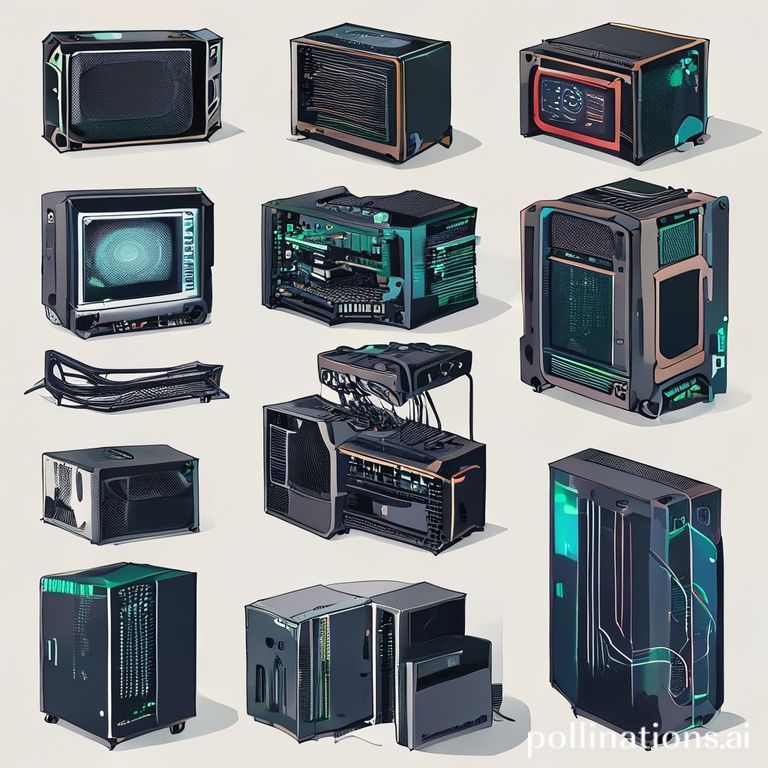
Specialized Small Form Factor PC cases, moreover, often cost more. Specifically, they have intricate designs for optimal cooling. They also use premium materials. Building these systems also typically requires more patience and skill. Indeed, the confined space can make assembly challenging, with tight clearances for hands, tools, and cable routing. Consequently, first-time builders face a steeper learning curve. Thus, this can lead to longer build times. It also brings greater risk of minor frustrations.
The Future is Small: What’s Next for SFF PCs?
The momentum behind the Small Form Factor PCs trend shows no signs of slowing down. As technology keeps evolving, we expect more innovative solutions. These, furthermore, will address challenges and push compact computing boundaries. Indeed, the Mini PC market will grow. It, for example, projects a USD 17.4 billion increase. Specifically, a CAGR of 4.5% is expected from 2023-2028. This continued growth, therefore, signals a vibrant future for compact desktops across all sectors.
Furthermore, innovations on the horizon promise to make SFF builds even more accessible, powerful, and aesthetically pleasing. The future of Small Form Factor PCs thus looks bright, continually blurring the lines between traditional desktops and integrated, minimalist solutions.
Innovations Driving SFF Evolution
Initially, development aims to simplify building. It also improves aesthetics and airflow. For example, innovations include “cable-free” motherboard designs. Gigabyte’s Aorus Stealth and Asus’s BTF series are examples. Specifically, connectors move to the motherboard’s rear. Consequently, this cleans up cable management. Also, it potentially improves airflow by removing obstructions. Their impact on case size, however, is debated. Nevertheless, their contribution to internal organization and aesthetics is clear.
Furthermore, industry giants like NVIDIA are taking steps to standardize SFF component compatibility. A new SFF standard, for instance, is being established. Indeed, this simplifies graphic card design for manufacturers. Consequently, cards will fit smaller chassis better. Moreover, this particularly helps enthusiast-grade performance. This initiative, ultimately, will greatly benefit builders, reducing guesswork and expanding options for high-performance Small Form Factor PCs.
A Glimpse into Tomorrow’s Compact Desktops
Future CPUs and GPUs, admittedly, demand more power. However, experts believe energy efficiency will improve. Consequently, this ensures SFF computing’s long-term viability and growth. Manufacturers, moreover, are constantly refining their designs, focusing on more efficient power delivery and advanced cooling techniques.
Ultimately, Small Form Factor PCs will be more customizable. Indeed, a wider array of components and cases will emerge. Thus, they will suit every need and aesthetic preference. The distinction between traditional desktops and more integrated, appliance-like solutions, furthermore, will likely continue to blur. Ultimately, your next powerful gaming rig, workstation, or home hub is coming. It might be a discreet, compact box. It will, moreover, seamlessly integrate into your life. Less truly is more.

Conclusion
The “explosion” of Small Form Factor PCs is here. Indeed, Micro-ATX and Mini-ITX motherboards drive this. Thus, it marks a significant evolution in computing. Specifically, these compact powerhouses reclaim desk space. Moreover, unparalleled portability is another key offering. Furthermore, they deliver uncompromising performance. These compact powerhouses, therefore, redefine desktop expectations. However, building an SFF system has unique challenges. Specifically, these include component compatibility, thermal management, and cost. Yet, the rewards are substantial. Ultimately, you get a powerful, pleasing, efficient machine.
As technology marches forward relentlessly, we anticipate more innovative designs. Furthermore, standardized components will improve. Energy efficiency will also get better. Ultimately, this will cement SFF computing’s place in our lives. The future of computing, moreover, is certainly looking smaller, smarter, and incredibly exciting.
What, however, is the most revolutionary SFF PC aspect in five years? How, furthermore, will it change your daily computing experience? Let us know, therefore, in the comments below!