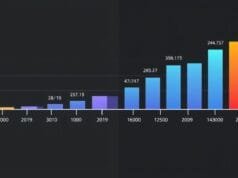

The anticipated RTX 5080 4090 performance comparison sparks intense discussion among PC enthusiasts. Initially, whispers suggested NVIDIA’s GeForce RTX 5080 would significantly outperform the mighty RTX 4090. This claim generated considerable excitement for the next-gen Blackwell architecture. However, recent leaks and deeper analyses have dramatically shifted this narrative. Many now question the RTX 5080’s ability to dethrone the RTX 4090 in raw desktop performance. Consequently, this article cuts through the speculation. We will examine core specifications, analyze benchmark expectations, and explore new technologies, like Multi Frame Generation (DLSS 4), to reveal the true story.

The Genesis of a Rumor: Unpacking RTX 5080 4090 Performance Expectations
To understand the anticipated RTX 5080 4090 Performance, we must first explore the “10% faster” rumor. Typically, NVIDIA improves its architecture with each new generation, delivering clear generational leaps. Historically, some x80-tier cards have even matched or surpassed previous x90-tier performance, primarily due to significant efficiency gains. This trend fuels much of the discussion around the NVIDIA GeForce 5080 vs 4090.
This historical trend, therefore, likely started the “10% performance advantage” rumor, influencing expectations for the RTX 5080 benchmarks. Internal NVIDIA projections might have also spread it, perhaps highlighting tasks where the RTX 5080’s new Blackwell architecture genuinely excelled. Another possibility involves early figures from unoptimized engineering samples, possibly for professional cards, which might have been misunderstood and wrongly applied to consumer desktops. The rumor, therefore, rapidly spread, setting high expectations for the Blackwell GPU’s potential to impact the Next-gen NVIDIA GPU comparison.

The Reign of Ada Lovelace: Setting the Baseline for Next-gen NVIDIA GPU Comparison
To truly grasp the RTX 5080’s context and frame the NVIDIA GeForce 5080 vs 4090 discussion, we must first examine the NVIDIA GeForce RTX 4090. This powerhouse GPU launched as the premier flagship of the Ada Lovelace generation, profoundly redefining consumer graphics and cementing its status as the unrivaled performance king. It set a formidable baseline for RTX 5080 benchmarks.
The RTX 4090, moreover, boasts astonishing specifications, including 16,384 CUDA cores and a substantial 24GB of GDDR6X VRAM on a wide 384-bit memory bus. This robust configuration provides ample bandwidth, allowing it to handle demanding 4K gaming and professional applications. Therefore, its impressive core count and generous memory deliver unparalleled raw performance, consistently achieving high 4K frame rates and making any Next-gen NVIDIA GPU comparison challenging.
Furthermore, the RTX 4090 excels at powering immense professional workloads, including demanding 3D rendering, intensive video editing, advanced AI development, and complex scientific simulations. Its massive computational strength and abundant VRAM make it an indispensable tool. This card set a performance benchmark exceedingly difficult to surpass, even for a newer generation lacking an x90-tier upgrade, directly impacting RTX 5080 4090 Performance expectations.

Blackwell vs Ada Lovelace: Predicting RTX 5080 4090 Performance from Core Specifications
The NVIDIA GeForce RTX 5080, conversely, will introduce the new Blackwell architecture, succeeding Ada Lovelace. This marks a significant Blackwell vs Ada Lovelace GPU shift. Although official specifications are unconfirmed, reliable leaks and expert analyses paint a clear picture. Blackwell is expected to boost core efficiency, improve ray tracing, and enhance AI acceleration, strategically building on NVIDIA’s existing strengths for the next generation.
The RTX 5080’s rumored core specifications, moreover, diverge significantly from the RTX 4090. For example, the RTX 5080 will likely have fewer CUDA cores than its predecessor; current leaks indicate a substantial deficit. Furthermore, it is anticipated to include 16GB of VRAM, considerably less than the RTX 4090’s generous 24GB. This VRAM difference is a key point in any NVIDIA GeForce 5080 vs 4090 analysis, potentially bottlenecking future ultra-high-resolution gaming or intensive professional applications.
Conversely, the RTX 5080 is expected to feature higher clock speeds, typical for newer architectures. Raw power, however, often depends more on CUDA core count and VRAM. Therefore, the RTX 5080’s design focuses on architectural refinements and new features, rather than brute-forcing performance with more cores. This refined approach is especially clear when comparing RTX 5080 benchmarks to the RTX 4090’s raw power.

Head-to-Head: RTX 5080 4090 Performance in Raw Benchmarks
A key question is how the RTX 5080 compares to the RTX 4090 in raw performance. Latest information suggests the RTX 4090 largely retains its performance crown, especially for the desktop RTX 5080. The initial rumor of a 10% advantage for the 5080 appears inaccurate when considering raw RTX 5080 benchmarks without new software features. This clarifies the true RTX 5080 4090 Performance picture.
Several consistent sources indicate the RTX 4090 generally outperforms the RTX 5080. These insights come from unverified but consistent benchmark leaks. The RTX 4090 consistently maintains its advantage, with reports suggesting a 5% to 20% lead in overall RTX 5080 benchmarks or specific gaming scenarios. Conversely, the RTX 5080 could potentially be 15% slower in raw performance.
This performance gap primarily stems from core specification differences, highlighting the Blackwell vs Ada Lovelace GPU contrast. The RTX 4090’s higher CUDA core count is its core strength. Although Blackwell’s architectural efficiencies are present, they are insufficient to overcome the RTX 4090’s numerical advantage. For pure computational throughput, the RTX 4090’s hardware excels, solidifying its position in the Next-gen NVIDIA GPU comparison.

The Game Changer: Multi Frame Generation and its Impact on DLSS 4 Performance
While raw performance indeed favors the RTX 4090, the RTX 5080, however, offers more than just raw power. Specifically, Multi Frame Generation (DLSS 4) technology is a pivotal factor; it could, therefore, act as a performance equalizer. This feature represents a substantial evolution of NVIDIA’s DLSS suite, moving beyond simple upscaling and profoundly impacting DLSS 4 performance.
DLSS 4 specifically leverages dedicated AI hardware within the Blackwell architecture. This advanced technology synthesizes entirely new frames, offering a substantial frame rate boost. Crucially, the RTX 4090 does not support this new version. While it supports older DLSS, DLSS 4 is an exclusive advancement designed solely for Blackwell chips, a key differentiator in the NVIDIA GeForce 5080 vs 4090 contest.
When enabled, this innovative feature could allow the RTX 5080 to match or even surpass the RTX 4090’s frame rates. This is a game-changer, letting the RTX 5080 overcome its raw hardware deficit using intelligent software, significantly boosting its RTX 5080 4090 Performance in supported titles. However, this depends on game support and user activation; without it, the RTX 4090 typically remains faster.
DLSS 4 Performance: Elevating Next-Gen NVIDIA GPU Comparison
Beyond desktop GPUs, examining mobile GPU performance sometimes provides hints regarding broader desktop capabilities. For instance, early OpenCL RTX 5080 benchmarks for the RTX 5080 Laptop GPU were surprising, revealing it to be 6% faster than its RTX 4090 laptop counterpart. While encouraging for mobile users, it highlights a crucial distinction between laptop and desktop GPU performance.
Laptop GPUs inherently operate under tighter thermal and power limits, often featuring different configurations and clock speeds compared to their desktop counterparts. Therefore, a mobile performance lead does not directly translate to desktop performance, as desktop GPUs benefit from considerably more thermal headroom and power. This mobile performance disparity might stem from distinct optimization targets or the OpenCL benchmark itself, underscoring the complexities of RTX 5080 4090 performance trends.
4. Analyzing RTX 5080 4090 Performance: Why the RTX 4090 Still Leads in Raw Benchmarks?
While the NVIDIA GeForce 5080 vs 4090 comparison might disappoint some users, the RTX 5080 offers a distinct and appealing upgrade path, especially compared to its direct predecessor, the RTX 4080. For users currently owning an RTX 4080 or older cards, the RTX 5080 presents a significant upgrade opportunity, especially when considering RTX 5080 benchmarks against previous generations.
Preliminary figures consistently indicate an impressive 11% to 22% performance increase for the RTX 5080 over the RTX 4080, varying depending on specific benchmarks. This generational leap aligns well with typical NVIDIA x80-tier improvements. Users upgrading from an RTX 30-series card will experience an even more substantial jump, benefiting from enhanced raw power, the innovative Blackwell architecture, and advanced features like DLSS 4, a strong point in the Next-gen NVIDIA GPU comparison.
Key Differences Summarized: NVIDIA GeForce 5080 vs 4090 Performance Aspects
To consolidate this complex picture, therefore, a concise overview is presented below. These key points, in fact, succinctly summarize the expected distinctions between these two powerful NVIDIA GPUs:
- Architecture: The RTX 4090 uses Ada Lovelace; the RTX 5080 features the newer Blackwell architecture.
- CUDA Cores: The RTX 4090 has significantly more CUDA cores (16,384), driving its raw performance lead over the anticipated lower count of the RTX 5080.
- VRAM: The RTX 4090 boasts 24GB GDDR6X VRAM; the RTX 5080 is expected to have 16GB GDDR6X.
- Clock Speeds: The RTX 5080 will likely achieve higher clock speeds due to architectural efficiencies.
- Raw Performance: Without DLSS 4, the RTX 4090 generally outperforms the RTX 5080 (5-20% lead); some reports suggest the 5080 could be up to 15% slower.
- DLSS 4 Support: Crucially, the RTX 5080 uniquely supports new DLSS 4 Multi Frame Generation, which the RTX 4090 lacks. With DLSS 4, the 5080 can match or exceed the 4090’s performance.
- Target Segment: The RTX 4090 remains the previous-gen flagship. The RTX 5080 targets high-end users, offering architectural improvements and new AI features, a substantial upgrade over the RTX 4080.

Implications for Gamers and Professionals: The Impact of RTX 5080 4090 Performance
The RTX 5080 and RTX 4090 consequently present a complex performance choice. Their distinct capabilities significantly impact a wide range of users, including gamers and creative professionals. Therefore, a thorough understanding of these nuances is crucial for an an informed purchasing decision when evaluating NVIDIA GeForce 5080 vs 4090.
Gamers prioritizing peak raw 4K frame rates without frame generation will find the RTX 4090 superior; its abundance of CUDA cores and VRAM allows it to excel. However, if Multi Frame Generation (DLSS 4) is actively utilized, the RTX 5080 could offer a comparable or even superior experience in supported titles. This choice balances raw rasterization power against intelligent, AI-driven frame synthesis, fundamentally altering the RTX 5080 4090 Performance landscape.
Professional users typically require very high computational throughput and substantial VRAM. For demanding tasks like 3D rendering and intricate simulations, the RTX 4090 likely maintains a significant advantage, attributed to its 24GB VRAM and higher core count. While Blackwell’s improvements may aid some professional applications, the 4090’s hardware scale remains essential, a crucial consideration in Blackwell vs Ada Lovelace GPU assessments for demanding workloads.

AI-Enhanced Performance: DLSS 4 Performance in RTX 5080 vs 4090 Scenarios
NVIDIA’s strategy for the RTX 5080 extends beyond brute-force performance. This new generation brings significant architectural refinements and, more prominently, cutting-edge AI features, specifically DLSS 4. This strategic emphasis positions the RTX 5080 as a forward-looking card, appealing to users eager for new display technologies and advanced AI upscaling capabilities, even if RTX 5080 benchmarks do not surpass the previous generation’s top card in every raw metric.
1. What’s the Expected RTX 5080 4090 Performance Comparison?
Initially, rumors suggested the RTX 5080 would be 10% faster than the RTX 4090. However, these claims have proven inaccurate for desktop GPUs in terms of raw RTX 5080 4090 Performance. The RTX 4090, powered by Ada Lovelace, consistently maintains its lead, excelling in unassisted gaming and demanding professional workloads. Its superiority stems from its higher CUDA core count and generous VRAM. Some reports even indicate the RTX 5080 could be slower in raw RTX 5080 benchmarks without specific software enhancements.
AI-Enhanced Performance with DLSS 4
The overall performance narrative fundamentally shifts with NVIDIA’s groundbreaking new DLSS 4 technology. The RTX 5080, featuring the advanced Blackwell architecture, uniquely supports this sophisticated feature, which is notably absent from the RTX 4090. Consequently, when users properly enable DLSS 4 in supported titles, the RTX 5080 can effectively match or even surpass the RTX 4090’s frame rates, offering a compelling next-gen gaming experience. This emphatically highlights the divergence between raw hardware power and intelligent, AI-driven frame synthesis, crucial for understanding DLSS 4 performance.
For those seeking a clear generational upgrade, the RTX 5080 strongly outperforms its direct predecessor, the RTX 4080. It consistently delivers a substantial performance boost, ranging from an impressive 11% to 22%, depending on the specific benchmark. While the RTX 5080 may not dethrone the RTX 4090 as the absolute raw performance leader, it carves out its own distinct niche, ushering in the next era of NVIDIA’s architecture and advanced AI features. Consumers must carefully weigh raw horsepower against cutting-edge, software-driven RTX 5080 4090 Performance when making their decision.
Frequently Asked Questions
1. Is the RTX 5080 faster than the RTX 4090?
For raw, unassisted desktop GPU performance, the RTX 4090 generally remains faster than the RTX 5080. Reports consistently suggest the RTX 4090 could lead by 5% to 20% across various RTX 5080 benchmarks. Conversely, the RTX 5080 might even be up to 15% slower in pure raw metrics, impacting the direct RTX 5080 4090 Performance comparison.
2. What is Multi Frame Generation (DLSS 4), and how does it affect RTX 5080 performance?
DLSS 4 is NVIDIA’s next-generation, AI-powered frame generation technology, exclusive to the Blackwell architecture found in the RTX 5080. This advanced technology synthesizes entirely new frames, boosting frame rates significantly. When enabled in supported games, DLSS 4 can allow the RTX 5080 to match or even surpass the RTX 4090’s performance; notably, the RTX 4090 does not support this specific feature, a crucial aspect of DLSS 4 performance.
3. How much VRAM does the RTX 5080 have compared to the RTX 4090?
The RTX 5080 is expected to feature 16GB of GDDR6X VRAM. The RTX 4090, conversely, comes with a significantly larger 24GB of GDDR6X VRAM. This substantial VRAM difference can be highly significant, particularly impacting demanding games at ultra-high resolutions or intensive professional applications, a key aspect of the NVIDIA GeForce 5080 vs 4090 specifications.
4. Why does the RTX 4090 still outperform the RTX 5080 in raw benchmarks?
The RTX 4090 maintains its raw performance lead primarily due to its significantly higher CUDA core count (16,384 cores) and larger VRAM buffer. While the RTX 5080 benefits from Blackwell’s architectural improvements and higher clock speeds, these gains are generally insufficient to overcome the RTX 4090’s formidable numerical processing power advantage in raw computational tasks, impacting the overall Blackwell vs Ada Lovelace GPU comparison.
5. Is the RTX 5080 a significant upgrade from the RTX 4080?
Yes, the RTX 5080 is a notable upgrade over its direct predecessor, the RTX 4080. Performance improvements consistently range from an impressive 11% to 22%, depending on the specific benchmark. For users upgrading from an RTX 4080 or older cards, the RTX 5080 offers a compelling generational leap, especially with the added benefit of DLSS 4, making it a strong contender in the Next-gen NVIDIA GPU comparison.