
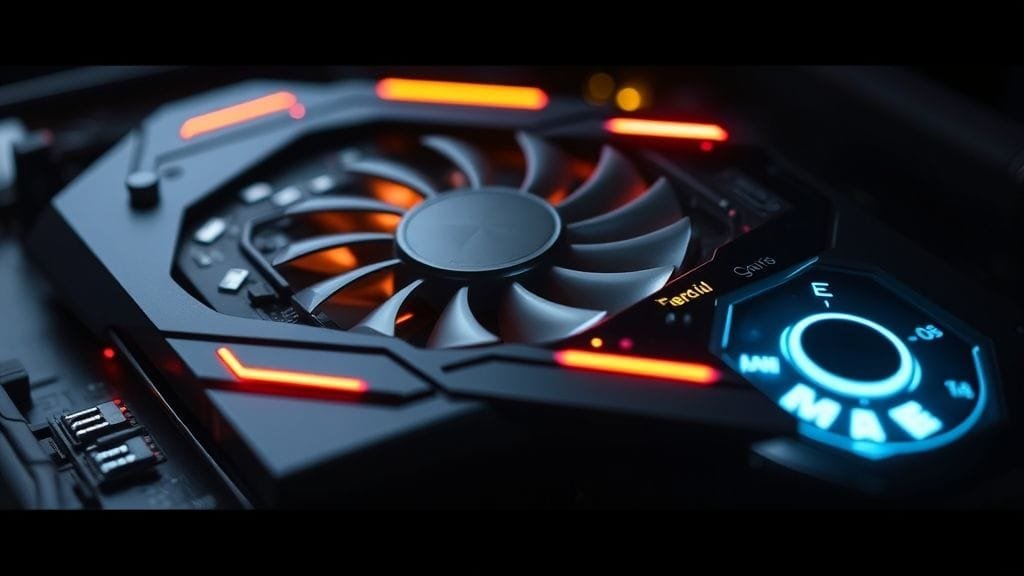
Graphics Processing Units (GPUs) once meant breathtaking gaming. However, they have undeniably transcended their initial purpose. Indeed, today, AI graphics cards are indispensable engines. Specifically, they drive the artificial intelligence (AI) revolution. Consequently, their profound influence extends across virtually every industry imaginable. These next-generation GPUs are meticulously designed. Furthermore, they have specialized architectures and enhanced capabilities. These capabilities, in fact, reach far beyond merely rendering pixels. Therefore, they are now critical. Indeed, they train and deploy the most complex AI models. This monumental shift is primarily due to the GPU’s inherent ability. Namely, it performs massive parallel processing. This, consequently, is a core requirement for nearly all modern AI workloads.

The Parallel Processing Power of AI Graphics Cards
Central Processing Units (CPUs) excel at sequential tasks. That is, they handle operations one after another with immense speed. However, AI computations demand a different approach. Consequently, this is where the unique architecture of AI graphics cards truly shines. Ultimately, it offers a distinct advantage for data-intensive operations.
CPU vs. GPU: A Fundamental Difference
Unlike CPUs, GPUs are architected with thousands of smaller cores. Indeed, these cores are highly efficient. Moreover, they are specifically designed to process multiple operations simultaneously. This parallel processing capability, therefore, is exceptionally well-suited. Specifically, it handles data-intensive, repetitive mathematical computations. Furthermore, these underpin machine learning (ML) and deep learning (DL) algorithms. For instance, tasks like matrix multiplications and convolutions are fundamental to neural networks. Crucially, they can be accelerated dramatically on a GPU. As a result, what might take days on a traditional CPU can often be completed in mere hours on an advanced GPU. This efficiency, consequently, is paramount for rapid model iteration and development.
The Math Behind Machine Learning
Machine learning, especially deep learning, relies heavily on calculations. Specifically, these are performed on massive datasets. For example, imagine teaching an AI to recognize a cat. To do this, it needs to process millions of image pixels. Additionally, it applies the same mathematical operations to each. This process, consequently, repeats across countless images. A GPU’s ability, in turn, divides these calculations among its thousands of cores. This, thus, allows an unprecedented rate of data processing. Therefore, the computational horsepower of AI graphics cards is directly proportional. Ultimately, it determines the speed and complexity with which AI models can be developed and refined.
Broadening Horizons: AI Applications Powered by GPUs
The integration of GPUs has significantly accelerated AI’s evolution. Indeed, it enables breakthroughs across an impressive array of diverse fields. This widespread adoption, therefore, underscores the transformative power of these specialized processors. Ultimately, from scientific discovery to everyday convenience, GPUs are at the forefront of innovation.
Transforming Machine Learning and Deep Learning
At its core, artificial intelligence relies heavily on GPUs. Furthermore, this is especially true for machine learning and deep learning. Indeed, these processors are workhorses for training and deploying sophisticated ML and DL models. This also includes the most complex neural networks. The ability to quickly process vast datasets is thus crucial. Consequently, it allows researchers and developers to create more accurate and intricate models. This computational power, therefore, has unlocked new possibilities. Specifically, it aids in pattern recognition and predictive analytics across various industries.
Advancing Natural Language Processing (NLP)
Progress in Natural Language Processing (NLP) owes a great deal to modern AI graphics cards. For example, tasks like sentiment analysis and machine translation rely on GPU power. Similarly, the development of Large Language Models (LLMs) like GPT-4 also uses it heavily. These models, consequently, process enormous amounts of text data for training and real-time inference. This process, furthermore, would be prohibitively slow without parallel processing. The speed of GPUs, in turn, allows for instant translation. Moreover, it enables nuanced understanding of human language. For a deeper dive into NLP, consider exploring Wikipedia’s entry on [Natural Language Processing](https://en.wikipedia.org/wiki/Naturallanguageprocessing).
Revolutionizing Computer Vision and Autonomous Systems
Computer vision systems enable machines to “see” and interpret visual information. Indeed, these systems also heavily depend on GPUs. Specifically, image recognition, object classification, and facial recognition utilize AI graphics cards. Thus, they efficiently process large image datasets. Furthermore, they analyze features with high accuracy and speed. Similarly, autonomous systems like self-driving cars and robotics leverage GPUs. In these cases, they process sensor data in real-time. This, consequently, ensures split-second decision-making. Moreover, it also coordinates complex movements. This is crucially important for safety and efficiency.

Impact in Healthcare, Finance, and Generative AI
The influence of AI graphics cards extends into critical sectors. For example, these include healthcare and finance. In healthcare, GPUs enable predictive analytics for early disease detection. Additionally, they analyze medical images. Furthermore, they accelerate drug discovery through complex simulations. Likewise, in finance, they power fraud detection and risk analysis. Moreover, they also run high-frequency trading algorithms. Beyond these applications, Generative AI is a burgeoning field. Specifically, it creates chatbots, text-to-image generation, and other advanced simulations. These capabilities, for instance, include Generative Adversarial Networks (GANs) and Variational Autoencoders (VAEs). This field, consequently, is entirely powered by GPU capabilities. Ultimately, it ensures fast model preparation and inference.
Next-Generation AI Graphics Card Architectures
Modern and future GPUs are increasingly designed with AI at their core. Indeed, they incorporate specialized features and architectural innovations. These advancements, therefore, are crucial. Specifically, they handle the ever-growing demands of AI workloads. Consequently, every component is optimized for performance.
Specialized AI Accelerators and Cores
A significant development in AI graphics cards is dedicated AI accelerators. For example, companies like NVIDIA have Tensor Cores. Similarly, AMD offers AI Accelerators in architectures like RDNA 4. Furthermore, Intel features Xe Matrix Extensions (XMX) cores. All of these, therefore, are specialized units. Ultimately, they drastically speed up deep learning computations. This specifically includes matrix operations vital for neural networks. Such dedicated hardware, consequently, allows far greater efficiency. Indeed, it surpasses general-purpose compute units.
High Memory Bandwidth and Capacity
Handling massive datasets and complex AI models requires rapid memory access. Specifically, it needs more than just raw processing power. Therefore, GPUs are equipped with high-speed memory technologies. These include, for instance, GDDR6 and High Bandwidth Memory (HBM2/3/3e). Consequently, they provide significantly faster data transfer rates. This, indeed, is crucial for the demanding memory requirements of AI workloads. Increased capacity furthermore allows larger models to be held in memory. Ultimately, this reduces bottlenecks.
Platform Innovation: CUDA vs. ROCm
The software ecosystem supporting GPUs is as important as the hardware. Indeed, NVIDIA’s CUDA platform has long been dominant. Furthermore, it offers a robust software environment for AI development. However, alternatives are emerging. Specifically, AMD’s ROCm platform provides an open-source alternative to CUDA. Moreover, ROCm supports major AI frameworks. For example, these include TensorFlow and PyTorch. Consequently, it offers greater flexibility and choice for developers. This competition, therefore, fosters innovation and accessibility in AI computing. For more on AMD’s approach, visit their [AMD ROCm Platform](https://www.amd.com/en/developer/rocm.html) page.
Prioritizing Energy Efficiency
As AI models grow in complexity and size, their energy consumption becomes a critical concern. Consequently, the industry strongly focuses on delivering more performance per watt. Therefore, next-generation AI graphics cards incorporate more efficient power management techniques. Furthermore, they also feature novel cooling solutions. This, in turn, mitigates environmental impact. Moreover, it also keeps operational costs for data centers manageable. This is crucially despite escalating computational demands. This emphasis, therefore, is critical for long-term sustainability.
The Expanding Market for AI Graphics Cards
The AI revolution has dramatically fueled the GPU market’s growth. Indeed, it transformed it into a powerhouse industry. Consequently, projections indicate continued exponential growth. This furthermore reflects GPUs’ indispensable role in advancing artificial intelligence. This surge, therefore, highlights a significant shift in technological priorities.
Market Growth and Projections
The global GPU market is projected to reach US$592.18 billion by 2033. Notably, it climbed from US$63.22 billion in 2024. This consequently represents a Compound Annual Growth Rate (CAGR) of 28.22%. More specifically, the AI GPU market expects to grow from $31.95 billion in 2024 to $126.7 billion by 2032. This is furthermore with an 18.8% CAGR. These figures, therefore, underscore the immense demand. Ultimately, they show the investment flowing into this crucial technology.
Key Players: NVIDIA, AMD, and Intel
NVIDIA remains a clear leader in the AI accelerator market. Indeed, it holds approximately 80% of the overall market. This is even up to 92% in data center GPUs. This dominance, consequently, is largely attributed to its early and significant investment in AI-specific hardware. Moreover, it also boasts a robust CUDA software ecosystem. NVIDIA’s data center revenue, for instance, soared to $18.4 billion in Q3 2023. This was a 279% increase year-over-year.
However, AMD and Intel actively push to gain ground. AMD, with its ROCm platform and Instinct MI series, offers a compelling alternative. Crucially, it is cost-effective for AI workloads. Future GPUs like the MI450, for example, aim for leadership performance. Specifically, they target all AI tasks. Intel, on the other hand, introduced Arc Pro B-Series GPUs. Additionally, it also has Gaudi AI accelerators. These, consequently, are for workstations and data centers. Significantly, they emphasize open Ethernet-based fabrics. This ultimately helps avoid vendor lock-in. For more on the competitive landscape, check out analyses on reputable tech sites.
The Role of Cloud Computing and Data Centers
Data centers and cloud computing platforms drive GPU demand significantly. Indeed, these entities utilize AI graphics cards. Specifically, they provide scalable, high-performance computing resources for AI workloads. This thus serves businesses and researchers worldwide. Moreover, cloud providers offer AI-as-a-service. This, consequently, makes cutting-edge GPU power accessible. Furthermore, it requires no massive upfront hardware investments. This accessibility, therefore, accelerates AI development across industries. Ultimately, it democratizes access to powerful computational tools. For more information on internal AI initiatives, visit our [blog/ai-solutions-for-business/](/blog/ai-solutions-for-business/) page.
Challenges and Future Outlook for AI GPUs
AI graphics cards have a revolutionary impact. Yet, their rapid advancement and deployment present several challenges. Furthermore, the future holds exciting prospects. These powerful processors, in fact, continue to evolve. Moreover, they integrate with emerging technologies. Addressing these issues is thus vital for sustainable progress.
Cost, Supply, and Energy Concerns
Immense demand for AI-capable GPUs can lead to significant hurdles. For instance, high prices are a barrier for many. Advanced cards like the NVIDIA H100, for example, cost between $25,000 and $40,000. Potential supply shortages furthermore exacerbate this issue. Moreover, modern data center GPUs for AI consume substantial energy. This, consequently, raises concerns about electricity availability and environmental impact. Indeed, data center GPUs sold in 2023 alone consumed as much power as 1.3 million average American households annually. Future GPUs will therefore prioritize energy efficiency. This, ultimately, is a key design principle. This emphasis is crucial for long-term sustainability.
Emerging Specialized Hardware
Beyond general-purpose GPUs, the AI landscape sees a rise in specialized hardware. Specifically, this hardware is tailored for specific AI tasks. For example, these include Tensor Processing Units (TPUs) and Field-Programmable Gate Arrays (FPGAs). Such hardware, consequently, can offer even greater efficiency. This indeed applies to particular types of AI computations. The interplay between general-purpose AI graphics cards and these specialized accelerators, therefore, will likely shape future AI infrastructure. This diversification, ultimately, allows optimized solutions across various AI challenges.
AI-Enhanced Gaming: A Full Circle
AI technology enhances the gaming experience itself. This happens even while transcending gaming. For instance, technologies like NVIDIA DLSS and AMD FSR utilize AI. Specifically, they boost frame rates, reduce latency, and improve image quality. They achieve this ultimately through intelligent upscaling and frame generation. This thus demonstrates a fascinating full circle. The technology that propelled GPUs beyond gaming, in fact, now elevates gaming. Exploring our article on [blog/future-of-gaming-tech/](/blog/future-of-gaming-tech/) can furthermore offer more insights.
The Indispensable Role of AI Graphics Cards
In conclusion, AI graphics cards are far more than just gaming components. Indeed, they stand as the foundational bedrock of the artificial intelligence revolution. Specifically, they enable unprecedented computational power. This, consequently, supports an ever-expanding array of applications. Continuous innovation in GPU architecture will certainly drive advancements. Similarly, the development of specialized AI features will too. Moreover, ongoing competition among manufacturers will also contribute. Ultimately, these powerful processors will reshape industries. Furthermore, they will enhance scientific discovery. Beyond that, they will profoundly impact daily life in ways we are only just beginning to imagine. Their evolution, therefore, is a testament to human ingenuity. Ultimately, it shows the relentless pursuit of intelligent machines.