
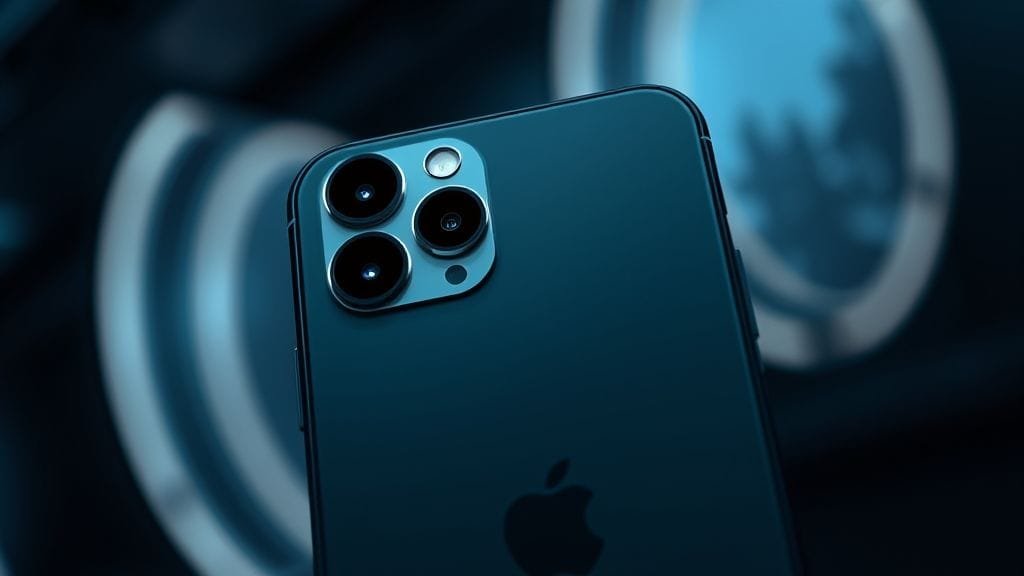
The iPhone 17 Center Stage Camera heralds a significant leap for front-facing smartphone photography and videography. Apple will debut this advanced feature across its entire iPhone 17 lineup in September 2025. Importantly, this innovation redefines mobile communication. Notably, this isn’t merely a simple port from iPad; Apple instead reimagined its core mechanics. It further incorporates a new 18-megapixel square sensor. This novel hardware, powered by the A19 Bionic chip, works with sophisticated software. Consequently, users can expect a versatile, stable, and unparalleled experience for all selfies and video calls.

The Heart of Innovation: The iPhone 17 Center Stage Camera’s 18-Megapixel Square Sensor
The iPhone 17 Center Stage Camera delivers groundbreaking performance, centered on an 18-megapixel square sensor. This meticulously engineered design marks a dramatic departure from prior iPhone generations; for instance, older models used 12-megapixel sensors. Consequently, this new sensor boosts pixel count by 50%. More megapixels provide higher detail and better cropping flexibility, ensuring clearer images after digital manipulation. However, the true innovation isn’t just the megapixel count; instead, its unique square shape genuinely stands out.

Apple’s implementation of a square sensor was a thoughtful engineering choice, surpassing traditional rectangular smartphone sensors. Crucially, this design allows capture of a significantly wider field of view (FOV). This expanded view is vital for Center Stage’s intelligent framing. The square sensor, a key component of the iPhone 17 Center Stage Camera, uniquely captures extra raw image data around the subject. The A19 Bionic chip then leverages this data, enabling dynamic composition and providing unprecedented flexibility.
A wider FOV offers greater versatility. For example, users can capture both portrait and landscape selfies without physically rotating their phone. The software intelligently extracts the desired orientation from the larger square capture, resulting in less awkward angling and natural-looking shots. Furthermore, the square sensor empowers computational photography algorithms to process a richer dataset, ensuring optimal framing and detail retention, regardless of the final aspect ratio. Ultimately, this subtle hardware change forms the foundation for all advanced features of Center Stage on iPhone 17.
iPhone 17 Center Stage Camera in Action: AI-Powered Auto-Framing and Dynamic Composition
The iPhone 17 Center Stage Camera truly showcases its magic via AI-powered auto-framing. This feature leverages the A19 Bionic chip’s processing power, identifying subjects within its wide FOV. Subsequently, it dynamically adjusts the frame, keeping you or your group perfectly centered. This ensures everyone remains visible and engaged. Furthermore, this technology operates seamlessly in real-time, adapting instantly to movements and group changes, requiring no manual intervention.
During a video call, Center Stage on iPhone 17 intelligently tracks you. For instance, if you move, the software instantly responds; the camera virtually pans and zooms to keep you centered. This creates a natural video conferencing experience. No longer must you constantly readjust your phone; nor remain rigidly still. Instead, the system anticipates movement, smoothly adjusting composition, making video calls feel more like face-to-face conversations.
Center Stage particularly excels in group selfies and calls. The AI within the iPhone 17 selfie cam, indeed, automatically expands the FOV to include new people. Instead of cramming, Center Stage identifies faces and then recomposes the shot. It also fluidly rotates the frame if more horizontal space is needed. Importantly, this requires no physical device rotation. This intelligent adaptability ensures everyone is included, making group interactions effortless and inclusive. Overall, this system enhances personal and professional communications.

Beyond Selfies: Enhanced Video Capabilities with the iPhone 17 Center Stage Camera
The iPhone 17 Center Stage Camera elevates mobile videography beyond simple selfies. Importantly, it offers ultra-stabilized 4K HDR from the front camera. Consequently, users record incredibly smooth, vibrant, and detailed footage, even while moving, thereby eliminating jarring shakes for vlogging or dynamic scenes. Furthermore, 4K HDR ensures rich colors, impressive contrast, and fine detail, significantly boosting quality for all users.

Introducing Dual Capture with Apple’s Advanced Front Camera on iPhone 17
The most exciting new video feature is ‘Dual Capture.’ This innovative functionality allows simultaneous recording with both the Apple iPhone 17 front camera and rear cameras, unlocking new creative possibilities. Previously difficult with one device, it proves invaluable for creators, vloggers, and journalists. For example, capture reactions with the front camera while the landscape unfolds via the rear.

Dual Capture is perfect for many uses: grabbing authentic reactions, aiding dynamic interviews, and crafting immersive storytelling. It streamlines workflow by removing complex multi-camera setups; furthermore, it eliminates tiresome post-production syncing. The A19 Bionic chip handles real-time processing, ensuring both video streams remain perfectly synchronized. Thus, this feature genuinely transforms your iPhone, leveraging the capabilities of Apple’s advanced front camera, into a potent mobile studio for richer, more engaging content.
Seamless Integration: The iPhone 17 Center Stage Camera and the Dynamic Island
The advanced iPhone 17 Center Stage Camera is not isolated; instead, it meticulously integrates into the Apple ecosystem, particularly with the Dynamic Island. This notably evolved beyond a simple notch replacement into an interactive, animated display area, fluidly expanding to show alerts, notifications, and background activities. Housing the new 18-megapixel front-facing camera here solidifies its role as a central hub for user interaction.

The Dynamic Island, moreover, houses both the iPhone 17 Center Stage Camera and Face ID sensors. This is a strategic placement, ensuring optimal capture of faces and movements, thereby enhancing Center Stage’s tracking. Furthermore, it improves Face ID’s secure authentication. Despite its upgraded sensor, the module is seamlessly tucked away; therefore, the Dynamic Island functions without obstruction.
This integration is both physical and experiential. For example, when Center Stage is active, visual cues appear within the Dynamic Island, indicating tracking or frame adjustments. This provides subtle, non-intrusive user feedback, enhancing deep integration. Furthermore, the A19 Bionic chip ensures Face ID authentication remains lightning-fast and secure, even during demanding tasks. Thus, this synergy exemplifies Apple’s commitment to cutting-edge hardware and intuitive software, making the iPhone 17 a benchmark.
The Computational Photography Advantage: Apple’s AI Prowess Behind the iPhone 17 Center Stage Camera
Apple, first and foremost, leads mobile photography due to its exceptional computational prowess. The iPhone 17 Center Stage Camera, indeed, perfectly illustrates this. Sophisticated algorithms and AI blend seamlessly with powerful hardware. Specifically, the A19 Bionic chip, powering all iPhone 17 models, is key. Its Neural Engine handles machine learning for real-time Center Stage tracking and 4K HDR video.
Computational photography, however, extends beyond capturing light. Specifically, it combines exposures and analyzes pixels, merging data to optimize detail. For the iPhone 17 Center Stage Camera, this is more advanced. The system, for instance, doesn’t just crop; instead, it actively analyzes the scene, identifies subjects, and makes smart decisions about exposure, white balance, and detail. Furthermore, Deep Fusion and Photonic Engine likely enhance front camera images.
The AI within Center Stage enables dynamic adaptation. For example, it recognizes faces, distinguishes foreground, and understands lighting. This empowers the system to crop and recompose shots with human-like intuition. As a result, subjects remain perfectly framed and well-lit. Ultimately, this continuous AI integration, a cornerstone of Apple’s new front camera technology, transforms raw sensor data, creating stunning, perfectly composed photos and videos, pushing mobile photography boundaries.
A Glimpse into the Future: iPhone 17 Center Stage Camera and the Foldable iPhone Theory
The iPhone 17 Center Stage Camera, with its square sensor, has sparked significant industry discussion. Analysts now speculate about Apple’s long-term roadmap, particularly regarding the rumored foldable iPhone. Many view this unique camera design as a strategic “future-proof” step, suggesting Apple prepares for flexible or unconventional display devices. Its wide field of view, managed by software, can intelligently crop into various aspect ratios.
Imagine a foldable iPhone revealing a nearly square display, perhaps shifting aspect ratios. A traditional rectangular sensor struggles for optimal coverage and adaptable framing, creating trade-offs. In contrast, a square sensor, key to the iPhone 17 Center Stage Camera, offers superior adaptability. It captures a larger, encompassing frame, providing a robust foundation. Software dynamically adjusts output, fitting any display configuration for seamless transitions.

This is not mere guesswork. Apple introduces core technologies that pave the way for future innovations. The square sensor decision signals a new smartphone camera architecture, extending beyond the current iPhone form factor. If a foldable iPhone materializes, the iPhone 17 Center Stage Camera‘s tech would be essential, ensuring consistent, high-quality front-facing interactions across diverse display orientations. This unique camera is vital for Apple’s next major hardware frontier.
The Impact on Users: Redefining Communication and Creativity with the iPhone 17 Center Stage Camera
The iPhone 17 Center Stage Camera revolutionizes user interaction and creativity. It makes communication natural, engaging, and effortless. Its advantages for daily use are clear: video calls become more personal and less distracting. AI-driven auto-framing keeps you perfectly in shot, even if you move or multiple people join, eliminating constant device adjustments and fostering genuine connections.
Transforming Your Creative Output with the iPhone 17 Selfie Cam
Beyond daily chats, the Center Stage on iPhone 17 offers powerful tools for content creators. The front camera delivers ultra-stabilized 4K HDR video, ensuring vlogs and social media stories look professionally polished. Dual Capture unlocks unprecedented creative freedom, allowing dynamic storytelling by recording reactions and environment simultaneously. Creators produce richer, more immersive content, breaking barriers to high-quality mobile production.
Moreover, Center Stage significantly enhances accessibility and inclusivity. Group photos become simpler, capturing everyone perfectly. For individuals with mobility challenges, automatic framing is particularly beneficial, reducing physical manipulation. Technology truly adapts to the user. Ultimately, the iPhone 17 Center Stage Camera fosters a more intuitive relationship, empowering users to express themselves authentically and connect deeply, setting new standards for front-facing mobile interactions.
The smartphone market is fiercely competitive, with manufacturers striving for camera differentiation. Many Android makers focus on higher megapixel counts or ultrawide lenses. However, Apple’s approach with the iPhone 17 Center Stage Camera is distinctly different. While competitors like Samsung and Google advance front cameras, none offer a square sensor paired with AI-driven dynamic framing in Apple’s uniquely integrated manner.
Competitors utilize ultrawide front cameras for group selfies, often introducing distortion. Apple’s square sensor, conversely, couples with advanced computational photography, providing a wider capture area. This is intelligently cropped and composed, minimizing distortion while maximizing flexibility. This strategy combines unique hardware with sophisticated software, leveraging the A19 Bionic chip’s Neural Engine for a superior user experience, beyond just headline specifications.
Apple’s differentiation stems from its holistic ecosystem. The Center Stage feature is deeply integrated into the iOS experience, leveraging the Dynamic Island and working seamlessly across applications. This optimization is challenging for competitors, unable to replicate without controlling both hardware and software. By reimagining the sensor and embedding advanced AI, the iPhone 17 Center Stage Camera sets a new benchmark, forcing others to innovate. Apple continues to lead in mobile imaging.
What is the iPhone 17 Center Stage Camera?
The groundbreaking Center Stage front camera is a defining feature spanning the entire Apple iPhone 17 lineup, signaling Apple’s commitment to a uniform user experience. All users benefit; whether choosing the standard iPhone 17, iPhone Air, or Pro models, it’s included. You receive the same advanced 18-megapixel square sensor and AI-powered auto-framing as standard, ensuring everyone experiences next-gen mobile photography and video communication.
Each model caters to different user needs, yet all consistently share this core innovation. The iPhone 17 and iPhone Air offer performance allowing access to Center Stage on iPhone 17 without upgrading to Pro models. Conversely, those demanding Apple’s absolute pinnacle should consider Pro models: the iPhone 17 Pro and Pro Max push boundaries further with additional camera, display, and processing power, making them ultimate tools for professionals and enthusiasts.
The iPhone 17 series officially launched in September 2025. Pre-orders for flagship Pro models began September 12, with general availability on September 19. This staggered release ensures prompt delivery and sets the stage for a new era of mobile interaction. This unified approach underscores Apple’s belief that the iPhone 17 Center Stage Camera is not merely premium, but a fundamental improvement for all iPhone users.
Conclusion
The Apple iPhone 17 Center Stage Camera marks a significant inflection point for mobile imaging and communication. It features a pioneering 18-megapixel square sensor, boasts AI-powered auto-framing, and offers enhanced video capabilities, including ultra-stabilized 4K HDR and Dual Capture. Apple has fundamentally reimagined the front-facing camera, evolving interactions to be more intuitive, natural, and creatively expansive for every user.
The Center Stage Camera elevates the entire mobile experience. It provides perfect group selfies and seamless video conferences, keeping everyone in frame. It empowers creators with tools like simultaneous front and rear camera recording. Its deep integration with the Dynamic Island and A19 Bionic chip underscores Apple’s commitment to a cohesive hardware-software ecosystem. The unique sensor design hints at Apple’s forward-thinking vision, potentially laying groundwork for future form factors like a foldable iPhone.
As the iPhone 17 lineup becomes available, it sets a new benchmark, defining what a front-facing camera can achieve. It reinforces Apple’s position at the forefront of computational photography and user-centric design. The iPhone 17 Center Stage Camera is more than just technology; it’s an enabler for richer connections and boundless creative expression in the digital age.
Frequently Asked Questions
What is the new Center Stage front camera on the iPhone 17?
The Center Stage front camera on the iPhone 17 is an advanced front-facing camera system featuring an 18-megapixel square sensor and AI-powered auto-framing. It automatically adjusts the field of view to keep subjects centered during video calls and group photos, providing a more versatile and user-friendly experience.
What is unique about the iPhone 17’s square camera sensor?
The iPhone 17 is the first iPhone to feature an 18-megapixel square sensor for its front camera. This unique design captures a significantly wider field of view, allowing for greater flexibility in cropping and intelligent framing, including the ability to take both portrait and landscape selfies without physically rotating the phone, a key feature of the Apple iPhone 17 front camera.
How does Center Stage improve video calls and selfies?
Center Stage on iPhone 17 uses AI to track subjects in real-time, expanding the field of view or cropping to ensure everyone remains centered in the frame. This creates a more natural video conferencing experience and simplifies group selfies by automatically including all participants and adjusting orientation as needed.
Can the iPhone 17 Center Stage Camera record 4K HDR video?
Yes, the iPhone 17 Center Stage Camera supports ultra-stabilized video recording in 4K HDR. This provides exceptionally smooth, detailed, and vibrant front-facing video content, ideal for vlogging and high-quality video communication.
What is the “Dual Capture” feature?
Dual Capture is a new video feature on the iPhone 17 that allows users to simultaneously record video with both the front and rear cameras. This is particularly useful for content creators who want to capture their reactions and the surrounding scene at the same time, without needing multiple devices or complex editing, making the Apple iPhone 17 front camera incredibly versatile.