
Artificial intelligence (AI) is no longer confined to the cloud; instead, it’s rapidly integrating into our everyday devices. Indeed, at the forefront of this shift is the Intel NPU. It’s also called a Neural Processing Unit. Consequently, this dedicated AI accelerator fundamentally changes what your laptop can do. Heard the buzz about “AI PCs”? Perhaps, you wonder what it means for your next machine? Ultimately, the Intel NPU is a crucial part of that answer.
Essentially, imagine a specialized assistant inside your laptop. It handles complex AI tasks efficiently. Thus, that’s what an Intel NPU offers. Specifically, it moves intensive AI processing directly to your device. Consequently, this frees up distant data centers. Moreover, this innovation is more than a technical upgrade. It also promises enhanced privacy. Furthermore, expect blazing-fast performance. New features will redefine your computing experience.
What Exactly is an Intel NPU?
An Intel NPU, therefore, is a revolutionary microprocessor optimized specifically for neural network operations and parallel computing. Crucially, it differs from general-purpose CPUs. It also differs from graphics-focused GPUs. Instead, the NPU is purpose-built. Consequently, it excels at accelerating AI tasks. Specifically, it processes vast multimedia data directly on your device. This includes images and videos.
To illustrate, think of it this way. Your CPU is a brilliant generalist. It handles many tasks. However, it’s not hyper-specialized for one. Similarly, your GPU is like an artist. It renders visuals fantastically. It also handles highly parallel calculations. Conversely, the NPU is the dedicated mathematician. It’s tailored for intricate matrix multiplications. Indeed, these form the backbone of modern AI workloads. Consequently, the Intel NPU dedicates hardware to these computations. This improves AI application speed and efficiency. Concurrently, it reduces the power consumption associated with them, consequently extending your laptop’s battery life.
The Specialized Role of a Neural Processing Unit
An NPU’s design, therefore, makes it supremely efficient. Specifically, it handles calculations AI algorithms demand. Indeed, AI algorithms process massive datasets. They also perform repeated mathematical operations. A general-purpose CPU is powerful. However, it’s not designed for this computation pattern. Consequently, this can cause inefficiencies and high energy use.
Conversely, an Intel NPU incorporates specialized hardware acceleration blocks and vector engines. Specifically, these are crafted to execute AI tasks with optimal performance and minimal energy expenditure. Moreover, this specialization helps when running AI software. Then, your NPU steps in. It offloads duties from your CPU and GPU. Consequently, this frees CPU and GPU for other tasks. Thus, it creates a smoother computing experience.

Inside Intel’s AI Boost Technology
Intel’s foray into on-device AI acceleration comes to life through its “Intel AI Boost” technology. However, it’s not just about the NPU. Instead, it’s a holistic approach. Specifically, it integrates into Intel’s latest Core Ultra processors. These were “Meteor Lake”, now “Lunar Lake”. Ultimately, these processors boast a cutting-edge 3D hybrid architecture designed for ultimate flexibility and efficiency.
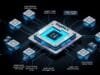
The architecture, thus, ingeniously combines several elements. For instance, Performance-cores (P-cores) tackle demanding applications. Meanwhile, Efficiency-cores (E-cores) handle lighter workloads. They also manage background processes quietly. Then, working in concert, is the dedicated Intel NPU. The NPU features Neural Compute Engines. Specifically, these have hardware acceleration blocks. It also has Streaming Hybrid Architecture Vector Engines. These handle AI operations and general computing. Furthermore, it incorporates Direct Memory Access (DMA) engines. These ensure efficient data transfer. They also provide advanced memory management. Ultimately, this guarantees seamless operation.
How CPU, GPU, and NPU Work Together
The Intel NPU, primarily, excels at sustained AI tasks. It also offers optimal power efficiency. However, “Intel AI Boost” uses a broader strategy. Specifically, it leverages all three “AI engines”. Thus, CPU, GPU, and NPU work collectively. Consequently, this delivers the best speed and efficiency. It also optimizes any given AI workload. Your system dynamically decides. Indeed, it picks the best component for each AI function.
For instance, if an AI task requires rapid bursts of computation, the GPU might lend its parallel processing prowess. Conversely, if it’s a simpler AI routine integrated into a standard application, the CPU might handle it. However, for continuous AI features, the Intel NPU leads. Indeed, examples include advanced video effects or real-time language models. Thus, it ensures consistent performance. Moreover, battery drain is minimal. Ultimately, this intelligent distribution is key. It also unlocks responsive and efficient AI on your laptop. To learn more about these powerful processors, first explore their underlying architecture here: `(/blog/understanding-core-ultra-processors/)`.
Transformative Benefits for Your Laptop Experience
Integrating the Intel NPU, therefore, changes things. Indeed, it’s not just technical specifications. Rather, it fundamentally changes how you interact with your device. Consequently, this dedicated hardware ushers in an era of richer, more intuitive, and highly personalized computing. Advantages range from enhanced security. They also include new features. Notably, these were once only possible via cloud connections.
First, consider the practical implications. Your laptop, for example, becomes a smarter companion. It anticipates needs and executes complex tasks. It does this without breaking a sweat. Moreover, battery depletion is not rapid. Instead, local processing means less waiting. Thus, you spend more time doing. Furthermore, sensitive data remains under your control. This also provides peace of mind. Ultimately, the Intel NPU is truly bringing the future of AI directly to your fingertips.
Enhanced Privacy and Security: Keeping AI Local
The Intel NPU, indeed, profoundly improves data privacy and security. Moreover, this is a significant, often overlooked, benefit. Specifically, AI tasks run directly on your device. Consequently, sensitive information stays local. This includes your face on video calls. It also covers personal or business documents. Thus, data avoids cloud transmission. This consequently mitigates risks with cloud AI. It also prevents data breaches or unauthorized access.
Furthermore, on-device AI processing enables much faster and more robust threat detection. For instance, your laptop monitors for anomalies locally. Therefore, it detects malicious activity instantly. Crucially, there’s no latency from remote server analysis. Consequently, this creates a stronger, more resilient security. It also gives you greater control over your data. Ultimately, you can feel confident that your information stays precisely where it belongs: on your own machine.
Unlocking Peak Performance and Efficiency
A dedicated Intel NPU, therefore, offloads specialized AI tasks. Consequently, this frees up the CPU and GPU. This division of labor, in essence, is akin to having a dedicated express lane for AI traffic. Specifically, the NPU handles specific computations. Then, your CPU and GPU are freed. They consequently focus on their primary roles. This includes running demanding apps. It also includes rendering high-resolution graphics.
Thus, the result? Specifically, a noticeably smoother, more responsive computing experience across the board. Indeed, multitasking becomes effortless, applications launch faster, and your system feels snappier. Moreover, the Intel NPU is very power efficient. It handles AI workloads efficiently. Consequently, your laptop runs advanced features longer. Battery drain is minimal. Therefore, enjoy enhanced AI capabilities all day. You won’t then constantly search for an outlet.
Revolutionary AI-Powered Features You’ll Love
Intel’s NPU, in effect, enables unprecedented AI experiences. Consequently, these will soon be indispensable. They will also enhance your workflow and creative pursuits. For instance, virtual meetings will be professionalized. Digital media can also be transformed. Crucially, these features use on-device AI power. Therefore, expect seamless, real-time enhancements.
Key AI Feature Examples
Smarter Video Conferencing
For example, imagine joining a video call where you always look your best, regardless of your background or lighting. Laptops equipped with an Intel NPU, furthermore, can efficiently handle sophisticated video conferencing enhancements. Specifically, enhancements include intelligent background blurring. Background replacement also maintains privacy. Automatic eye contact correction, moreover, makes you engaged. Image quality also optimizes for your environment. Crucially, all features run smoothly in real-time. They don’t significantly drain your battery. Ultimately, this keeps you professional and polished.
Creative Photo and Video Editing
The Intel NPU, additionally, unlocks possibilities. This therefore helps content creators and everyday users. It furthermore enhances photo and video editing. Indeed, these features move beyond basic filters, allowing for complex, AI-driven manipulations. For instance, perform object detection and removal effortlessly. Similarly, remaster old photos quickly. Upscale videos to higher resolutions. Also, add incredible detail. Apply advanced AI filters for stunning effects. Consequently, this dramatically speeds up workflows and makes professional-grade edits accessible to everyone.
Advanced Audio Processing
The benefits of the Intel NPU, moreover, extend beyond visuals to the auditory realm. Consequently, expect a leap in audio experiences. For example, get highly accurate speech recognition. This then helps transcribe notes or command your system. Whisper transcription also converts quiet speech to text. Furthermore, fascinating applications are emerging. One, for instance, is AI-powered music generation. Thus, compose unique tunes directly on your laptop.
Local Generative AI Capabilities
Running LLMs and generative AI locally, undeniably, is exciting. Crucially, the Intel NPU makes this possible. This consequently allows faster text generation. You get coding assistance and image creation. Moreover, no constant internet or cloud services are needed. Performing tasks locally then boosts speed. It also reinforces privacy. Ultimately, your creative work stays on your device. To dive deeper into generative AI, first check its impacts here: `(/blog/the-rise-of-generative-ai/)`.
Intel’s NPU in Action: Performance Metrics and Market Impact
When it comes to the raw power of these new AI capabilities, indeed, the numbers speak for themselves. Intel’s Core Ultra chips are powerful. They are also known as Meteor Lake. Specifically, they achieve 34 TeraOPS combined AI performance. This spans CPU, GPU, and Intel NPU. Notably, the NPU alone contributes about 11 TOPS. This furthermore showcases its dedicated prowess.
Looking ahead, newer Lunar Lake processors elevate this even further. Specifically, they boast a fourth-generation Intel NPU delivering up to a remarkable 48 TOPS. With CPU and GPU, total power is 120 TOPS. This only applies to Lunar Lake processors. Crucially, it far exceeds Microsoft’s 40 TOPS requirement. This consequently demonstrates Intel’s commitment to AI PCs.
Benchmarking AI Performance
Therefore, let’s compare AI performance capabilities. This spans Intel’s NPU generations. It also includes Microsoft’s industry benchmark. Ultimately, this helps understand the advancements. This data specifically highlights the rapid acceleration in on-device AI processing power.
| Processor Generation | NPU Performance (TOPS) | Total Platform AI Performance (TOPS) | Microsoft Copilot+ PC Requirement (TOPS) |
|---|---|---|---|
| Core Ultra (Meteor Lake) | ~11 | ~34 | 40 |
| Lunar Lake | ~48 | ~120 | 40 |
TOPS: Trillions of Operations Per Second
The Growing AI PC Market
The market for AI-powered PCs is experiencing explosive growth, and Intel is quickly establishing itself as a key player. Initially, Intel was a relatively late entrant. Competitors then included Apple and Qualcomm. However, Intel gained traction rapidly. Q2/24 reports show Intel secured 40% market share. This is in the burgeoning AI PC segment. It consequently underscores strong reception for its NPU. Core Ultra processors also received strong reception. Ultimately, rapid adoption signals an industry shift. Indeed, consumers demand laptops. These then handle advanced AI locally.

A bar chart comparing the AI performance (TOPS) of Intel’s Core Ultra (Meteor Lake) and Lunar Lake NPUs, alongside the Microsoft Copilot+ PC requirement.
The Future of AI on Your Laptop
Currently, AI integration into personal computing is beginning. Thus, the Intel NPU will be a cornerstone. Certainly, dedicated GPUs remain superior for deep learning. They also excel at large-scale AI model development. However, NPUs are emerging as indispensable. They offer crucial efficiency for low-power AI. This then happens directly on client devices. Consequently, it makes advanced AI ubiquitous.
Experts, including Intel, indeed, envision a future. In this future, the NPU will be a third pillar. It works alongside CPU and GPU. Crucially, this powerful triumvirate works in synergy. It thus provides intelligent computing experiences. These experiences are responsive and intuitive. They also adapt to your needs. Ultimately, the goal is seamless integration. Consequently, distinction between units will be invisible. Users will simply enjoy ambient intelligence.
A Seamless, Intelligent Computing Experience
Intel is not just building hardware; rather, it’s actively fostering an ecosystem to support the widespread adoption of its NPU. For instance, Intel pushes for developer engagement. It also offers toolkits like OpenVINO. Through these, developers optimize AI models for Intel hardware. This includes the NPU. Furthermore, Intel collaborates with Microsoft on DirectML API. This consequently ensures Windows apps leverage NPU capabilities.
This effort, therefore, aims for a future with integrated AI. Specifically, AI features will be powerful. They will also integrate seamlessly into your computing life. For example, imagine your laptop intelligently managing background noise. It anticipates creative needs in design software. It also offers real-time coding suggestions. Crucially, you won’t notice the underlying hardware. The Intel NPU, therefore, is a significant step. It leads to an intelligent, personalized computing future.
To learn more about how developers are leveraging this technology, visit the official [OpenVINO](https://docs.openvino.ai/latest/index.html) documentation. For a broader understanding of the technology, furthermore, check out the [Wikipedia page on Neural Processing Units](https://en.wikipedia.org/wiki/NeuralProcessingUnit).
Embracing the AI PC Era
The Intel NPU, consequently, marks a pivotal moment. It thus transforms laptops into intelligent companions. Indeed, Intel dedicated specialized hardware to AI tasks. This consequently unlocked new possibilities. Benefits now include enhanced privacy and performance. Revolutionary features emerge in video conferencing. Also in content creation and local generative AI. Your laptop is no longer just a tool. Instead, it’s an active participant in your digital life. It also offers sophisticated AI capabilities.
AI PCs are becoming the new standard. What AI feature excites you most? How will it integrate into your daily use? Share your thoughts in the comments below!