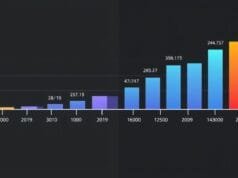

For PC enthusiasts, DDR5 RTX 5090 overclocking is the ultimate quest for peak system performance, pushing components past factory limits. Indeed, this advanced discipline blends technical prowess with a deep understanding of hardware dynamics. Therefore, this guide navigates the intricate world of memory and GPU tuning. It reveals how community wisdom and cutting-edge techniques transform your high-end rig. First, we will explore DDR5 memory optimization, from latency reduction to stability testing. Next, we will focus on the powerful NVIDIA RTX 5090, discussing thermal management, power delivery, and undervolting benefits. Ultimately, understanding these risks and rewards empowers you to achieve peak system performance.

DDR5 RTX 5090 Overclocking: Unlocking Memory Potential for Extreme Gaming
DDR5 memory, therefore, represents a significant technological leap. Notably, it offers substantially improved bandwidth and density, consequently surpassing its predecessor, DDR4. However, crucially, unlocking its full potential, especially for demanding gaming scenarios, involves more than mere installation. As a result, enthusiasts diligently explore DDR5 RAM tuning, aiming to extract extra performance. Specifically, this focus on memory and GPU optimization seeks reduced memory latency and, moreover, increased bandwidth. This, subsequently, translates into noticeable gains, particularly in memory-intensive applications; furthermore, specific CPU-bound gaming scenarios also benefit significantly.

The journey into hardware optimization, consequently, is often meticulous, typically requiring precise PC adjustments. Specifically, this involves meticulously adjusting frequencies, timings, and voltages. While professional overclockers achieve astonishing world records under extreme conditions, the broader community, alternatively, seeks stable “sweet spots.” These, importantly, offer high performance for everyday use in demanding use. Therefore, a judicious balance between raw speed and unwavering reliability is paramount, especially for a daily driver system.
Pushing the Limits of DDR5 RTX 5090 Overclocking: World Records and Daily Gains
High-frequency DDR5 tuning, a pinnacle of DDR5 RAM tuning, showcases truly staggering achievements. Professional overclockers like “Saltycroissant” have remarkably pushed frequencies, setting records exceeding 13,000 MT/s on high-end hardware. This demonstrates the absolute maximum potential inherent in current DDR5 technology for demanding gaming scenarios.

Likewise, “Bl4ckdot” achieved 12,872 MT/s with G.Skill Trident Z5 DDR5 memory. However, these extreme benchmarks, demonstrating advanced system overclocking, typically involve specific setups. They utilize single DIMM configurations, liquid nitrogen cooling, and very loose memory timings. Such setups pushing the limits of hardware optimization are impractical and unsustainable for regular computing.
For the average enthusiast, the goal for DDR5 RAM tuning is a substantial, stable performance uplift, not world records. On modern platforms, such as AMD’s AM5, a “sweet spot” around 6000 MT/s (with tight CL30 timings and Hynix A-die DIMMs) is widely recognized. This balance of speed and latency yields significant real-world improvements for demanding gaming scenarios. Achieving this memory optimization requires meticulous hardware adjustments, including refining primary, secondary, and tertiary timings to enhance memory responsiveness.
Common Principles and Best Practices for DDR5 RTX 5090 Overclocking
Evaluating DDR5 performance, particularly in the context of system optimization, often leads to comparisons with highly tuned DDR4. While DDR5 offers higher theoretical bandwidth, the practical gaming uplift is often modest over an optimized DDR4 setup. Generally, gains are 5-10% at 1080p, where CPU bottlenecks are common. However, this performance gap usually widens at higher resolutions and in memory-intensive titles, making DDR5 RAM tuning more impactful.
Conversely, DDR5 demonstrates a more significant advantage in productivity and creative applications. These tasks demand substantial memory bandwidth. For instance, video editing, 3D rendering, and large dataset analysis often benefit considerably from the increased throughput offered by optimized DDR5 RAM tuning. Many users building new systems currently choose DDR5 for future-proofing, acknowledging the technology is maturing. Its performance advantages will likely grow with further hardware improvements and the introduction of next-generation platforms.
Navigating the Challenges and Risks of DDR5 RTX 5090 Overclocking
Hardware optimization, while rewarding, presents challenges. System stability is key; improper settings cause crashes. Thorough, iterative testing is essential for long-term reliability in your PC performance tuning.
Heat generation is critical for memory and GPU tuning. Dual-rank DDR5 DIMMs produce significant heat at higher voltages. Serious system overclocking often needs active cooling like RAM fans or liquid loops. RGB elements can even impede heat dissipation.
Voltage concerns are prominent, especially on AMD AM5 platforms during DDR5 RAM tuning. VSOC voltage supports memory controller stability, but exceeding thresholds can degrade it. The community advises caution, recommending under 1.30V for daily memory tuning. Consult guidelines and consensus.
Running four DDR5 DIMMs is harder to stabilize at high frequencies for memory optimization than two. Four modules load the CPU’s memory controller more, limiting speeds. For maximum frequency in DDR5 RAM tuning, a two-DIMM configuration is usually preferred.
Essential Stability Testing Tools for DDR5 RTX 5090 Overclocking
Ensuring your DDR5 RAM tuning is stable is as crucial as achieving high speeds. Robust tools verify stability and catch potential errors not manifesting in casual use.
- OCCT (OverClock Checking Tool): This is a versatile diagnostic tool. It includes a highly effective memory-only test. Running OCCT for several hours stresses your RAM. It also identifies instabilities.
- TestMem5 (TM5): This is a favorite among memory overclockers. TM5 is renowned for its thoroughness. It is often used with custom configurations. These include “anta777’s ABSOLUT” and “EXTREME” profiles. Furthermore, these apply aggressive test patterns. They quickly expose even subtle memory errors.
- y-cruncher: While primarily a CPU stress tester, y-cruncher is excellent. Specifically, its VT3 algorithm tests memory stability. This happens under heavy computational load. Its demanding nature often reveals issues. Other tools might miss these.
- Karhu RAM Test: This tool is known for its speed. It is also effective. Karhu RAM Test quickly cycles through memory patterns. Therefore, it is a good choice for initial stability checks.
For PC performance tuning, the community advises testing stability with active GPU load. Run a demanding game or benchmark alongside memory tests. This accounts for increased temperatures and power draw during demanding gaming scenarios and NVIDIA 5090 boosting, exposing instabilities.
DDR5 RTX 5090 Overclocking: Taming the Gaming Beast
NVIDIA’s RTX 5090 represents a pinnacle in consumer graphics card performance, delivering unparalleled frame rates. For enthusiasts, “stock” performance is merely a starting point. Therefore, NVIDIA 5090 boosting extends beyond memory, specifically pushing the GPU core and boosting its GDDR7 memory to new limits. Ultimately, this process extracts greater power for demanding gaming scenarios from this already formidable hardware.

The pursuit of RTX 5090 performance tuning is dynamic; it aims for higher frame rates, smoother gameplay, and faster rendering times in creative applications. Similar to DDR5, the community engages in varied system overclocking endeavors, ranging from extreme, record-setting attempts to practical, daily-use enhancements. All focus on achieving a stable performance uplift through careful hardware adjustments.
Raw Power Unleashed with DDR5 RTX 5090 Overclocking: Records and Real-World Gains
The NVIDIA RTX 5090 has shattered records, including its China-exclusive RTX 5090D variant. One modified RTX 5090D, allowing 1000W TDP and liquid nitrogen cooling, achieved an astonishing 3.4 GHz core clock and 34 Gbps memory speed, demonstrating the raw potential via NVIDIA 5090 boosting.
Similarly, the ASUS ROG Astral GeForce RTX 5090 OC Edition broke multiple system overclocking records. This card boasts a 2580MHz factory boost and advanced cooling for higher frequencies. An extreme Galax Hall of Fame 5090D, with a special Extreme OC BIOS, allowed 2000W, reaching an incredible 3.65 GHz core frequency through dedicated NVIDIA 5090 boosting.
For everyday users, these figures translate into significant performance increases. A well-optimized RTX 5090 setup can be 33% faster than an RTX 4090 at 4K. It delivers up to 60% faster 1% lows, creating much smoother demanding gaming scenarios. Stable manual overclocks (+450 MHz core, +2000 MHz memory) provide a noticeable boost without sacrificing reliability.
Power Consumption and Advanced Thermal Management for DDR5 RTX 5090 Overclocking
The RTX 5090’s immense power comes with a cost: a substantial 575W default Thermal Design Power (TDP). This figure increases significantly with system overclocking. Therefore, robust power delivery is critical, and advanced cooling is essential. For record-breaking attempts, liquid nitrogen is vital to manage the extreme heat generated during NVIDIA 5090 boosting.

Even for daily use with NVIDIA 5090 boosting, a high-quality power supply unit (PSU) of 1000W or more is strongly recommended for stable power delivery. Maintaining optimal temperatures is equally important. While air-cooled cards exist, many enthusiasts opt for liquid-cooled custom cards, investing in more case fans and superior airflow. Even with modest system overclocking, temperatures under load can reach around 52°C, so effective cooling is necessary to prevent thermal throttling and ensure longevity of your gaming setup.
Factory OC vs. Manual DDR5 RTX 5090 Overclocking: The Enthusiast’s Choice
When purchasing an RTX 5090, users encounter “OC Edition” cards with a premium price and minor factory overclock. However, community discussions suggest users often achieve similar, or better, results through manual PC performance tuning.
Tools like MSI Afterburner provide granular control over core clock, memory clock, and voltage. Enthusiasts can fine-tune their specific card, often surpassing conservative factory overclocks through dedicated PC performance tuning. This leads many to conclude the premium for factory OC versions may not be justified due to the “silicon lottery.” A non-OC card can sometimes be a better overclocker. Manual tuning offers a deeper understanding of hardware adjustments and system behavior related to GPU optimization.
The Art of Undervolting in DDR5 RTX 5090 Overclocking
Undervolting is an interesting and increasingly popular practice within the overclocking community. This technique involves reducing the GPU’s operating voltage while maintaining or even slightly improving clock speeds. The primary goal is to enhance efficiency by lowering power consumption and reducing heat generation, often without a significant performance penalty for demanding gaming scenarios.

Users report impressive results; reducing power draw by approximately 20% leads to only a minimal 6% performance loss. Skilled undervolters achieve better-than-stock performance while drawing over 100 watts less power. This attractive balance suits those prioritizing efficiency, lower noise, and reduced stress on cooling, all while retaining excellent performance from their optimized hardware. Undervolting showcases a sophisticated approach to hardware adjustments that goes beyond simply pushing clocks higher.
Long-Term Reliability and Degradation Concerns with DDR5 RTX 5090 Overclocking
Concerns about long-term reliability naturally arise with any high-performance component; degradation is a worry, especially with high-performance system tuning. For the RTX 5090, discussions have surfaced concerning its GDDR7 memory, similar to the RTX 4090’s GDDR6X. The general worry is significant: prolonged high voltages or temperatures could shorten VRAM module lifespan.
However, many seasoned community members and hardware experts argue against common beliefs. They contend that true VRAM degradation from typical overclocking practices voltages is rare and often misunderstood. Issues attributed to degradation are more frequently due to faulty factory modules, temperature sensitivity (performance drops at thermal thresholds), or general system overclocking instability, rather than voltage-induced physical degradation at typical enthusiast settings.
While caution is advised for rigorous system optimization, specific factors accelerate hardware wear. These include extreme, sustained high voltages (far beyond daily use) and dangerously high temperatures. Adhering to reasonable voltage limits and maintaining excellent cooling are the best defenses for long-term hardware adjustments.
Common Overclocking Principles and Best Practices
Whether you tune DDR5 memory or an RTX 5090 graphics card, universal principles underpin successful hardware optimization. Adhering to these best practices significantly enhances your chances of achieving stable, high-performance results and helps safeguard your valuable hardware during system overclocking.

Incremental Adjustments and Meticulous Testing
The golden rule of performance tuning is simple: make small, incremental changes. Avoid drastically increasing frequencies or voltages. Make minor adjustments, then thoroughly test for stability. With DDR5 RAM tuning, increase frequency by 100-200 MT/s or adjust timings one step. For your NVIDIA 5090 boosting, increment core and memory clocks by 10-25 MHz. This methodical approach helps pinpoint instability, making troubleshooting easier.
Essential Monitoring Tools and Robust Power Supply Requirements
Accurate hardware monitoring is indispensable for safe and effective hardware adjustments. Tools like HWInfo, HWiNFO64, and AIDA64 provide comprehensive real-time data: temperatures, voltages, clock speeds, and power consumption. Utilize these to track CPU core, VRM, memory junction, GPU core, GPU hot spot, and VRAM temperatures. Understanding these metrics is critical to prevent overheating and identify bottlenecks for demanding gaming scenarios.
Furthermore, rigorous system tuning inherently increases power draw; for high-end components, a robust PSU is non-negotiable. This applies to both DDR5 and the RTX 5090. A PSU requires ample wattage (often 1000W+ for an RTX 5090 setup) and high efficiency (e.g., 80 Plus Gold or Platinum) to ensure stable voltage delivery under load. Skimping on the PSU risks instability, system crashes, or even component damage, hindering your hardware adjustments.
Optimizing Case Airflow, Cooling Strategy, and BIOS/UEFI Settings
Effective heat dissipation is paramount for system tuning. Even without liquid nitrogen, excellent case airflow is crucial, involving good ventilation, strategic fan placement, and cable management. For serious system overclocking, consider upgrading your CPU cooler (high-end air or AIO liquid) and ensure sufficient GPU breathing room. Optimal cooling maintains lower operating temperatures, key for stability and hardware longevity.
The motherboard’s BIOS/UEFI interface serves as your control center for DDR5 RAM tuning. Enable XMP or EXPO as a baseline, then manually fine-tune settings: frequencies, primary, secondary, tertiary timings, and various voltages (e.g., VCCSA, VDDQ, VDD, VPP for DDR5; VSOC for AMD AM5). Understanding each setting’s impact is vital. For NVIDIA 5090 boosting, a BIOS baseline can set power limits, but most fine-tuning occurs through software utilities for optimal PC performance tuning.
Understanding Risks and Warranty Implications
It’s crucial to acknowledge the inherent risks associated with system performance tuning. While modern hardware has safeguards, pushing components beyond specifications is undoubtedly risky, potentially leading to premature degradation or outright failure. Generally, overclocking voids product warranties, though some manufacturers offer limited grace. Always proceed with caution, accepting you operate outside specifications. Understand that sustained damage is typically at your own risk. Backing up data is wise before undertaking significant system overclocking.
The Overclocking Community: Sharing Knowledge
The enthusiast community is an invaluable resource for aspiring or experienced hardware optimizers alike. Online forums, dedicated Discord servers, and YouTube channels brim with shared experiences, in-depth guides, and troubleshooting advice. Platforms like Overclock.net and various subreddits (e.g., r/overclocking, r/hardware) are popular, while experts like Buildzoid (Actually Hardcore Overclocking) provide extensive information for demanding gaming scenarios. Thus, a wealth of knowledge is readily accessible.
This collaborative environment fosters continuous learning, helping users navigate complex issues in system performance tuning. For example, understanding Hynix A-die timings or troubleshooting an unstable RTX 5090 undervolt are common challenges. Sharing benchmarks, stable settings, and lessons learned is crucial, contributing to a collective knowledge base that empowers enthusiasts to push boundaries safely and effectively through PC performance tuning and hardware optimization.
Conclusion
System performance tuning is more than a hobby; it tests the enthusiast’s drive for maximized performance and hardware understanding. From meticulously engaging in DDR5 RAM tuning to finding the NVIDIA RTX 5090’s sweet spot for NVIDIA 5090 boosting, the journey offers rich learning and tangible rewards. While world records inspire, true value lies in stable, significant performance gains for daily computing and demanding gaming scenarios.
By embracing incremental adjustments, robust monitoring, adequate cooling and power, and engaging with the overclocking community, you can confidently unlock latent power within your high-end PC via this optimization process. The ultimate goal is not just higher numbers; it’s a more responsive, powerful, and satisfying experience. Proceed with knowledge and patience, respecting your hardware. Your system will reward you by delivering unparalleled demanding performance and superior PC performance tuning and hardware optimization.