
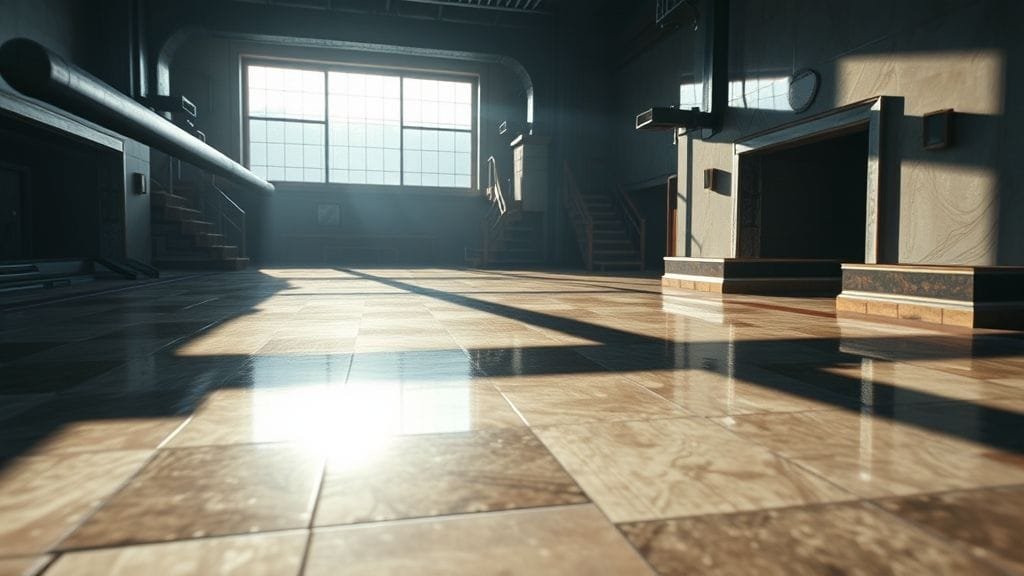
markdownThe pursuit of photorealism in gaming has consistently pushed the boundaries of technological innovation. Indeed, what was once considered a lofty aspiration is now rapidly becoming an interactive reality, driven by a powerful convergence of advanced rendering techniques and artificial intelligence (AI). Consequently, this evolution promises unprecedented immersion, blurring the lines between virtual worlds and our own.
Today’s games are transforming into breathtaking visual spectacles, moving far “beyond the pixels” of yesteryear. Specifically, developers are crafting hyper-realistic environments and characters, breathing new life into interactive entertainment. Yet, this remarkable journey into the future of photorealistic gaming graphics also presents significant technical and creative challenges.
The Quest for Photorealistic Gaming Graphics: A New Era
Defining the New Standard
The gaming industry continually strives for visuals that captivate and convince players. Consequently, modern advancements are setting a new standard for graphical fidelity, creating experiences previously unimaginable. Indeed, this quest for authentic representation demands sophisticated tools and innovative approaches.
Achieving true photorealism involves meticulously simulating the physical world. To this end, developers leverage cutting-edge technologies to reproduce light, textures, and atmospheric conditions with astonishing accuracy. Ultimately, the resulting visuals immerse players deeply within their chosen digital realms.
Beyond Traditional Rendering: The Rise of Ray Tracing
Ray tracing represents a fundamental shift in how games generate visuals. Specifically, this sophisticated technology simulates the physical behavior of light, tracking individual light rays as they interact with objects in a scene. Consequently, the result is dramatically more realistic shadows, reflections, and global illumination.
Its widespread adoption marks a significant milestone. Indeed, both PC GPUs, like NVIDIA’s RTX series and AMD’s RDNA 2 architecture, and current-generation consoles, including the Xbox Series X and PlayStation 5, now feature hardware-accelerated ray tracing. Thus, this capability has profoundly elevated the standard for visual fidelity in photorealistic gaming graphics. Moreover, it enables scenes to possess a natural depth and realism that traditional rasterization techniques simply cannot match. For instance, imagine reflections on a polished floor or the subtle diffusion of light through a dusty room; ray tracing renders these effects with stunning authenticity. You can learn more about its technical intricacies on [Wikipedia’s Ray Tracing page](https://en.wikipedia.org/wiki/Raytracing(graphics)).

Unleashing Immersion with Volumetric Effects
Volumetric rendering is another crucial technology in the drive for photorealistic gaming graphics. Specifically, it realistically depicts atmospheric phenomena such as fog, smoke, and underwater environments. Consequently, these effects add immense depth and realism, making game atmospheres feel tangible and dynamic.
Imagine moving through a dense, swirling mist or observing sunlight filtering through murky water. Indeed, volumetric effects make these scenarios visually convincing. Unreal Engine’s Nanite geometry system further enhances this capability. Furthermore, Nanite allows developers to construct open worlds with hundreds of millions of triangles, managing incredibly complex scenes. This massive geometric detail also accelerates ray tracing performance for these intricate environments, leading to breathtaking landscapes and architectural marvels.
AI’s Pivotal Role in Photorealistic Gaming Graphics
AI as a Core Enabler
Artificial intelligence has become an indispensable ally in the pursuit of photorealism. AI not only helps achieve incredibly realistic visuals but also optimizes performance, making these demanding graphics playable on a wider range of hardware. In fact, its integration extends far beyond simple upscaling, touching various aspects of the graphics pipeline.
AI algorithms can learn from vast datasets, identifying patterns and generating highly convincing visual elements. Consequently, this revolutionary approach allows for efficiencies and quality improvements that manual development alone cannot achieve. Ultimately, the symbiotic relationship between AI and rendering technologies is truly defining the future of photorealistic gaming graphics.
Deep Learning Super Sampling (DLSS): AI Upscaling Revolution
NVIDIA’s Deep Learning Super Sampling (DLSS) technology stands as a prime example of AI’s transformative power in gaming. Now in its fourth iteration (DLSS 4), this AI-powered solution intelligently upscales lower-resolution images to higher resolutions. Indeed, this process significantly boosts frame rates while simultaneously improving overall image quality.
DLSS is remarkably efficient; up to 15 out of 16 pixels displayed on screen can potentially be AI-generated. This means the GPU renders fewer pixels, then an AI model intelligently reconstructs the final high-resolution image, filling in the missing details. Consequently, the result is a smooth, high-fidelity experience without the severe performance hit traditionally associated with rendering at native high resolutions. Moreover, such innovation makes high-end photorealistic gaming graphics accessible to more players.

Neural Rendering’s Expanding Horizon
Beyond upscaling, neural rendering encompasses a broader range of AI applications integrated directly into the graphics pipeline. Specifically, this advanced form of AI-driven rendering is accelerating various processes, enhancing visual fidelity, and reducing computational load. Thus, it promises to unlock new levels of realism and efficiency for photorealistic gaming graphics.
Neural networks are learning how light interacts with surfaces, how textures behave, and how to compress complex data more effectively. In turn, this deep learning approach allows for optimizations and visual enhancements that traditional methods struggle to achieve. Therefore, the continuous evolution of neural rendering points towards a future where AI handles increasingly complex graphical tasks.
Key Neural Rendering Techniques
Key Components of Neural Rendering
Neural Shaders: Optimizing the Graphics Pipeline
Neural shaders integrate neural networks directly into the graphics pipeline. As a result, this integration significantly accelerates the processing of graphical data, leading to enhanced image quality and higher frame rates. Furthermore, neural shaders intelligently reduce system resource usage, making games more efficient.
Microsoft is actively supporting this innovation by adding cooperative vector support to DirectX. Consequently, this move aims to enable neural shading capabilities across the entire gaming industry, fostering widespread adoption. With neural shaders, game engines can render more complex lighting and material interactions without overwhelming hardware.
Neural Materials and Texture Compression
AI is also revolutionizing the creation and management of game assets. Indeed, neural materials and texture compression leverage AI to compress complex shader code and textures. Thus, this allows for the use of film-quality assets within games while significantly reducing their memory footprint and processing demands.
For instance, NVIDIA’s RTX Neural Texture Compression can offer up to an 8x VRAM improvement at similar visual fidelity. Consequently, this breakthrough means developers can include incredibly detailed textures and materials without encountering prohibitive hardware requirements. Therefore, it opens up new possibilities for the visual richness of photorealistic gaming graphics.
AI-Driven Content Generation
AI-Powered Animation: Bringing Characters to Life
The animation of characters is receiving a significant boost from AI. Specifically, AI-powered animation enables dynamic, human-like movements that adapt seamlessly to the environment and player interaction. Indeed, this marks a substantial departure from traditional “canned” animations, which are often repetitive and less reactive.
Characters can now exhibit more natural gaits, react realistically to terrain, and even express subtle emotions through movement. Ultimately, this level of fluidity and adaptability enhances character believability, making interactions feel more authentic and contributing to overall immersive photorealistic gaming graphics. Furthermore, the goal is to move beyond predictable patterns and towards truly intelligent, responsive digital beings.
Procedural Generation: Worlds Without End
AI-driven procedural generation is a game-changer for world-building. Indeed, this technology creates vast, unique landscapes, quests, and entire game worlds on the fly. By automating the generation of content, it drastically reduces manual development effort, offering players endless exploration opportunities.
From sprawling forests to intricate cave systems, AI can craft diverse environments that feel organic and distinct. This not only empowers smaller studios to create expansive games but also ensures that every playthrough can offer fresh discoveries. Consequently, the ability to generate complex, believable worlds dynamically is crucial for the future of photorealistic gaming graphics and open-world experiences.
The Impact: Immersive Worlds and Blurred Lines
These relentless advancements are driving a profound revolution in gaming. Specifically, they are pushing the boundaries of realism, creating hyper-realistic environments and characters that breathe unprecedented life into virtual worlds. Ultimately, the overall goal is to forge truly immersive experiences.
In such experiences, the line between virtual worlds and reality becomes increasingly blurred. Consequently, players are drawn deeper into narratives and interactions, perceiving the digital world as a credible, living space. Indeed, this level of immersion is the ultimate aspiration for developers creating cutting-edge photorealistic gaming graphics.
Industry leaders recognize this transformative potential. Tim Sweeney of Epic Games, for example, believes that environmental photorealism will be largely achieved within a decade. However, he also emphasizes that true realism requires solving complex problems in simulating human intelligence, animation, speech, and lip-syncing. Therefore, these areas will demand ongoing research and development to fully realize the vision of indistinguishable-from-reality visuals. To learn more about Epic Games’ vision, visit [Epic Games’ official site](https://www.epicgames.com/).

Navigating the Challenges of Photorealistic Gaming Graphics
Understanding the Obstacles
Despite the rapid and impressive progress, achieving and sustaining photorealism in interactive games presents several significant hurdles. Indeed, the journey to truly indistinguishable-from-reality visuals is fraught with technical, economic, and creative complexities. Therefore, developers must carefully navigate these challenges to deliver compelling experiences.
Overcoming these obstacles requires continuous innovation, smart optimization, and a clear understanding of player expectations. Ultimately, the balance between visual ambition and practical implementation is always a delicate one. Thus, the path to ultimate photorealistic gaming graphics is not without its intricate turns and demanding climbs.
Computational Hurdles and Hardware Demands
One of the most immediate challenges is the sheer computational demand. Specifically, pushing graphical boundaries to render stunning photorealistic gaming graphics requires immensely powerful hardware. While AI-assisted techniques like DLSS help to optimize performance, the raw processing power needed for real-time, high-fidelity photorealism remains a significant hurdle.
Graphics cards, processors, and memory must work in concert to render incredibly complex scenes, lighting, and textures at smooth frame rates. This places a premium on high-end gaming rigs, potentially limiting access for players with less powerful systems. Furthermore, the constant demand for more processing power drives hardware innovation, but also creates a barrier.
Development Costs and Time Investment
Creating photorealistic graphics is an incredibly resource-intensive endeavor. Indeed, it demands substantial time, significant financial investment, and meticulous attention to detail from developers. Consequently, every texture, every model, every lighting effect must be crafted with painstaking precision.
This can be particularly challenging for independent studios with limited budgets and manpower. Moreover, the cost of hiring skilled artists, animators, and engineers capable of producing such high-fidelity assets is astronomical. Consequently, only larger studios with extensive resources can typically afford to pursue the pinnacle of photorealistic gaming graphics.

The Uncanny Valley: A Perceptual Minefield
As graphics relentlessly approach human likeness, there is a distinct risk of falling into the “uncanny valley.” Specifically, this phenomenon occurs when characters appear unsettling, creepy, or even repulsive, rather than truly realistic or appealing. Often, this effect is triggered by imperfections in animation, subtle facial expressions, or inconsistencies in rendering.
The closer a digital human gets to reality without quite reaching it, the more jarring the imperfections become to the human eye. Overcoming the uncanny valley requires incredibly nuanced and precise animation, particularly for facial expressions and subtle body language. This remains one of the most difficult challenges in achieving convincing photorealistic gaming graphics.
Balancing Fidelity with Performance
Developers constantly face the critical task of balancing visual fidelity with playable performance. While the desire to push graphical limits is strong, performance cannot be sacrificed for visual grandeur alone. Indeed, a game, no matter how beautiful, quickly becomes frustrating if it runs poorly.
Optimization techniques are crucial to ensure smooth gameplay on a wide range of hardware configurations. This involves making intelligent compromises, streamlining assets, and leveraging technologies like AI upscaling effectively. Ultimately, the goal is to deliver impressive photorealistic gaming graphics without compromising the core interactive experience.
The Enduring Value of Artistic Style
While photorealism represents a dominant and captivating trend, it is important to acknowledge that there will always be a place for unique and stylized art directions. For instance, many beloved games prioritize artistic expression, distinctive aesthetics, and creative interpretation over pure visual replication.
Artistic choices can often convey emotion, establish mood, and define a game’s identity in ways that hyper-realism might not. For example, think of vibrant, hand-drawn styles or minimalist designs that purposefully deviate from reality. The future of gaming graphics is diverse, and while photorealistic gaming graphics push technical boundaries, artistic style ensures a rich tapestry of visual experiences.
The Road Ahead for Photorealistic Gaming Graphics
The journey to indistinguishable-from-reality visuals is undeniably complex. Indeed, it involves constant innovation, a commitment to overcoming technical hurdles, and a deep understanding of artistic intent. Crucially, the interplay between advanced rendering and AI will continue to be the driving force.
As hardware evolves and AI models become more sophisticated, the dream of truly living, breathing virtual worlds moves closer to realization. Furthermore, future iterations of technologies like ray tracing, neural rendering, and procedural generation will undoubtedly unlock even greater levels of visual fidelity. The ongoing innovations from companies like NVIDIA, AMD, and Microsoft are steadily paving the way for increasingly immersive and breathtaking gaming experiences, redefining what we expect from photorealistic gaming graphics. Specifically, look for breakthroughs in real-time global illumination and even more dynamic AI-driven content generation. For instance, new research in areas such as real-time neural radiance fields holds immense promise for rendering complex scenes with unparalleled realism and efficiency, as explored in various computer graphics research papers (e.g., [read more on advancements in computer graphics](https://www.nature.com/articles/s41586-023-06606-w)).

Conclusion
The future of photorealistic gaming graphics extends far “beyond the pixels,” evolving through a powerful, symbiotic relationship between advanced rendering technologies and the transformative power of AI. Ray tracing offers a physically accurate simulation of light, while neural rendering, exemplified by innovations like DLSS and neural shaders, optimizes performance and enhances visual fidelity. Collectively, these advancements create hyper-realistic environments and characters, pushing the boundaries of immersion.
While the journey toward indistinguishable-from-reality visuals is fraught with computational, developmental, and creative challenges, the continuous innovations from industry leaders are steadily paving the way. Consequently, players can anticipate increasingly immersive and breathtaking gaming experiences that redefine the very essence of interactive entertainment. Ultimately, the quest for ultimate photorealistic gaming graphics continues, promising an exciting future for gaming.