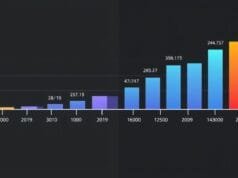


The Smartphone Market Growth 2025 is defying earlier predictions of market saturation. For years, industry observers anticipated stagnation. However, fresh data now confirms an undeniable return to expansion. Indeed, Q2 2025 figures show positive year-over-year growth in shipments and revenue. This resurgence, therefore, signals a pivotal shift. The industry now embraces premiumization, integrates AI, and prioritizes consumer experience. Consequently, this article explores these dynamics, key players, and future challenges.
The Resilient Rebound: Fueling Global Smartphone Market Expansion in Q2 2025
The smartphone industry performed strongly in Q2 2025, clearly demonstrating its resilience. The market, which previously faced contraction, has now fully recovered, establishing a positive trajectory for global smartphone market expansion. Indeed, this rebound is not just about units shipped; rather, it also reflects the rising value consumers see in their mobile devices, contributing significantly to the smartphone industry outlook.
Q2 2025 Mobile Device Sales Forecast: A Closer Look at the Numbers
Global smartphone shipments showed a positive, though varied, picture in Q2 2025, providing insights into mobile phone market trends 2025. Initially, data from IDC indicated a modest 1.0% year-over-year (YoY) increase, reaching 295.2 million units. Significantly, this figure represented a big improvement over past periods and surpassed earlier conservative forecasts for mobile device sales forecast. Counterpoint Research, conversely, reported a healthier 3% YoY growth. TechInsights observed an even stronger 4% YoY increase, exceeding expectations and highlighting the market’s momentum, which is positive for the overall sector.

These figures naturally show slight differences; nevertheless, such variations often stem from diverse data collection methods and varying “smartphone” definitions. Despite these discrepancies, one fact remains clear for the handset market performance: an unmistakable upward trend. This collective agreement on positive growth is very important, as it signals a clear break from declines, boosting confidence across the entire value chain. It suggests stronger underlying demand and provides a more stable base for future global smartphone market expansion. This positive shift contributes robustly to the smartphone industry outlook.
Revenue and ASP: Key Indicators for Smartphone Market Growth 2025
Revenue and Average Selling Price (ASP) showed even stronger growth than shipment numbers, serving as key indicators of the industry’s upward trajectory. Indeed, global smartphone revenue was exceptionally strong in Q2 2025, even despite modest shipment growth. Counterpoint Research reported a major milestone: global smartphone revenue topped $100 billion for the first time ever in a second quarter. Furthermore, this represented a substantial 10% YoY increase, clearly highlighting a key industry shift as the market moves towards higher-value transactions, shaping the smartphone industry outlook.
The global ASP also reached an unprecedented Q2 peak, rising by 7% YoY to $347. Crucially, this significant increase confirms consumers’ willingness to invest more in their devices, which is a positive sign for sustained growth. TechInsights, similarly, backed this trend, reporting that wholesale revenue climbed 3.8% in Q2 2025. Therefore, many vendors are now making a strategic pivot, emphasizing value creation over sheer volume to capitalize on the mobile device sales forecast.

Vendors are delivering advanced features, superior performance, and premium designs. Collectively, these elements justify higher price points, thereby maximizing profitability and supporting global smartphone market expansion. Moreover, this approach ensures long-term sustainability in a mature market. This strong growth in revenue and ASP, consequently, indicates a healthy market where innovation is rewarded and consumers benefit from more sophisticated technology, further enhancing the positive smartphone industry outlook.
Driving Forces Behind the Upswing: Propelling Smartphone Market Growth 2025
The smartphone market’s positive trend is not merely a recovery cycle; rather, it stems from deep strategic and technological changes propelling the current market upswing. Two main forces are clearly at work: premiumization and widespread Artificial Intelligence (AI) integration. Together, these are reshaping consumer expectations and influencing what vendors offer, making them strong drivers for continued global smartphone market expansion.
Premiumization: A Key Trend for Smartphone Market Growth 2025
“Premiumization” is a key part of the industry’s strategy for the industry. Vendors now focus on creating high-value devices that command higher prices and, simultaneously, deliver better user experiences. This new approach, consequently, replaces the old strategy, which simply pursued market share through volume sales. This shift is very clear and crucial for the smartphone industry outlook; indeed, we see it in highlighted features and advanced designs across the industry.

Consumers actively seek devices offering more than basic functions. For example, they desire enhanced camera systems, faster, more efficient processors, and superior display technologies like high-refresh-rate OLED panels. Premium designs, often using durable materials, add to a sense of luxury. Moreover, a greater focus on sustainability, with longer software support cycles, increases perceived value, supporting this growth. Consequently, consumers view their smartphone as a long-term investment.
This strategic shift receives key support from market drivers. Specifically, promotions, interest-free financing, and attractive trade-in programs lower entry barriers for higher-priced models. This allows more consumers to upgrade. Ultimately, when replacing old smartphones, users often choose upgraded experiences, further boosting the premium segment’s strong growth and contributing to global smartphone market expansion.
Artificial Intelligence: Shaping Mobile Phone Market Trends 2025
Artificial Intelligence (AI), especially Generative AI (GenAI), is fast becoming a key smartphone differentiator in 2025, significantly shaping mobile phone market trends 2025. Initially a niche feature, it is rapidly becoming a core expectation. IDC predicts over 370 million GenAI-enabled smartphones will ship globally this year, comprising 30% of the total market. This widespread adoption, consequently, is changing user interaction with devices and reshaping overall expectations.
GenAI on smartphones offers many advanced capabilities, driving forward the sector. Users can expect sophisticated on-device photo/video editing tools for content enhancement and object removal. In addition, personal assistants are becoming more intuitive. Real-time translation capabilities are also greatly improving. Moreover, on-device AI processing boosts privacy by handling sensitive data locally, reducing cloud computations.
This technological shift is not just for ultra-premium flagship devices. GenAI integration will quickly reach mid-range models, expanding powerful features to more users and positively impacting the mobile device sales forecast. Forecasts suggest GenAI-enabled smartphones will capture over 70% of the market by 2029, making AI a standard, vital feature. Samsung, for example, already champions “Galaxy AI,” and Apple is expected to reveal significant AI capabilities soon. AI integration rethinks the user experience, making smartphones much more intelligent, personal, and capable.
Healthy Replacement Demand: Sustaining Global Smartphone Market Expansion
The market’s steady growth depends on “healthy replacement demand,” which is a fundamental cycle sustaining global smartphone market expansion. Smartphones have a finite lifespan, despite increasing durability. As devices age, batteries degrade, processors slow down, and software support eventually fades. This natural obsolescence, consequently, drives the need for upgrades. In 2025, this demand is especially strong, since many consumers are replacing devices bought during the pre-pandemic boom, significantly contributing to healthy sector performance.
Major tech advancements constantly create reasons to upgrade, influencing mobile phone market trends 2025. These include improvements in camera technology, battery efficiency, and display quality. Furthermore, AI capabilities are now critically important. An older device may still work; however, it cannot match the performance, security, or features of a new model. This ensures a steady flow of potential buyers, especially with premiumization’s appeal and AI’s benefits, which are key for the overall smartphone industry outlook. The desire for better performance and new innovations ultimately drives sales and enhanced user experiences ensure ongoing replacement demand.
Brand Dynamics and Regional Hotspots in the Smartphone Industry Outlook
The global smartphone market presents a complex picture, combining competing brand strategies with diverse regional markets. While overall market expansion is anticipated, performance varies greatly across different players and regions. Indeed, this reflects successful brand positioning, as well as localized economic conditions, shaping the overall smartphone industry outlook.
Regional Variances: Diverse Factors in Global Smartphone Market Expansion
Apple continued to show formidable revenue strength, reporting a substantial 13% YoY increase, significantly impacting global smartphone market expansion. Apple captured 43% of global smartphone revenue, highlighting its brand loyalty and premium product strategy. iPhone models consistently achieved the highest ASPs, reaching $879 in Q2 2025. Consumers’ willingness to invest, driven by perceived quality and superior design, fuels Apple’s market dominance.
Samsung, however, remained the leader in global smartphone shipments, playing a key role in the industry’s performance. While Apple focused on premium revenue, Samsung built a broader market presence, offering devices across many price segments. Its revenue grew by a healthy 4% YoY, indicating strong sales across its diverse portfolio, including flagship Galaxy S series and popular A series models. Innovative foldable technology further strengthens Samsung’s market position.

Beyond these two leaders, other brands compete fiercely, contributing significantly to global smartphone market expansion. Xiaomi, OPPO, Vivo, and Transsion, for example, excel in emerging markets where affordability and value for money are crucial. These brands offer feature-rich devices with highly competitive price points, helping them expand where smartphone use continues to grow.
Looking Ahead: Smartphone Market Growth 2025 and Beyond
The global smartphone market is not uniform; instead, Smartphone Market Growth 2025 varies greatly across many regions. Each region, consequently, faces unique drivers and challenges. The U.S. smartphone market, for example, performed strongly in Q2 2025. Counterpoint Research projects 9% year-over-year growth, largely boosted by aggressive carrier promotions, attractive interest-free financing plans, and generous trade-in programs. These incentives, therefore, make upgrading to premium devices easier, driving strong demand in this mature market, shaping mobile phone market trends 2025.
Emerging markets also show substantial growth, especially in MEA, India, and LatAm, significantly contributing to global smartphone market expansion. IDC noted strong double-digit growth for Apple in these regions, showing the brand’s appeal is growing beyond developed areas. Other manufacturers find large volume opportunities here, as smartphone penetration continues to climb. This allows consumers to upgrade from feature phones or acquire their first or second smartphone, driving the overall smartphone industry outlook. This trend is driven by affordable, feature-rich devices specifically tailored to local preferences.

Looking Ahead: The Full-Year Smartphone Market Growth 2025 Forecast
China’s smartphone market is quite complex. Despite its huge size, IDC reported a 1% drop in Q2 2025 shipments, and a similar decline is forecast for the whole year for handset market performance. Several factors cause this contraction: phasing out of government subsidies, economic difficulties slowing consumer spending, and intense domestic competition among local brands. China remains a crucial market; however, its unique dynamics demand highly tailored strategies from manufacturers to navigate the challenges to market expansion.
Europe is another mature market. It faces specific challenges; yet, it also shows promising signs of stabilization, indicating evolving mobile phone market trends 2025. Economic conditions still affect sales, and fierce competition from Asian brands plays a big role. A strategic focus on premiumization, coupled with integrating advanced AI features, should aid recovery. These regional differences highlight a key point for the smartphone industry outlook: manufacturers must adopt highly localized strategies, considering each market’s unique economic conditions, consumer preferences, and competitive environment to achieve lasting success.
Divergent but Positive Outlooks for Smartphone Market Growth 2025
The Smartphone Market Growth 2025 outlook is mostly positive. However, emerging niche segments also shape it, and persistent macroeconomic challenges play a role too. These elements, consequently, add significant complexity, requiring strategic navigation from industry players in the global smartphone market expansion.
The Rise (and Reality) of Foldable Smartphones
Foldable smartphones are an exciting and distinct innovation, influencing mobile phone market trends 2025. After years in a nascent stage, the foldable market now shows clearer growth. Shipments are expected to rise by 6% YoY in 2025, up from 4% growth seen in 2024. This significant uptick stems from improved designs, better durability, and a wider range of offerings from manufacturers like Samsung, OPPO, Huawei, and Xiaomi. Samsung, for instance, offers its popular Galaxy Z Fold and Z Flip series.

Despite their recent growth, foldables will likely remain a niche segment within the smartphone industry outlook. Forecasts suggest they will make up less than 3% of total smartphone shipments by 2029. High price is the main barrier, putting them out of reach for most consumers. While durability has improved, concerns about flexible display longevity still exist. Finally, there is currently no “killer app” that truly leverages the foldable’s unique design, limiting their impact on overall sector growth.
This combination of factors makes justifying the premium cost hard compared to a traditional smartphone. While prices will decrease and technology will keep advancing, making foldables more robust and accessible, for now, they remain a premium, aspirational product.
Economic Headwinds and Geopolitical Uncertainty
Despite positive trends for the smartphone market, the smartphone industry faces ongoing challenges. It is not immune to global economic and geopolitical forces. Economic uncertainty still persists, including fluctuating inflation rates and higher interest rates. Consumer spending, consequently, remains cautious in many regions. These factors create significant challenges, particularly affecting demand in lower-end market segments where consumers are more sensitive to price increases and economic instability, thereby influencing handset market performance.
Geopolitical tensions also cast a big shadow over global smartphone market expansion. Tariff volatility is a key example; Counterpoint Research cited U.S. tariff uncertainties, which affected their revised 2025 forecast. Such volatility can disrupt supply chains severely and increase manufacturing costs significantly, ultimately impacting retail prices and consumer demand. These uncertainties make long-term planning very difficult for manufacturers and can also cause sudden market shifts, influencing the overall smartphone industry outlook. Companies, therefore, must build strong resilience into their supply chains and diversify manufacturing bases to mitigate these risks effectively.
Innovation vs. Saturation
The smartphone market, being fairly mature, constantly struggles with a key tension: the balance between continuous innovation and perceived saturation, impacting the market’s performance. Consumers, having already owned many smartphone generations, are therefore harder to impress. Manufacturers face immense pressure to introduce truly compelling features that clearly justify an upgrade; small improvements are no longer enough. AI, for instance, is a clear differentiator in 2025, and foldables offer a new form factor. However, core functionalities are mostly established, challenging mobile phone market trends 2025.
This ongoing challenge forces companies to invest heavily in R&D. Their focus includes advanced battery life, ultra-fast charging speeds, and highly sophisticated camera capabilities that expertly leverage computational photography, influencing the mobile device sales forecast. The market now demands more than new features; rather, it requires meaningful innovations that solve real user problems and tangibly enhance experiences. Navigating this balance, consequently, is crucial to maintain consumer interest and drive future sales growth, essential for the smartphone industry outlook.
Looking Ahead: Full-Year 2025 Forecasts and Beyond
Q2 2025 data paints a clear picture, showing a resilient and evolving market. Attention now shifts to the full-year outlook and what lies beyond 2025 for Smartphone Market Growth 2025. Market research firms have slightly different forecasts for the year; however, a common theme emerges: cautious optimism paired with strategic evolution for global smartphone market expansion.
Divergent but Positive Full-Year Outlooks
Market intelligence providers expect continued, albeit modest, growth for 2025 global smartphone shipments, impacting the mobile device sales forecast. IDC, based on Q2 observations, now forecasts 1.0% YoY growth, equating to 1.24 billion units worldwide. This figure significantly improves their earlier 0.6% projection, reflecting a rise in confidence. Counterpoint Research is also positive; still, it has slightly lowered its expectations.
Counterpoint specifically revised its 2025 forecast down from an earlier 4.2% to 1.9% YoY. This adjustment came from lingering U.S. tariff uncertainties, demonstrating how macro factors can sway even hopeful projections for the smartphone industry outlook. TechInsights, in sharp contrast, remains more bullish, projecting a strong 4% YoY rebound in global smartphone sales for 2025, a positive sign for mobile phone market trends 2025.
These varied forecasts, indeed, reveal a clear consensus: the smartphone market should grow throughout 2025, ensuring positive handset market performance. While the exact pace of expansion is debated, and global economic conditions continue to affect it, the overall trend is clearly positive. The industry has moved past recent downturns and is now in a phase of measured ascent. This shows a healthier market, driven by renewed consumer interest and strategic product development.
Key Trends Shaping the Future
AI as a Baseline Expectation: Generative AI is rapidly moving from novelty to a fundamental expectation, greatly influencing Smartphone Market Growth 2025. By 2029, AI will be in 70% of smartphones, making on-device AI standard. This will, consequently, drive new applications and personalized digital interactions, shaping mobile phone market trends 2025.
Sustained Focus on Sustainability and IoT Integration: Consumers increasingly prioritize sustainable, ethical, and easily-repairable devices. Manufacturers are adopting eco-friendly materials and modular designs, moving toward a circular economy. Simultaneously, smartphones will serve as central hubs for expanding IoT devices, enhancing connectivity and intuitive control for smart homes, wearables, and connected vehicles, further boosting global smartphone market expansion.
AR/VR Convergence and Form Factor Diversification: Standalone AR/VR headsets are emerging; however, smartphones remain vital for AR/VR development and adoption due to advanced cameras and powerful processors. Furthermore, while foldables stay niche, new form factor exploration continues. Rollable displays and modular designs may emerge, thereby continually pushing smartphone boundaries, positively affecting the smartphone industry outlook.

Strategic Adaptations for Vendors
Smartphone vendors must adapt strategically to thrive in the evolving landscape of Smartphone Market Growth 2025. This requires a delicate balance: fostering cutting-edge innovation while ensuring cost-effectiveness to appeal to diverse markets. Tailoring products and marketing efforts is crucial to address regional demands, such as camera preferences in Asia or durability requirements in rugged environments, influencing the mobile device sales forecast. Leveraging software and services, moreover, is vital to generate recurring revenue, moving beyond single device sales, and will be an increasingly important part of business models, ultimately helping build stronger customer ecosystems and enhancing overall handset market performance.
Conclusion
The global smartphone market in 2025 is not stagnant; instead, it shows dynamic evolution and resurgence, clearly indicating strong Smartphone Market Growth 2025. Q2 provided clear evidence of positive shipment growth, complemented by significant increases in revenue and ASPs. This strong upward momentum stems from a strategic pivot, focusing on premiumization. Consumers are willing to invest in devices that offer superior design and advanced features.
Artificial Intelligence (AI) integration is perhaps the most significant differentiator, shaping mobile phone market trends 2025. Generative AI, in particular, defines this new era. AI-enabled smartphones will redefine user interaction, offering unprecedented personalization, efficiency, and new capabilities. Despite advancements, challenges remain, including economic uncertainties and geopolitical shifts. Pressure for continuous innovation is also inherent, influencing the smartphone industry outlook.
Still, the industry adapts with resilience. Full-year forecasts for 2025 consistently point to sustained growth, though its pace will vary, supporting the positive mobile device sales forecast. This foundational year marks a crucial period. The smartphone is becoming more than a mere communication tool; it is transforming into a powerful, intelligent hub at the center of our connected lives, poised for continued innovation and future expansion.