Nvidia has consistently pushed the boundaries of visual computing and artificial intelligence. For years, they have set the standard. Indeed, this applies to gaming, professional design, and data centers. The Nvidia Latest Series of products represents another monumental leap forward. Specifically, these new offerings use the Blackwell architecture. Consequently, they improve performance and redefine industries.
Explore Nvidia’s GPU transformation. For instance, it enables breathtaking gaming experiences. Moreover, it fuels complex AI research. We’ll unpack the innovations that make these new series stand out. Ultimately, they deliver unprecedented power, intelligence, and efficiency. Therefore, this covers consumer, professional, and data centers. Get ready to understand the true impact of this next-generation technology.
The Dawn of a New Era: Understanding Nvidia’s Blackwell Architecture
At the heart of Nvidia’s recent advancements lies the revolutionary Blackwell architecture. First unveiled in March 2024, Blackwell is more than just an incremental update. Instead, it’s a complete reimagining of GPU design. Furthermore, it is engineered for generative AI demands. Think of it as the brain behind the brawn. Specifically, it provides foundational intelligence. Thus, this powers all new capabilities.
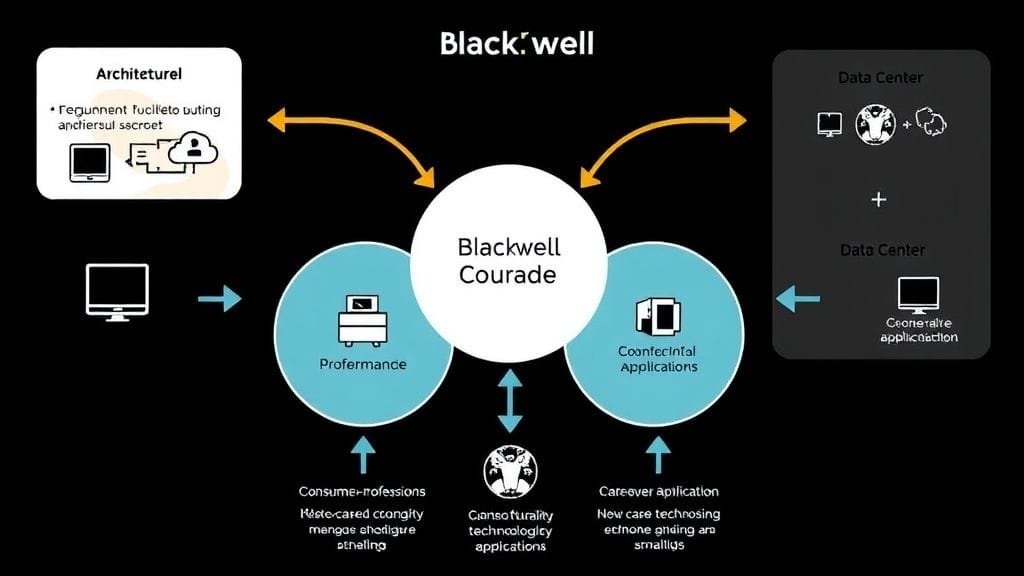
Indeed, this architecture is not confined to one type of product. Instead, it forms a cohesive platform. It scales from data center supercomputers. Moreover, it reaches high-performance GPUs in your rig. Consequently, this unified approach ensures benefits. Specifically, innovations for one segment help others. Ultimately, it creates a powerful ecosystem. Understanding Blackwell is key to appreciating the full scope of the Nvidia Latest Series.
Blackwell: Powering Performance Across the Spectrum
Blackwell introduces several critical innovations. For example, it features enhanced processing units. Specifically, these include fourth-generation RT Cores. As a result, they make real-time ray tracing lifelike. Furthermore, fifth-generation Tensor Cores are specifically optimized for deep learning tasks, drastically accelerating AI computations. Consequently, this combination means everything, from game graphics to complex simulations, runs faster and with greater fidelity.
The integration of these specialized cores directly impacts performance across all of Nvidia’s new product lines. Indeed, Blackwell provides underlying horsepower. For instance, this helps gamers. Moreover, it aids professionals. Furthermore, scientists running AI models also benefit. Ultimately, its design represents a strategic pivot towards a future where AI and accelerated computing are inseparable.

For Gamers & Creators: Unpacking the Nvidia Latest Series Consumer GPUs
For many, Nvidia is synonymous with gaming. The company’s consumer graphics cards have long been the gold standard for enthusiasts and professionals alike. Furthermore, the Nvidia Latest Series for consumers continues this legacy. Specifically, it introduces groundbreaking technology. Thus, this redefines what’s possible. These advancements are designed to make your games look better, run faster, and create immersive new experiences.
Wonder about the next evolution of gaming and content creation? Indeed, these cutting-edge GPUs hold the answer. Nvidia meticulously crafted these cards. Consequently, they deliver unparalleled performance. Therefore, be ready for demanding titles and creative apps.
The GeForce RTX 50 Series: Pushing Gaming Boundaries
The most recent highlight in consumer graphics is the GeForce RTX 50 series. Officially announced at CES 2025 and launched in January 2025, this series immediately captivated the industry. The RTX 50 series succeeds the RTX 40 series. Specifically, it uses Blackwell architecture. Consequently, this promises a new era for gaming and creation.
Imagine playing your favorite games at unprecedented frame rates and visual fidelity. Indeed, this series makes that a reality. Moreover, it ushers in several “firsts” for consumer GPUs, dramatically enhancing every aspect of your computing experience.
Key Innovations of the RTX 50 Series
Key features and specifications of the RTX 50 series include:
- Architecture: Powered by Blackwell, this series boasts fourth-generation RT Cores for incredibly realistic real-time ray tracing. It also features fifth-generation deep-learning-focused Tensor Cores. Thus, these enable new levels of graphics fidelity and performance.
- Memory: For the first time in consumer GPUs, the RTX 50 series utilizes GDDR7 video memory. Consequently, this offers greater bandwidth. Moreover, it surpasses GDDR6 and GDDR6X memory from previous generations. As a result, you’ll notice smoother textures and faster loading times.
- AI Enhancements: The RTX 50 series is packed with significant AI horsepower. Specifically, this enables new experiences and graphics fidelity. It also features NVIDIA DLSS 4 for unparalleled performance multiplication. Furthermore, DLSS 4 includes a new, significantly faster AI model for frame generation. This is claimed to boost frames per second by up to eight times. It’s also up to 40% faster and 30% less VRAM-intensive than previous iterations.
- Performance Claims: The flagship RTX 5090 achieves astounding 240 fps at 4K. Even with full ray tracing enabled. Therefore, this is a testament to its raw power.
The initial launch saw the RTX 5090 hit shelves at $1,999, followed by the RTX 5080 at $999. Subsequently, other models followed. RTX 5070 Ti, RTX 5070, and RTX 5060 Ti variants released through mid-2025. Mobile variants for laptops also became available in March 2025, extending this next-gen power to portable devices.
| Feature | GeForce RTX 5090 (Blackwell) | GeForce RTX 5080 (Blackwell) | GeForce RTX 4090 (Ada Lovelace) |
|---|---|---|---|
| Architecture | Blackwell | Blackwell | Ada Lovelace |
| Memory Type | GDDR7 | GDDR7 | GDDR6X |
| Launch Price | $1,999 | $999 | $1,599 |
| AI Feature | DLSS 4 | DLSS 4 | DLSS 3 |
| Ray Tracing Cores | 4th Gen RT | 4th Gen RT | 3rd Gen RT |
| Tensor Cores | 5th Gen | 5th Gen | 4th Gen |
The GeForce RTX 40 SUPER Series: Value and Performance Refreshed
Before the RTX 50 series, Nvidia introduced the GeForce RTX 40 SUPER series. This occurred in early 2024. Specifically, these cards used Ada Lovelace architecture. Consequently, these cards improved performance. Prices were also adjusted over non-SUPER counterparts. Indeed, they provided excellent value for gamers looking for an upgrade without waiting for the next generation.
This series included popular models like the RTX 4080 Super, RTX 4070 Ti Super, and RTX 4070 Super. For instance, the RTX 4080 Super’s price dropped to $999. It previously cost $1,200. It also gained minor performance. The RTX 4070 Ti Super boosted performance by 5%. Moreover, VRAM increased from 12GB to 16GB. However, the price was unchanged. Meanwhile, the RTX 4070 Super delivered a 16% performance uplift. This was over the standard RTX 4070. Ultimately, these “SUPER” refreshes proved that even existing architectures could still offer significant upgrades.
| Model | Original Price | SUPER Price | Performance Gain (vs. non-SUPER) | VRAM (SUPER version) |
|---|---|---|---|---|
| RTX 4080 Super | $1,200 | $999 | Minor | Same |
| RTX 4070 Ti Super | $799 | $799 | ~5% | 16GB (from 12GB) |
| RTX 4070 Super | $599 | $599 | ~16% | Same |
Empowering Professionals: The Nvidia Latest Series for Workstations
Beyond the realm of gaming, Nvidia’s prowess extends deeply into professional industries. Architects, engineers, editors, and animators rely on powerful GPUs. Indeed, these GPUs bring complex projects to life. The Nvidia Latest Series for professionals is the RTX PRO Blackwell series. Specifically, it boosts workstation performance greatly. Thus, these cards are engineered to handle the most demanding tasks imaginable.
These GPUs are built for you. For instance, they handle massive datasets, intricate simulations, or high-fidelity visual effects. Moreover, they offer raw power, enormous memory, and specialized AI. Consequently, these features accelerate professional workflows. This segment of the Nvidia Latest Series truly redefines what a professional workstation can achieve.
Introducing the RTX PRO Blackwell Series
Nvidia introduced the RTX PRO Blackwell series to meet the escalating demands of modern professional workflows. Specifically, this lineup includes both desktop and mobile GPUs. First, they are designed for advanced AI. Second, they handle high-fidelity simulation, complex 3D design, and visual effects. Leveraging the power of the Blackwell architecture, these GPUs offer unparalleled computational capabilities.
The series includes robust desktop GPUs: the RTX PRO 6000 Blackwell Workstation Edition, and RTX PRO 5000, 4500, and 4000 Blackwell models. A comprehensive range of laptop GPUs also ensures that professionals can access this power on the go. Indeed, these GPUs are not just faster. Rather, they are fundamentally more capable. Ultimately, they tackle grand professional challenges today.
Flagship Features and Performance
Consider the flagship RTX PRO 6000 Blackwell. For instance, it boasts an astonishing 96GB of GDDR7 ECC memory. Moreover, this significantly exceeds the 32GB found in the consumer RTX 5090. ECC memory (Error-Correcting Code memory) is vital. Specifically, it ensures data integrity in professional applications. Furthermore, this powerhouse offers over 10% more CUDA cores. Indeed, it surpasses its consumer counterpart. Consequently, it delivers up to 125 TFLOPS. Thus, this raw power renders cinematic visual effects. It also runs complex fluid dynamics simulations in real-time.

A visual comparison showcasing the memory and performance advantages of the RTX PRO Blackwell series, specifically the RTX PRO 6000, over previous generation professional GPUs in a professional rendering application.
These GPUs are precisely tailored to accelerate professional workflows. Specifically, they provide massive memory, cutting-edge AI capabilities, and neural rendering features. As a result, this ensures faster iteration. Furthermore, professionals visualize complex data. Moreover, they achieve results previously impossible. Ultimately, the Nvidia Latest Series for professionals is a game-changer for innovation.
The Future of AI: Nvidia Latest Series Data Center Accelerators
Perhaps nowhere is Nvidia’s impact more profound than in the data center. Here, GPUs process more than graphics. Instead, they power AI. They also drive HPC and scientific discovery. The Nvidia Latest Series data center offerings use Blackwell architecture. Indeed, they represent a seismic shift in computing power.
Specifically, this segment holds the magic. For instance, it covers generative AI, large language models, and advanced scientific research technologies. Moreover, these accelerators are designed for scale, efficiency, and raw might. Ultimately, they change how we approach complex world problems.
Blackwell Architecture: The Core of Data Center Innovation
The Blackwell architecture was announced in March 2024. Thus, it succeeds Hopper and Ada Lovelace architectures. Nvidia explicitly emphasized Blackwell’s pivotal role in enabling the “generative AI era.” Instead, this is more than faster calculations. Rather, it provides infrastructure for foundational AI models. Specifically, they are built, trained, and deployed efficiently.
Key data center products based on Blackwell include the B100 and B200 data center accelerators. Indeed, these are the workhorses of modern AI. Furthermore, associated products offer scalable solutions. For example: the 8-GPU HGX B200 board. Also, the 72-GPU NVL72 rack-scale system. Ultimately, these systems are designed for extreme concurrency and throughput, essential for today’s demanding AI workloads.
Key Data Center Products and Configurations
Consider the RTX PRO 6000 Blackwell Server Edition, a powerful variant tailored specifically for server environments. For instance, this accelerator features 96GB of GDDR7 ECC memory, ensuring data integrity. It also packs 24,064 CUDA cores, 752 Tensor Cores, and 188 RT Cores. With configurable power consumption up to 600W, it’s designed for intense, continuous operation. Moreover, it’s compatible with Multi-Instance GPU (MIG) technology. Therefore, a single GPU partitions into multiple instances. Ultimately, this serves concurrent workloads.

The primary purpose is clear. Specifically, these accelerators power deep learning. They also handle machine learning and HPC workloads. Furthermore, Blackwell-powered Nvidia Latest Series solutions focus on generative AI and foundational models. Thus, they shape AI’s future.
Before Blackwell, Hopper architecture served as Nvidia’s AI flagship. Specifically, the H100 and H200 epitomized this. These offered high CUDA and Tensor core counts along with substantial HBM memory. The Ada Lovelace architecture also plays a significant role in data centers with GPUs like the L4 and L40S. Moreover, they integrate AI and graphics silicon. Consequently, this handles AI inferencing and graphics workloads. Therefore, it’s a versatile enterprise solution.
| Accelerator Model | Architecture | Memory Type | Key Features | Primary Use Case |
|---|---|---|---|---|
| Blackwell B200 | Blackwell | HBM3e | Next-gen AI performance, high-speed interconnect | Generative AI, LLM training |
| Blackwell B100 | Blackwell | HBM3e | High performance for AI training and inference | Deep learning, HPC |
| HGX B200 Board | Blackwell | HBM3e | 8-GPU integrated board for scalable AI clusters | Data center AI infrastructure |
| NVL72 System | Blackwell | HBM3e | 72-GPU rack-scale system, massive memory pooling | Trillion-parameter AI models |
| RTX PRO 6000 Server | Blackwell | GDDR7 ECC | 96GB ECC VRAM, 24K CUDA cores, MIG compatibility | Enterprise AI, professional visualization |
| Hopper H200 | Hopper | HBM3e | High memory bandwidth, large language model acceleration | Previous-gen LLM training, HPC |
| Ada Lovelace L40S | Ada Lovelace | GDDR6 | AI inferencing, graphics workloads, virtualization | Enterprise inferencing, virtual workstations |
The Impact and What’s Next for Nvidia Latest Series
The introduction of the Nvidia Latest Series represents a pivotal moment in technology. Indeed, new Blackwell-powered GPUs span gaming, design, and data center AI. Rather, they offer more than incremental upgrades. Instead, they are delivering fundamental shifts in capability. For example, this means more immersive games. Furthermore, you get faster creative workflows. Moreover, scientific breakthroughs accelerate, once only dreams.
The strategic decision to base all these new series on a unified architecture—Blackwell—underscores Nvidia’s vision. Consequently, it creates a cohesive ecosystem where innovations can flow between different segments. Thus, this ensures you benefit. Specifically, casual gamers and AI researchers gain. Ultimately, you get the best of Nvidia’s engineering. Moreover, AI power is democratized. For instance, it impacts software interaction. It also impacts solving global challenges.

Looking Ahead: The Evolution of GPU Technology
What comes next for the Nvidia Latest Series? AI evolves rapidly. Therefore, expect Tensor Core optimization. Also, higher memory bandwidth. Furthermore, software will ease complex architectures. However, emphasis remains on pushing AI boundaries. Specifically, this means performance and efficiency. Ultimately, Nvidia stays at the forefront. The journey towards a fully AI-accelerated world is just beginning. ([Visit Wikipedia for more on Nvidia’s history](https://en.wikipedia.org/wiki/Nvidia)).
In conclusion, the Nvidia Latest Series is more than new products. It covers gaming RTX 50 to AI Blackwell chips. Instead, it’s a statement about the future of computing. Rather, it’s about providing the tools necessary to unlock unprecedented levels of performance and intelligence. Nvidia charts a path forward. Specifically, it helps build virtual worlds. It also trains the next generation of AI.
What excites you most in the Nvidia Latest Series? How do these advancements impact your life or work? Share your thoughts in the comments below! ([Read our recent blog post on AI trends in gaming for more insights](/blog/ai-trends-gaming/)).