The digital world, as you know it, runs on software. For decades, the open-source revolution has profoundly reshaped how we develop software, fostering collaboration and innovation. However, a similar movement now challenges hardware’s proprietary foundations. Indeed, this transformative shift impacts the processors powering our devices. Consequently, this raises a compelling question: Can a processor truly be free? Ultimately, the rise of the open-source processor is proving the answer is “yes.” Moreover, this brings new transparency, customization, and cost-efficiency to the silicon landscape.
Imagine computer blueprints openly available. Specifically, these are for its most fundamental component: the CPU. Thus, anyone can inspect, modify, and distribute them. Certainly, this isn’t a futuristic fantasy; rather, it’s the core promise of Free and Open Source Silicon (FOSSi). Therefore, this paradigm extends open-source software principles to hardware. Indeed, it fundamentally changes processor design and manufacturing.
What Exactly is an Open-Source Processor?
At its heart, an open-source processor represents a significant departure from traditional proprietary models. Therefore, it embodies openness, transparency, and collaboration. Essentially, developers and companies engage with hardware on their terms. However, what does “free” really mean when discussing something as complex as a processor? Clearly, it’s a nuanced concept that deserves a closer look.
Defining “Free” in Hardware
A “free processor” isn’t necessarily a free physical chip. Indeed, it’s not about monetary cost. Instead, “free” echoes the spirit of “free speech,” signifying freedom and accessibility. Specifically, a processor’s instruction set architecture (ISA) is openly available. Thus, this includes its fundamental commands. Furthermore, its hardware implementation (physical design) is also open. Consequently, users can employ, modify, and distribute these designs. Moreover, no expensive licensing fees or royalties apply. Conversely, this contrasts with closed, proprietary ISAs. For example, Intel’s x86 and ARM are examples. Ultimately, they require significant upfront investment to utilize.
Open Standard ISAs vs. Open-Source Implementations
It’s crucial to understand a key distinction here. Essentially, an “open standard ISA” is like a language specification that anyone can use and build upon. RISC-V, for instance, is the quintessential example of an open standard ISA. Thus, its specification is freely available to the public. Moreover, many open-source RISC-V core implementations exist. Specifically, they offer fully inspectable hardware designs. However, commercial vendors also provide proprietary RISC-V implementations. Indeed, proprietary versions offer performance optimizations. Furthermore, they provide verification guarantees and dedicated support. Consequently, they leverage the open ISA but keep a closed implementation.
The Architects of Freedom: Key Players and Initiatives
The open-source processor journey is a collective effort. Specifically, academia, industry pioneers, and a global community drive it. Indeed, this revolution is powered by several key initiatives and players, each contributing to the growing ecosystem.
RISC-V: The Vanguard of the Movement
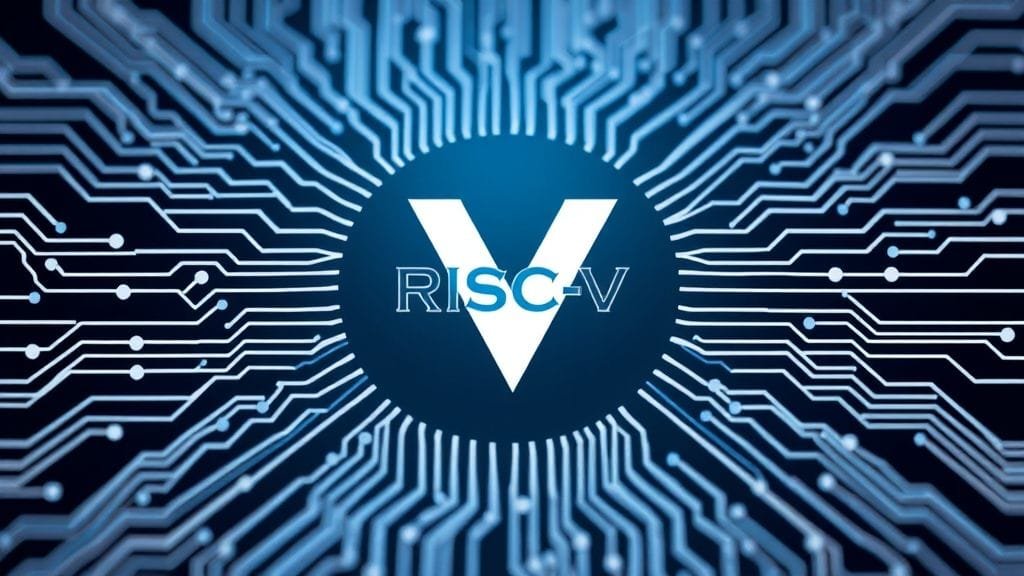
Without a doubt, RISC-V (pronounced “risk-five”) leads the charge in the open-source hardware revolution. Indeed, originating from the University of California, Berkeley, in 2010, RISC-V is a free and open standard ISA. Moreover, it is modular and extensible. Consequently, developers choose only necessary instructions. This, in turn, leads to optimized, specialized processors.
RISC-V International, a global non-profit organization, now manages the standard. Significantly, it boasts over 3,000 members. These, crucially, include leading tech companies, startups, and academic institutions worldwide. Therefore, this widespread support underscores its rapidly growing influence and potential to reshape the future of computing. Furthermore, companies like SiFive and Alibaba integrate RISC-V cores. Similarly, StarFive, Espressif Systems, and Raspberry Pi also use them. Ultimately, this demonstrates viability and market readiness.

Other Notable Open Hardware Projects
RISC-V dominates current conversations. Yet, it builds on earlier open hardware efforts. In fact, other concurrent projects also contributed. Though perhaps less commercially widespread, these projects have contributed significantly to the open-source ethos in processor design:
- OpenRISC: An early pioneer, OpenRISC has been a foundational project for exploring open-source hardware principles since the early 2000s.
- OpenSPARC: It built on Sun Microsystems’ SPARC architecture. Thus, OpenSPARC showed open designs for complex, high-performance processors.
- OpenPOWER: This project used IBM’s POWER designs. Specifically, it aimed to build an open ecosystem. Moreover, this focused on powerful server architectures. Indeed, it served data centers and high-performance computing.
Ultimately, these initiatives show a long-standing desire. Clearly, engineers want more accessible hardware designs. Furthermore, they also seek transparency. Consequently, experience from these projects paved the way. Ultimately, it led to RISC-V's explosive growth today.The Compelling Case for Open-Source Processors: Why They Matter
The momentum behind the open-source processor movement isn’t accidental. Instead, powerful advantages drive it. Indeed, these appeal to many stakeholders. This, therefore, includes startups and tech giants. Ultimately, these benefits collectively promise a more democratic, innovative, and resilient semiconductor industry.
Unlocking Cost Efficiencies and Economic Freedom
One of the most immediate and tangible benefits of embracing open-source processors is the significant reduction in costs. Specifically, eliminating expensive licensing fees saves millions. Furthermore, ongoing royalties for proprietary ISAs are gone. Consequently, companies benefit from these savings. Indeed, this financial relief is particularly attractive for startups and academic institutions operating with limited budgets. Ultimately, imagine the freedom to innovate without the burden of hefty intellectual property payments! Therefore, this cost efficiency lowers the barrier to entry, fostering a more diverse and competitive market.
Fueling Innovation Through Customization
The modular and extensible nature of open ISAs, especially RISC-V, is a game-changer for innovation. Indeed, unlike fixed proprietary architectures, designers can precisely tailor a processor to specific application needs. For instance, add custom instructions. Moreover, optimize for IoT power consumption. Similarly, boost AI accelerator performance. Consequently, customization offers optimal PPA. Thus, it suits many applications. Specifically, examples include tiny embedded systems. Furthermore, smart sensors, AI, and HPC also benefit. Ultimately, the ability to truly differentiate your product at the silicon level is incredibly powerful.
Building Trust: Transparency and Enhanced Security
In an era of increasing cybersecurity concerns, the open nature of these designs offers a distinct advantage. Indeed, with an open-source processor, the entire design is available for public scrutiny. Consequently, transparency enhances security. Specifically, a wide community can inspect the code. Thus, they identify potential vulnerabilities. Therefore, the “many eyes make all bugs shallow” principle applies here, leading to more robust and trustworthy hardware. Moreover, users can inspect microcode. Furthermore, they add custom security layers. Ultimately, this provides unparalleled control and assurance.

Breaking Free: Vendor Independence and Flexibility
Proprietary architectures cause vendor lock-in. Indeed, companies depend on a single supplier. Consequently, this impacts processor needs. However, adopting an open-source processor like RISC-V mitigates this risk. Therefore, it provides greater choice. Specifically, companies can source cores from multiple vendors. Alternatively, they can also develop them in-house. Moreover, this independence fosters competition. Furthermore, it reduces supply chain risks. Ultimately, businesses maintain control over their technology. Thus, you are no longer beholden to a single entity’s roadmap or pricing decisions.
The Power of Community and Collaborative Development
The strength of any open-source project lies in its community, and open-source processors are no exception. Indeed, a robust and diverse community actively supports development, verification, and the growth of an extensive ecosystem. Consequently, this collective effort yields richer tools. Moreover, it creates software libraries and reusable IP cores. Furthermore, join the open-source hardware movement. Thus, you get more than a design. Instead, you access a global network of engineers. Ultimately, researchers and enthusiasts push boundaries.
Catalyzing Academic Research and Education
For universities and research institutions, the open-source nature of these architectures is invaluable. Specifically, they offer ideal platforms for research and teaching. Thus, students and professors can modify designs. Moreover, they can experiment and even design new architectures. Indeed, this hands-on experience is crucial. Consequently, it trains future semiconductor engineers. Furthermore, this also accelerates research into new computing paradigms. Additionally, the practical and financial barriers often associated with proprietary hardware experimentation are removed.
Navigating the Road Ahead: Challenges and Considerations
Despite the clear advantages, the journey of the open-source processor is not without its hurdles. Indeed, the shift from a proprietary to an open model introduces new complexities and demands careful consideration. Therefore, understanding these challenges is key to successfully adopting and leveraging open-source hardware.
The Rigors of Verification and Validation
A key challenge for open-source processors is verification. Furthermore, validation is also an intensive process. Indeed, ensuring that a processor design functions correctly, reliably, and securely is an incredibly complex and costly undertaking. Specifically, building a processor from an open ISA takes more effort. In fact, verification can be ten times greater. Conversely, commercial IP cores are often pre-verified. Moreover, this phase demands specialized tools. It also requires expertise and engineering resources. Consequently, this creates a barrier for newcomers.
Maturing the Ecosystem: Software and Tooling
The software ecosystem is rapidly expanding. Still, it is less mature than for proprietary architectures. Specifically, this includes development tools and support. Conversely, ARM or x86 platforms are more comprehensive. Furthermore, established platforms offer more choices. Indeed, you find more compilers, debuggers, and OS ports. Therefore, bridging this gap needs community effort. Moreover, it also requires investment from companies. Ultimately, they must adopt open-source hardware.
Understanding True Development Costs
Licensing fees are eliminated. However, custom chip development costs remain high. Specifically, this includes verifying and fabricating. Indeed, this process demands engineering talent. Furthermore, it needs sophisticated EDA tools. Moreover, powerful compute infrastructure is also vital. Ultimately, bringing a chip to market costs millions. This, furthermore, is true even with a “free” ISA. Consequently, the allure of “free” can overshadow this reality.
Addressing Fragmentation and Support Concerns
Concerns exist about instruction set fragmentation. Specifically, different developers might create incompatible extensions. However, RISC-V International manages the base architecture. Therefore, this prevents fragmentation for standardized software. Moreover, another challenge is support and maintenance. Indeed, open-source projects rely heavily on community contributions. Consequently, this can lead to less consistent support. Conversely, commercial teams offer more immediate help. Thus, users must often be more self-reliant or seek commercial support from third-party vendors.
Performance and Security in Practice
Optimized proprietary solutions once outperformed open-source. This, significantly, was due to decades of refinement and R&D. However, this gap is rapidly closing. For instance, Alibaba’s XuanTie 910 shows this. Similarly, the academic XiangShan project also demonstrates it. Indeed, RISC-V processors achieve competitive performance. While an open ISA offers security transparency, implementations still need diligent maintenance. Furthermore, auditing and robust practices prevent vulnerabilities. Ultimately, openness alone is not a guarantee of security; rather, it’s an enabler for better security.
Navigating Legal and Licensing Complexities
The world of open-source licenses, such as permissive BSD or copyleft GPL, can be complex. Therefore, adhering to license terms is key. Specifically, this is true when integrating components. Moreover, it applies especially with proprietary elements. Consequently, careful legal review is required. Otherwise, misunderstandings or misapplication of licenses cause disputes. Thus, teams need a clear understanding of legal obligations.
Open-Source Processors in Action: Market Adoption and Impact
Open-source processors are no longer theoretical. Instead, they actively unfold in the market. Indeed, growth and adoption are impressive. Moreover, this spans various sectors. Ultimately, the data paints a clear picture of a paradigm shift.
Rapid Growth and Key Statistics
The adoption of the open-source processor, spearheaded by RISC-V, has been nothing short of explosive. Indeed, consider these compelling figures:
- Chip Shipments: Over 10 billion chips with RISC-V cores shipped by 2022. Clearly, this shows widespread industrial acceptance.
- Market Growth: RISC-V core market doubled in 2022 from 2021. Furthermore, another doubling was projected for 2023. Ultimately, this rapid growth shows strong demand.
- Revenue Projections: RISC-V revenue neared $800 million in 2023. Moreover, it aims for nearly $1 billion by 2024. Consequently, this reflects significant commercialization.
- Broader Open-Source Services Market: This market covers software and hardware. Specifically, it hit $25.03 billion in 2022. Furthermore, it may surge to $83.87 billion by 2030. Thus, this trend signals a strong industry shift.

Sectors Embracing Open-Source Hardware
Initial adoption for open-source processors was strong. Specifically, this was true for embedded applications and microcontrollers. Indeed, cost efficiency and customization are key here. However, its reach is rapidly expanding:
| Sector | Key Drivers | Current & Forecasted Impact (Examples) |
|---|---|---|
| Embedded Systems | Cost reduction, low power, extreme customization. | Smart home devices, industrial control, sensors, wearables. |
| Microcontrollers | Small footprint, low energy consumption, fast time-to-market. | IoT devices, consumer gadgets, automotive ECUs. |
| Automotive | Demand for custom processing, safety-critical applications, and vendor independence are drivers. | Cores are forecasted to grow from 4 million in 2020. They may reach 2.9 billion by 2025. |
| Consumer Electronics | Cost-effective innovation and custom features are vital. | These are for specific product lines, like smart TVs. This sector led the RISC-V market in 2024. |
| AI & ML Accelerators | Custom instruction sets for AI workloads drive adoption. Energy efficiency and data center specialization are key. | This is promising for HPC. It also applies to data centers and specialized AI chips. |
| High-Performance Computing | Flexibility to optimize HPC tasks is key. Energy efficiency for large deployments is also important. | Interest is growing for supercomputers. Cloud infrastructure also shows interest. |
Overall, this diverse adoption highlights versatility. Furthermore, it shows the strategic importance of open-source processors. Thus, this spans virtually every electronics industry segment.
Diverse Perspectives: Who Benefits from Open-Source Processors?
The appeal of the open-source processor resonates differently across various industry players and governmental bodies. Indeed, each finds unique value propositions that align with their specific goals and strategic imperatives. Therefore, understanding these perspectives helps paint a comprehensive picture of the movement’s impact.
Startups: Leveling the Playing Field
For startups, open-source processors represent a democratizing force. Specifically, they enable agile companies to innovate. Thus, custom silicon solutions are possible on a budget. Moreover, prohibitive licensing costs are gone. These, consequently, often stifle early hardware development. Therefore, this levels the playing field. Ultimately, smaller players compete with giants. In fact, they offer specialized, cost-effective products. Indeed, it’s about empowering the next wave of innovators.
Academia: A Sandbox for Innovation
Academic institutions view open-source ISAs as invaluable tools. Specifically, they offer an accessible sandbox. This, therefore, is for teaching semiconductor design. Furthermore, they can conduct groundbreaking research. Moreover, they also experiment with novel architectures. Consequently, students dive deep into internals. They also modify designs and contribute globally. Thus, this gives practical experience. Ultimately, it prepares them for industry careers. Indeed, it fosters an environment of open learning and collaborative discovery.
Tech Giants: Strategic Adoption
Even established tech giants are adopting and investing heavily in RISC-V. For example, NVIDIA, Google, and Alibaba leverage its customizability. Specifically, they use it for specialized applications. These, importantly, include AI, ML, and IoT devices. Even Intel, an x86 powerhouse, shows interest via its foundry services. Moreover, it partners with RISC-V players. Consequently, this offers manufacturing capabilities. For them, therefore, it’s less about cost savings. Instead, it’s more about strategic flexibility. Ultimately, they optimize specific workloads.
Governments: Pursuing Semiconductor Sovereignty
Governments globally are recognizing the strategic importance of open-source processors. For instance, nations like China embrace RISC-V. Specifically, they aim for semiconductor independence. Thus, this mitigates export restrictions. Furthermore, it reduces reliance on foreign technology. Similarly, the U.S. government shows interest. Indeed, open architectures enhance sovereignty. Moreover, they also ensure national security in supply chains. Ultimately, it’s about control, resilience, and strategic autonomy in a geopolitical landscape.
Traditional IP Providers: Competition and Coexistence
Traditional intellectual property (IP) providers, such as ARM, acknowledge the growth of RISC-V. However, they emphasize their mature ecosystems. Indeed, proven IP and comprehensive support are valued. Yet, they are also adapting. Consequently, the market is becoming increasingly competitive, pushing all players to innovate. However, it’s not a zero-sum game. Instead, cooperation and coexistence are emerging. For example, some vendors offer RISC-V compatible solutions. These, moreover, exist alongside proprietary offerings.
The Future is Open: Reshaping the Semiconductor Landscape
“Can a processor be free?” is no longer theoretical. Indeed, it’s a tangible reality. Specifically, the open-source processor movement drives this. Moreover, RISC-V leads the way. Ultimately, this shift makes processors “free.” This is because their core ISA is open. Thus, it enables open-source implementations. Consequently, the benefits are clear: unprecedented customization, significant cost advantages, and enhanced transparency.
Despite this, substantial challenges remain. For instance, verification demands are rigorous. Furthermore, the software ecosystem still matures. Additionally, support complexities also exist. Still, diverse stakeholders show undeniable momentum. Specifically, startups seek economic freedom. Conversely, governments pursue tech independence. Moreover, academics foster innovation. Similarly, tech giants strategize for specialized apps. Therefore, the collective investment in open-source hardware is profound. Ultimately, this movement will reshape the semiconductor industry. It will also drive innovation. And importantly, it will provide flexibility. This, moreover, occurs in a diverse, demanding computing landscape.
What excites you most about open-source processors? How will they impact your daily life? Share your thoughts in the comments below!