Apple’s MacBook Pro models are known for their premium aesthetics and robust power. Yet, the 2021 display notch sparked considerable debate. However, good news has arrived for users: the controversial MacBook Pro display notch 2026 will vanish. New details confirm this major change. By 2026, both 14-inch and 16-inch models will see its removal, replaced by sleek OLED screens. This enhancement transcends mere aesthetics, underscoring Apple’s dedication to superior visual experiences. Consequently, users will soon enjoy a truly immersive viewing experience.
The notch’s journey, from its inception to its potential removal, initially drew mixed reactions. Now, however, the path forward appears clear. We anticipate an uninterrupted display, vibrant OLED technology, and a refreshed aesthetic. Together, these elements could redefine premium portable computing. This deep dive explores the motivations behind these monumental changes, examines the technological advancements enabling them, and considers what a notch-free, OLED-powered MacBook Pro display notch 2026 might mean for Apple’s professional laptops.
The MacBook Pro Display Notch: A Controversial Chapter in Design History
Apple unveiled redesigned 14-inch and 16-inch MacBook Pro models in October 2021. Many features received widespread acclaim. For instance, beloved ports like HDMI and an SD card reader returned, and powerful M1 Pro and M1 Max chips were introduced. This marked a significant shift from previous minimalist designs. However, one element immediately sparked debate: the display notch. Understanding its controversial past is, therefore, key to appreciating the reasons for its eventual elimination in the MacBook Pro display notch 2026.

The notch sat prominently at the top center of the screen. It housed the improved 1080p FaceTime HD camera and ambient light sensor. Many users, however, considered it an unwelcome intrusion. It disrupted the pristine visual canvas that MacBook Pro users expected. Naturally, its presence quickly drew iPhone comparisons. The iPhone’s similar notch included Face ID, a feature many felt justified its existence. Now, users eagerly await the removal of this prominent element from the forthcoming MacBook Pro display notch 2026 lineup.
Arguments for the MacBook Pro Display Notch: A Necessary Compromise for 2026?
Apple rarely makes arbitrary design decisions. The notch’s introduction, for example, proved no exception. Proponents, including Apple, argued it represented a clever engineering solution. It maximized screen real estate without increasing chassis size. Apple achieved this by extending the display upwards. This method utilized previously unused bezel space. Consequently, Apple reduced side and top bezels. This, in turn, provided users a more expansive viewing area.
This design offered a larger screen within the same chassis dimensions. Crucially, Apple strategically placed the macOS menu bar alongside the notch. This made the notched area “extra” space, ensuring it never blocked the main content. Many users adapted, and for some, the notch soon went unnoticed, simply becoming part of their everyday computer use. Consequently, many saw it as a trade-off: thinner bezels for a larger screen. They accepted this compromise in exchange for the new machines’ benefits. Nonetheless, its eventual removal in the MacBook Pro display notch 2026 is still highly anticipated.
The Backlash Against the MacBook Pro Display Notch: Aesthetic Intrusion and Functional Questions
The MacBook Pro notch drew significant criticism, despite Apple’s reasons. For example, many users disliked its look. They deemed it “ugly” and an annoying visual break, a clear aesthetic intrusion. Unlike the iPhone, this notch lacked Face ID. Its purpose, therefore, was questioned. Many felt that a webcam and sensors alone did not necessitate such a prominent design. After all, most laptops had historically integrated webcams discreetly. This negative feedback underscored the need for a more refined solution, which the MacBook Pro display notch 2026 is expected to deliver.
However, practical problems also soon emerged. For example, full-screen apps, especially unoptimized ones, frequently obscured content. While developers adjusted interfaces, users still encountered “notch compatibility” issues. These often arose with older software or menu bar tools. Furthermore, the notch proved distracting during screen recordings. Thus, it compromised the display’s immersion and professional aesthetic. Such aesthetic, practical, and functional issues rendered the notch highly controversial. Consequently, these persistent issues directly prompted the planned changes for the MacBook Pro display notch 2026.

The Anticipated 2026 MacBook Pro Redesign: Bye-Bye Notch, Hello OLED
The contentious debate surrounding the MacBook Pro notch is nearing its conclusion. Industry experts, such as Omdia, widely expect its removal. Apple is widely anticipated to remove the notch from its 14-inch and 16-inch MacBook Pro models. This redesigned lineup is projected to launch in late 2026 or early 2027. Notably, this MacBook Pro display notch 2026 change also ushers in a significant upgrade: advanced OLED panels. This thus marks the notch’s definitive end, promising a refreshed visual experience. Clearly, Apple plans a comprehensive redesign, directly impacting the MacBook Pro display notch 2026.
The 2026 MacBook Pro Timeline and the OLED Display Transition
The 2026-2027 timeline is critical. It indicates Apple is not merely implementing a cosmetic fix. Instead, the company is undertaking a comprehensive overhaul. This, therefore, encompasses a fundamental shift in display technology. The transition from current mini-LED screens to OLED is key. While mini-LEDs represented a major upgrade in 2021, OLED (Organic Light-Emitting Diode) now forms the lynchpin of this new redesign. Overall, this comprehensive overhaul will effectively address the long-standing critique surrounding the MacBook Pro display notch 2026.
Apple is expected to utilize hybrid OLED display technology for the new MacBook Pros. This technology, similar to the 2024 iPad Pro’s, blends rigid and flexible OLED materials. The rigid layer contributes durability and stability, while the flexible layer enables thinner designs and superior image quality. These aspects are vital for the ultimate elimination of the MacBook Pro display notch 2026. Thus, this combination effectively helps Apple meet its aesthetic and performance goals.
The Advantages of the MacBook Pro OLED Display: A Visual Feast
The shift to OLED technology offers substantial benefits beyond merely enabling a notch-free experience for the MacBook Pro display notch 2026. It promises a host of advantages that will fundamentally elevate the visual experience on the MacBook Pro.
- Increased Brightness and Higher Contrast Ratios: OLED displays feature self-emissive pixels, where each pixel generates its own light. This allows for incredibly precise control over illumination, leading to “true blacks” where pixels are completely turned off. The resulting contrast ratios are vastly superior to traditional LCD or even mini-LED displays, imparting stunning depth and realism to images and videos. Peak brightness levels are also anticipated to improve, significantly enhancing HDR content viewing.
- Improved Power Efficiency for Longer Battery Life: Since OLED pixels can be individually controlled and turned off, they consume less power when displaying dark content. This inherent efficiency can translate directly into longer battery life for the MacBook Pro, a crucial factor for professional users on the go.
- Potential for Thinner Device Designs: The self-emissive nature of OLED panels typically means they require fewer backlighting layers compared to mini-LED. This reduction in components directly contributes to the potential for significantly thinner display assemblies and, consequently, slimmer overall device designs. This aligns with Apple’s historical emphasis on sleek, minimalist aesthetics.
- Superior Color Accuracy and Viewing Angles: OLED technology is renowned for its exceptional color reproduction, offering a wider color gamut and more vibrant, accurate color representation. Additionally, with light emitted directly from each pixel, OLED displays typically offer much wider viewing angles without significant color shift or degradation.
This confluence of design aspiration and technological capability paints a compelling picture for the future of the MacBook Pro display notch 2026, promising not just a cosmetic refresh but a genuine leap forward in display quality and the overall user experience.
Precedent: The 2024 iPad Pro’s Tandem OLED
A notch-free design inherently pairs well with OLED technology. For example, OLED panels offer greater design flexibility. This allows for thinner bezels and more optimal camera placement. Such features are crucial for facilitating the notch’s removal. Indeed, new OLED panels directly enable the removal of the MacBook Pro display notch 2026. This advanced display technology underpins the next MacBook Pro’s design. In fact, it makes the complete disappearance of the display notch a reality. This change truly underscores Apple’s commitment to innovation.
The 2024 iPad Pro offers Apple’s groundbreaking Tandem OLED display. It serves as a strong indicator for the MacBook Pro’s future. Indeed, Tandem OLED technology stacks two OLED panels. This configuration provides unparalleled brightness and improved longevity. It thus surpasses single-layer OLEDs. This innovation effectively addresses traditional OLED concerns, such as potential burn-in. Thus, it proves robust enough for professional use cases that demand high brightness and static elements.
What Replaces the MacBook Pro Display Notch for 2026? “Hole-Punch” and Dynamic Island Speculation
The iPad Pro’s advanced OLED technology has been successfully implemented. This provides a clear roadmap for its integration into the MacBook Pro. It demonstrates Apple’s mastery of complex display manufacturing processes. Furthermore, it showcases their commitment to delivering high-quality visual experiences for pro-grade devices. Lessons learned and supply chains from the iPad Pro OLED will accelerate this transition. This also de-risks the transition for the MacBook Pro display notch 2026.
The “Hole-Punch” Cutout for a Notch-less MacBook Pro: A Discreet Solution
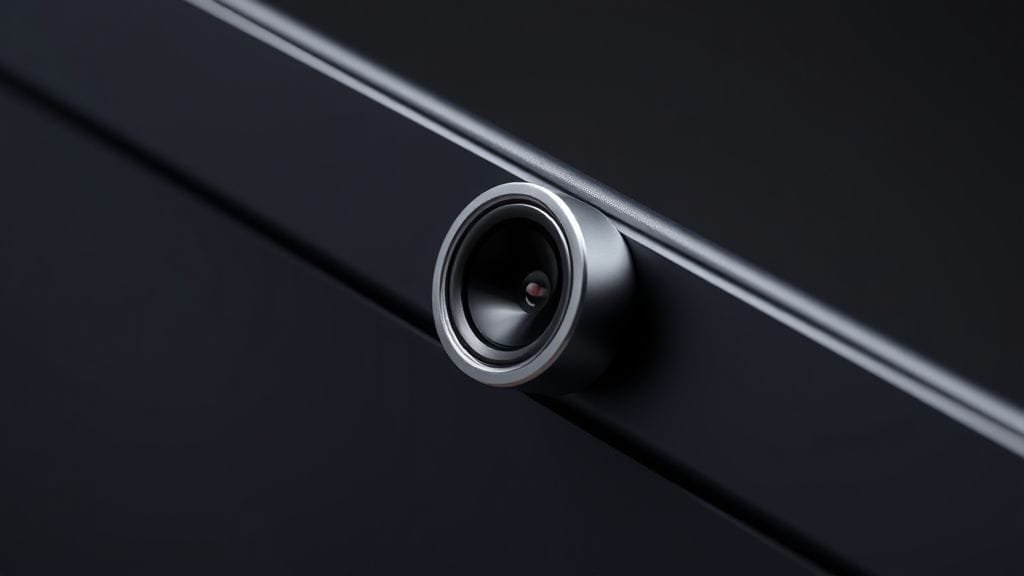
With the notch’s imminent departure, the question arises: what will house its essential components? Research, however, points towards a “hole-punch” camera cutout. This design is common in smartphones. Typically, a small, circular or pill-shaped cutout houses the front-facing camera. This design minimizes intrusion on the display. With the expected removal of the MacBook Pro display notch 2026, attention shifts to this replacement.

This design philosophy aligns perfectly with Apple’s goal of maximizing screen real estate and providing an uninterrupted viewing experience. It’s a natural evolution, taking cues from advancements in display manufacturing and miniaturization of camera modules.
The Dynamic Island: An Interactive Future for macOS?
A hole-punch design allows the display to extend almost to the chassis edges. Only a tiny webcam cutout would interrupt the flow. This approach, consequently, is far less obtrusive than the existing MacBook Pro display notch 2026 design. It thus provides a more seamless and cohesive visual experience. Apple would integrate the 1080p webcam and ambient light sensor into this compact enclosure. These components are indeed critical for video conferencing and automatic display adjustments.
The most intriguing speculation involves the potential for the hole-punch cutout to offer “Dynamic Island” functionality. Apple first introduced this feature with iPhone 14 Pro models. The Dynamic Island transforms the physical pill-shaped cutout. Consequently, it transforms into an adaptable, interactive software element. It visually expands and contracts. This dynamically displays system alerts, notifications, and background activities, such as music playback or timers. Additionally, it presents live activities in an intuitive and engaging manner.
A Dynamic Island on macOS is a fascinating prospect. The existing menu bar already manages numerous system alerts. However, a macOS-optimized Dynamic Island could introduce new levels of interactivity. Imagine:
- Visualizing background downloads or file transfers.
- Quickly interacting with FaceTime calls without leaving your current app.
- Monitoring active timers or alarms.
- Seamlessly controlling media playback with contextual buttons.
Future MacBook Pro Design Evolution: Thinner Chassis, Enhanced Experience
The anticipated redesign of the MacBook Pro, centered around the removal of the MacBook Pro display notch 2026 and the adoption of OLED, also hints at a broader evolution in Apple’s design philosophy for its professional laptops. This re-evaluation of design principles actively informs the vision for the upcoming MacBook Pro display notch 2026.
From Function-First to Aesthetic Refinement
Apple’s definitive plans for a MacBook Pro Dynamic Island remain uncertain. Perhaps it will merely mimic the aesthetic around the hole-punch camera. However, an interactive notification system on the MacBook Pro holds considerable promise. This could effectively resolve the notch’s visual problems. Moreover, such a feature might transform that area into a truly helpful, user-focused tool. It would therefore greatly enhance user interaction with macOS. A macOS Dynamic Island, free from the MacBook Pro display notch 2026, is indeed exciting. Yet, it prompts important questions, such as how it will integrate with current macOS notifications and menu bar items.
The 2021 MacBook Pro models marked a deliberate shift. They moved away from the ultra-thin, port-minimalist designs prevalent in the late 2010s. Notably, Apple responded to feedback from professional users. They therefore reintroduced essential ports, including HDMI, an SD card slot, and MagSafe. A more robust cooling system was also implemented. This, consequently, resulted in a slightly thicker, heavier chassis. Ultimately, this was a function-first design, prioritizing utility and raw power for its target audience.
A Seamless Visual Experience with the Notch-less MacBook Pro
The 2026 redesign will still offer powerful performance. However, it also appears poised to reintroduce thinner chassis designs. OLED technology inherently supports this objective. It allows for thinner display panels by eliminating the need for a backlight. This doesn’t imply extreme thinness akin to older models that sacrificed functionality. Instead, users can expect a sleeker, more optimized profile. This carefully balances power with portability and aesthetic appeal.
- Expanded Usable Space: The area previously “lost” to the notch would become fully usable, particularly for the macOS menu bar. This translates to more available space for menu items, application indicators, and third-party utilities without feeling cramped or visually disjointed.
- Enhanced Full-Screen Applications: For creative professionals, developers, and anyone who frequently uses full-screen applications, the removal of the notch will be a boon. It eliminates the visual distraction, allowing for complete immersion in content, whether it’s editing video, designing graphics, or coding.
- Improved Media Consumption: Watching movies, TV shows, or playing games on a truly uninterrupted display will significantly enhance the immersive quality, providing a more cinematic experience.
The primary aim of removing the notch is to achieve an uninterrupted, cohesive display. This, therefore, translates to a significantly improved visual experience for users. With a hole-punch camera, the display will truly feel edge-to-edge. It will effectively maximize the visible screen area. Indeed, the overarching goal of eliminating the MacBook Pro display notch 2026 is to achieve a completely uninterrupted and cohesive display.
The Broader Apple Display Landscape: Consistency and Differentiation
Apple’s design evolves through refinement cycles. Technological advancements naturally drive these changes. The 2026 MacBook Pro appears poised for a new phase. It will combine the powerful internal architecture introduced in 2021. This will leverage OLED for a visually superior and elegant exterior. Consequently, Apple will create a truly seamless and expansive canvas.
MacBook Air: A Different Path from the 2026 MacBook Pro Notch Removal, For Now
While the MacBook Pro is slated to shed its notch by 2026, the research indicates that the more consumer-oriented MacBook Air models are anticipated to retain the notch design for a longer period, possibly through 2028. This divergence in strategy underscores Apple’s approach to product segmentation.
The MacBook Pro display changes are not isolated. They align with Apple’s broader, long-term strategy. Apple aims to advance display technology across its entire product ecosystem. This, however, is accompanied by nuanced differentiation. Indeed, the anticipated changes for the MacBook Pro display notch 2026 are an integral part of Apple’s overarching display strategy.
Consistency Across Apple’s Product Line
MacBook Air users primarily seek solid performance for daily tasks. They do not require the advanced displays or extreme power found in Pro models. Therefore, retaining the notch offers Apple cost savings and simplifies production. It also allows for efficient utilization of current supply chains. However, Air models are likely to gain OLED screens by 2028. This upgrade will eventually standardize superior display technology across all MacBooks. Presently, the notch serves to differentiate products. Moreover, this strategy addresses the MacBook Pro display notch 2026 issue for Pro models at an earlier stage. Ultimately, this enables Apple to offer premium features initially, thereby justifying higher price points.
Hybrid OLED technology, similar to the 2024 iPad Pro’s, demonstrates Apple’s commitment to ecosystem consistency. As users increasingly interact with multiple Apple devices, a consistent visual experience becomes paramount. OLED offers superior contrast, brightness, and color accuracy. These benefits will eventually permeate across iPhones, iPads, and MacBooks. This, consequently, fosters a unified, high-quality visual language. Indeed, the benefits of OLED, soon to be showcased in the MacBook Pro display notch 2026, will eventually permeate widely across the ecosystem.
Potential Challenges for the 2026 MacBook Pro Display Notch Removal
While the outlook for a notch-free, OLED-powered MacBook Pro display notch 2026 is overwhelmingly positive, such significant technological transitions rarely occur without their own set of challenges and unanswered questions. These factors could significantly impact the final price and availability of the MacBook Pro display notch 2026.
Cost Implications of the MacBook Pro OLED Display Transition
This strategic alignment also facilitates software development. Apple’s operating systems, macOS and iOS/iPadOS, are continually converging. Therefore, similar underlying display technologies simplify application creation. Developers can thus create applications that perform optimally across all platforms. The long-term vision aims for a cohesive suite of devices. These devices will offer a premium, visually stunning experience. Each will be customized for its specific form factor and user needs.
OLED display technology, especially advanced hybrid or Tandem OLED, costs more to manufacture. It surpasses the manufacturing costs of mini-LED or traditional LCD panels. This increased cost could mean higher retail prices for new MacBook Pro display notch 2026 models. Given Apple’s reputation for premium pricing, it must carefully balance an enhanced user experience with market expectations. Supply chain efficiencies and mass production will likely mitigate some costs. Still, initial models might experience a noticeable price bump.
Supply Chain and Production Volume
Ramping up production for cutting-edge OLED panels presents a monumental undertaking. Millions of MacBook Pro units will require these panels. Apple must therefore ensure a stable and robust supply chain for these complex components. This is crucial to effectively meet demand and avoid potential delays. Indeed, any disruptions could impact the 2026-2027 timeline for the MacBook Pro display notch 2026. However, Apple’s past experience in scaling new technologies suggests robust strategies are already in place or being developed.
Real-World Performance and Longevity
Tandem OLED technology addresses some longevity concerns. Yet, the long-term performance of these displays under rigorous professional use remains to be fully assessed. Professionals often use their screens for many hours daily, sometimes displaying static elements for extended periods. Apple must ensure that the OLED panels of the MacBook Pro display notch 2026 maintain pristine quality. They must also effectively resist issues like burn-in over the device’s lifespan.
Dynamic Island in Future MacBook Pro Design: Full Functionality or Aesthetic Feature?
MacBook Pro users, especially creative professionals and developers, demand an uncompromising experience. They seek several key improvements.
The Dynamic Island presents an interesting software challenge. Will Apple fully integrate the iPhone’s interactive features, or will the hole-punch merely serve an aesthetic purpose? A fully integrated Dynamic Island for macOS would necessitate substantial engineering effort. Therefore, it would require innovative UI/UX design. Conversely, a simple visual integration would be easier. The scope of this feature will profoundly affect the user experience for the MacBook Pro display notch 2026. Furthermore, it prompts questions regarding its integration with existing macOS notifications and menu bar items.
Impact on other internal components
Addressing these challenges will be key to the success of the 2026 MacBook Pro redesign and its ability to fully deliver on the promise of a superior, notch-free, OLED-powered experience.
User Expectations and Market Impact
The anticipation surrounding the MacBook Pro display notch 2026 redesign is palpable, driven by a confluence of user expectations and desires and broader market trends.
What Users Are Hoping For
Looking towards late 2026 and early 2027, the future of the MacBook Pro is exciting. A MacBook Pro combining Apple Silicon’s raw power with an unblemished OLED canvas. This signifies a future where design elegance and technological prowess seamlessly converge. It will therefore deliver an uncompromising professional computing experience. This will undoubtedly set a new industry benchmark once again. Ultimately, the departure of the MacBook Pro display notch 2026 will herald a brighter, more expansive era for the iconic MacBook Pro line.
Competitive Landscape
The PC laptop market is fiercely competitive. For instance, Dell, HP, Lenovo, and Microsoft constantly innovate. They often offer crisp OLED displays and sleek designs. Therefore, to maintain its leadership position, Apple must adopt OLED for the MacBook Pro display notch 2026. This step, moreover, reinforces its position in the premium segment. It also ensures the MacBook Pro leads in display technology. Such a significant upgrade, naturally, justifies its higher price point compared to Windows PCs. Ultimately, this rivalry benefits consumers with faster innovation.
Apple’s Innovation Cycle
The 2026 MacBook Pro is poised to drop the notch and feature OLED screens. This aligns with Apple’s typical innovation cycle. Significant design shifts and technological upgrades typically occur every 3-5 years. In between these cycles, performance updates often occur. For example, the 2021 models brought improvements in power and port selection. Now, the MacBook Pro display notch 2026 is set to fundamentally change how displays look and feel. New display technology powers this strategic move. This steady, yet revolutionary, approach keeps Apple at the heart of technology discussions. Consequently, it solidifies Apple’s image as a trendsetter.
Conclusion: A New Horizon for the MacBook Pro Display Notch 2026
The MacBook Pro’s display has continuously evolved. It has moved from early Retina displays to current mini-LED technology. Now, it is reportedly heading toward a stunning OLED future. The anticipated removal of the MacBook Pro display notch 2026 marks a significant turning point. This resolves one of the most debated design elements in its recent history. Ultimately, this signifies a pivotal evolution for the MacBook Pro display notch 2026.
This shift is more than aesthetics. It testifies to Apple’s relentless pursuit of a seamless, immersive, and visually superior user experience. Hybrid OLED technology is set to empower the next MacBook Pro generation. It promises unparalleled contrast, brightness, and color accuracy, alongside thinner designs and longer battery life. This combination sets a new standard for the MacBook Pro display notch 2026. Furthermore, the transition to a discreet “hole-punch” camera redefines potential user interaction. It may even incorporate a macOS-optimized Dynamic Island.
Frequently Asked Questions
When Will the MacBook Pro Display Notch be Removed in 2026?
The 14-inch and 16-inch MacBook Pro models are anticipated to remove the display notch as part of a significant redesign slated for late 2026 to early 2027.
What Technology Will Replace Current Mini-LEDs for the MacBook Pro OLED Display?
The redesigned MacBook Pro models are expected to transition to hybrid OLED display technology, similar to what was introduced in the 2024 iPad Pro.
What are the main benefits of OLED displays for the MacBook Pro?
OLED displays are expected to bring increased brightness, higher contrast ratios with deeper blacks, improved power efficiency for longer battery life, and the potential for thinner device designs.
What Will Replace the Notch in the 2026 MacBook Pro Design for the Camera?
The notch is expected to be replaced by a discreet “hole-punch” camera cutout, which may also incorporate “Dynamic Island” functionality, mirroring the interactive feature on iPhone 14 Pro models for system alerts and notifications.
Will the MacBook Air also lose its notch at the same time?
No, MacBook Air models are anticipated to retain the notch design through 2028, even as they transition to OLED displays around that time, differentiating them from the Pro models.