
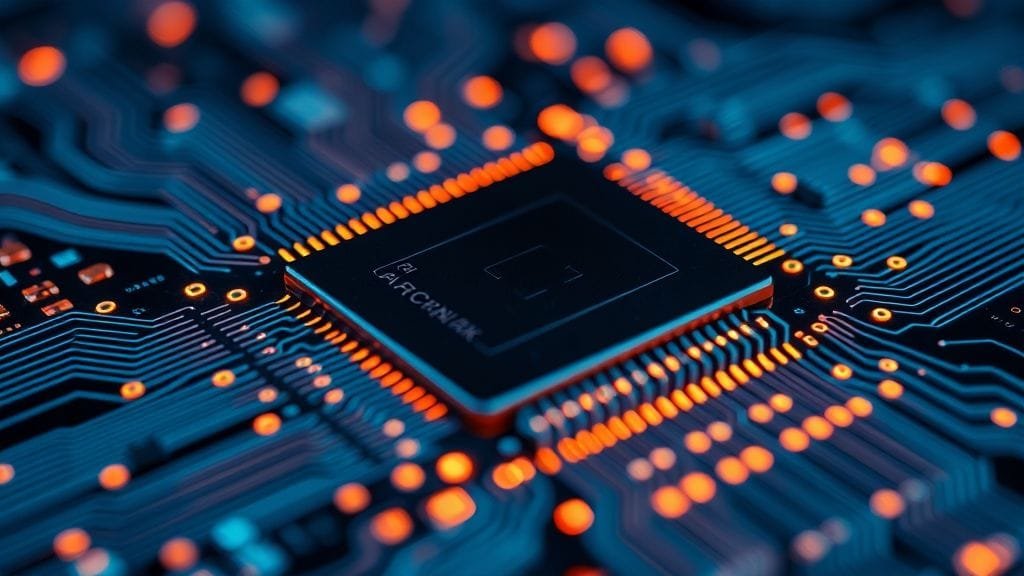
What truly powers your smartphone? Indeed, it feels fast, smart, and ready for anything. It’s not just the screen or camera; rather, it’s the mobile processor. This tiny, complex brain nests deep inside your device. Imagine, for example, a silent, high-stakes battle that constantly unfolds behind the scenes. Accordingly, tech giants pour billions into development, thereby creating faster, smarter, more efficient chipsets. This is not just a technical detail; rather, it’s an intense “mobile processor arms race.” Consequently, it shapes your daily digital life and also defines your smartphone’s cutting edge capabilities.
Indeed, competition drives smartphone innovation; thus, manufacturers like Qualcomm, MediaTek, and Apple are relentless. Consequently, this dictates app loading speed, and moreover, your photo quality is also impacted, and it even affects battery life. Furthermore, this sophisticated struggle offers a window, for it shows the future of mobile technology and also reveals why some phones feel light-years ahead. Therefore, let’s delve into this technological contest to discover the secret weapon inside your pocket.

The Intense Race for Dominance: Key Mobile Processor Players
Indeed, the global mobile processor arena is fiercely competitive, and thus a handful of tech titans dominate it. Specifically, each player brings unique strengths, offers distinct strategies and innovations, and vies for market share and tech leadership. Consequently, their ceaseless efforts contribute to smartphone evolution, from which we enjoy these capabilities today.
Qualcomm’s Premium Powerhouse: The Snapdragon Legacy
Qualcomm is, therefore, a formidable giant in this arms race, and its Snapdragon series is renowned. For instance, in late 2023, Qualcomm captured 40% market revenue, thereby cementing its position as the largest mobile phone chip manufacturer globally. Consequently, their strategic focus is on premium chips; therefore, if you own a high-end Android device, it likely uses a Snapdragon mobile processor.
However, Qualcomm does not rest on its laurels; instead, it actively pushes boundaries. Specifically, the company integrates laptop chip technology, which consequently boosts on-device generative AI capabilities. Ultimately, this commitment keeps Snapdragon chips at the forefront, providing both performance and intelligence, thereby delivering a top-tier user experience.

MediaTek’s Market Momentum: Powering Affordable Connectivity
While Qualcomm often dominates the premium segment, MediaTek, conversely, leads in overall smartphone shipment share. For example, its Dimensity series reached 22% in Q4 2023; thus, MediaTek carved a crucial niche. Specifically, it excels in the budget-conscious arena, which includes mid-range and affordable 5G devices. Moreover, their success proves their focus on delivering excellent performance at accessible prices.
Furthermore, MediaTek’s partnerships with Chinese OEMs were instrumental, as these alliances spurred its rapid growth. Consequently, this approach allows for quick tech deployment, meaning new technologies reach many devices and advanced features become available globally. Ultimately, their commitment balances cost and capability, which indeed makes them vital in the mobile processor market.
Apple’s Integrated Edge: The Bionic Advantage
Conversely, Apple uses a different strategy, as it is vertically integrated. Specifically, Apple designs custom A-series Bionic chips exclusively for iPhones and iPads. Consequently, this offers meticulous control over hardware and software, and this tight integration thus optimizes performance and efficiency. However, competitors often find this challenging to match; moreover, Apple controls nearly a quarter of global smartphone semiconductor revenue, which therefore highlights its unique approach’s success.
A-series Bionic chips are lauded for power and efficiency, and they often set industry benchmarks. This integrated model, in turn, ensures a seamless user experience, including app performance and camera capabilities. A perfectly tuned mobile processor orchestrates everything.
The Rising Challengers: Samsung, Google, and Others
Furthermore, other significant contenders enrich the mobile processor landscape, existing beyond the dominant players. For example, Samsung develops its Exynos chips, which often power its Galaxy devices in some regions. Similarly, Google entered the fray with Tensor chips, which bring advanced AI to Pixel phones by integrating machine learning directly.
Moreover, Huawei’s HiSilicon (Kirin series) is notable, as it innovates despite geopolitical challenges. Likewise, UNISOC also grows in budget and mid-range segments; consequently, this vibrant ecosystem ensures innovation. Therefore, the mobile processor arms race stays dynamic, constantly pushing boundaries for handheld devices. To further explore these companies, for instance, explore detailed market analysis reports [on Wikipedia](https://en.wikipedia.org/wiki/ComparisonofARM_processors).
Beyond Raw Power: The Cutting-Edge Advancements Driving Mobile Processors
Indeed, the mobile processor arms race is multi-faceted, as it’s not just about faster clock speeds. Rather, it integrates groundbreaking technologies; thus, today’s advancements deliver chipsets that are more powerful, smarter, and remarkably efficient. Consequently, these innovations transform smartphone interaction, enabling features once seen only in science fiction.
Unleashing Unrivalled Performance and Speed
Undoubtedly, raw processing power is core, for it defines every great smartphone experience. Specifically, modern mobile processors have advanced architectures, boasting multi-core CPUs for general tasks and powerful GPUs for rendering visuals. Therefore, this combination ensures smooth app navigation, provides lightning-fast loading times, and also supports console-quality HD gaming.
Furthermore, by 2025, chips like Snapdragon 8 Elite (Gen 4) and others promise significant speed and responsiveness leaps. Consequently, these future mobile processor iterations will unlock new performance levels, ensuring your smartphone becomes more capable of handling demanding tasks and entertainment.
The Artificial Intelligence Revolution: On-Device AI
Moreover, AI integration is a key battleground, as it is particularly significant in the mobile processor arms race. Consequently, dedicated NPUs are now standard, appearing in both high-end and mid-range smartphones. Ultimately, these specialized AI chips enable a new era, delivering intelligent features like:
- Real-time language translation: Communicate effortlessly across linguistic barriers.
- Personalized photography enhancements: Capture stunning images with intelligent scene recognition and automatic adjustments.
- Intelligent battery management: Optimize power consumption without user intervention.
- Advanced voice recognition: Interact with your device more naturally and accurately.
- Generative AI tasks: Create images and text directly on your device, enhancing creativity and productivity.
Crucially, the emphasis here is firmly on on-device AI processing; this approach, therefore, enhances privacy, as data doesn’t always travel to the cloud. Moreover, it also provides greater speed and efficiency, since tasks are handled locally. For instance, Arm designs new cores to accelerate machine learning workloads. Similarly, advanced graphics, like ray tracing, also benefit, thus showing a deep commitment to AI.
Mastering Power Efficiency: Longer Lasting Smartphones
Indeed, what good is immense power if your battery dies halfway through the day? Therefore, manufacturers prioritize optimizing power consumption to extend battery life without sacrificing performance. Specifically, this delicate balance is achieved through several cutting-edge innovations:
- Smaller semiconductor manufacturing processes: First, smaller semiconductor manufacturing processes are key; for example, moving from 3nm to 2nm is impending. Consequently, more transistors fit a smaller space, which consumes less power for the same effort.
- Advanced chip architectures: Second, chip architectures are advanced; engineers, for instance, design processors to allocate resources intelligently. Specifically, unused cores turn off, and clock speeds reduce for less demanding tasks.
- AI algorithms for resource management: Third, AI algorithms manage resources, as they learn usage patterns and dynamically manage background processes and allocation. Ultimately, this ensures your mobile processor works smarter, not harder.
For example, the MediaTek Dimensity 9000 is power efficient, showing that high performance and long battery life can indeed coexist.
Connectivity and Miniaturization: The Foundations of Future Tech
Furthermore, mobile processor evolution links not only to connectivity but also to manufacturing advancements. For instance, modern processors support 5G, which is crucial for blazing-fast data speeds. Moreover, it enables real-time cloud apps, and high-quality streaming and next-gen mobile experiences also benefit. At the same time, the continuous miniaturization of semiconductor technology remains a fundamental driver; consequently, moving to smaller nodes, for example from 3nm then to 2nm, is key. Indeed, this packs more computational elements onto one chip, which then leads to a virtuous cycle. Specifically, performance increases, power efficiency improves, and more features integrate onto a compact mobile processor.
How Your Mobile Processor Elevates Daily Smartphone Experience
Indeed, your smartphone’s mobile processor does invisible work, yet it profoundly impacts daily interactions. Essentially, it’s a silent force that transforms glass and metal, ultimately becoming an indispensable tool for communication, creativity, and entertainment. Therefore, let’s explore how these advancements enhance your daily digital life.
Seamless Multitasking and Lightning-Fast Apps
Ultimately, a powerful mobile processor is the primary determinant of your smartphone’s responsiveness. For instance, when you tap an app icon, you can expect it to launch instantly. Moreover, when you switch between multiple applications, you experience smooth transitions without frustrating delays. However, this seamless multitasking is not magic; rather, it results from an efficient CPU, and intelligent resource management is also key. Consequently, your mobile processor keeps pace, so whether you browse social media, check emails, or edit documents, your device keeps up.
Photography, Gaming, and Immersive AR/VR
Furthermore, the processor is the unsung hero behind your smartphone’s camera prowess, as it plays a crucial role in image processing, enabling sophisticated features like:
- High Dynamic Range (HDR): Capturing detail in both bright and dark areas of a single shot.
- Night Mode: Producing bright, clear photos even in extremely low light conditions.
- Portrait Photography: Creating artistic depth-of-field effects that mimic professional cameras.
Moreover, beyond photography, the integrated GPU determines the smoothness and visual fidelity of mobile games. Consequently, with powerful GPUs, you can enjoy graphically demanding titles with high frame rates and stunning visuals. In addition, these processors power immersive VR and AR experiences, which blur the lines between digital and physical worlds. Ultimately, the enhanced capabilities of a cutting-edge mobile processor transform your smartphone into a portable entertainment powerhouse.
Extended Battery Life and Future-Proofing Your Device
Indeed, power-efficient designs and AI management extend battery life, which modern smartphones now offer. Therefore, you can stream videos, play games, and stay connected longer, without the need for a constant outlet search. Specifically, intelligent resource allocation conserves energy, meaning your device uses less power when not under heavy load, which in turn gives you more daily freedom.
Consequently, investing in a robust mobile processor is an excellent way to future-proof your smartphone. Specifically, a powerful chip ensures your device’s future ability to handle forthcoming apps and OS updates. Moreover, new features will work for years, which extends its useful life, provides greater value for your investment, and thus reduces the need for frequent upgrades. To further learn how modern processors impact device longevity, for instance, visit a tech review site like [AnandTech](https://www.anandtech.com/).
The Future Landscape: Generative AI and Beyond in Mobile Processors
Indeed, the mobile processor market is on an explosive growth trajectory, as the market will surge to USD 118.3 Billion by 2034. This is a 22.40% CAGR, for it started at USD 15.67 Billion in 2024. Moreover, Asia-Pacific currently leads this charge, capturing over 31.8% market share in 2024; however, this growth is not just about units. Rather, it pushes technology boundaries further. To illustrate, here’s a snapshot of the market in 2023 Q4, demonstrating the competitive landscape:
| Manufacturer | Shipment Share (Q4 2023) | Revenue Share (Q4 2023) | Key Product Line | Target Market |
|---|---|---|---|---|
| Qualcomm | – | 40% | Snapdragon | Premium |
| MediaTek | 22% | – | Dimensity | Mid-range/Budget |
| Apple | – | ~25% | A-series Bionic | Premium |
Consequently, fierce competition fuels innovation, particularly in key areas that will define next-gen mobile experiences.
The Next Frontier: Generative AI on Your Device
Indeed, the future of mobile processor technology is undeniably intertwined with Artificial Intelligence, especially generative AI. Therefore, expect a greater focus on AI acceleration, as dedicated NPUs will become more powerful and versatile. Specifically, generative AI capabilities stimulate new consumer demand, which includes image and text generation. Moreover, personalized content and predictive assistance are also key; consequently, these capabilities will drive innovation. Ultimately, your smartphone becomes an intelligent creative partner, transforming it into more than just a tool.
Balancing Power with Efficiency: The 2nm Challenge
While raw power is always a goal, the industry now emphasizes balance, specifically seeking both performance and power efficiency. Consequently, transitioning to smaller nodes is crucial; for instance, the impending 2nm technology is an example. Indeed, this helps achieve the balance, as smaller nodes allow more transistors, which leads to greater efficiency and performance without increasing chip size. However, miniaturization also presents challenges, for example, managing heat dissipation and manufacturing complexity. Therefore, the future mobile processor needs clever engineering, as it must mitigate overheating while still delivering top-tier performance. Furthermore, specialized cores, such as NPUs, CPUs, and GPUs, will evolve, making smartphones even more adept at complex AI. Consequently, user experience and accessibility will enhance; moreover, competition will intensify as manufacturers differentiate offerings by using cutting-edge performance and advanced AI, and meticulous optimization for specific segments will also play a role.
Your Smartphone’s Hidden Powerhouse
Ultimately, the mobile processor arms race is far more than a technical contest among silicon giants; rather, it’s a continuous pursuit of excellence. Consequently, this translates to superior functionality and also creates immersive smartphone experiences. Indeed, the mobile processor is an unseen hero, for it works tirelessly so that apps launch lightning-fast, photos are stunningly clear, and battery life is long. Therefore, it makes your digital life smoother, smarter, and more exciting.
Furthermore, relentless innovation continues in this field, thereby guaranteeing tomorrow’s smartphones. Specifically, they will be more capable and intuitive, seamlessly integrating into our lives. As generative AI continues its ascent and chip architectures grow sophisticated, the future, therefore, promises a new era. Consequently, your smartphone will be an intelligent extension, becoming more than just a device.
What advancements in mobile processors are you most excited to see in your next smartphone? Share your thoughts in the comments below!