


AMD has made significant strides in computing. Specifically, it introduced its latest AMD series of processors and graphics cards. Indeed, these new product lines are innovative. Zen 5 microarchitecture powers the CPUs, while RDNA 4 architecture is for the GPUs. Consequently, they promise substantial advancements across desktop, mobile, and workstations. This overview, therefore, explores these cutting-edge technologies. Ultimately, they redefine performance, efficiency, and AI capabilities worldwide.
First, the company’s strategic focus on pushing boundaries is clear. Furthermore, it shows a commitment to continuous innovation. As a result, gamers, creators, and professionals will benefit. Indeed, they gain enhanced processing power and graphical fidelity. Moreover, AMD aggressively integrates AI features across its portfolio. Ultimately, this highlights a forward-thinking approach to modern computing.
The Dawn of Zen 5: AMD’s New CPU Architecture
Initially, AMD’s Zen 5 microarchitecture, codenamed “Nirvana,” represents a major leap from Zen 4. Specifically, this new architecture uses TSMC’s N4P process. Therefore, it delivers significant architectural improvements. Crucially, these are designed for superior performance. In fact, it forms the backbone of AMD’s latest AMD series of CPUs. Thus, it sets new standards in various computing domains.
For one, Zen 5 focuses on boosting instructions per clock (IPC). Additionally, it also improves branch prediction accuracy. Furthermore, pipeline width is enhanced. Consequently, these core advancements translate directly into faster execution. Moreover, they also mean more efficient handling of demanding workloads. Therefore, users can expect a smoother, more responsive experience across all applications.
Ryzen 9000 Series: Desktop Powerhouses
Initially, the Ryzen 9000 series, “Granite Ridge,” launched in August 2024. Subsequently, it brought Zen 5 to desktop users. Significantly, these powerful processors are compatible with existing AM5 motherboards. Only a BIOS update is required; therefore, this offers a valuable upgrade path for current users. Furthermore, it extends the AM5 socket’s longevity to at least 2027.
To begin, the Ryzen 9 9950X, 9900X, 9700X, and 9600X spearhead this new lineup. Notably, a key highlight is a reported 16% IPC increase over Zen 4. This, therefore, demonstrates a substantial generational uplift. For example, the Ryzen 9 9950X has 16 cores and 32 threads. Nonetheless, this mirrors its predecessor, the Ryzen 9 7950X. However, it achieves significantly higher performance.
Indeed, reviews praise the energy efficiency of 65W TDP models. For example, these include the Ryzen 7 9700X and Ryzen 5 9600X. In particular, these chips offer impressive performance. Nevertheless, they maintain lower power consumption. However, experts suggest they could achieve greater performance with higher power limits. Ultimately, this balance of power and efficiency is key. Ultimately, it makes the latest AMD series attractive for many desktop builds.

Ryzen AI 300 Series: Mobile Innovation
Next, the Ryzen AI 300 series, “Strix Point,” came to notebooks. Specifically, it brought Zen 5 to mobile platforms in July 2024. For instance, these APUs are particularly noteworthy. Indeed, they feature an integrated Neural Processing Unit (NPU). Furthermore, this NPU is specifically designed for AI acceleration. Therefore, this marks a crucial step. Consequently, it brings powerful local AI capabilities to portable devices.
Moreover, the Ryzen AI 300 series features a sophisticated split L3 cache design. Notably, this design allocates 16MB of L3 cache to Zen 5 cores. Moreover, an additional 8MB goes to Zen 5c cores. This, in turn, optimizes resource allocation for diverse tasks. Additionally, specific core arrangements further enhance versatility. For example, some configurations have 4 Zen 5 and 8 Zen 5c cores. Thus, such innovations position the latest AMD series mobile processors at the forefront of AI-powered laptops.

Threadripper 9000 Series: Workstation Dominance
Furthermore, AMD’s commitment to high-end computing is solidified. Indeed, this is evident with the Threadripper 9000 series. First, this series was announced at Computex 2025. Subsequently, it released on July 30, 2025. Moreover, Threadripper PRO variants are included. Furthermore, it boasts up to 96 Zen 5 cores. Consequently, these processors cater to demanding multi-threaded workloads. Indeed, they are essential for professional content creation. Moreover, they also aid advanced AI development.
Significantly, the sTR5 socket is robust. In addition, the Threadripper 9000 series supports DDR5-6400 memory. For instance, standard Threadripper models use quad-channel mode. However, Threadripper PRO uses octa-channel mode with ECC support. Also, full PCIe 5.0 support ensures lightning-fast data transfer. This, therefore, applies to professional-grade GPUs and storage. Consequently, these processors will anchor high-performance workstations. You can explore more about AMD’s workstation solutions [here](https://www.amd.com/en/products/processors/ryzen-threadripper).

RDNA 4 Unleashed: The Radeon RX 9000 Series
Meanwhile, beyond CPUs, AMD’s latest AMD series advances graphics processing. Specifically, it uses the RDNA 4 microarchitecture. Indeed, RDNA 4 powers the new Radeon RX 9000 series. Furthermore, these GPUs released on February 28, 2025. Therefore, they offer gamers and professionals new visual performance.
Overall, RDNA 4 brings a host of improvements. Indeed, it targets both raw gaming performance and advanced visual features. Moreover, this architecture delivers a compelling experience. Furthermore, it works across various resolutions and gaming titles. Crucially, the focus remains on excellent performance per dollar. This, therefore, is a hallmark of AMD’s strategy.
Radeon RX 9000 Series: Desktop Graphics Redefined
Initially, the Radeon RX 9000 series introduces several compelling desktop graphics cards. For instance, these include the Radeon RX 9070 XT, RX 9070, and RX 9060 XT. Consequently, each model is strategically positioned. Therefore, they offer strong performance at competitive price points.
To illustrate, the RX 9070 XT, for instance, launched around $599. Specifically, it aims to rival the Nvidia RTX 4080 in 4K gaming. Consequently, this provides a budget-friendly option for high-resolution experiences. Additionally, the RX 9060 XT comes in 8GB and 16GB versions. Furthermore, it significantly upgrades its predecessor, the RX 7600 XT. Ultimately, it offers impressive performance for 1080p and 1440p gaming. Thus, this makes it a strong contender in its segment.

Advanced Features and Performance Benchmarks
First, RDNA 4 technology introduces several key features. These, therefore, enhance the gaming and professional experience. For example, powerful ray-tracing accelerators deliver more realistic lighting. Moreover, they also create reflections and shadows in supported titles. Similarly, full AV1 encode/decode support ensures high-quality streaming. Additionally, it also provides video playback with greater efficiency. Furthermore, AMD Noise Suppression, powered by AI, provides clearer communication. Specifically, it filters out background noise.
Moreover, the architecture integrates second-generation AMD AI accelerators. Indeed, these feature prominently in products like the Radeon AI PRO R9700. Indeed, this card offers 32GB graphics memory. Furthermore, it also has PCIe Gen 5 support. Consequently, such capabilities are vital for local AI inference. Moreover, they also handle complex creative workloads. Ultimately, this expands the utility of the latest AMD series GPUs beyond gaming. In addition, the RX 9000 series uses FSR 4 (FidelityFX Super Resolution). Ultimately, this provides ML-enhanced upscaling and accelerated ray tracing. Therefore, it further boosts visual quality and frame rates.
Notably, ray tracing capabilities show significant improvements. Specifically, this is compared to previous generations. For instance, the RX 9070 XT performs on par with the RTX 4070 Ti Super in ray-traced titles. This, therefore, indicates a strong competitive position for AMD. Consequently, it is strong in this demanding area. Hence, learn more about graphics technology advancements. Visit [Wikipedia’s RDNA page](https://en.wikipedia.org/wiki/RDNA).

Strategic Market Positioning of Latest AMD Series
Indeed, AMD’s market strategy is clear for its latest AMD series of CPUs and GPUs. Primarily, it delivers exceptional performance per dollar. Furthermore, this applies particularly to mainstream and enthusiast segments. For instance, the Radeon RX 9070 and RX 9070 XT compete fiercely. Specifically, they target the $550-$700 price range. Specifically, they compete against Nvidia’s RTX 5070 series. Thus, this approach aims to capture a wide audience. Ultimately, it seeks high-value solutions.
However, the company does not necessarily vie for supremacy. Rather, it avoids the ultra high-end market against Nvidia’s top-tier cards. Instead, AMD focuses on compelling options. Specifically, these offer strong gaming performance and advanced features. Moreover, they do this without a premium price tag. Consequently, this strategy ensures accessibility for a broader range of consumers.
AMD’s Vision: Performance, Efficiency, and AI
Overall, AMD’s latest AMD series products underscore a steadfast commitment to innovation. This commitment, in fact, spans its entire portfolio. Primarily, the company emphasizes high-performance computing. Indeed, it caters to diverse needs. For example, this includes gaming, content creation, professional industries, and advanced AI development. Therefore, with Zen 5 architecture, AMD offers a powerful option for enthusiasts. Furthermore, it continues its performance-per-watt leadership.
Another crucial aspect is the AM5 socket. Specifically, it is still used for Ryzen 9000 series desktop CPUs. This decision, therefore, provides valuable upgrade paths. Moreover, it fosters loyalty among existing users. Thus, future upgrades are more accessible. Meanwhile, on the GPU front, RDNA 4 aims high. Specifically, it delivers competitive gaming performance. Additionally, it also offers enhanced visuals and cutting-edge AI capabilities. Consequently, a wider audience benefits. Consequently, many models offer compelling value against competing Nvidia offerings.

In particular, an ongoing effort to enhance AI capabilities is evident. Specifically, it spans both CPU and GPU lines. For instance, the Ryzen AI 300 series integrates NPUs for mobile AI. Similarly, the Radeon AI PRO R9700 uses powerful AI accelerators within GPUs. These advancements, therefore, enable robust local AI inference. Moreover, they significantly accelerate complex AI workloads. Indeed, this includes machine learning and generative AI. Ultimately, this dual-pronged approach showcases AMD’s holistic vision. Ultimately, it looks to the future of computing. For more details on AMD’s AI initiatives, check out their official AI page (`/blog/amd-ai-innovation/`).

Conclusion
In conclusion, the latest AMD series represents a monumental leap in computing. Specifically, it features Zen 5-powered Ryzen 9000, Ryzen AI 300, and Threadripper 9000 CPUs. Additionally, RDNA 4-based Radeon RX 9000 GPUs are also included. Overall, AMD relentlessly pursues performance, efficiency, and integrated AI. Consequently, this positions it as a formidable industry force. Therefore, users can expect unparalleled experiences. Indeed, whether they build a high-end gaming PC, a powerful workstation, or a sophisticated AI development rig, AMD delivers.
Furthermore, AMD offers compelling value propositions. Moreover, it has strategic market positioning. Therefore, a clear vision for future innovation guides it. In essence, AMD empowers users with cutting-edge hardware. Furthermore, the company commits to extending platform longevity. Also, it integrates next-generation features. This, in turn, ensures its latest offerings are powerful. Moreover, they are also future-ready.






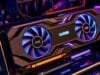

 and RDNA 4 GPUs (Radeon RX 9000). Discover performance, efficiency, and AI advancements.)