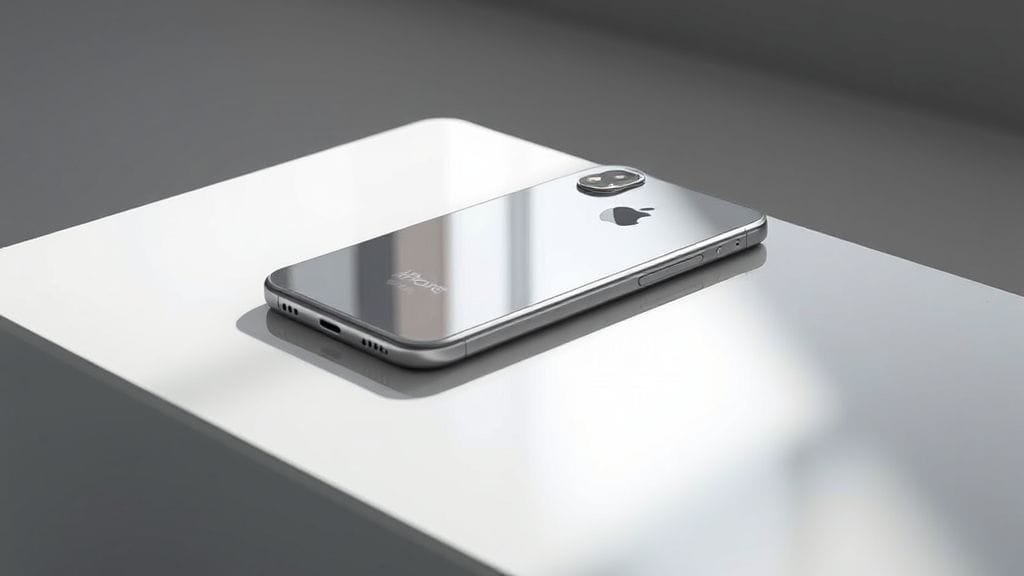
Apple has unveiled the iPhone Air ultra-thin, truly redefining smartphone aesthetics. This device is set to become Apple’s slimmest and lightest, representing a significant engineering feat. It boasts an incredibly thin 5.6mm profile, thus hinting at future mobile design. Its debut on September 9, 2025, therefore, signals a strategic shift for Apple. The company aims to attract users prioritizing sleek, highly portable devices. This article will examine its revolutionary design. We explore the innovations enabling its ultra-thin form and discuss the compromises made. Furthermore, we consider its broader market implications.

The Enduring Pursuit of Thinness: Driving the iPhone Air Ultra-Thin
Apple’s design philosophy notably prioritizes simplicity, elegance, and thinness. For example, the original MacBook Air famously emerged from an envelope. Consequently, this set a crucial precedent for thinness within the company. Furthermore, subsequent iPhone iterations have also grown progressively slimmer over time. Indeed, Apple consistently pushes the boundaries of miniaturization. Moreover, this commitment is not superficial; instead, it reflects a deeper belief. A thinner, lighter device, in turn, inherently enhances portability. It also significantly improves ergonomics. Ultimately, it embodies a more advanced technological aesthetic. Consequently, the iPhone Air truly showcases this enduring design ethos. Specifically, its iPhone Air ultra-thin design represents the latest and most dramatic example of this philosophy.

Historically, Apple has often challenged conventional wisdom regarding device thickness. For instance, the iPhone 6 was remarkably thin at just 6.9mm. Consequently, this established a new benchmark, which competitors quickly emulated. Typically, each new generation brought marginal thickness reductions. These often coincided with performance and feature improvements. However, the iPhone Air ultra-thin model represents a genuine quantum leap. Indeed, it is a deliberate and truly significant departure from previous designs. Interestingly, recent design trends saw iPhones become slightly thicker. This was primarily to accommodate larger batteries and more sophisticated camera systems. Nevertheless, this bold move underscores Apple’s unwavering confidence. Ultimately, it demonstrates their remarkable ability to innovate around traditional engineering constraints.
iPhone Air Ultra-Thin: A Radical Departure in Apple’s Design Philosophy
Indeed, the iPhone Air ultra-thin device is astonishingly thin. Consequently, its groundbreaking slimness challenges conventional perceptions of powerful smartphones. Previously, it was even called “iPhone 17 Air” or “iPhone Slim.” Evidently, these early names already highlighted significant expectations for its remarkably slender profile.
The Astonishing 5.6mm Profile: Setting a New Benchmark for the Ultra-Slim iPhone
Specifically, the iPhone Air ultra-thin model measures approximately 5.6mm thick. Moreover, some reports even suggest it reaches an astonishing 5.5mm at its slimmest point. Consequently, it dramatically undercuts previous iPhone models. For instance, the iconic iPhone 6, once praised for its slenderness, measured 6.9mm. Furthermore, recent flagships now appear chunky; specifically, the iPhone 16 Pro is 8.3mm, and the iPhone 15 is 8.25mm. This represents about a 30% thickness reduction compared to standard iPhone 17 models. Indeed, this truly is a remarkable feat of engineering. Ultimately, this achievement required fundamental changes across the device’s entire internal architecture. Therefore, this extreme thinness is a product of years of meticulous research and development, necessitating innovations in virtually every component, including the display, battery, and logic board.

Appealing to the Style-Conscious User with the iPhone Air Ultra-Thin Design for the iPhone Air Ultra-Thin
Significantly, the iPhone Air ultra-thin device is not just slender, but also exceptionally light. Weighing approximately 165 grams, it is considerably lighter than its predecessors. Consequently, this greatly enhances its overall appeal. Therefore, users can carry and use the device effortlessly, without fatigue. Indeed, this makes the iPhone Air incredibly portable; it almost disappears into a pocket. Moreover, its tactile experience feels distinctively premium. Ultimately, it appeals strongly to users seeking a minimalist and convenient design.
Premium Materials and Exquisite Finish for the iPhone Air Ultra-Thin
Indeed, Apple’s commitment to premium materials clearly shines in the iPhone Air ultra-thin model. Specifically, it features a durable titanium frame. This frame, furthermore, offers a superior strength-to-weight ratio and a luxurious aesthetic. Consequently, the frame boasts a high-gloss mirror finish, which adds both sophistication and signals premium status. Moreover, Ceramic Shield 2 protects the front, as this durable glass-ceramic composite resists drops and scratches. Similarly, the back also features Ceramic Shield for robust protection. Ultimately, these critical material choices help maintain structural integrity while achieving the desired iPhone Air ultra-thin form factor.

Powering the Sleek Silhouette: Internal Innovations for the iPhone Air Ultra-Thin
Achieving the iPhone Air ultra-thin design is inherently complex. Indeed, it requires more than just smaller components. Instead, it demands a complete rethinking of design, integration, and power management. Nevertheless, Apple has successfully packed significant technological advancements into this slim chassis. Consequently, this ensures the device’s svelte exterior. Thus, it does not sacrifice cutting-edge performance in any way.
eSIM-Only Design: A Crucial Enabler for the iPhone Air Ultra-Thin
At the heart of the iPhone Air ultra-thin device sits the powerful A19 Pro chip. This advanced System-on-Chip (SoC) consequently delivers significant performance gains. Specifically, it boosts raw processing, graphics rendering, and neural engine capabilities, thereby supporting demanding AI and machine learning tasks. Furthermore, its remarkable efficiency is paramount in an iPhone Air ultra-thin device. This allows Apple to maintain robust performance even with power and thermal constraints. Ultimately, the A19 Pro handles demanding applications and multitasking with ease, providing the fluid and responsive user experience that Apple users expect.
Moreover, the A19 Pro is complemented by Apple’s new N1 chip and a faster C1X modem. The N1 chip, specifically, handles Wi-Fi 7 and Bluetooth 6. Consequently, this chip brings next-gen wireless connectivity, offering faster speeds, lower latency, and improved Wi-Fi 7 efficiency. This, in turn, enables seamless streaming, quicker downloads, and a stable connection—all vital for on-the-go usage.
Furthermore, Bluetooth 6 significantly enhances wireless peripheral connectivity. It provides reliable, power-efficient connections for accessories like AirPods and Apple Watch. Similarly, the C1X modem ensures faster, dependable cellular connectivity. Specifically, it supports the latest 5G bands globally and optimizes network performance. Ultimately, these chips work in concert, providing robust and future-proof connectivity for the iPhone Air ultra-thin model.

Display Excellence: Visuals Beyond the iPhone Air Ultra-Thin Form Factor
Undoubtedly, the iPhone Air ultra-thin device needs ample RAM. This, importantly, supports its powerful chipset and modern applications. Consequently, it is expected to feature a robust 12GB of RAM. This ample memory, moreover, ensures exceptionally smooth multitasking, allowing users to switch between apps without slowdowns or reloads. Furthermore, it significantly benefits demanding tasks, including high-end gaming, video editing, and complex AR experiences. Thus, the A19 Pro chip and 12GB of RAM make the iPhone Air highly capable, even despite its minimalist form factor.
The iPhone Air Ultra-Thin: A Balancing Act of Compromises
Crucially, the iPhone Air ultra-thin profile profoundly relies on a key architectural decision: the global adoption of an eSIM-only design. Consequently, eliminating the physical SIM card slot freed up valuable internal space. This space, therefore, could be repurposed or removed to achieve the desired thinness. While this move is not entirely new for Apple, as the company began transitioning from physical SIMs in certain markets previously, making the iPhone Air entirely eSIM-only globally is nevertheless decisive. Indeed, it represents a significant step towards a streamlined, port-less future for smartphones.
Moreover, the eSIM offers several advantages beyond merely saving space. For instance, it allows for easier carrier switching. It also significantly simplifies international travel by provisioning digital local plans. Furthermore, it enhances security by preventing unauthorized SIM swaps. While some users might initially miss the physical SIM, the industry trend undeniably points towards eSIM technology. Ultimately, Apple’s iPhone Air ultra-thin implementation accelerates this transition and cements its leadership in this evolving area.
Durability Concerns for the iPhone Air Ultra-Thin: Echoes of “Bendgate”? for the iPhone Air Ultra-Thin
Despite its extreme thinness, the iPhone Air ultra-thin device notably makes no visual quality compromises. Instead, it features a display that promises an immersive and vibrant viewing experience. Specifically, the device incorporates a 6.5-inch Super Retina XDR display, which is a hallmark of Apple’s premium iPhone lineup. This display technology is, moreover, renowned for exceptional contrast, deep blacks, and stunning color accuracy, thereby bringing content to life with unparalleled fidelity.
Furthermore, ProMotion technology significantly enhances the visual experience. It offers an adaptive refresh rate of up to 120Hz. Consequently, this ensures incredibly smooth scrolling and fluid animations. It also provides a highly responsive touch experience. This feature, therefore, is especially noticeable in demanding applications and games.
In addition, the display also features an anti-reflective coating. This, importantly, significantly reduces glare in brightly lit environments, thereby improving outdoor visibility and overall viewing comfort. Moreover, a remarkable peak brightness of 3,000 nits makes the iPhone Air ultra-thin display exceptionally legible, even under direct sunlight. Ultimately, this ensures vibrant and clear content in virtually any condition. This exceptional blend of size, resolution, and advanced display technologies, therefore, firmly establishes the iPhone Air as a top-tier multimedia device.

Camera System: Single Lens, Singular Focus in the iPhone Air Ultra-Thin?
While the iPhone Air ultra-thin model indeed showcases Apple’s engineering prowess, an ultra-thin design invariably involves calculated trade-offs. Consequently, these compromises are crucial considerations for potential buyers. They specifically highlight the inherent challenges in extreme miniaturization. Nevertheless, Apple aims to mitigate these, for example, through innovative solutions like careful component selection. However, these factors predictably remain key discussion points for tech enthusiasts and critics alike.
Design Appeal: The iPhone Air Ultra-Thin for Style-Conscious Users
Inevitably, an iPhone Air ultra-thin design often raises significant concerns, primarily regarding its potential for reduced battery capacity. Indeed, shorter battery life is a widespread worry. Historically, less internal space inherently means smaller batteries. Consequently, the iPhone Air is rumored to have a smaller capacity, possibly ranging from 2,800-2,900 mAh. While this might seem modest compared to larger iPhones, it is nevertheless a necessary compromise for the svelte form factor.
However, Apple reportedly uses advanced battery technology. For example, a “silicon anode battery” offers higher energy density, thereby packing more power into a smaller footprint. Moreover, the A19 Pro chip’s power efficiency is absolutely critical. Furthermore, sophisticated software optimizations also play a significant role. Ultimately, Apple’s integrated ecosystem allows for tight hardware and software control, which enables precise power consumption management by iOS.
Despite these physical constraints, Apple claims the iPhone Air ultra-thin offers “all-day battery life.” This assertion, significantly, hinges on efficiency gains that stem from the new chip, optimized display, and iOS energy management. Therefore, for users prioritizing thinness, accepting slightly shorter battery life is possible. Furthermore, relying more on external charging might also be a necessary compromise in some scenarios.
Thermal Management: Keeping the iPhone Air Ultra-Thin Cool Under Pressure
To maintain its slender profile, the iPhone Air ultra-thin model features a single 48-megapixel rear camera. This notably departs from dual-lens setups in standard iPhones; moreover, it also differs from triple-lens systems of Pro variants. While a single 48MP sensor is indeed highly capable, offering excellent detail and light capture, it inherently sacrifices optical zoom capabilities. Furthermore, it lacks the ultra-wide perspectives afforded by multi-lens systems. Consequently, users accustomed to multiple focal lengths might find this a significant compromise.
Nevertheless, Apple’s computational photography, powered by the A19 Pro chip, delivers impressive results from even a single sensor. This notably includes advanced portrait modes and improved low-light performance. Additionally, the front camera upgrades to 24MP, which promises sharper selfies and enhanced video calls. Ultimately, the single rear camera reflects Apple’s strategic choice: it prioritizes design aesthetics and thinness over more sophisticated camera systems for this model. Therefore, it caters to users who value a clean, minimalist design, offering excellent primary camera performance over advanced zoom features.
Audio Experience: Single Speaker Implications for the iPhone Air Ultra-Thin
Historically, thin iPhones have faced durability challenges. For example, the “bendgate” controversy around the iPhone 6 serves as a cautionary tale, as it was notoriously prone to bending under pressure. Given that the iPhone Air ultra-thin pushes even further into ultra-thin territory, concerns about reduced structural integrity are naturally heightened. This includes potential susceptibility to bending, twisting, or shattering. Therefore, addressing these concerns is paramount for Apple.
Consequently, a durable titanium frame is central to Apple’s iPhone Air ultra-thin durability strategy. Titanium, moreover, is stronger and more rigid than aluminum or stainless steel, thereby offering enhanced resistance to everyday stresses. Furthermore, Ceramic Shield 2 protects the front, and Ceramic Shield protects the back, both providing advanced protection against drops and scratches. While no device is truly indestructible, Apple’s premium materials and robust engineering instill confidence, promising an incredibly thin and resilient device.

Does the iPhone Air Ultra-Thin Maintain Good Battery Life? for the iPhone Air Ultra-Thin
Inevitably, powerful chipsets invariably generate heat. Therefore, effective thermal management is crucial to maintain sustained performance and battery health. Consequently, thinner designs inherently pose greater heat dissipation challenges, as there is less internal volume available. This, in turn, impacts cooling solutions and air circulation. While the A19 Pro chip is efficient, it remains a high-performance component. Moreover, less space for heat dissipation can lead to thermal throttling, where the chip reduces its clock speed to prevent overheating, potentially reducing performance during intensive tasks like gaming or video editing.
For example, iPhone 17 Pro models may improve thermal management with vapor chambers. However, integrating such solutions into the iPhone Air ultra-thin design might prove challenging. Instead, Apple will likely rely on an efficient chip design and optimized software thermal control. Additionally, the thermal properties of its titanium frame will help manage heat effectively. Nevertheless, prolonged, high-intensity activities might still show performance limitations, especially in contrast with thicker devices, which often feature more robust cooling systems.
What Makes the iPhone Air Ultra-Thin Stand Out in Thinness?
Reportedly, some sources suggest the iPhone Air ultra-thin might feature a single speaker, which would consequently conserve valuable internal space. While Apple’s single speakers are typically high-quality, this design choice would nevertheless represent a step back, as modern iPhones usually boast stereo speaker setups. Therefore, a single speaker could impact immersive audio, specifically affecting media consumption and gaming. Moreover, it might also reduce loudness and spatial separation. For many users, especially those who primarily use headphones, this might be a minor inconvenience; however, it could be a noticeable compromise for those who frequently rely on device speakers.
How durable is the iPhone Air ultra-thin?
Indeed, the iPhone Air ultra-thin model holds a strategic position within Apple’s diverse lineup. Consequently, it specifically aims to capture a particular market segment. Its unique blend of ultra-thin design and premium features, furthermore, carves out a distinct niche, thereby expanding Apple’s overall demographic appeal.
Bridging the Gap in the Lineup
Positioned as a mid-priced device, the iPhone Air ultra-thin starts at $999. Consequently, it specifically fills a key gap between standard iPhone 17 and Pro models, subsequently replacing the “Plus” model. While it indeed offers a larger 6.5-inch screen, its value proposition fundamentally differs from its predecessor. Therefore, this strategic placement allows Apple to offer a compelling option for consumers who desire a large, premium display and cutting-edge performance. Yet, importantly, they prioritize sleekness and portability over advanced camera systems or Pro-exclusive features.
Moreover, analysts widely view the iPhone Air as a strategic move that effectively diversifies Apple’s offerings. It specifically caters to a market segment that highly values design aesthetics and a lighter form factor. For example, these users may find Pro models too heavy or robust. Ultimately, this approach proves that Apple understands the modern smartphone market is not monolithic, recognizing that different user groups have distinct priorities.
Appealing to the Style-Conscious User
Primarily, the iPhone Air ultra-thin device’s appeal lies in its striking design. Consequently, it targets consumers who view their smartphone as a fashion statement, a piece of art, or a minimalist tool that integrates seamlessly into their lifestyle. For these users, owning an “impossibly thin” device is thrilling, as it showcases Apple’s peak engineering. This aesthetic appeal, furthermore, often outweighs compromises like multi-lens camera versatility or maximum battery capacity. Indeed, it serves those wanting an an almost invisible device, yet one that performs with flagship-level speed and responsiveness.
Moreover, its high-gloss mirror finish, titanium frame, and 5.6mm profile collectively create a powerful “style factor.” This, importantly, differentiates the iPhone Air ultra-thin as a truly premium device. Therefore, its design is not merely functional; instead, it is a primary feature in itself. While thinness alone may not drive mass adoption, it is nevertheless a powerful differentiator in a crowded market where many smartphones otherwise look remarkably similar.
Strategic Vision: A Precursor to Foldables
Beyond its immediate market impact, many observers consequently see the iPhone Air ultra-thin as a crucial precursor. Specifically, it points towards Apple’s rumored foldable iPhone, which is anticipated around 2026. The iPhone Air’s ultra-thin profile, moreover, overcomes significant engineering challenges, including advanced battery tech, space optimization, and material selection. This process, therefore, generates invaluable lessons directly transferable to foldable device development. Ultimately, a foldable iPhone needs to be exceptionally thin when unfolded to ensure it remains practical and desirable; thus, the insights gained from the iPhone Air are invaluable for this future endeavor.
Indeed, the iPhone Air ultra-thin demonstrates Apple’s formidable capabilities in extreme miniaturization and structural design. Consequently, it clearly signals that Apple is actively pushing smartphone form factor boundaries, thereby preparing the ground for next-gen mobile devices. This long-term vision, furthermore, strategically positions the iPhone Air. It is not merely a product; rather, it is a profound statement about Apple’s unwavering innovation commitment and future roadmap.

The Future of Thinness: Beyond the iPhone Air
While the iPhone Air ultra-thin marks a significant milestone in smartphone design, it also raises pertinent questions. For instance, what are the realistic limits of future device thinness? Can practicality and durability still be maintained effectively? Innovations specifically demonstrated in the iPhone Air suggest further refinement is indeed possible, including high-density batteries and advanced materials. Nevertheless, evident compromises highlight the diminishing returns of extreme thinness, particularly in camera versatility and thermal management.
Moreover, Apple’s iPhone Air ultra-thin move suggests a strategic market segmentation based on distinct design priorities. Consequently, Apple’s Pro models will continue to push boundaries in areas including photography, performance, and robustness. Conversely, the “Air” line might represent the pinnacle of minimalist design and portability. This diversification, therefore, caters to a broader range of user preferences and cements Apple’s leadership in smartphone innovation. Ultimately, the iPhone Air is more than just a new phone; rather, it boldly declares that design remains a core driver of technological evolution.
Conclusion
Ultimately, the iPhone Air ultra-thin boasts a groundbreaking 5.6mm profile, triumphantly returning to Apple’s roots of minimalist design and engineering audacity. Indeed, it fundamentally challenges how thin a powerful smartphone can truly be. Yet, despite its slenderness, it still delivers a premium experience, marked by a stunning display, a potent A19 Pro chip, and an exquisite titanium finish. Although the pursuit of ultra-thinness inherently required calculated compromises, specifically in battery capacity and camera versatility, Apple expertly mitigated them using innovative battery technology, efficient chip design, and robust material choices, thus effectively balancing form and function.
Moreover, the iPhone Air ultra-thin is strategically positioned between standard and Pro models, catering to a distinct demographic. These users, consequently, prioritize a lightweight, sleek, and highly portable device, and it also makes a strong style statement. Its introduction, furthermore, is not merely a product launch; rather, it represents a strategic move that expands Apple’s appeal and simultaneously lays the groundwork for future innovations, including a potentially foldable iPhone. Therefore, the iPhone Air is more than “Apple’s thinnest smartphone ever”; instead, it testifies to the company’s unyielding commitment to pushing design boundaries and offers users a glimpse into mobile technology’s future, where form and function merge in an impossibly slender package.
Frequently Asked Questions
What makes the iPhone Air so much thinner than other iPhones?
The iPhone Air ultra-thin profile, approximately 5.6mm, is achieved through several key innovations. These notably include an eSIM-only design, which consequently eliminates the physical SIM tray. Furthermore, it also features a highly efficient A19 Pro chip and advanced internal component miniaturization. Potentially, high-energy-density silicon anode battery technology is used as well. Overall, its design specifically prioritizes thinness; however, this naturally leads to some strategic compromises elsewhere.
Does the iPhone Air have good battery life despite being so thin?
Despite a potentially smaller battery capacity, rumored to be around 2,800-2,900 mAh, Apple claims “all-day battery life” for the iPhone Air ultra-thin model. This endurance is achieved via highly efficient components, including the A19 Pro chip. Moreover, sophisticated software optimizations in iOS play a crucial role. Additionally, new battery chemistry with higher energy density is also possible. While actual battery life will naturally vary based on usage, Apple has nevertheless optimized endurance within the demanding thin form factor.
What are the main compromises of the iPhone Air’s ultra-thin design?
The primary compromises of the iPhone Air ultra-thin design notably involve a single 48-megapixel rear camera. This, crucially, lacks optical zoom and ultra-wide lenses found in Pro models. Furthermore, concerns about long-term durability also exist; however, these are addressed with a durable titanium frame and Ceramic Shield 2. Additionally, thermal management challenges may appear for sustained heavy workloads. Moreover, some reports also suggest a possible single speaker, which would replace a stereo setup.
How durable is the iPhone Air?
Apple has specifically addressed durability concerns for the iPhone Air ultra-thin model. Specifically, it incorporated a durable titanium frame. Moreover, Ceramic Shield 2 protects the front, while Ceramic Shield protects the back. Titanium, in particular, offers superior strength-to-weight, thereby enhancing structural rigidity compared to other materials. Although ultra-thin devices historically faced challenges, like “bendgate” with the iPhone 6, Apple’s careful material choices and robust engineering instill confidence, promising a device that is both incredibly thin and resilient.
What is the price and market position of the iPhone Air?
The iPhone Air ultra-thin is positioned as a mid-priced device, starting at $999. Consequently, it effectively bridges the gap between standard iPhone 17 and high-end iPhone 17 Pro models. Ultimately, it appeals to users who prioritize sleek, ultra-thin, and lightweight designs. Therefore, they desire a large, premium display and strong performance, which is prioritized over features like a multi-lens camera or the longest battery life.