
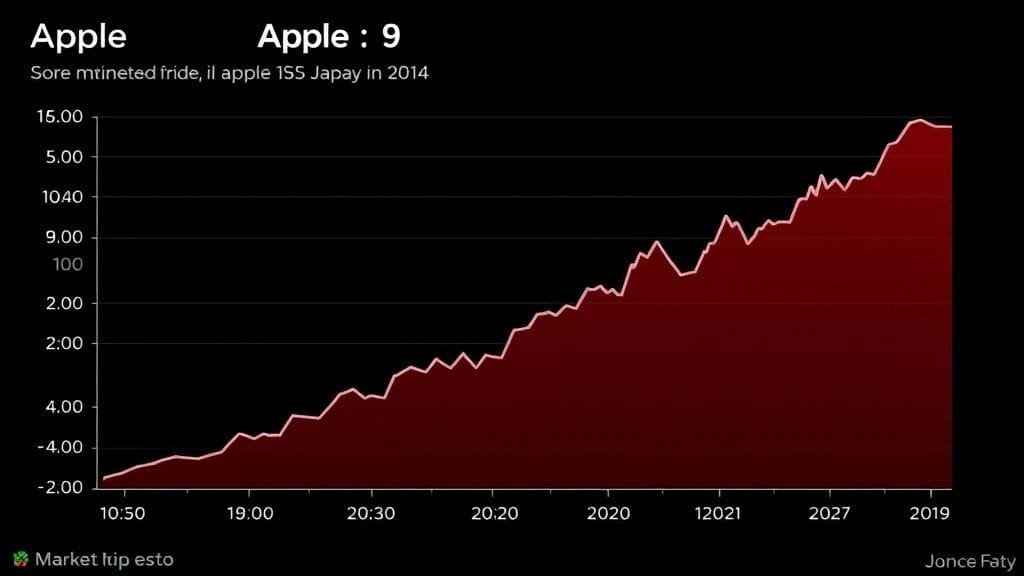
Have you ever wondered about the hidden forces that move the stock market? Often, a single legal decision can send significant effects across the financial world. This is especially true when major tech giants are involved. Indeed, that is precisely what occurred recently with the Apple shares Google antitrust ruling. The company’s stock experienced an immediate and significant surge. This surge followed a pivotal decision in the Google antitrust case. Crucially, this was not merely a minor adjustment. Instead, it sent a powerful message from the market about Apple’s future, particularly concerning its growing Services revenue.
This article will therefore clarify the complex legal and financial landscape. We will examine why this decision was dubbed a “near best-case scenario” for Apple. You will thus understand how the preservation of a profitable deal with Google has boosted Apple’s current earnings. It has also opened new opportunities. Ultimately, prepare to delve into the significant implications of this landmark decision for one of the world’s most valuable companies. We will focus on how the Apple shares Google antitrust ruling has reshaped its trajectory.
Apple Shares Surge Post Google Antitrust Ruling
The financial world watched intently. A U.S. District Judge rendered a verdict in the much-anticipated Google antitrust case. When the dust settled, the Apple shares Google antitrust ruling brought considerable attention to the company’s stock. It rose sharply in pre-market trading. This immediate positive reaction thus signaled strong investor confidence in the favorable outcome of the Apple shares Google antitrust ruling. It also underscored the pivotal role that specific legal rulings can play in the valuation of major technology companies. The Apple shares Google antitrust ruling had a direct and profoundly positive impact on Apple. Consequently, many analysts swiftly labeled it a “near best-case scenario” for the iPhone maker.
Why such a strong reaction? The primary reason was the court’s decision to uphold Apple’s valuable agreement with Google. This deal ensures Google remains the default search engine on Apple devices. Indeed, the partnership generates billions of dollars for Apple annually. This revenue, furthermore, is crucial for Apple’s services division. This segment represents a significant growth driver for the company. It also alters perceptions of the Apple shares Google antitrust ruling. The enduring financial arrangement, secured by the Apple shares Google antitrust ruling, serves as a primary pillar for this growth.
Apple Shares’ “Best-Case Scenario” from the Google Antitrust Ruling
When referring to a “near best-case scenario” following the Apple shares Google antitrust ruling, we mean the ruling largely averted the most detrimental outcomes that could have harmed Apple. For instance, concerns existed that the Department of Justice might compel Google to fundamentally alter its business model. Such changes, therefore, could have directly impacted Google’s capacity to compensate Apple for search placement. However, the court’s judicious decision in the Apple shares Google antitrust ruling permitted this crucial financial arrangement to persist. This unequivocal victory for Apple, facilitated by the Apple shares Google antitrust ruling, provided significant relief for those involved.
Consequently, this outcome offered immediate clarity and relief to investors. It alleviated a major regulatory concern that had been weighing on Apple’s stock. With the primary Google search deal remaining intact, Apple could anticipate its future revenue with greater certainty. This stability is paramount in the often unpredictable realm of high-tech investing. Ultimately, it enabled the market to more confidently factor Apple’s sustained success into its valuation. This reflected a positive sentiment regarding the Apple shares Google antitrust ruling outcome.

Strategic Advantages for Apple Stock After the Google Antitrust Ruling
A primary driver of Apple’s positive market reaction is its long-standing, highly profitable agreement with Google. This agreement stipulates that Google will serve as the default search engine for Safari on Apple devices. For example, think about how many times you open Safari on your iPhone, iPad, or Mac. Each time, Google is ready to serve your search queries. This seemingly straightforward arrangement, therefore, translates into a massive financial benefit for Apple.
This partnership extends beyond mere user convenience. Instead, it represents a strategic alliance that underpins a significant portion of Apple’s financial strength. The payments Google makes to Apple are not a trivial sum. Instead, they constitute a primary pillar of Apple’s growing services revenue. Grasping the magnitude of these payments helps us comprehend why the market reacted so strongly to the court’s decision. Crucially, the Apple shares Google antitrust ruling averted a significant challenge for a core component of Apple’s business model. This bolstered the company’s financial outlook. The sustained certainty of this agreement, solidified by the Apple shares Google antitrust ruling, represents a substantial strategic advantage.
Google Payments Bolstering Apple Shares Post-Antitrust Ruling
Let’s examine the figures. They clearly illustrate the impact of the Apple shares Google antitrust ruling. The annual payments Google makes to Apple for this default search engine placement are estimated to be substantial. Analysts place these figures in the range of $20 billion to $28 billion annually. These significant annual payments for the default search engine placement, affirmed by the Apple shares Google antitrust ruling, are integral to Apple’s financial health. To illustrate their magnitude, this represents a considerable portion of Apple’s total Services revenue. Some estimates suggest it could account for approximately 20% of this high-profit segment.
These payments are not merely supplemental income. Instead, they represent a steady and consistent revenue stream that significantly contributes to Apple’s profits. For any company, possessing such a stable and substantial source of revenue is critically important. It provides funds for research and development, shareholder returns, and further investment in other growth areas. Thus, retaining this “lifeline” ensures that Apple can continue to invest heavily in its ecosystem. This includes new hardware and growing its service offerings. This outcome further bolstered confidence in the Apple shares Google antitrust ruling implications.
Apple Shares’ Services Goldmine Secured by the Google Antitrust Ruling
You might already know Apple for its famous devices, like the iPhone, iPad, and Mac. However, in recent years, Apple’s Services division has emerged as an increasingly vital component of its business. This segment includes products such as the App Store, Apple Music, Apple Pay, iCloud, Apple TV+. Crucially, it also encompasses revenue derived from search engine agreements. Services are attractive because they typically have higher profit margins compared to hardware sales.
Furthermore, the sustained strength of the Google search payments directly supports the growth and profitability of this services segment. Hardware sales can fluctuate. But the consistent revenue from services provides a robust and dependable financial foundation. This diversified revenue stream, therefore, enhances Apple’s strength in the eyes of investors. It also helps explain why analysts are so interested in Apple’s Services growth. It also illustrates why any threat to it would provoke significant concern. Ultimately, the Apple shares Google antitrust ruling mitigated one of the greatest risks to this “goldmine”. This outcome greatly benefited Apple’s future plans. Indeed, the stability afforded by the Apple shares Google antitrust ruling ensures Apple’s services revenue remains robust.

Apple Stock’s Growth Horizons Post-Google Antitrust Ruling
The primary Google search deal remained intact. However, the antitrust ruling introduced some intriguing new dynamics. These changes are not merely minor adjustments. Instead, they bestow upon Apple newfound freedom and significant advantages. These new dynamics, stemming from the Apple shares Google antitrust ruling, confer upon Apple renewed freedom and substantial advantages. This signifies that the relationship between Apple and Google, while remaining highly profitable for both, will now operate under new parameters established by the Apple shares Google antitrust ruling. For Apple, these new parameters unlock a world of potential.
The court’s decision specifically addressed how Google could structure future distribution agreements. This, naturally, has a direct impact on how Apple can negotiate its terms. Furthermore, the ruling mandates certain data sharing from Google. This could enable Apple to explore new avenues for innovation. Let’s closely examine these exciting developments and their potential implications for the future of Apple’s ecosystem.
Apple Shares: Enhanced Negotiating Power Post-Google Antitrust Ruling
One of the most significant shifts for Apple, courtesy of the Apple shares Google antitrust ruling, is Google’s newly imposed limitation on exclusive deals. Google is now prohibited from entering into exclusive contracts for search, Chrome, Assistant, and Gemini for durations exceeding one year. What does this signify for Apple? It translates into enhanced negotiating power. The augmented negotiating power stemming from the Apple shares Google antitrust ruling is a potent tool for Apple. Apple can now approach its agreement with Google with the knowledge that it can renegotiate terms annually. This annual review period, therefore, grants Apple considerably more leverage in negotiations.
Imagine you are Apple. You now possess the option to potentially offer a “search choice screen” to your users. Such a feature, therefore, would empower users to select their preferred search engine from a list of options. This seemingly simple change could enable other search companies to compete. Consequently, a more competitive bidding situation for the default spot would emerge. As a result, Apple could potentially secure even higher payments from Google. Or, it could explore profitable partnerships with new search companies. This newfound level of control ensures Apple can always secure the best possible terms for its users and its profitability. This directly impacts how Apple shares Google antitrust ruling will evolve.
New Search Opportunities for Apple Shares Post-Google Antitrust Ruling
The Apple shares Google antitrust ruling also presents Apple with a strategic opportunity to collaborate with other search providers. The search market is evolving rapidly, especially with advances in artificial intelligence. Thus, with the annual deal review mandate and the potential for a search choice screen, Apple is no longer bound by a single, long-term exclusive agreement. This newfound freedom, a direct result of the Apple shares Google antitrust ruling, fundamentally alters Apple’s position within the evolving search market. This freedom, therefore, represents a significant shift.
For example, think about the rise of AI-driven search platforms. Companies are investing heavily in novel approaches for users to discover information. They are moving beyond traditional search paradigms. Apple could leverage this opportunity to partner with emerging AI search companies. Or, it could even develop its own robust search tools. This doesn’t mean Apple will necessarily drop Google tomorrow. However, it certainly signifies that Apple possesses more options and a greater ability to shape the future of search on its platforms. Ultimately, this strategic flexibility represents a significant win in terms of Apple shares Google antitrust ruling outcomes.
Data-Driven Innovation for Apple Shares Post-Google Antitrust Ruling
Another compelling aspect of the Apple shares Google antitrust ruling is Google’s obligation to share certain search and user data with competitors. This mandated data sharing, a unique component of the Apple shares Google antitrust ruling, opens avenues for significant innovation. This requirement, therefore, could unlock substantial opportunities for Apple. Access to this granular data is highly beneficial. It provides insights into search trends, user behavior, and how information is organized across the web.
How could Apple leverage this? Firstly, it could aid in the development of its own robust search tools. Secondly, it could also assist Apple in enhancing its current services. This entails making Siri more intelligent, refining app recommendations, or even enhancing its Maps product. Furthermore, this data could accelerate Apple’s capacity to partner with or even acquire new AI search companies.
The capacity to better understand the search landscape assists Apple in fostering superior innovations. This could potentially lead to entirely new user experiences within its ecosystem. Ultimately, this transcends mere financial considerations. It’s about strategic planning and a sustainable long-term competitive edge for Apple shares Google antitrust ruling beneficiaries. This data-driven innovation, enabled by the Apple shares Google antitrust ruling, could catalyze exciting new developments within Apple’s ecosystem.

Analyst Outlook on Apple Stock After the Google Antitrust Ruling
The immediate market reaction to the antitrust ruling was unequivocally favorable for Apple. However, true investor confidence often stems from the detailed reports provided by leading financial firms. Following the decision, many prominent analysts swiftly upgraded their forecasts for Apple. This signaled robust confidence in the company’s future. These expert opinions, furthermore, play a pivotal role in influencing market sentiment and guiding investment decisions.
The elimination of regulatory uncertainty surrounding the Google search deal, a central element of the Apple shares Google antitrust ruling, was a significant catalyst for these optimistic adjustments. A comprehensive review of the Apple shares Google antitrust ruling by financial experts provided further corroboration. It, therefore, empowered analysts to confidently project Apple’s sustained growth, particularly within its high-profit Services segment. Let’s explore what the experts are saying and how they view Apple’s future path.
Clearing Uncertainty: Analysts Turn Bullish on Apple Stock After the Google Antitrust Ruling
Prior to the Apple shares Google antitrust ruling, a discernible sense of apprehension prevailed among some analysts. Genuine concerns existed that an unfavorable outcome for Google could significantly impair Apple’s profits. Some even speculated that Apple’s annual earnings could be reduced by billions of dollars. This scenario would materialize if the search payments were substantially curtailed or ceased.
This uncertainty, therefore, fostered a state of unease among investors. The actual outcome, however, completely alleviated these concerns. The profitable search agreement remained in place. And crucially, Apple gained enhanced freedom and negotiating leverage. This clarity was a massive relief. Analysts at Morgan Stanley, for instance, described the outcome as a “clearing event for the stock.” This implies that a significant impediment or unknown has been removed. This allows investors to re-evaluate the stock’s intrinsic value with greater confidence. The elimination of this regulatory risk was considered a “monster win” in their eyes. It paved the way for a more optimistic outlook regarding Apple shares Google antitrust ruling valuations. The clarity provided by the Apple shares Google antitrust ruling helped re-establish investor confidence.
Price Target $260: Apple Share Projections After the Google Antitrust Ruling
Following the decision from the Apple shares Google antitrust ruling, several major investment banks elevated their price targets for Apple stock. Both Morgan Stanley and Bank of America, for instance, increased their price targets for Apple to $260. This increase in price targets is directly linked to the positive impact of the Apple shares Google antitrust ruling. This represents a substantial increase and indicates their heightened confidence in the company’s Services growth trajectory.
Notably, the optimism extends beyond merely the current search agreement. Analysts also anticipate more significant partnerships for Apple arising from this new landscape. One exciting possibility mentioned is a closer collaborative relationship between Apple and Google’s Gemini AI. If Apple can leverage its newfound freedom to forge stronger links with leading AI developers, it could generate even greater value for its services. This could manifest, for instance, in enhanced Siri functionalities. It could also lead to more tailored user experiences. Or, it could introduce entirely new AI features within Apple’s ecosystem. Therefore, the $260 price target suggests that experts believe Apple is well-positioned for sustained robust performance. This is especially true following the Apple shares Google antitrust ruling. This positive forecast reflects the strategic advantages gained by Apple due to the Apple shares Google antitrust ruling.
Elevated Price Targets and Apple’s Strategic Gains
Here’s a snapshot of the immediate market and financial impact:
| Metric | Details |
|---|---|
| Stock Performance | Surged 3.08% to 3.9% in pre-market trading; peaked at $239.13 within 30 minutes post-ruling |
| Revenue Stream | Google’s annual payments to Apple: Est. $20 billion – $28 billion (approx. 20% of Apple’s Services revenue) |
| Analyst Price Target | Morgan Stanley & Bank of America raised targets to $260, citing increased Services growth confidence |
| Regulatory Impact | Removed significant uncertainty, deemed a “monster win” for Apple |

Google’s Position & Wider Antitrust Implications for Apple Shares from the Google Antitrust Ruling
This ruling is largely perceived as a significant victory for Apple. However, it’s important to acknowledge that it also represents a complex outcome for Google. Antitrust cases are rarely black and white. Indeed, this case exemplifies the intricate balancing act regulators confront. Ultimately, the decision from the Apple shares Google antitrust ruling permitted both tech giants to retain crucial business arrangements that generate substantial revenue. However, these arrangements now come with new limitations.
This case, the Apple shares Google antitrust ruling, also highlights the persistent challenges regulators face in enforcing antitrust laws within the rapidly evolving tech landscape. Therefore, understanding Google’s perspective provides insight into the comprehensive scope of this pivotal decision. Comprehending the effects of the Apple shares Google antitrust ruling necessitates recognizing its dual impact on both companies. Furthermore, it underscores the challenge of disaggregating core assets without precipitating unforeseen issues or stifling innovation. Let’s delve into Google’s partial victory and the broader implications for the tech landscape.
Google’s Partial Victory in the Google Antitrust Case, Impacting Apple Shares
For Google, the antitrust ruling brought a significant sense of relief. The company was found liable for unlawfully monopolizing online search and advertising. However, it managed to avert the harshest remedies proposed by the Department of Justice. The DOJ had sought extensive structural changes. For example, it advocated for Google to divest its highly successful Chrome browser or its primary Android operating system. Such a divestiture would have fundamentally transformed Google’s business and market position. However, the court’s decision not to mandate these extreme measures means Google can continue to operate its core businesses largely intact. Google’s success in avoiding forced divestitures, despite the broader ramifications of the antitrust case, constituted a strategic win for the company. It also, indirectly, reinforced the conditions of the Apple shares Google antitrust ruling.
It also signifies that Google was not precluded from making its substantial traffic acquisition payments to third parties, including Apple. For Google, this provides important clarity. It enables the company to continue its successful strategy of maintaining distribution agreements. This holds true even if those partnerships now entail new limitations on exclusive arrangements. Essentially, Google retains its most valuable assets. This represents a significant victory despite the guilty verdict.
Tech Regulation Evolution Post-Google Antitrust Ruling for Apple Shares
This antitrust ruling serves as a potent illustration of the ongoing global effort to regulate large technology companies. Governments worldwide are grappling with how to address market dominance without stifling innovation. This case, for instance, demonstrates that courts are often reluctant to impose remedies that could significantly disrupt existing businesses or user experiences. Instead, they aim to strike a balance between fostering competition and acknowledging real-world business imperatives. The approach adopted in the Apple shares Google antitrust ruling underscores a delicate balance between fostering competition and maintaining market stability.
The decision indicates a continued focus on behavioral remedies rather than a complete structural breakup of the company. In other words, rather than dismembering Google, the court focused on modifying how Google interacts with partners and rivals. This approach aims to foster competition by granting smaller companies enhanced access and opportunities. It also bestows greater leverage upon significant partners like Apple. It also sets a precedent for how future antitrust cases against other tech giants might be adjudicated. The ruling emphasizes behavioral and access-based changes over forced divestitures. Furthermore, this emphasis on behavioral changes, rather than structural separation, sets a precedent for future regulatory actions. This outcome is a direct consequence of the Apple shares Google antitrust ruling. The evolving regulatory landscape is something all major tech companies are closely monitoring.

Understanding Your Digital Future After the Apple Shares Google Antitrust Ruling
You might be wondering how a complex legal decision involving two colossal tech companies actually impacts your daily life. The truth is, these decisions reverberate throughout the entire digital ecosystem. They influence everything from the services you use to the cost of your devices and the pace of innovation. Thus, comprehending these effects helps you grasp the broader context of how technology is shaped. This particular ruling, the Apple shares Google antitrust ruling, illustrates the profound interconnectedness of the tech world. The far-reaching implications of the Apple shares Google antitrust ruling touch upon innovation, competition, and user experience. It also suggests a future where competition might be fostered by strategic leverage and data access, rather than forced structural separations. Let’s explore what this pivotal decision truly signifies for you and the broader digital landscape.
How the Antitrust Ruling Shapes Apple and Google’s Intertwined Destinies
The Apple shares Google antitrust ruling clearly demonstrates that even the largest tech companies, often perceived as rivals, are deeply interconnected. Apple benefits immensely from Google’s search engine, and Google relies on Apple’s vast user base. Their destinies, therefore, are not disparate. They are bound by numerous agreements, partnerships, and shared ecosystems. The intricate interplay between these two giants, re-evaluated in the wake of the Apple shares Google antitrust ruling, shapes much of the digital realm. This interconnectedness signifies that a legal decision impacting one can have profound effects on the other.
For you, this implies that the innovations and services you receive are often a direct outcome of these complex relationships. Changes in one area, such as Google sharing data or Apple gaining negotiating leverage, can lead to enhanced or diversified search experiences. It can also usher in improved AI assistants or novel types of digital services. It reinforces the idea that no single company works alone. Their strategic interplay profoundly influences your digital life. The long-term ramifications of the Apple shares Google antitrust ruling will undoubtedly continue to shape this interconnected relationship.

Navigating the Digital Landscape Post-Google Antitrust Ruling
The provisions stemming from the Apple shares Google antitrust ruling promise to transform how users interact with search technology. The new parameters introduced by the antitrust ruling are designed to foster a more competitive environment within the search market. Google remains the dominant player. But the increased latitude for Apple and other potential partners opens avenues for new companies or alternative search options to emerge. This shift could have several benefits for you as a consumer:
- More Choices: If Apple offers a search choice screen, you might have more direct control over which search engine powers your device. This, therefore, could lead to specialized search engines catering to certain interests or more privacy-focused alternatives.
- Enhanced Innovation: Increased competition often spurs innovation. Google might strive harder to enhance its search engine if it recognizes Apple’s increased leverage to switch providers. Furthermore, other companies might invest more in developing superior rival search products.
- Potential for Novel Features: Apple’s capacity to leverage new data or collaborate with AI search companies could lead to entirely new features within your devices. Imagine, for instance, more intuitive voice assistants or personalized information tools.
Ultimately, this ruling aims to foster an evolving digital landscape where user choice and innovation are prioritized. It ensures that the current tech landscape, while still dominated by large corporations, is subject to pressures that could yield superior outcomes for everyone.
Conclusion: Apple Shares’ Strategic Trajectory Post-Google Antitrust Ruling
The Apple shares Google antitrust ruling signifies a pivotal moment for Apple, Google, and indeed, the entire technology industry. For Apple, it represented a significant triumph. It preserved billions in crucial Services revenue. And it granted new levels of latitude for future strategic decisions. The market’s robust response, evidenced by rising stock prices and elevated analyst targets, clearly underscores the significance of this outcome. Apple’s future trajectory, heavily influenced by the Apple shares Google antitrust ruling, suggests ongoing innovation and growth.
Throughout this article, we have observed how the enduring partnership with Google continues to fuel Apple’s high-profit Services segment. We also examined new, exciting avenues opened by the ruling. These range from enhanced negotiating leverage to opportunities within the evolving landscape of AI-driven search. Thus, this isn’t merely about maintaining the status quo. It’s about positioning Apple for its next phase of growth and innovation.
For Google, meanwhile, the decision averted a disastrous breakup. It provided clarity while establishing new parameters for their operations. And for you, the consumer, it signals a future with heightened competition and novel innovations online. Ultimately, tech giants perpetually cooperate and compete. This ruling, the Apple shares Google antitrust ruling, demonstrates the profound influence of legal frameworks on the technology we utilize daily.
How do you think this newfound flexibility for Apple might change your digital experience in the coming years?