

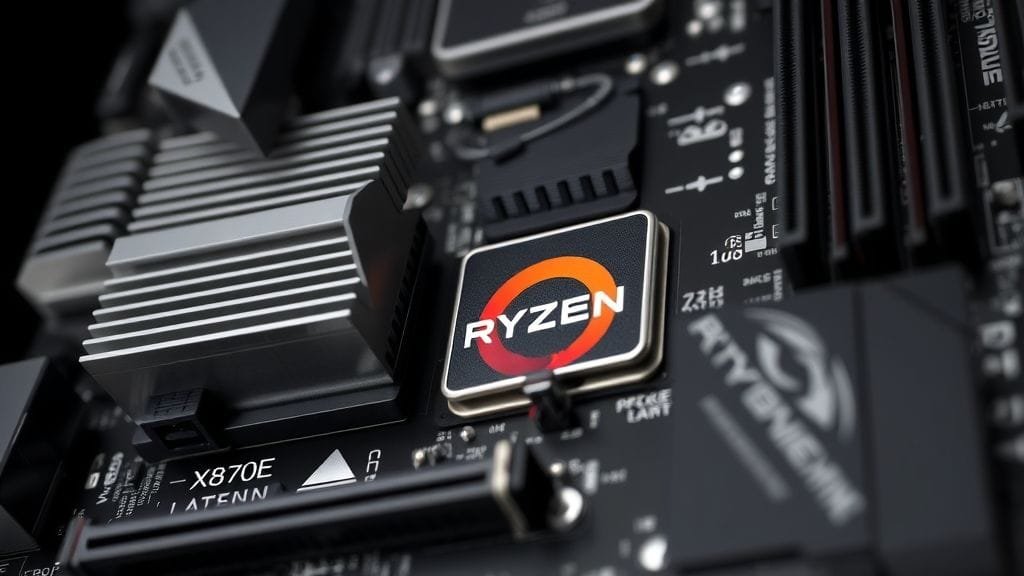
Are you ready to truly unlock the raw power simmering within your latest AMD Ryzen processor? Indeed, enthusiasts and high-end users awaited a new platform. This platform, moreover, needed to keep pace with cutting-edge CPUs, and simultaneously, it needed to propel them to new heights. Now, however, the wait is over. AMD’s X870E and X870 chipsets are here. Consequently, they mark a pivotal moment. As a result, expectations for high-performance PCs will fundamentally change.
Notably, AMD X870 chipsets launched on September 30, 2024. Indeed, they are more than just components; rather, they form an architectural foundation. Specifically, this maximizes Ryzen 9000 (Zen 5) potential, and furthermore, it supports 8000 and 7000 (Zen 4) series processors. Moreover, all run on the AM5 socket. Thus, AMD focused on enhanced overclocking, also adding extensive connectivity, and incorporating refined architectural improvements. Therefore, AMD empowers you to build systems. For example, these systems handle extreme gaming, also supporting professional content creation and unparalleled multitasking. Ultimately, this isn’t just an incremental update; instead, it’s a leap forward.

The Dawn of a New Era: Introducing AMD X870 Chipsets
Clearly, building an elite PC starts with core components. In this context, the chipset acts as its central nervous system. Consequently, AMD X870E and X870 chipsets are engineered for modern computing, readily supporting ambitious demands. Furthermore, they evolve significantly from the 600 series. Indeed, new features future-proof your system. Thus, this lasts for years. Ultimately, these chipsets are a meticulously designed stage where your high-performance components will perform best.
Moreover, these new platforms bring forth a host of anticipated advancements for systems stretching into 2026. Indeed, they aren’t merely about adding features; instead, they’re about optimizing the entire user experience. For instance, you will feel the difference at boot-up. Specifically, a harmonized, capable chipset makes it possible. As a result, high-end graphics cards will communicate freely, and similarly, lightning-fast NVMe drives will too, ensuring there will be no bottlenecks.
X870E vs. X870: Understanding the Core Differences
While both X870E and X870 chipsets champion performance, they serve different enthusiast markets. Primarily, the distinction lies in their architecture, also involving the volume of resources offered. Specifically, the X870E, designed for the most demanding users, employs a dual-chipset design. Consequently, this means it integrates two “Promontory 21” chips, significantly expanding its capabilities.
Furthermore, the X870E dual-chip approach delivers more PCIe lanes, doubles the USB ports, and also increases maximum SATA ports. Clearly, this compares favorably to its single-chip counterpart. Therefore, if you envision many expansion cards, multiple high-speed external devices, or numerous storage drives, the X870E provides the foundation you need. In contrast, the high-end X870 chipset uses a single “Promontory 21” chip; it still offers robust performance, yet it has a more focused I/O set.
Significantly, both chipsets offer comprehensive PCIe 5.0 support. Specifically, this is crucial for modern graphics cards, and equally vital for primary M.2 SSDs. Consequently, this ensures you’re getting the fastest possible data transfer speeds for gaming textures and large project files. Moreover, X870E universally supports PCIe 5.0, applying to both GPU and storage. However, some X870 boards may only offer PCIe Gen 5 for storage, and this is worth noting. Therefore, AMD positions the X870E carefully, as it directly competes with Intel’s Z-series chipsets. For example, these include the Z790 and upcoming Z890, making the X870E a true contender for ultimate builds. Conversely, the X870 competes with Intel’s H-series. Specifically, this includes H670, H770, and H870, and furthermore, it offers a superior upgrade path from X670, featuring more PCIe 5.0 lanes, including native USB4 support, and enhanced overclocking.
Unrivaled Overclocking Capabilities with AMD X870 Chipsets
Often, high-end hardware appeals to many. Consequently, its ability to exceed stock settings is key. Indeed, AMD X870 chipsets wholeheartedly support this philosophy. Specifically, they offer robust CPU overclocking, and DDR5 memory overclocking is also fully supported. Therefore, if you dream of maximum system performance, these chipsets provide the bedrock for it. Ultimately, your PC becomes a finely tuned instrument, responding to commands with unprecedented speed.
For example, imagine smoother games, complex rendering tasks finishing faster, and overall system responsiveness feeling snappier. Indeed, this isn’t just wishful thinking; rather, it’s the tangible result of a platform engineered for maximum performance. Ultimately, X870 and X870E unlock latent power, thus pushing consumer hardware boundaries.
Pushing CPU and Memory Limits
Crucially, X870E motherboards have formidable power delivery systems. Indeed, these are among the best on consumer boards. Specifically, you’ll find robust VRM designs, with configurations often including 16+2+2 or 18+2+1 phases. Furthermore, each phase has powerful 110A Smart Power Stages. Therefore, this extreme power delivery is not just for show; rather, it’s essential for rock-solid stability. Especially, this is true when pushing high-core Ryzen processors. For instance, think of the formidable Ryzen 9 9950X3D; it lets you push them to their limits.
Moreover, advanced thermal management is standard. In turn, this keeps powerful VRMs cool, and also ensures other critical components stay cool under pressure. Consequently, this translates directly to sustained performance and greater overclocking headroom. Furthermore, for memory enthusiasts, the AMD X870 chipsets are a revelation. Specifically, many boards boast impressive DDR5 memory overclocking, with speeds often reaching 8600MT/s or 8800MT/s. Indeed, some premium models even surpass 9000 MT/s. As a result, high-speed memory reduces latency and boosts system bandwidth, making gaming and professional applications feel incredibly responsive.

Smart Overclocking Features for Every Enthusiast
Importantly, overclocking doesn’t have to be an intimidating dark art reserved for seasoned veterans. Instead, AMD X870 chipsets democratize performance access. To this end, motherboard partners help by using intelligent, user-friendly features. For example, discover innovative tools like “AI Cache Boost,” and “Active OC Tuner” is also included. These tools, furthermore, integrate directly into many motherboard BIOSes. Ultimately, these features simplify the often-complex process of fine-tuning your system.
Specifically, they intelligently analyze your system’s capabilities and also assess current workloads. Consequently, optimal overclocking settings are then recommended or applied automatically. Thus, this strives for peak performance and stability. Therefore, new overclockers can safely explore higher clock speeds, and also explore memory frequencies. Crucially, no deep technical knowledge is needed. Moreover, the optimized BIOS specifically designed for the Zen 5 architecture plays a crucial role. In addition, this refined firmware improves overclocking headroom and also enhances stability out of the box. As a result, this reduces manual tuning trial-and-error. Indeed, these intelligent features truly unlock the potential of the AMD X870 chipsets for everyone.
Extensive Connectivity: A Future-Proof Foundation
Beyond just CPU or GPU, a PC’s performance is more. Instead, it needs seamless peripheral integration, and good network integration is also vital. Especially, this is true in today’s interconnected world. Consequently, the 800 series chipsets redefine connectivity. Specifically, their features ensure your system stays current. Thus, this lasts for years. Moreover, AMD X870 chipsets add more than just ports; in fact, they introduce new standards. Ultimately, these push speed and versatility boundaries.
Therefore, this robust connectivity means you can truly future-proof your workstation or gaming rig. For example, imagine connecting high-resolution external displays, lightning-fast external SSDs, and a myriad of other devices without compromise. Indeed, X870 and X870E chipsets form a robust backbone, thereby supporting a rich digital ecosystem. Ultimately, every component communicates at optimal speed.
USB4 and PCIe 5.0: The Speed You Need
Crucially, USB4 support is a standard feature. Indeed, it truly future-proofs AMD X870 chipsets. Consequently, offering a staggering 40 Gbps of bidirectional bandwidth, USB4 is a game-changer for external device connectivity. Specifically, this incredible speed is ideal for a multitude of applications:
- High-Speed External Storage: For example, use high-speed external storage. In fact, transfer colossal files in seconds. Consequently, external SSDs become viable for demanding tasks.
- High-Resolution Display Outputs: Moreover, power multiple high-resolution monitors, including up to 8K displays, all through a single port.
- Versatile Device Connectivity: Finally, connect docks, external GPUs, and other high-bandwidth peripherals with unparalleled ease.
Furthermore, X870E motherboards amplify USB connectivity. Specifically, they provide more ports, including multiple 20 Gbps and 10 Gbps USB options. When you combine this with comprehensive PCIe 5.0 support, which applies to graphics cards and primary M.2 SSDs, you then get an unstoppable data pathway. Consequently, your GPU accesses data for seamless gaming, and your primary storage delivers apps and files fast. Thus, this eliminates frustrating bottlenecks. Ultimately, this commitment to cutting-edge I/O solidifies the AMD X870 chipsets as the premier choice for enthusiasts.
Next-Gen Wireless and Wired Networking
In today’s interconnected world, fast, reliable internet is crucial. Consequently, AMD X870 chipsets offer top-tier networking. Specifically, Wi-Fi 7 is standard on many X870E and X870 boards, delivering a monumental wireless upgrade. Indeed, this latest wireless standard isn’t just about raw speed, though it certainly delivers with rates up to 5.8 Gbps. Moreover, it brings wider channels (320MHz on 6GHz), and efficiency is also greatly improved. As a result, this minimizes lag and maximizes throughput, even in congested environments.
Crucially, Wi-Fi 7 introduces Multi-Link Operation (MLO). Therefore, devices can use multiple bands and channels. Consequently, this greatly enhances reliability, and also reduces latency. In practice, this means more stable connections for competitive gaming and smoother streaming of 4K content. Furthermore, wired networking is equally robust, thereby ensuring that your local network experience is just as blistering. For instance, many boards feature 2.5 Gigabit Ethernet as standard, providing ample bandwidth for most users. However, demanding users have options, as higher-end models offer 5 or 10 Gigabit LAN. Specifically, this suits professional workstations, is also perfect for NAS systems, and extreme network gaming environments benefit too.

Maximizing Ryzen Performance with AMD X870 Chipsets
Ultimately, a platform’s true test is performance extraction. That is, it must get every ounce from its components. Indeed, X870E and X870 chipsets are compatible with Ryzen, and are purpose-built to unleash full performance. Consequently, AMD X870 chipsets act as a force multiplier. Specifically, they transform your CPU, which then becomes a more potent processing engine.
Significantly, every design choice aims for peak CPU operation. For example, this includes power delivery and thermal management. Consequently, your Ryzen CPU runs longer at its peak, avoiding thermal throttling or degradation. Indeed, here, the engineering truly shines. Thus, it translates into a tangible difference. In short, this impacts your daily computing experience, helping with gaming, streaming, or crunching numbers.
Precision Boost Overdrive and Enhanced Power Delivery
Crucially, one of the cornerstones of AMD’s performance strategy is Precision Boost Overdrive (PBO) and Curve Optimizer. Specifically, AMD X870 chipsets fully support these features. Consequently, they allow automatic CPU optimization, where performance is finely tuned. For instance, PBO dynamically pushes your CPU, exceeding official limits by using thermal and power headroom. Therefore, this boosts clock speeds. Furthermore, Curve Optimizer refines your CPU’s curve, which is the voltage-frequency curve. In turn, it helps the CPU run cooler, and also runs more efficiently at higher clocks.
Moreover, X870 and X870E motherboards have enhanced power delivery, and also feature superior thermal designs. Indeed, these are critical for sustaining peak performance. For example, VRMs use larger heatsinks, often accompanied by dedicated fan headers. Furthermore, smart fan control helps. Consequently, this keeps vital power components cool. Similarly, M.2 SSDs get expanded, often screwless heatsinks. Thus, this prevents high-speed storage from throttling, even under intense loads. Ultimately, these robust solutions are essential. Specifically, they help with prolonged gaming sessions, also aid heavy video rendering, and any demanding workload benefits. As a result, your CPU and storage are pushed to their limits while the system maintains its blistering pace.

DIY-Friendly Design for Seamless Builds
Often, building or upgrading a PC feels complex. However, AMD X870 chipsets simplify this. Furthermore, thoughtful motherboard designs also help. Consequently, the process becomes more accessible and enjoyable. Specifically, manufacturers embraced “DIY-friendly” features. Indeed, these simplify assembly and maintenance. Thus, this saves time and frustration. For example, imagine not fumbling with tiny screws or wrestling with stiff retention clips.
Notably, innovations include quick-release GPU mechanisms. For instance, remove your GPU with a simple press. Moreover, screwless M.2 heatsinks are also included. Therefore, SSD installation or upgrades become a breeze. Ultimately, these seemingly small conveniences add up, transforming the PC building experience into something genuinely satisfying. Furthermore, expanded AMD EXPO support is included. Specifically, this ensures optimal DDR5 performance. In turn, easy-to-enable profiles help. Consequently, the system becomes powerful, and also user-friendly to set up and optimize. Indeed, the AMD X870 chipsets are truly a platform designed for builders, by builders.
Why Upgrade to AMD X870 Chipsets?
Naturally, the question of whether an AMD X870 chipset upgrade is worth it might arise. This is especially true if you currently use a capable AM5 platform. However, the answer, for enthusiasts and high-end users, is a resounding yes. Fundamentally, these chipsets offer a future-proof foundation. In fact, it extends beyond Ryzen 9000 compatibility. Moreover, they unlock new capabilities and provide performance overhead. Ultimately, previous generations cannot match this.
For instance, consider the leap in connectivity with native USB4 and ubiquitous PCIe 5.0 for both GPUs and SSDs. Furthermore, think about the potential for extreme memory overclocking, reaching speeds of 9000 MT/s and beyond. Indeed, these features are not incremental; instead, they are transformational. Therefore, build a system that handles demanding apps and games. In fact, it will do so with ease. Ultimately, an AMD X870 chipset-based system is an investment in cutting-edge performance and longevity.
The Future of High-Performance Desktops is Here
Finally, AMD X870E and X870 chipsets are here. Indeed, they mark a significant milestone. Specifically, this advances high-performance desktop computing. Furthermore, they are more than new hardware. These chipsets also demonstrate AMD’s commitment. Furthermore, they provide a platform for enthusiasts. Consequently, creators and gamers can push boundaries. Specifically, focus areas include robust power delivery, advanced thermal management, extensive I/O, and intelligent overclocking. Therefore, these AMD X870 chipsets provide the ultimate foundation to power your next-gen Ryzen system.
Moreover, AMD meticulously engineered these chipsets. Specifically, they ensure your Ryzen processor has full support. Thus, it reaches its zenith, no matter its power. For instance, the X870E features a dual-chip design, with Wi-Fi 7 and USB4 as standard. Indeed, every aspect is fine-tuned. Consequently, this ensures unparalleled performance, and also provides a future-ready experience. Ultimately, the high-performance desktop future is here, and it’s built on AMD X870 chipsets.
What X870 chipset feature excites you most? How will you integrate it into your PC build? Share your thoughts below!




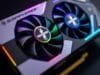
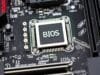

 unlock Ryzen's full potential with extreme overclocking, USB4, PCIe 5.0, and Wi-Fi 7.)