Imagine a world. Instead, energy needs are met by the sun’s embrace. They are also met by the wind’s whisper. Furthermore, they are met by water’s flow. Crucially, not by finite, polluting fossil fuels. This isn’t a distant dream; it is the imminent future of renewable energy. Indeed, we stand at an energy revolution’s cusp. Clean power sources are rapidly expanding. Moreover, they are innovating. Consequently, they reshape our global landscape. This shift is transformative. It promises environmental salvation. Additionally, it also brings robust economic growth. Energy security is enhanced. Thus, millions of new jobs will emerge.
Renewable energy has an optimistic trajectory. First, decreasing costs drive this. Moreover, widespread corporate commitments also help. Furthermore, growing public awareness contributes too. Consequently, we navigate an exciting era. Specifically, solar and wind power lead the charge. These are also supported by groundbreaking advancements. For instance, these include energy storage, smart grids, and green hydrogen. Therefore, let’s explore the powerful forces shaping this greener tomorrow.

The Unstoppable Ascent of Green Power
The world is witnessing an unprecedented surge in green power generation. Indeed, renewable electricity will surge. It will, moreover, reach over 17,000 terawatt-hours (TWh). This is expected by decade’s end. Such growth represents a 90% increase from 2023. Clearly, the scale of this growth is monumental. Therefore, it is a pivotal moment. For example, renewables will surpass coal generation by 2025. Furthermore, wind power will exceed nuclear generation by 2026. Similarly, solar power will too. Both will, moreover, exceed it individually. Consequently, this clearly highlights the accelerating shift in our global energy mix.
By 2025, renewables will account for 35%. This, moreover, applies to global power generation. Indeed, it is a significant leap from 29%. Consequently, IRENA experts envision a future. They project that 90% of electricity will be renewable. This will, in fact, happen by 2050. Significantly, this is not just a forecast. Rather, it is a global ambition. This ambition, furthermore, shows profound potential. It also, therefore, reveals the trajectory for renewable energy.
Solar’s Brightest Future
Solar energy stands out as the undisputed leader in this renewable revolution. Indeed, it’s truly remarkable how quickly photovoltaic technology has advanced and become accessible. Moreover, the IEA anticipates significant solar growth. Solar will, therefore, meet half of global electricity demand. This is projected to happen through 2025. Furthermore, an astounding 4000 gigawatts (GW) of new solar capacity is expected. This capacity addition will occur by 2030. Ultimately, it represents 80% of all global renewable growth. This substantial growth, moreover, occurs during this period.
Think about that for a moment: 80% of new renewable capacity coming from solar. Consequently, this reflects not just its efficiency but also its versatility, from utility-scale farms to rooftop installations. Therefore, the sun’s power is becoming our primary electrical source.
Wind’s Dominance: From Land to Sea
While solar shines, wind energy, nevertheless, continues its powerful ascent, especially offshore. Indeed, global installed wind capacity already reached an impressive 1097 GW by mid-2024. This growth, moreover, is driven by technological advancements. For instance, turbines are becoming larger and more efficient. They, consequently, harness stronger, consistent winds.
Offshore wind, in particular, holds immense promise. Imagine, for instance, vast turbine arrays. These are located miles out at sea. Such installations silently generate clean power. Crucially, terrestrial landscapes are not impacted by them. These are colossal structures. Many, furthermore, incorporate advanced designs. Floating offshore turbines, for example, are a prime instance. They are, therefore, critical components of the future of renewable energy. Consequently, they provide reliable, large-scale electricity. This, moreover, benefits coastal populations and industrial centers.
Economic Imperative: Why Renewables Make Cents
Beyond environmental benefits, the economic case for renewable energy has, moreover, become irrefutable. Investing in clean power is, therefore, no longer just an ethical choice; rather, it is a shrewd financial decision. First, costs are decreasing. Second, investments are increasing. Third, job creation potential is massive. These elements, consequently, solidify renewables. Indeed, they are a cornerstone of future prosperity.
Cost Parity and Beyond
One of the most compelling arguments for the future of renewable energy is its rapidly declining cost. Previously, solar and wind technologies were expensive. Now, however, they are more competitive. Moreover, they often beat traditional fossil fuels. For example, in 2024, 91% of new renewable capacity did something. Specifically, it delivered electricity. This, furthermore, cost less than the cheapest fossil fuel alternative.
This achievement, therefore, marks a significant turning point. Consequently, almost all new large projects. Moreover, choosing renewable energy is good for the planet. Furthermore, it is also the most economical option. This cost parity, in fact, often shows superiority. Ultimately, it underpins a massive global shift. The world, moreover, moves from carbon-intensive power.
Investment Surge and Job Creation
The financial world has, indeed, taken notice. Consequently, investment in clean energy technologies is accelerating at an unprecedented pace. Global energy investments, for instance, are projected to hit a record $3.3 trillion in 2025. Clean energy expects $2.2 trillion. This, moreover, is from this colossal sum. It effectively, therefore, doubles fossil fuel investment. In fact, this trend is already underway. For example, in 2024, clean energy investments outpaced fossil fuels. They beat them by $800 billion. This, furthermore, is a 70% increase over a decade.
This capital influx is not just for tech development. Instead, it also creates many jobs. Therefore, the transition to clean energy represents a significant engine for employment worldwide. For instance, about 5 million fossil fuel jobs may be lost by 2030. However, 14 million new jobs are expected. These jobs, moreover, are in the clean energy sector. Consequently, this translates to a net gain of 9 million jobs, showcasing a dynamic and growing industry.
The economic benefits of clean energy are clear:
- Lower electricity costs: Directly benefiting consumers and businesses.
- Reduced fuel price volatility: Shielding economies from geopolitical shocks.
- Enhanced energy security: Decreasing reliance on imported fossil fuels.
- Massive job growth: Creating sustainable, future-proof careers.
Indeed, these factors affect renewable energy’s future. Consequently, it is not just a green vision. Instead, it is also a powerful economic strategy.

A bar chart titled “Global Clean Energy vs. Fossil Fuel Investment (2014-2025)” showing a steadily increasing green bar for clean energy investments dramatically surpassing a stagnant or slightly declining orange bar for fossil fuel investments, with a projection for 2025.
Innovation: The Engine of Tomorrow’s Energy
The relentless pace of technological innovation is, indeed, a core driver of the renewable energy future. Specifically, scientists and engineers push boundaries. They, moreover, develop efficient ways to generate clean power. Additionally, they also store and manage it. This spirit of innovation, therefore, ensures that the capabilities of renewable energy continue to expand exponentially.
Storage Solutions: The Missing Piece
One of the most critical areas of innovation lies in energy storage. For instance, solar and wind power are intermittent. They also fluctuate with weather. Therefore, robust storage solutions are needed. These, moreover, ensure stable, reliable electricity. Advancements in battery technology are, consequently, pivotal here. Specifically, we’re seeing exciting developments in:
- Solid-state batteries: Offering higher energy density and safety than traditional lithium-ion.
- Flow batteries: Ideal for large-scale, long-duration storage. Their design is modular. They separate power and energy components.
- Thermal storage: Capturing excess energy as heat for later use.
These innovations, moreover, transform grid management. They also enable more renewable energy integration. Consequently, power availability is ensured. This holds true even without sun or wind. Therefore, developing more efficient and longer-lasting storage is crucial for the overall future of renewable energy.
Smart Grids and Digital Intelligence
Beyond individual technologies, the way we manage and distribute energy is, moreover, undergoing a revolution. Specifically, smart grid technologies, powered by artificial intelligence (AI) and machine learning, are becoming increasingly sophisticated. These digital advancements, furthermore, allow for:
- Real-time energy management: Balancing supply and demand dynamically.
- Optimized site selection: Identifying ideal locations for new renewable projects.
- Enhanced grid operation: Predicting and preventing outages, improving efficiency.
- Accurate demand forecasting: Anticipating energy needs to minimize waste.
Indeed, we integrate AI and digitalization. This, consequently, builds resilient infrastructure. It is, moreover, more responsive and efficient. Furthermore, it suits renewable power’s dynamic, decentralized nature. Ultimately, this intelligence will be central to securing the reliable future of renewable energy.
Green Hydrogen: Decarbonizing Industry
Another promising innovation is green hydrogen. Specifically, green hydrogen is produced by electrolysis. Here, renewable electricity splits water. This, moreover, offers a powerful pathway. It also decarbonizes hard-to-abate sectors. For example, some industries rely on fossil fuels. These, consequently, include steel, chemicals, and heavy transport. They can, therefore, leverage green hydrogen. It serves, furthermore, as a clean energy carrier and feedstock.
As the cost of renewable electricity continues to fall, green hydrogen is becoming a more economically viable solution. Indeed, it is a crucial tool. This tool, moreover, helps achieve net-zero targets. Furthermore, it also extends renewable energy’s reach. This, significantly, goes far beyond electricity generation. Ultimately, this versatility underscores its importance in the broader future of renewable energy.
Policy and Global Commitments: Guiding the Transition
Technology and economics drive progress. However, supportive policy is also essential. Furthermore, regulatory frameworks are crucial. They, moreover, accelerate the clean energy transition. Governments worldwide are, consequently, playing a crucial role in creating a favorable environment for renewable energy growth.
Incentives and Regulatory Tailwinds
Around the globe, governments are, therefore, implementing a range of incentives to attract investments and speed up deployment. These often include:
- Tax credits: Reducing the financial burden for developers and consumers.
- Subsidies: Providing direct financial support for renewable projects.
- Clear renewable energy targets: Setting ambitious goals that drive policy and investment.
Consequently, these frameworks offer a predictable and encouraging environment for investors, ensuring that capital flows into renewable projects. Moreover, strong governmental support provides the stability needed for long-term investments in the future of renewable energy.
The International Push for Net-Zero
International agreements and a global consensus on climate change are also, moreover, creating a powerful impetus for renewables. Indeed, the widespread commitment to achieving net-zero emissions targets by mid-century is a game-changer. Consequently, these targets necessitate rapid decarbonization. Our energy systems must, therefore, be complete. Renewable energy is now, furthermore, at the forefront. It also guides global strategies.
Such international collaboration, therefore, fosters knowledge sharing, technology transfer, and coordinated efforts to overcome barriers. However, policy consistency and streamlined approval processes are absolutely vital. For instance, bureaucratic delays can hinder projects. Permitting or grid requests, moreover, cause them. Consequently, they slow rapid progress. This, ultimately, affects renewable energy’s future.

Navigating the Headwinds: Challenges on the Path Ahead
The outlook is overwhelmingly positive. Yet, the path to a fully renewable future, nevertheless, has challenges. Addressing these hurdles is, therefore, crucial. This ensures it realizes the sector’s full potential. It also, moreover, ensures a smooth, equitable transition.
Grid Modernization: The Backbone Challenge
One of the most significant obstacles is, first, the need for substantial upgrades to our existing grid infrastructure. Many grids, for instance, were centralized. They used fossil fuels. Consequently, they were not designed for renewables. Renewables are, furthermore, often intermittent. Moreover, grid saturation is a real issue. Delayed requests, therefore, create bottlenecks. This, furthermore, affects new renewable projects. Insufficient grid investment also causes issues. It can, moreover, lead to supply disruptions. It also limits renewable energy integration.
Modernizing aging networks is paramount. Therefore, use smart grid technologies. Furthermore, enhance transmission capacity. Moreover, improve flexibility. Ultimately, this ensures a robust renewable energy future.
Overcoming Intermittency and Storage Gaps
Solar and wind power are, indeed, intermittent. Consequently, they don’t generate 24/7. Therefore, sophisticated solutions are necessary. While energy storage technologies are maturing rapidly, further research and development are, moreover, needed. This includes exploring new battery materials. Furthermore, extend battery lifespans. Additionally, develop more cost-effective storage. Focus, moreover, on large-scale options.
The challenge, however, is not just more batteries. Instead, it is optimizing their use. Therefore, intelligent management systems are key. They, moreover, balance supply and demand in real-time. Ultimately, this dynamic balancing act is key to ensuring grid stability and maximizing the contribution of renewables.
Financing the Transition: Bridging the Divide
Renewable energy costs are falling. Still, however, initial capital investment is substantial. This, moreover, applies especially to large-scale projects. Furthermore, high financing costs, particularly in developing countries, can diminish the economic attractiveness of even promising projects. For instance, policy uncertainty can deter investors. Furthermore, a lack of transparency in auctions also does. This, consequently, creates hesitation. Therefore, bold action is needed.
Therefore, international cooperation is vital. Moreover, innovative financing mechanisms are too. Specifically, blended finance and green bonds can bridge this gap. Ultimately, ensuring equitable access to affordable capital is crucial for accelerating global deployment.
Land Use and Environmental Footprint
Scaling up renewable energy, however, needs land. For example, large solar farms require it. Similarly, vast wind turbine installations also do. This, consequently, can cause land use conflicts. This often happens in densely populated regions. It also, moreover, occurs in high ecological value areas. Therefore, potential environmental impacts, such as habitat disruption or visual intrusion, must be carefully managed.
However, innovative solutions are emerging to mitigate these concerns. For instance, Agri-PV systems, which integrate solar panels with agricultural land use, allow for dual-purpose land utilization. Floating solar panels also help. They are on reservoirs or water bodies. These panels, moreover, generate power. Critically, they do not occupy valuable land. Therefore, thoughtful spatial planning is essential. Community engagement, too, is crucial. These combined efforts, consequently, ensure sustainable deployment. They make renewable energy’s future, furthermore, harmonious.
Geopolitical Currents and Market Shifts
Renewables, indeed, enhance energy security. They also, moreover, diversify power sources. However, geopolitical shifts still influence trade. They, furthermore, affect supply chains. For instance, trade tariffs on components could cause issues. Likewise, bottlenecks in mineral supply chains could too. This, consequently, leads to cost increases or project delays.
Consider, for example, recent US trends. A pivot from renewable policies, furthermore, is possible. This, consequently, could jeopardize clean energy investments. In contrast, the EU-27 saw a rise in clean energy investment. This, moreover, was due to capital reallocation. Indeed, some capital came from other regions. These market dynamics, therefore, highlight a need. Resilient, diversified supply chains, furthermore, are vital. They, ultimately, support renewable energy’s future.
Addressing Regional Disparities
The pace of investment and deployment of renewable energy, however, varies significantly across the globe. China, for instance, continues to lead in renewable energy capacity and investment. In contrast, Africa, despite its immense renewable energy potential, receives only a small fraction of global energy funds. Much African energy investment, moreover, still goes to fossil fuels. This is, therefore, regrettable. It’s due to financial constraints. High debt service burdens also, furthermore, contribute.
Consequently, closing these regional disparities is critical for achieving global climate goals and ensuring an equitable energy transition. This, moreover, requires targeted international support, capacity building, and innovative financing solutions tailored to specific regional contexts.
A Glimpse into the Future: What to Expect
Let’s, therefore, examine key projections. They, consequently, paint a vivid picture. This, furthermore, shows renewable energy’s near-term future:
| Metric | 2023 Value | 2025 Projection | 2030 Projection | Significance |
|---|---|---|---|---|
| Global Renewable Generation | ~9,000 TWh | ~10,000+ TWh | >17,000 TWh | Nearly doubling in less than a decade, surpassing coal. |
| Renewables in Power Mix | 29% | 35% | TBD (significantly higher) | Rapid increase in share, showing mainstream adoption. |
| New Solar Capacity | TBD | TBD | 4,000 GW | Solar dominating new capacity additions (80% of growth). |
| Wind Power Generation vs. Nuclear | Lower | Lower | Exceeds Nuclear | Wind becoming a larger individual contributor than nuclear power. |
| Clean Energy Investment (annual) | $2.0 trillion | $2.2 trillion | TBD (increasing) | Investment accelerating, outstripping fossil fuels. |
| Net New Jobs Created | TBD | TBD | 9 million | Significant positive impact on global employment. |

Your Role in the Green Revolution
Renewable energy’s future is, indeed, a collective endeavor. Therefore, you play a vital role. This, moreover, applies whether you are an individual, consumer, or business leader. First, understand the immense potential. Second, understand the challenges. Subsequently, you can make informed decisions. These, consequently, contribute to this positive shift.
- For Individuals: Consider rooftop solar if feasible. Furthermore, switch to a green energy provider. Additionally, support policies encouraging renewables. Moreover, educating yourself and others about the benefits of clean energy creates broader advocacy.
- For Businesses: Explore integrating renewable energy. Specifically, integrate it into your operations. Also, invest in sustainable supply chains. Moreover, champion green technologies in your industry. This not only enhances your brand’s reputation but also, consequently, offers long-term cost savings and resilience.
- For Policymakers: Prioritize consistent policies, streamline approval processes, and invest in grid modernization. Additionally, ensuring equitable access to financing for developing nations is also a critical responsibility.
The ultimate goal, therefore, is more than replacement. Instead, we must rethink our energy relationship. We must also foster a system that is sustainable. Furthermore, make it equitable and resilient. Ultimately, this serves generations to come.
Conclusion: A Brighter, Sustainable Horizon
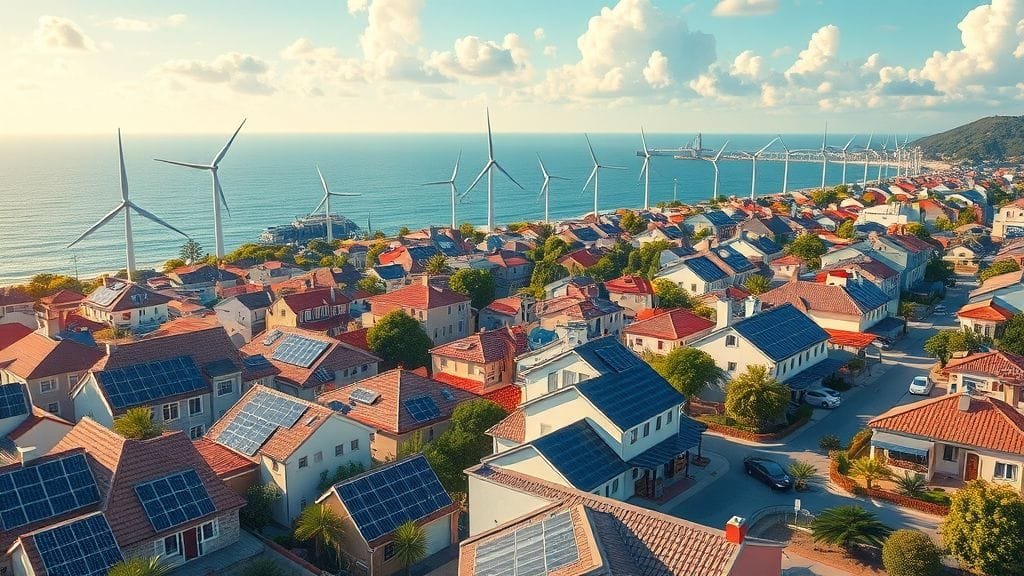
The future of renewable energy is not just a concept; instead, it is a tangible reality unfolding before our eyes. Indeed, we see an unparalleled era. It is, moreover, one of growth, innovation, and commitment. This, consequently, positions clean power. It is, furthermore, the most cost-effective choice. It is also, significantly, environmentally sound for electricity. For example, sun-drenched plains yield solar power. Meanwhile, windswept oceans drive massive turbines. The revolution is, therefore, well underway.
Challenges exist: namely, grid integration, financing disparities, and land use. These, therefore, require concerted effort. However, the momentum is undeniable. First, sustained infrastructure investment is key. Second, continuous tech advancements help. Third, supportive, consistent policies are needed globally. With these, we can realize full potential. We can also, moreover, achieve climate goals. The journey ahead is complex. Yet, it promises a cleaner future. It will be more secure. Furthermore, it will be infinitely more sustainable.
What aspect of the future of renewable energy excites you the most, and how do you envision yourself contributing to this global transition? Share your thoughts below!