

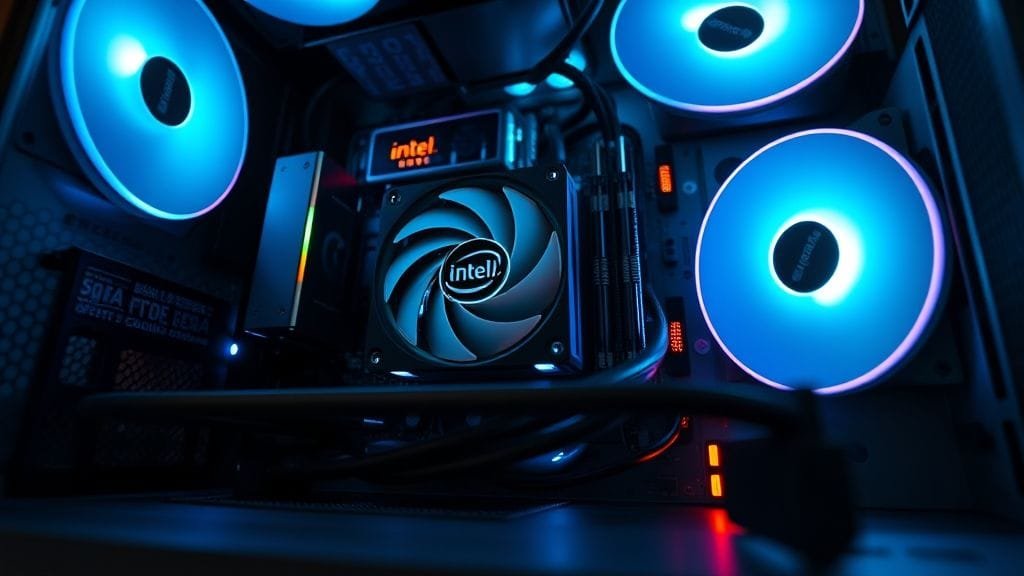
PC building has long been a tale of two titans. Specifically, Intel leads with CPUs. Meanwhile, NVIDIA and AMD fiercely rival for GPUs. However, a new challenger emerged, promising a cohesive experience from a single vendor. Indeed, this is the all-Intel PC. Essentially, it combines Intel’s Core processors. Furthermore, it uses their Arc discrete graphics cards. For years, therefore, the question lingered: is an all-Intel PC finally worth it? Initially, stumbles occurred. In fact, driver maturity was a key concern. Nevertheless, recent developments changed things. Consequently, this unified approach is now compelling. Specifically, it blends performance, features, and value. Moreover, this setup helps budget-conscious buyers. Finally, it aids those seeking creative efficiencies.
The Dawn of a New Era: Intel’s Unified Vision
To begin with, imagine your CPU and GPU actively collaborating. Indeed, they wouldn’t just be compatible. Instead, resources would be shared. Furthermore, workloads would also be optimized. Conversely, a mixed-vendor system simply can’t do this. Ultimately, this isn’t science fiction; rather, it’s the tangible promise of Intel’s expanding ecosystem. However, the journey, admittedly, hasn’t been without its hurdles. For instance, Intel faced an uphill battle from the outset. Thus, it needed to establish presence. Moreover, the discrete GPU market is highly competitive. Consequently, early Arc drivers often caused frustration. Specifically, they led to inconsistent performance. In addition, stability issues were common. Therefore, these tested early adopters’ patience.
Nevertheless, Intel demonstrated a strong commitment to improving its graphics drivers. In fact, they have released frequent, substantial updates, drastically enhancing gaming performance and overall system stability. Indeed, this ongoing, transparent development process is crucial. First, it indicates long-term viability for Arc GPUs. Second, it also builds trustworthiness. Consequently, an all-Intel PC is now much more attractive. As a result, the ecosystem is maturing. Therefore, benefits are increasingly clear. Specifically, enthusiasts and everyday users see this. Ultimately, it heralds a new era for PC enthusiasts.
From Challenge to Contender: Arc’s Maturation Journey
Indeed, Arc’s evolution has been nothing short of remarkable. Specifically, Arc initially struggled with older APIs. For instance, DirectX 9 and DirectX 11 had driver overhead. Nevertheless, Intel diligently optimized performance. Significantly, this was done across the board. Consequently, the transformation is profound, showcasing Intel’s dedication to its graphics division.
Currently, Arc GPUs shine particularly brightly in newer games that leverage modern APIs such as DirectX 12 and Vulkan. Furthermore, technologies like Xe Super Sampling (XeSS) help. Specifically, XeSS offers intelligent upscaling. Moreover, integrated frame generation is also present. As a result, Arc cards now deliver smooth, playable experiences. Indeed, this applies at 1080p and 1440p. Even so, demanding titles like Cyberpunk 2077 run well. Thus, this consistent improvement addresses early criticisms. Consequently, it firmly positions Arc as a serious contender. In short, it now competes in the graphics arena.
The Power of Synergy: Unpacking Intel Deep Link Technology
Indeed, the true magic of an all-Intel PC lies in its exclusive “Deep Link” technology. Specifically, this innovative suite of features helps. Consequently, Intel Core CPUs and Arc GPUs work in harmony. Furthermore, this includes both integrated and discrete GPUs. Ultimately, Deep Link optimizes performance. Moreover, it handles many workloads. Crucially, it offers advantages. However, these are unavailable in mixed-vendor systems. For instance, such systems combine Intel CPUs with AMD or NVIDIA GPUs. In essence, it’s like a specialized team. Therefore, every member understands how to support others. This, in turn, ensures maximum efficiency. Ultimately, it leads to a truly unified computing experience.
Dynamic Power Share: Smart Allocation for Peak Performance
First, one of Deep Link’s standout features is Dynamic Power Share. Essentially, this technology allocates power intelligently. Specifically, it shifts power between your CPU and GPU. Crucially, this happens in real-time. Moreover, it depends on application demands. For instance, imagine rendering a complex 3D model. If it heavily taxes the GPU, Deep Link might, consequently, reduce CPU power. Instead, this boosts the GPU’s allocation. Therefore, it ensures optimal performance for the task. Conversely, for CPU-intensive tasks, power can shift back towards the processor. Ultimately, this dynamic balancing act ensures effective power use. Indeed, your system always utilizes its resources well. As a result, this can deliver noticeable performance boosts. Furthermore, it aids creative and compute-intensive applications. In short, it’s an intelligent approach to power management that maximizes your hardware’s potential.
Hyper Encode: Supercharging Content Creation
Furthermore, for content creators, Hyper Encode is nothing short of a game-changer. Specifically, this feature accelerates video encoding. Indeed, it harnesses power from multiple media engines. Crucially, these are across your integrated and discrete GPUs. For example, imagine exporting a high-resolution video project. This could, for instance, be a 4K documentary. Alternatively, it could be a complex animation. Significantly, Hyper Encode does it faster. Consequently, it saves time over traditional systems. In fact, Hyper Encode leverages Intel’s full silicon. Therefore, it makes video editing faster. Moreover, encoding workflows become more efficient. Ultimately, this is a significant improvement. Thus, this capability makes an all-Intel PC attractive. Specifically, it appeals to YouTubers and videographers. Indeed, anyone with large video files benefits. Ultimately, it transforms tedious waits into productive minutes.
Stream Assist & Hyper Compute: Elevating Live Content and AI
Furthermore, beyond encoding, Deep Link further empowers streamers and AI enthusiasts. Specifically, Stream Assist offloads demanding streaming workloads. It does this by encoding the live feed. Crucially, this uses integrated graphics. These, moreover, are within your Intel Core CPU. Significantly, this separation is crucial. Consequently, it frees up the discrete Arc GPU. Thus, the GPU focuses on higher game frame rates. Therefore, this ensures a smoother gaming experience. In addition, it also provides a smoother streaming experience. Ultimately, both you and your audience benefit. Likewise, Hyper Compute is also called Additive AI. Essentially, it allows integrated and discrete graphics to run AI workloads. Indeed, they can do this simultaneously. Currently, AI is integral to many applications. Furthermore, it is even used in gaming. Therefore, this combined processing power boosts AI-driven tasks. In essence, it prepares your system for intelligent computing’s future. As a result, you gain a distinct edge in applications that leverage artificial intelligence.
Performance Where It Counts: Gaming and Beyond
Indeed, gaming is often the ultimate PC test. However, the all-Intel PC now competes vigorously. Consequently, it stands ready for this challenge. While Nvidia and AMD GPUs, for instance, command the enthusiast segment, Arc, on the other hand, offers a strong showing in its target markets. Furthermore, it delivers impressive capabilities. Thus, these challenge established norms.
Conquering Modern Titles: DirectX 12 and Vulkan Dominance
Indeed, Intel Arc GPUs have made tremendous strides in modern gaming. Specifically, in titles built with DirectX 12 and Vulkan APIs, you’ll find Arc cards delivering compelling performance that often surprises. Furthermore, XeSS is Intel’s AI-enhanced upscaling technology. Moreover, built-in frame generation is also available. Consequently, gamers can achieve satisfying frame rates. Indeed, this applies at 1080p and 1440p. For example, play Cyberpunk 2077 or Alan Wake 2. Thus, enjoy smooth visuals and responsive gameplay. Ultimately, this is now within reach for many Arc users. Furthermore, improvements are continuous. Specifically, they reflect Intel’s dedication. Indeed, Intel pushes graphics performance boundaries. This, moreover, applies to contemporary titles. To learn more about modern graphics APIs, therefore, consider visiting [Wikipedia’s DirectX page](https://en.wikipedia.org/wiki/DirectX).
The Legacy Challenge: Optimizing Older Games
While progress is impressive, still, some older titles show inconsistencies. Specifically, this applies to DirectX 9 and DirectX 11 games. Although Intel improved driver efficiency for these legacy APIs, performance might, nevertheless, not always match AMD and Nvidia. This is because their drivers are highly mature. However, this is true for every older game. Consequently, this is largely due to architecture differences. In addition, competing drivers have sheer longevity. Ultimately, this applies to specific API environments. However, many community workarounds exist. For example, DXVK translates DirectX calls to Vulkan. Indeed, these often bridge the gap. Therefore, enthusiasts can enjoy classic favorites. This, moreover, includes the all-Intel PC. For further information, you can explore projects like [DXVK on GitHub](https://github.com/doitsujin/dxvk).
Integrated Arc Graphics: A Surprising Powerhouse
Crucially, the advancements aren’t limited to discrete cards. Indeed, Intel’s “Meteor Lake” Core Ultra processors are new. Specifically, they feature integrated Arc graphics. This, consequently, is a significant generational leap. Furthermore, it surpasses previous integrated solutions like Iris Xe. As a result, integrated Arc solutions are surprisingly capable. Therefore, you can play many modern games. Specifically, this is true at 1080p with reasonable settings. Thus, some users may not need a dedicated GPU. Nevertheless, they still enjoy casual gaming. Moreover, others consider a powerful laptop. Consequently, integrated Arc graphics are compelling. Indeed, they make an all-Intel PC laptop attractive. Specifically, this applies to Core Ultra chips. Ultimately, they offer a level of graphical fidelity and performance previously unthinkable for integrated solutions.
Value Proposition: Is an All-Intel System Budget-Friendly?
Indeed, one of the most compelling arguments for an all-Intel PC is its exceptional value proposition. Specifically, Intel Arc GPUs offer excellent value. This is especially true in budget to mid-range segments. For instance, examples include Arc A750, A770, B570, B580 series. Furthermore, they provide an excellent price-to-performance ratio. Often, these cards challenge AMD Radeon and Nvidia GeForce. In fact, at similar price points, they even outperform them. Consequently, this makes them a savvy choice for discerning buyers. Consider, moreover, the current hardware landscape. Indeed, GPU prices are rising. Therefore, finding competitive hardware is hard. Ultimately, it’s a win when it doesn’t break the bank. This, in turn, benefits consumers greatly. Specifically, this is for budget gamers. Likewise, it’s for aspiring content creators. Furthermore, students building their first rig also benefit. In short, an all-Intel PC provides a robust system. It is also capable and avoids premium pricing. For example, consider savings on an Arc A750. When doing so, you save compared to competitors. You can then reinvest this into a faster NVMe SSD. Alternatively, buy more RAM. This, consequently, enhances the overall system experience. For tips on smart component selection, therefore, check out our guide on [/blog/building-a-budget-gaming-pc/].

Weighing Your Options: Pros and Considerations
Ultimately, making an informed decision about your next PC requires looking at both sides of the coin. Therefore, here’s a balanced perspective to help you decide if an all-Intel PC aligns with your needs and expectations. Indeed, understanding these points can empower you to make a choice that truly serves your computing goals.
Advantages of an All-Intel Build
Overall, the ecosystem synergy is undeniably strong, thereby offering unique benefits that are exclusive to Intel’s platform:
- Exclusive Ecosystem Synergy: Deep Link technology, for instance, provides genuine advantages. Specifically, this applies to specific workloads. Examples, moreover, include video encoding and AI inference. Furthermore, streaming offloading also benefits. Crucially, these are not available with mixed-vendor builds. Instead, it creates a cohesive, optimized environment.
- Rapid Driver Evolution: Intel, indeed, invests significantly in driver optimization. Consequently, this addressed many initial concerns. As a result, Arc GPUs are more reliable now. Moreover, they are also more performant than ever. Therefore, continued improvements are promised. Ultimately, this is part of Intel’s long-term commitment. To track progress, therefore, visit the [official Intel Arc Graphics page](https://www.intel.com/content/www/us/en/products/docs/arc-discrete-graphics.html).
- Competitive Mid-Range Value: Arc GPUs, furthermore, offer a strong price-to-performance ratio. This is particularly true in entry-level and mid-range markets. Consequently, they challenge AMD and Nvidia’s duopoly. Thus, you get more power for your dollar.
- Content Creation Powerhouse: Features like efficient AV1 encoding/decoding exist. Moreover, Hyper Encode is also present. Therefore, Arc GPUs are attractive for streamers. Similarly, video editors and media professionals benefit. Ultimately, this speeds up critical creative workflows.
- Forward-Looking AI Capabilities: Intel Arc GPUs, significantly, emphasize AI capabilities. Likewise, Core Ultra processors also do. Indeed, they often incorporate dedicated neural processing units (NPUs). As AI integration expands in software and gaming, an all-Intel PC prepares you for future advancements. This, for example, includes generative AI and advanced upscaling.
Important Considerations for Potential Buyers
While the benefits are clear, nevertheless, potential users should also be aware of these points to make a fully informed decision:
- Legacy Game Performance Nuances: While performance has improved, still, some very old DirectX 9/11 titles show inconsistencies. Specifically, they don’t match mature AMD and Nvidia drivers. Consequently, this concerns enthusiasts of specific older games. Indeed, it often affects niche titles.
- CPU Overhead: Arc GPUs, at times, can show CPU overhead. This is particularly true with lower-end CPUs. Moreover, it also occurs at lower resolutions. Therefore, unleashing Arc’s potential requires investment. Specifically, a capable Intel Core CPU (i5 or better) is beneficial. Ultimately, this ensures a balanced system. For guidance, therefore, see our article on [/blog/choosing-the-right-cpu/].
- Building Market Share and Trust: Intel Arc is, after all, a newer discrete GPU player. Consequently, it builds user trust. Furthermore, it expands its developer optimization base. However, this journey requires time. Eventually, broader developer optimization for Intel GPUs gains momentum.
- High-End Performance Gap: Intel Arc, conversely, lacks a direct competitor. Specifically, this applies to Nvidia and AMD’s highest-end GPUs. For instance, enthusiast 4K gaming at max settings needs these. Similarly, professional 3D rendering also demands the bleeding edge. Therefore, competitors might still be preferred in these cases.
At-a-Glance Comparison
Indeed, here’s a quick comparison. Specifically, it covers typical target performance characteristics. Therefore, this offers a concise overview. Ultimately, it helps those weighing options:
| Feature/Metric | All-Intel PC (Arc) | AMD/Nvidia Mixed Builds (Mid-Range) |
|---|---|---|
| Gaming (Modern) | Excellent 1080p/1440p with XeSS/FG | Excellent 1080p/1440p |
| Gaming (Legacy) | Good, improving, occasional inconsistency | Excellent, highly optimized for older APIs |
| Content Creation | Strong (Hyper Encode, AV1, Deep Link) | Strong (Nvidia CUDA, AMD Media Framework) |
| AI Workloads | Strong (Hyper Compute, dedicated NPU on Core Ultra) | Strong (Nvidia CUDA, AMD ROCm) |
| Value | Often superior price/performance mid-range | Competitive, but can be higher price/performance for similar tiers |
| Ecosystem Synergy | Exclusive Deep Link advantages | Standard component interaction |
| CPU Overhead | Can be noticeable with lower-end CPUs | Generally lower and more predictable |

Who is the All-Intel PC For? Identifying Your Ideal Build
Ultimately, is an all-Intel PC right for you? Indeed, this depends on aligning your needs. Specifically, it must match its specific strengths. Consequently, this platform is not one-size-fits-all. Instead, it excels for specific user profiles. Furthermore, certain use cases are well-suited by it. Moreover, tailored advantages are also offered. Ultimately, these can be highly compelling.
The Value-Conscious Gamer
If you want to build a powerful gaming rig. Then target 1080p or 1440p. Furthermore, don't spend top dollar. This, therefore, is for modern DirectX 12/Vulkan titles. Indeed, Arc GPUs offer an excellent performance-per-dollar ratio. Moreover, the added benefit of XeSS and frame generation can push these cards beyond what their price might suggest. Consequently, you get smooth gameplay without breaking the bank, thus leaving more budget for other components or games.The Aspiring Content Creator/Streamer
It offers unparalleled AV1 encoding/decoding. Moreover, Hyper Encode provides lightning-fast video exports. Furthermore, Stream Assist offloads live streams. Therefore, an all-Intel PC is a dream for creators. Specifically, digital artists, videographers, and streamers benefit. It helps them cut down render times on YouTube edits. Likewise, they can maintain high frame rates while streaming. This, consequently, is thanks to cohesive Deep Link technology. Imagine, then, these benefits on your favorite game.The AI Explorer
AI integration is expanding. This, for instance, includes photo editing tools. It also, moreover, covers in-game NPC behaviors. Therefore, dedicated AI acceleration is key. Your CPU (with Core Ultra NPU) provides this. Similarly, your GPU (Hyper Compute) also contributes. Consequently, this positions you at the forefront. You can, for example, experiment with local AI models. You can also use creative AI tools. Alternatively, you might want a future-proof system for the AI era. Ultimately, Intel's platform offers compelling capabilities. To learn more, read about the rise of AI in computing at [/blog/the-rise-of-ai-in-personal-computing/].The Ecosystem Enthusiast
Do you appreciate technological synergy? Then experience a platform designed as a unified whole. Indeed, the exclusive features of Deep Link are a compelling draw. You will feel satisfied knowing your components communicate. This is because they talk at a deeper level than mere compatibility. Ultimately, this maximizes their collective potential.The Forward-Thinker
Essentially, choosing an all-Intel PC means investing in a rapidly evolving platform. Specifically, you're buying into Intel's continued commitment to improving Arc drivers and expanding its ecosystem. However, it requires more trust than established leaders. Yet, improvement pace has been staggering. Therefore, this suggests a bright, innovative future.The Future is All-Intel: A Promising Horizon
Indeed, the trajectory of Intel Arc GPUs is clear. Likewise, Intel Core CPUs show proven prowess. Consequently, this paints a promising picture. Specifically, it’s for the future of the all-Intel PC. Moreover, we’re witnessing more than a new product line. Instead, it’s a strategic shift. Ultimately, it moves towards an integrated experience. In other words, it’s a synergistic computing experience. Furthermore, Intel invests heavily in driver development. As new hardware generations emerge, Deep Link capabilities expand. Therefore, the value proposition will only strengthen. Consequently, early adopters reap benefits. Likewise, so do those who value Intel’s innovative ecosystem features. Thus, the future looks even brighter.
Ultimately, is an all-Intel PC viable? Indeed, many no longer ask if. Instead, they ask when. Thus, it will become the default choice for specific users. Its appeal, furthermore, is clear. Specifically, it suits budget-to-mid-range gaming. Moreover, content creation leverages AV1 encoding. Here, Hyper Encode helps. Furthermore, growing AI capabilities are also strong. Consequently, the platform offers a compelling package. Indeed, it brims with promising potential. As Intel refines its Arc ecosystem further, this represents a bold step forward. Ultimately, it advances personal computing.

Conclusion
In conclusion, in 2025, an all-Intel PC is viable. Specifically, it combines an Intel Core CPU with an Arc GPU. Indeed, this setup has emerged as a worthwhile option. Still, it might not dominate every benchmark. This is particularly true against highest-end competitors. Moreover, it also applies to specific legacy titles. However, driver maturity made strides. Furthermore, Deep Link technology offers unique advantages. In addition, pricing is highly competitive. Consequently, these make it a formidable contender. Specifically, this is for users prioritizing gaming. It also suits budget-to-mid-range needs. Furthermore, it's for efficient content creation. Moreover, it leverages nascent AI capabilities. Ultimately, an all-Intel system presents a compelling package. It has, therefore, clear benefits. And it shows a strong growth trajectory. Nevertheless, the decision is yours. Indeed, it rests on your budget. It also depends on specific workload requirements. Furthermore, you must be willing to embrace the platform. This is because it is rapidly evolving. It is also increasingly robust. Therefore, consider an all-Intel build for your next PC? Finally, what features appeal most? Please share your thoughts below!








 is finally worth it in 2025. Explore Deep Link tech, gaming performance, and value for your next build.)