Next-gen GPU CPU insights are critical in an era where computing hardware constantly innovates. Recent Computex events, especially Computex 2024, introduced a host of new technologies. These shows significantly advanced processor and graphics development, giving valuable next-gen GPU/CPU insights. Furthermore, beyond new products, they highlighted a clear industry trend: Artificial Intelligence (AI) is integrating everywhere. Additionally, raw performance continues to advance for both CPUs and GPUs, offering crucial next-gen GPU/CPU insights into future capabilities.

This analysis explores key details from recent industry gatherings. It offers crucial next-gen GPU/CPU insights, illuminating the future of computing. We examine architectural breakthroughs and benchmark revelations. Moreover, we discuss the profound impact of driver software. All of this helps us understand these crucial developments. From powerful new AI silicon to advancements in gaming and productivity, these developments are crucial. Understanding them, therefore, helps us anticipate the technological landscape ahead.
Computex 2024 & 2023: Future GPU CPU Trends and Hardware Insights
Computex, an annual event held in Taipei, Taiwan, acts as a beacon for the global IT industry. It offers manufacturers a vital platform where they unveil innovations and hint at future roadmaps. Computex also sets the tone for upcoming hardware cycles. Indeed, recent shows, particularly Computex 2024 and 2023, were highly revealing. They signaled a major shift to AI-centric designs. Furthermore, they pushed traditional performance limits, providing valuable next-gen GPU/CPU insights.

An aerial wide shot of the bustling Computex exhibition hall in Taipei, Taiwan, filled with attendees, vibrant technology booths showcasing new hardware, and large display screens, highlighting future GPU CPU trends.
Computex events do more than simply showcase products. They act as a crucible where industry giants like AMD, Intel, and Nvidia reveal strategic visions. Developments span from desktop processors to advanced cooling solutions, and even groundbreaking peripherals are unveiled. These insights paint a vivid picture of computing’s immediate future. Thus, understanding the key takeaways is essential for anyone tracking hardware trends and seeking next-gen GPU/CPU insights.
Computex 2024: The AI Infusion and Performance Leaps – Next-Gen GPU CPU Insights
Computex 2024 marked a decisive turn. Artificial Intelligence (AI) moved beyond being a mere buzzword. Instead, it emerged as the defining trait of almost all new hardware. This revealed significant next-gen GPU/CPU insights into the industry’s direction. AI-ready silicon integrated everywhere, from dedicated NPUs in CPUs to accelerated GPU capabilities. Consequently, this signaled a fundamental industry shift. Beyond AI, the event also highlighted gains in raw processing power. Furthermore, advancements in efficiency and innovative component designs further enriched our next-gen GPU/CPU insights.
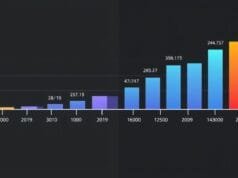
Next-gen processors generated considerable excitement on the show floor. They revealed important details about future CPU capabilities. AMD, a key player, introduced its Zen 5-powered Ryzen 9000 series desktop CPUs. These new processors promise a solid 16% IPC (Instructions Per Cycle) increase, vital for overall performance. Moreover, the flagship Ryzen 9 9950X impressed in early benchmarks. It performed 11% faster in gaming than Intel’s Core i9-14900K and was 21% faster in productivity tasks. These initial figures, therefore, suggest a strong generation for AMD, exciting enthusiasts and professionals alike.

Qualcomm also made a significant splash with its Snapdragon X Elite processors. Indeed, these chips may disrupt traditional x86 dominance in Windows PCs. They claim up to 26 hours of laptop battery life, combined with impressive speed. Consequently, Snapdragon X Elite signals a potent new contender in portable computing. Meanwhile, Intel showcased its new Xeon 6 E-core chips. Intel emphasized their superior power efficiency. This is a critical factor for data centers and enterprise applications, offering further next-gen GPU/CPU insights.

Next-Gen AI Processors Lead Computex 2024: Critical GPU CPU Insights
The laptop market recently saw interesting developments. These updates offer gamers and creators insights into future GPU and CPU technologies. For instance, Asus launched the TUF Gaming A14, which includes a Ryzen AI 9 HX 370 CPU and an RTX 4060 GPU. Users praise its excellent performance-to-weight ratio, making it ideal for those needing portable power. Asus also showcased the slim ZenBook S 16. Moreover, the ProArt P16, built specifically for creators, uses an Nvidia GeForce RTX 4070 GPU. These devices highlight mobile computing’s steady growth. They effectively blend performance, portability, and unique features.
Next-Gen CPU and GPU Revelations: Key Insights
Core components and motherboards revealed key innovations. These added to our next-gen GPU/CPU insights. Maxsun, for example, introduced a unique “back-to-back” Mini-ITX motherboard. This board uses a clever rear-mounted PCIe x16 connector, eliminating bulky riser cables. The design simplifies cable management. Moreover, it improves aesthetics for compact builds. Team Group also displayed new PCIe 5.0 SSDs optimized for AI tasks. Furthermore, they showcased advanced coolers to manage high-speed storage heat. Such improvements ensure hardware keeps pace with CPU and GPU progress.
Effective cooling solutions are vital for high-performance systems. Often overlooked, these solutions recently gained significant attention. For example, Lynk+ unveiled an RTX 4090 graphics card featuring an integrated water block and a modular AIO system. This innovation simplifies complex open-loop liquid cooling. Additionally, it offers excellent thermal management while reducing setup hassle. Phanteks’ Evolv X2 chassis also impressed, with many considering it ideal for premium PC builds. It combines attractive aesthetics with a practical design. Thus, strong cooling remains key as hardware pushes thermal limits, a core next-gen GPU/CPU insight.

Beyond core components, Computex 2024 also showcased future peripherals and conceptual tech, providing further next-gen GPU/CPU insights. MSI introduced the MEG 321URX QD-OLED, touting it as the world’s first AI gaming monitor. This monitor features “AI Skysight technology.” Consequently, it enhances gaming experiences through intelligent visual processing. Not to be outdone, Acer showcased its SpatialLabs Eyes Stereo Camera. This device, furthermore, aims to simplify 3D content creation and livestreaming. These peripherals demonstrate AI’s pervasive enrichment of computing. It boosts both processing and visual output.
Computex 2023: Foundation for Future Innovation and Upcoming Hardware Analysis
While Computex 2024 focused heavily on AI and new silicon, Computex 2023 presented a different picture. Yet, it still offered valuable next-gen GPU/CPU insights. This was a period of consolidation for CPUs and GPUs, as their previous generation had just launched. Therefore, the focus shifted to innovations in peripherals, advanced cooling, and hardware refinements. This laid crucial groundwork for advancements seen one year later, enabling future next-gen GPU/CPU insights.
Corsair’s iCue Link system was a significant highlight. This innovative technology, consequently, simplified PC cable management, often a challenge for enthusiasts. iCue Link reduced cables for cooling fans and RGB components. This, therefore, streamlined system assembly and improved internal airflow. Such user-centric innovations enhance the overall building and ownership experience. This remains an important aspect of next-gen GPU/CPU insights.
Frore Systems introduced AirJet cooling technology, a compact, highly efficient solid-state solution. This technology, for instance, appeared in products like the Zotac Zbox PI430AJ Pico, demonstrating its potential for ultra-small form factor devices. Furthermore, where traditional fans are impractical, this specialized cooling is vital for performance. It helps in increasingly miniaturized hardware, a key part of next-gen GPU/CPU insights.
Computex 2023: Hardware and Cooling Innovations
GPU designs have improved, offering clues about next-gen GPUs. For instance, MSI released its RTX 4070 Ti Gaming X Slim, a card that solves the size issue of modern graphics cards. Its slimmer profile, therefore, fits into more PC cases. Importantly, it does so without significant performance loss. Meanwhile, Asus impressed with its ROG Matrix GeForce RTX 4090. This premium card uses liquid-metal thermal material and features a large 360mm water cooler. Such extreme cooling consequently boosts the RTX 4090’s performance. This shows manufacturers’ commitment to high-end hardware.
Decoding Next-Gen GPU Architectures and Roadmaps: Essential Insights
The pursuit of performance and efficiency relentlessly drives GPU architecture innovation. Both dedicated and integrated graphics solutions are rapidly evolving. Each new generation, therefore, promises more power, enhanced features, and greater capacity for complex workloads. Roadmaps from Nvidia, AMD, and Intel reveal distinct strategies. However, all converge on a future dominated by AI, improved ray tracing, and more immersive experiences.
Understanding architectural shifts and release timelines provides critical next-gen GPU/CPU insights. These are not merely incremental upgrades. Instead, they represent fundamental re-imaginings of how graphics and compute tasks are handled. Every detail plays a role in defining future system capabilities, including core streaming multiprocessor design, memory configurations, and interconnect speeds, offering valuable next-gen GPU/CPU insights.
NVIDIA’s Blackwell and Beyond: RTX 50 & 60 Series Next-Gen GPU CPU Insights
Nvidia still leads the high-end GPU market. Its upcoming GeForce RTX 50 Series, powered by the anticipated Blackwell architecture, will be a significant leap, offering crucial next-gen GPU/CPU insights. Experts tout it to bring substantial AI horsepower and introduce new experiences. It will also deliver enhanced graphics fidelity through advancements like DLSS 4 and better ray tracing. These technologies are crucial for realistic rendering and adapting to demanding visual content. They will significantly shape our next-gen GPU/CPU insights.

Rumors suggest an RTX 50 Super lineup could debut around CES or early 2026. This might include the 5080 Super, 5070 Ti Super, and 5070 Super. These “Super” variants typically refresh older models with improved specifications. Upgrades often include more VRAM and higher TDPs. For instance, the RTX 5070 Super might get 18GB, and the 5070 Ti Super, 24GB, with TDPs reaching 275W and 350W respectively.
Nvidia’s Next-Gen GPU Roadmap
For the immediate future, however, the RTX 5050 is already available. This entry-level card uses the GB207-300 die, featuring 2560 CUDA cores and 8GB GDDR6 VRAM. With an MSRP of $250, it provides an accessible entry point to the new generation. This offers practical next-gen GPU/CPU insights for consumers.
Looking further ahead, the RTX 6000 family is tentatively expected in early 2027. It will be based on the Rubin platform and will feature the next-gen NVLink 6 interconnect. It promises incredible speeds of 3600 GB/second. Such massive bandwidth is crucial for data centers, AI training, and extreme professional workloads. This highlights Nvidia’s strategic focus on consumer gaming and enterprise AI acceleration. Moreover, NVLink’s continuous evolution ensures multiple GPUs communicate with unprecedented efficiency, unlocking new levels of parallel processing.
AMD’s Unified Vision: RDNA 5 and CDNA Next – Crucial Next-Gen GPU CPU Insights
AMD’s GPU strategy focuses on two distinct areas: advancements in consumer Radeon GPUs (RDNA architecture) and data center Instinct accelerators (CDNA architecture). Each provides distinct next-gen GPU/CPU insights. AMD’s roadmap includes significant developments for both. For data centers, AMD plans the MI325X by late 2024 and targets the MI400 for 2026, based on CDNA-Next. These accelerators will feature substantial HBM3E memory and bandwidth. This is essential for processing massive AI datasets and scientific simulations. Furthermore, they are critical for understanding future compute capabilities.

AMD’s future plans include an intriguing next-gen UDNA architecture. This ambitious project, therefore, aims to unify AI and gaming GPUs, succeeding current RDNA cards like the Radeon RX 9070 XT. The main goal is to establish a common architectural foundation that will efficiently handle both high-fidelity graphics and intensive AI computations.
Leaks regarding RDNA 5, the next consumer graphics iteration, suggest a powerful flagship. For example, it might feature 96 Compute Units (CUs) and a wide 512-bit memory bus. Such specifications indicate a significant performance leap. AMD aims to compete aggressively in the enthusiast segment. This unified approach could streamline development. It also offers greater flexibility across AMD’s product stack. Consequently, this yields important next-gen GPU/CPU insights regarding efficiency.
Intel’s Arc Battlemage: Challenging the Duopoly with Next-Gen GPU CPU Insights
Intel recently joined the discrete GPU market with its Arc series, a move that aims to boost Intel’s market position and highlights promising future GPU technology. Reports suggest the Arc Battlemage lineup will launch soon, potentially debuting early next year. This series includes B770 and B780 models. These second-generation cards improve on earlier Alchemist (A-series) cards. The B770, for example, is expected to feature 28 XE cores, 16GB VRAM at 19Gbps on a 256-bit bus, and 28MB of L2 cache. This setup offers 40% more XE cores than the current B580, promising a significant performance boost.
Intel’s B780, an even more powerful GPU, will reportedly feature 32 XE cores, 16GB VRAM, and a 32MB L2 cache. These specifications suggest 74% more compute power than the flagship A770. Both Battlemage GPUs will naturally utilize Intel’s XeSS upscaling technology. This greatly boosts game performance. Consequently, this technology is crucial for Intel to challenge Nvidia’s DLSS and AMD’s FSR, revealing a key next-gen GPU/CPU insight. Frame generation, furthermore, is becoming an indispensable tool for achieving high frame rates. This is especially true at higher resolutions with demanding graphics. It offers key next-gen GPU/CPU insights into performance optimization. Furthermore, Intel’s upcoming Panther Lake laptop CPUs will feature a 12 EU Celestial iGPU, confirming their continued investment in mobile integrated graphics.
The Unseen Power: Driver Technologies and Performance Boosts for Next-Gen GPU CPU Insights
While new hardware architectures and specifications grab headlines, GPU drivers are often the unsung heroes of PC performance. Indeed, these complex codes translate game and application instructions into commands the graphics card understands. Consequently, this profoundly impacts frame rates, stability, and new features. AMD, Intel, and Nvidia constantly refine their drivers. They offer crucial next-gen GPU/CPU insights through continuous updates and frame generation technology. Furthermore, evolving support models contribute. These ongoing developments are vital for understanding the full scope of future computing potential.
Driver development is dynamic and continuous. It involves constant optimization for new games, bug fixes, and advanced rendering techniques. A well-optimized driver’s impact can be highly significant. It sometimes matters more than a minor hardware revision. This highlights the importance of ongoing software support. Such support maximizes both existing and future hardware potential. This remains a core component of next-gen GPU/CPU insights.
NVIDIA’s Game Ready Advantage
Nvidia’s driver updates focus on a “Game Ready” philosophy, ensuring optimal performance for new game releases on day one. For example, driver 581.42 recently added support for Battlefield 6. It also introduced DLSS 4, Nvidia’s next AI-powered upscaling. This driver also addressed critical issues, resolving crashes in Battlefield 2042 and light flickering in Forza Horizon 4 on RTX 50 series GPUs. Such fixes are vital for a smooth and reliable user experience, especially with new hardware. They provide further next-gen GPU/CPU insights into the interplay of software and hardware.
Nvidia recognizes the complexity of driver development. Therefore, it regularly releases updates with new features and bug fixes. This commitment extends to new functionalities, such as the Nvidia App now including GPU overclocking. This integration streamlines overclocking for users. They can push hardware limits directly through Nvidia’s software. Indeed, the seamless interplay between hardware and software defines Nvidia’s ecosystem. This is a consistent theme in next-gen GPU/CPU insights.
AMD’s Fluid Motion and Geometric Detail
AMD also commits to enhancing its graphics stack through driver innovations. The company is actively developing Fluid Motion Frames 3 (AFMF 3), which we spotted in the upcoming Adrenalin 25.20 driver branch. This new AFMF 3 version is expected to leverage FSR 4’s advanced AI model. This integration, consequently, suggests a future with more efficient and widely applicable frame generation. It provides significant performance uplifts across more games and GPUs. Thus, it offers valuable next-gen GPU/CPU insights into performance scaling.
Beyond frame generation, AMD also pushes the boundaries of graphical fidelity using its Dense Geometry Format (DGF) 3D graphics technology. DGF aims to dramatically increase geometric detail in game worlds. This creates more realistic and immersive environments. Crucially, this technology includes hardware acceleration support designed for future RDNA5 GPUs. This forward-looking approach ensures upcoming AMD architectures will be optimized for these advanced rendering techniques. They will provide a truly next-gen visual experience, which impacts next-gen GPU/CPU insights into visual capabilities.
Intel’s XeSS MFG and Legacy Support
Intel, a new player in the discrete GPU market, understands software’s critical role. The company reportedly works on its own multi-frame generation technology, “XeSS MFG,” which we observed in Arc driver files. This development indicates Intel’s commitment to competitive performance features. It directly challenges Nvidia’s DLSS and AMD’s FSR, influencing next-gen GPU/CPU insights into competitive features. Frame generation, furthermore, is becoming an indispensable tool for achieving high frame rates. This is especially true at higher resolutions with demanding graphics. It offers key next-gen GPU/CPU insights into performance optimization.
While Intel innovates for the future, it also made strategic decisions on legacy support. The company recently shifted integrated graphics (11th-14th gen processors) to a legacy software model. This change means fewer driver updates and ends Day 0 Game support for these older iGPUs. Therefore, Intel can now allocate more resources to its newer Arc discrete GPUs. Upcoming integrated solutions will receive focused, timely optimization. This further contributes to next-gen GPU/CPU insights regarding resource allocation.
Benchmarks and Performance Trajectories: Next-Gen GPU CPU Insights
Drivers can have a dramatic impact, and Intel’s Arc B580 GPU is a prime example for next-gen GPU/CPU insights. For instance, a single driver update (version 7028) boosted performance by 36%. This happened with a Ryzen 5 5600 CPU. Consequently, software optimization that addressed CPU overhead achieved this substantial gain. This highlights driver development’s critical role. It suggests that while hardware provides the foundation, robust and updated software unlocks its full potential, a key element of next-gen GPU/CPU insights.
CPU Performance: A Fierce Contest, Offering Next-Gen GPU CPU Insights
Benchmarks definitively measure hardware performance. They offer objective comparisons and reveal true capabilities of new processors and graphics cards. The latest data, especially from Computex 2024, provides crucial next-gen GPU/CPU insights that showcase the evolving competitive landscape. Performance metrics are not merely numbers; instead, they indicate future computing potential. This ranges from seamless gaming to accelerated content creation and AI processing, forming foundational next-gen GPU/CPU insights.
Performance gains in the industry often tie to specific workloads. While raw clock speed remains important, other metrics are vital. These include Instructions Per Cycle (IPC), core count, and specialized accelerator efficiency, such as AI engines or ray tracing units. Analyzing these benchmarks helps us understand hardware development and reveals competitive battlegrounds, providing vital next-gen GPU/CPU insights.
GPU Driver Impact: Software as a Performance Multiplier
The CPU market remains intensely competitive. AMD, Intel, and now Qualcomm continue to push boundaries. AMD’s Ryzen 9 9950X, with its Zen 5 architecture, showed impressive gains in early Computex 2024 benchmarks. As noted, it notably outperformed Intel’s Core i9-14900K. It achieved an 11% average lead in gaming and a substantial 21% lead in productivity. Therefore, these results position the Ryzen 9000 series as a formidable contender. It offers compelling next-gen GPU/CPU insights for enthusiasts and professionals demanding top-tier CPU performance.
Qualcomm’s Snapdragon X Elite emerged as a significant player, especially in laptops. Early claims suggest its raw speeds could match Apple’s M3 MacBook Air. This signals a serious threat to x86 architecture’s dominance in Windows PCs. The Snapdragon X Elite combines high performance with exceptional battery efficiency. This makes it a compelling choice for mobile computing. Its emergence highlights a broader trend towards ARM-based processors in Windows. This potentially offers a new paradigm for laptop design and user experience, providing more next-gen GPU/CPU insights.
The Intel Arc B580 GPU case study powerfully reminds us of driver software’s impact and adds to our next-gen GPU/CPU insights. For instance, a single driver update (version 7028) boosted performance by 36%. This happened with a Ryzen 5 5600 CPU. Consequently, software optimization addressing CPU overhead achieved this substantial gain. This highlights driver development’s critical role. It suggests that while hardware provides the foundation, robust and updated software unlocks its full potential, a key element of next-gen GPU/CPU insights.
Despite Intel’s impressive driver improvement, the Radeon 9060 XT 8GB maintained a lead, offering about 30% greater performance than the Intel Arc B580 in similar setups. This comparison shows Intel is closing the gap. However, AMD’s architectures still hold a performance edge in many scenarios. The Arc B580, nevertheless, offers a distinct advantage: it provides 12GB of VRAM, compared to the 9060 XT’s 8GB. This is vital for memory-intensive games and applications, a point worth noting for next-gen GPU/CPU insights.
Overall Trends: AI Workloads and IPC Gains – Key Next-Gen GPU CPU Insights
Recent benchmarks and announcements reveal an overarching trend: a focus on AI workloads and fundamental IPC gains. Processors increasingly integrate dedicated AI accelerators (NPUs). These, consequently, handle machine learning tasks more efficiently and shift workloads from general-purpose CPU cores or GPUs. This specialization allows for faster AI processing while also lowering power consumption.
The push for tighter integration between CPU and GPU, especially in the context of AI, is a dominant theme. Uniform memory access, high-speed interconnects, and shared resource pools are becoming increasingly important for maximizing performance in modern workloads. Understanding these cross-vendor dynamics and strategic collaborations provides critical next-gen GPU/CPU insights into the future direction of computing.
Cross-Vendor Dynamics: Intel x86 RTX SOCs
The competitive drive is fierce. AMD shows impressive Zen 5 IPC gains and a unified UDNA vision; Nvidia, moreover, boasts its powerful Blackwell architecture; and Intel has ambitious Battlemage GPUs and x86 RTX SOC collaboration. Driver software, often an unsung hero, unlocks significant performance boosts, demonstrating how sophisticated software optimization realizes hardware’s full potential. Benchmarks, whether for CPUs or GPUs, illustrate a clear trajectory. This trajectory includes higher performance, smarter processing, and more immersive user experiences.
Simultaneously, traditional IPC improvements remain a priority. Higher IPC means a CPU does more work per clock cycle. This directly translates to better performance across all applications. This includes gaming, content creation, and general productivity. The consistent focus on these two areas ensures that next-gen GPU/CPU insights are not just about raw power but also smarter, efficient processing. The convergence of AI capabilities and core architectural improvements promises a new era. These devices will be highly capable and responsive, delivering comprehensive next-gen GPU/CPU insights.
The Future Landscape: Integration and Competition – Next-Gen GPU CPU Insights
The hardware industry stands at an inflection point. It is driven by insatiable demand for processing power, the rise of AI, and evolving user experiences. Competition among Nvidia, AMD, and Intel is fierce. It is not merely about building the fastest chip; rather, it focuses on creating the most integrated, efficient, and forward-looking ecosystem. This intense rivalry fosters innovation. It also leads to fascinating new partnerships and architectural paradigms.
AMD’s successful APUs combine a CPU and GPU on one chip. They share memory, which boosts performance within a compact package. This design hints at future integrated CPU-GPU systems. Now, however, Intel’s x86 RTX SOCs present a new challenge, also targeting integration and efficiency. Intel, however, seeks higher performance by utilizing Nvidia’s advanced GPU technology. Uniform memory access is crucial for these designs. It significantly reduces latency. Moreover, it speeds data transfer between the CPU and GPU, which is vital for complex games and AI applications. Therefore, this partnership showcases CPU and GPU technologies merging, blurring their traditional roles.
The AI Hardware Focus
AI’s pervasive presence in Computex announcements underscores its role as the primary catalyst for hardware innovation, a core aspect of next-gen GPU/CPU insights. Every major player invests heavily in AI-optimized silicon. Nvidia, for example, pushes boundaries with its Blackwell and Rubin architectures. They are designed for AI and leverage CUDA’s dominant market share. AMD is unifying RDNA and CDNA architectures under UDNA, aiming to bring AI capabilities to more products. Intel integrates NPUs into its CPUs (like Lunar Lake) and also develops XeSS MFG for Arc GPUs, ensuring AI-ready platforms.
This AI focus drives more than just performance gains; it also leads to new form factors and power efficiency targets. AI processing, whether on-device or in the cloud, needs specialized hardware. This hardware must deliver high throughput with minimal power. The race to develop efficient, powerful AI silicon will shape computing’s next decade, influencing everything from smartphones to supercomputer design. The competitive landscape is intense. It promises a future of intelligent, capable devices, validating many next-gen GPU/CPU insights.
Our journey through Computex wrap-ups, GPU/CPU specifications, and evolving drivers reveals a vibrant hardware landscape. The central theme from these next-gen GPU/CPU insights is AI’s profound and pervasive impact. AI is not merely another feature; instead, it reshapes processor design, drives new architectural philosophies, and demands unprecedented integration and efficiency, providing profound next-gen GPU/CPU insights.
Frequently Asked Questions
Q1: What were the main takeaways from Computex 2024 regarding new hardware and next-gen GPU/CPU insights?
A1: Computex 2024 was dominated by AI integration across various product categories. Key announcements included AMD’s Zen 5-powered Ryzen 9000 series CPUs, Qualcomm’s Snapdragon X Elite, new Intel Xeon 6 E-core chips, advanced cooling solutions, and innovative peripherals like MSI’s AI gaming monitor.
Q2: How are CPU and GPU drivers impacting performance for next-gen hardware, providing essential next-gen GPU/CPU insights?
A2: Driver updates are crucial for unlocking hardware potential. Intel’s Arc B580 GPU saw a 36% performance boost from a driver update, demonstrating significant software optimization potential. AMD is developing AFMF 3 with AI for frame generation, while Nvidia continuously releases “Game Ready” drivers for optimal new game performance and features like DLSS 4.
Q3: What is the significance of the Intel x86 RTX SOC collaboration, and what next-gen GPU/CPU insights does it offer?
A3: This collaboration between Intel and Nvidia is highly significant as it aims to integrate an Intel x86 CPU chiplet with an Nvidia RTX GPU chiplet via NVLink, offering uniform memory access. It’s a direct move to compete with AMD’s APU strategy by combining leading CPU and discrete GPU technologies for enhanced performance and efficiency, especially in gaming.
Q4: What new GPU architectures can we expect from Nvidia, AMD, and Intel, informing our next-gen GPU/CPU insights?
A4: Nvidia is preparing its Blackwell architecture for the RTX 50 series, followed by Rubin for the RTX 6000 series. AMD is working on its RDNA 5 architecture for consumer GPUs and CDNA-Next for data center accelerators, with a goal to unify AI and gaming under UDNA. Intel is set to release its Arc Battlemage lineup (B770, B780) next year, building on its first-gen Arc offerings.