Imagine a world where your devices effortlessly handle the most demanding tasks while sipping power like a hummingbird. Indeed, this isn’t a futuristic fantasy. Instead, it’s a new reality. Specifically, this reality is driven by performance and efficient cores. Furthermore, they are rising within our processors. For years, consequently, chip manufacturers chased raw speed, often at the expense of energy consumption and heat. However, a significant shift is underway. Namely, it intelligently combines specialized “muscle” cores. Moreover, it also uses “marathon runner” cores. Ultimately, this delivers an unparalleled balance of power and efficiency.
Initially, this article details the dual-core revolution. Thus, it explains how these clever designs work. In fact, they transform smartphones and data centers. Furthermore, it also covers future challenges and exciting prospects. Therefore, get ready to understand the brains behind your next-generation tech!

Understanding the Dual-Core Revolution: The Essence of Hybrid Computing
Initially, modern computing faces a core challenge. Specifically, how do we achieve blistering speeds? Moreover, we must avoid overheating devices. Also, we need to prevent quick battery drain. However, the answer is not a single approach. Instead, it’s a specialized, heterogeneous design. Indeed, this is increasingly clear. Essentially, this combines different processing units. Ultimately, each unit is optimized for a specific role. Furthermore, all are within a single chip.
Consequently, this intelligent segmentation allocates tasks dynamically. Therefore, it ensures the right tool is always used for the job. For instance, you wouldn’t use a bulldozer to plant flowers. Conversely, you also wouldn’t use a hand trowel to move mountains. Similarly, your processor now wisely chooses between its powerhouse and its energy-saver cores.
The Powerhouse: Performance Cores (P-cores)
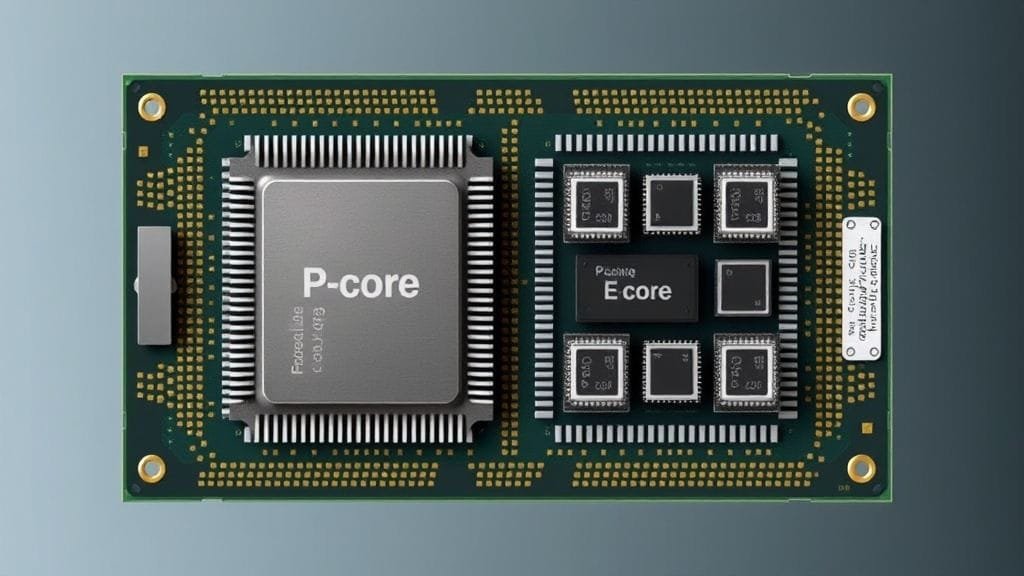
To begin with, think of `performance cores` as the sprinters of the CPU world. Specifically, these are robust, high-performance engines engineered for pure speed and maximum computational throughput. Thus, P-cores tackle demanding, single-threaded workloads. Therefore, they are ideal for tasks needing raw power and quick execution.
However, what kind of tasks are we talking about? For example, imagine editing high-resolution video. Alternatively, consider rendering complex 3D graphics. Moreover, think about dominating a graphically intensive video game. Consequently, these activities demand a core that can crunch numbers rapidly and maintain high clock speeds. In addition, many P-cores support hyper-threading. This, in turn, allows managing multiple software threads. Ultimately, it further boosts intensive computations.
The Efficiency Engine: Efficient Cores (E-cores)
On the flip side, `efficient cores` are the long-distance runners. Indeed, these are physically smaller and incredibly power-thrifty, optimized for maximum performance-per-watt. Specifically, their goal is to handle background tasks. Moreover, they also manage less demanding applications. Typically, these run on your device. Crucially, they do so without hogging power or generating heat.
For instance, consider activities like browsing the web, checking email, running antivirus software, or managing system updates. Notably, these tasks are crucial for a smooth computing experience but don’t require the brute force of a P-core. Consequently, E-cores excel here. Thus, they keep your system responsive and snappy. Furthermore, they also extend battery life on mobile devices. In addition, E-cores have a smaller physical footprint. Therefore, multiple E-cores can occupy the space of one P-core. Ultimately, this improves die space utilization. Moreover, it also enhances overall scalability.
A Synergistic Partnership for Performance and Efficient Cores
Indeed, the magic truly happens when P-cores and E-cores work in concert. Specifically, this heterogeneous design uses each core type’s unique strengths. Therefore, it creates a seamlessly responsive computing experience. Furthermore, it is remarkably efficient. To illustrate, the system directs demanding tasks to P-cores. This, consequently, ensures smooth, responsive performance where it matters most. Meanwhile, the E-cores quietly and efficiently manage the lighter workloads and background processes.
Ultimately, the result is a powerful processor. Hence, it offers blistering speed for peak demands. Moreover, it conserves energy exceptionally for everyday use. Furthermore, this partnership enhances user experience. In addition, it brings tangible benefits in power consumption. Significantly, it also helps with thermal management. Consequently, these are crucial for today’s diverse computing devices.
The Pioneers of Hybrid Architectures
While specialized cores may seem new, in fact, combining processor types is not. Instead, this idea optimizes power efficiency and speed. Indeed, its history is rooted in forward-thinking design. Specifically, two major players shaped this landscape. Furthermore, each brought a unique spin to hybrid architecture. Ultimately, their innovations paved the way for the sophisticated `performance and efficient cores` we see today.
ARM’s Big.LITTLE Legacy
Initially, the journey into heterogeneous computing was largely popularized by ARM’s big.LITTLE architecture, first announced in 2011. Notably, ARM envisioned a specific world. In this world, mobile devices would offer high performance. Moreover, they would also provide exceptional battery life for prolonged use. Consequently, their solution was ingenious: pair powerful “big” processors with energy-sipping “LITTLE” processors.
Indeed, this design allowed devices to dynamically switch between these core clusters based on workload requirements. As a result, ARM’s marketing touted big savings. Specifically, devices could save up to 75% power. This, importantly, was for certain activities. Consequently, it used the LITTLE cores. Therefore, this approach was groundbreaking. Ultimately, it showed how mobile SoCs could manage power and performance. Thus, it set the stage for broader industry adoption.
Intel’s Embrace of Performance and Efficient Cores
Initially, for decades, x86 architecture relied on homogeneous cores. Specifically, Intel primarily drove this design. Consequently, all cores on a chip were identical. However, this changed dramatically with Intel’s 12th Gen Alder Lake processors. Indeed, this generation marked Intel’s entry into hybrid architecture. Namely, it integrated dedicated `performance cores`. Moreover, it also added `efficient cores` into one design.
Specifically, Intel P-cores use powerful microarchitectures. For example, these include Golden Cove and Raptor Cove. By contrast, E-cores leverage Gracemont microarchitecture. Indeed, Gracemont is optimized for efficiency. Crucially, a key innovation enabling the seamless operation of Intel’s hybrid design is the Intel Thread Director. Furthermore, this hardware component is crucial. In essence, it works with the operating system. For instance, Windows 11 is a key example. Ultimately, it schedules threads on the best core. Thus, tasks go to a P-core for maximum performance. Alternatively, they go to an E-core for optimal efficiency. Consequently, this integration was strategic. Moreover, it brought hybrid computing benefits to a wider audience. Therefore, it fundamentally altered the x86 landscape. To clarify, you can learn more about Intel’s approach on their official site or reputable tech resources.

An infographic illustrating the Intel Thread Director managing tasks between P-cores and E-cores on a CPU die.
Unlocking the Benefits: Why Performance and Efficient Cores Matter
Ultimately, adopting `performance and efficient cores` is an engineering marvel. Specifically, it delivers tangible advantages. Indeed, these impact your daily workflow. Moreover, they also affect global data center operations. Significantly, this intelligent architecture goes beyond adding more cores. Instead, it focuses on smarter core utilization. Therefore, let’s delve into the profound benefits this approach brings to the computing world.
| Feature | Homogeneous (Traditional) Architecture | Heterogeneous (Hybrid) Architecture | Impact of P-cores & E-cores |
|---|---|---|---|
| Power Consumption | High, even for light tasks | Optimized, dynamic | E-cores handle light loads, significantly reducing overall power draw. |
| Performance | Consistent, but limits multi-tasking | Peak performance for demanding tasks | P-cores ensure responsiveness; E-cores free up P-cores. |
| Battery Life | Shorter on mobile devices | Extended | Lower power consumption directly translates to longer battery life. |
| Thermal Output | Higher overall heat | Reduced, better managed | E-cores generate less heat, preventing throttling. |
| Multitasking | Can slow down under heavy load | Smoother, more responsive | P-cores for foreground, E-cores for background tasks. |
| Scalability | Limited by core size and power | Highly adaptable across devices | Flexible configurations for diverse needs, from mobile to server. |
Improved Energy Efficiency
First and foremost, one of the most immediate and impactful benefits is a dramatic reduction in energy consumption. Specifically, E-cores handle less demanding tasks. Thus, this offloads them intelligently. Consequently, the system avoids unnecessary P-core activation. Since P-cores consume more power, this, therefore, is a game-changer for battery-powered devices, offering significantly extended battery life. Furthermore, for data centers, this means lower costs. It also reduces cooling requirements. Moreover, it also creates a smaller environmental footprint. Ultimately, every watt saved contributes to a more sustainable computing infrastructure.
Enhanced Performance and Multitasking
Crucially, don’t mistake efficiency for a lack of power. On the contrary, this architecture enhances performance. To illustrate, demanding tasks access P-cores directly. Specifically, P-cores run at higher clock speeds. This, in turn, ensures swift execution and responsiveness. Meanwhile, E-cores handle all background processes concurrently. Consequently, they do not compromise P-core peak performance. Therefore, this intelligent distribution creates smoother multitasking. Thus, your system remains snappy even under heavy load. For instance, Intel’s 12th Gen P-cores boosted performance significantly. Indeed, they surpassed their predecessors. Similarly, E-cores showed impressive gains too. Moreover, this was over older core designs. Significantly, it happened at equivalent power levels.
Optimized Thermal Management
Indeed, heat is the enemy of performance and longevity. Consequently, by routing lighter tasks to E-cores, the overall thermal load on the processor is significantly reduced. Thus, this prevents chip overheating. Moreover, it avoids thermal throttling. To clarify, throttling means the CPU slows down to cool off. Furthermore, better thermal management creates a stable system. It also prolongs hardware lifespan. In addition, it also ensures consistent performance. This, importantly, holds even during extended use.
Flexibility and Scalability
Ultimately, the heterogeneous approach offers flexibility. Specifically, it allows tailored configurations. Indeed, this spans devices and workloads. Furthermore, this architecture is adaptable. For instance, such adaptability extends to IoT devices. Moreover, consumer electronics are also well-suited for it. It also powers high-performance computing, and it even supports cutting-edge AI applications. Consequently, this scalability means that `performance and efficient cores` can power diverse applications with optimized resource allocation. Therefore, for further reading, explore resources on heterogeneous computing.
Workload Optimization
Consider this: imagine having a specialized team for every type of project. Essentially, that’s what `performance and efficient cores` provide. Specifically, dedicated P-cores handle compute-intensive tasks. By contrast, E-cores excel at scale-out workloads. For example, these include managing microservices. Additionally, they also handle multiple small, concurrent operations. Ultimately, this precise allocation ensures optimal resource utilization, maximizing throughput and efficiency across the entire system.
Navigating the Challenges of Hybrid Architectures
While the benefits of `performance and efficient cores` are clear, nevertheless, widespread adoption has hurdles. Furthermore, optimal utilization presents challenges too. Specifically, these complex architectures introduce new considerations for developers, operating system designers, and even end-users. Therefore, understanding these challenges is key to appreciating the ongoing innovations that are making hybrid computing a reality.
Software Compatibility and Scheduling
Indeed, a significant challenge exists. Namely, it’s assigning tasks to appropriate cores. Crucially, this must happen without latency. Moreover, it must also avoid performance bottlenecks. Consequently, not all software is inherently optimized for hybrid architectures. For example, older applications may not be optimized. Thus, they might not recognize distinct core types. Therefore, they may not fully use P-cores and E-cores.
However, operating systems play a crucial role here. Specifically, modern OS versions are engineered for this. For instance, Windows 11 is one example. Furthermore, they work seamlessly with Intel’s P-cores and E-cores. This, consequently, uses technologies like the Thread Director. Ultimately, consistent performance is needed. Indeed, this applies across all applications. Moreover, it also applies to operating environments. Therefore, this remains an ongoing development effort.
Thermal and Power Management Complexity
While E-cores improve efficiency dramatically, P-cores, conversely, generate significant heat. Indeed, this happens during intensive tasks. Consequently, this necessitates advanced cooling solutions, especially in compact form factors like laptops or high-density server racks. Thus, balancing core utilization is key. Furthermore, it maintains optimal temperatures. Moreover, it also manages power draw. Therefore, this needs sophisticated strategies. Ultimately, it’s a delicate dance between peak performance and thermal envelopes.
Design Complexity
Initially, multicore processors are already intricate feats of engineering. However, adding heterogeneous core types further increases this complexity. Specifically, chips with `performance and efficient cores` are complex. Indeed, their design, validation, and manufacturing are intricate. Consequently, these need specialized expertise. Moreover, advanced methodologies are also required. Furthermore, this complexity extends to software. For instance, operating systems are affected. Also, application developers must contend with it. Ultimately, they need to extract maximum performance. Moreover, they also need maximum efficiency from nuanced hardware.

The Future of Processor Design: Beyond Performance and Efficient Cores
Ultimately, the trajectory is clear. Indeed, heterogeneous computing is here to stay. Specifically, it blends `performance and efficient cores`. Consequently, this is the definitive future of processor design. Furthermore, the industry is moving beyond simply cramming more identical cores onto a chip. Instead, the focus is on smarter, more specialized, and ultimately more efficient computing. Therefore, this evolution promises even more dynamic and adaptive hardware for our increasingly complex digital lives.
AMD’s Entry into the Hybrid Race
Interestingly, Intel’s long-time competitor, AMD, has also confirmed its commitment to this hybrid philosophy. Consequently, future AMD client CPUs will adopt hybrid designs. Specifically, they will mix high-performance and power-efficient cores. Indeed, this mirrors big.LITTLE and Alder Lake approaches. Moreover, AMD pushes the envelope further. Namely, it integrates specialized AI accelerators. Thus, this signals a move towards diverse architectures. Ultimately, these will be more powerful and heterogeneous. Therefore, this competitive landscape will undoubtedly drive further innovation and optimization in the coming years.
The Evolution Towards Unified Cores
Furthermore, whispers suggest Intel’s future plans. Specifically, they may evolve away from P-core and E-core distinctions. Indeed, this could happen by 2028. Moreover, it aligns with the rumored “Titan Lake” generation. However, this isn’t a return to homogeneous cores. Instead, it’s a move towards unified cores. Consequently, these will still be highly energy-efficient.
Ultimately, the idea is to combine the best aspects. Thus, this creates a single, advanced core type. Specifically, it leverages cutting-edge manufacturing processes. Moreover, this vision may create nuanced core variants. For instance, AMD’s Zen 5 and Zen 5c are similar. Indeed, they offer “classic” and “compact” core versions. Consequently, these have different performance-per-watt profiles. Furthermore, it’s a continuous refinement process. Ultimately, the goal is immense computational power. This power, moreover, will be in a reduced space. Crucially, it won’t compromise efficiency. In conclusion, the goal remains the same: a powerful, responsive, and sustainable computing experience.

The Long-Term Vision
Ultimately, the evolution of `performance and efficient cores` continues. Indeed, it signifies a profound shift in processor architecture. Specifically, it’s a move away from brute-force scaling to a more intelligent, workload-aware design. Consequently, this paradigm prioritizes peak performance. Moreover, it also ensures sustainable energy consumption. This, importantly, is for everyday tasks. Thus, our devices become faster and smarter. Furthermore, they are also cooler and more eco-friendly. Therefore, the future of computing looks promising. It also blends power and efficiency harmoniously. Ultimately, it meets the demands of our digital world.
What excites you most about processor design? What balance between power and efficiency do you prefer? Share your thoughts in the comments below!