
Java has been a cornerstone of software development for decades. It remains robust, demonstrating its inherent flexibility and power. Java’s influence is truly vast; it powers complex systems for companies worldwide and apps on your smartphone. This makes Java Enterprise Android a crucial area to understand. This article explores Java’s pivotal role in both enterprise and Android development, highlighting its effectiveness in large business applications and its adaptability for Android.
Consider Java a highly reliable tool. Despite evolving over time, its performance remains consistently strong. Its strength derives from several core principles, including platform independence, scalability, robust security, and a rich ecosystem of tools and support. Consequently, understanding these elements reveals why Java remains pivotal for Java Enterprise Android solutions today.
Java’s Core Role in Enterprise and Android Applications
Many of the world’s largest companies rely on Java. Indeed, it forms the foundation of their critical systems. In fact, over 90% of Fortune 500 companies utilize Java for their backend servers. Consequently, Java operates the underlying infrastructure that powers everything from banking to delivery systems. Therefore, Java’s widespread adoption is well-justified. It provides significant benefits to large businesses, ultimately making it an ideal choice for robust Java Enterprise Android solutions.

Businesses require robust, secure technology that can scale with their growth. Significantly, Java excels at meeting these demands. Moreover, it empowers companies to manage vast amounts of data and millions of daily transactions. Let’s explore why Java remains a top choice for enterprise development, even amidst the emergence of other languages, and how it facilitates the creation of new Java Enterprise Android applications.
Why Businesses Trust Java for Critical Enterprise Systems
For Java Enterprise Android applications, reliability is paramount. Imagine a bank processing millions of transactions; even a minor issue could lead to substantial losses and reputational damage. Java’s design directly addresses these significant risks, providing a stable and predictable environment for complex tasks.
Consider the systems that manage airline bookings, hospital records, or global financial markets. Clearly, these are not simple applications. Instead, they require a language capable of handling immense workloads, safeguarding sensitive data, and integrating seamlessly with numerous other systems. Consequently, Java provides the tools and structure essential for such demanding environments, contributing to successful Java Enterprise Android implementations.
Platform Independence: The “Write Once, Run Anywhere” Promise
One of Java’s most renowned features is its “Write Once, Run Anywhere” promise. Specifically, this means developers can write Java code on one system, such as Windows, and run it on another, like Linux or macOS, without needing to rewrite it. This capability is facilitated by the Java Virtual Machine (JVM), which acts as a translator, enabling the same Java application to execute across diverse hardware and operating systems.
This cross-platform capability offers significant advantages for businesses engaged in Java Enterprise Android development. For instance, it reduces costs because teams do not need to create distinct versions for each system. Furthermore, it streamlines maintenance and deployment, as a single codebase can be managed and updated. Ultimately, this saves both time and resources. Consequently, this flexibility is paramount for businesses, highlighting a core strength of Java Enterprise Android, especially since these businesses often operate diverse system environments.
Performance and Security for Java Enterprise Android Scale
Scalability and Performance: Handling Heavy Loads with Ease
Enterprise applications frequently experience high traffic and process immense volumes of data. Consider a shopping website during a major sale or a bank at the close of a trading day. Java excels at managing these demanding workloads, making it a critical technology for Java Enterprise Android platforms. It ensures applications perform rapidly and remain stable, even under peak loads. This inherent scalability and strong performance make Java a premier choice for mission-critical systems and serve as the foundation for expandable Java Enterprise Android platforms.
Java achieves its impressive speed and scalability through several intelligent features. For example, it employs sophisticated memory management, which helps applications run smoothly by optimizing the utilization of computer memory. Furthermore, Just-In-Time (JIT) compilation dynamically transforms Java bytecode into machine code during runtime, significantly boosting performance. In addition, Java’s support for multithreading allows applications to execute numerous tasks concurrently, making them quick and efficient.
Robust Security Framework: Protecting Sensitive Data
Security is imperative for enterprise applications, particularly those handling sensitive data. Consider, for instance, the ramifications if a hospital or government agency experiences a data breach. Java, therefore, integrates security directly into its core design, offering a robust framework. This capability empowers developers to build highly secure applications, forming a critical component of Java Enterprise Android systems. Consequently, it remains a top choice for domains where data integrity and privacy are paramount.
Essential Java Enterprise Android Capabilities
Java employs several layers of security. Specifically, secure class loading ensures that only trusted code is executed. Furthermore, Bytecode verification rigorously checks for any malicious code or errors prior to execution. Additionally, sandboxing creates isolated execution areas, preventing untrusted code from accessing critical system components. Together, these features establish a formidable shield, ultimately providing businesses with confidence that Java can safeguard their vital data within Java Enterprise Android solutions.
Rich Ecosystem and Frameworks: Accelerating Development
Building complex enterprise solutions can be an arduous undertaking. However, Java significantly streamlines and accelerates this process, primarily due to its extensive collection of libraries, APIs, and frameworks. These tools offer ready-made components and structures, consequently saving developers considerable time. Instead of building everything from scratch, they can leverage proven solutions.
Two prime examples are Spring and Java Enterprise Edition (Java EE), now known as Jakarta EE. Indeed, both are highly significant for complex Java Enterprise Android projects. Spring, particularly with Spring Boot, is widely popular due to its modularity and flexibility. Moreover, it accelerates application development and is a cornerstone of modern microservices architecture. Conversely, Jakarta EE provides a comprehensive set of specifications for enterprise applications, offering a standardized approach to building them. While some perceive it as more robust or ‘heavier,’ both provide powerful tools for constructing feature-rich, resilient applications, which are crucial for comprehensive Java Enterprise Android projects.
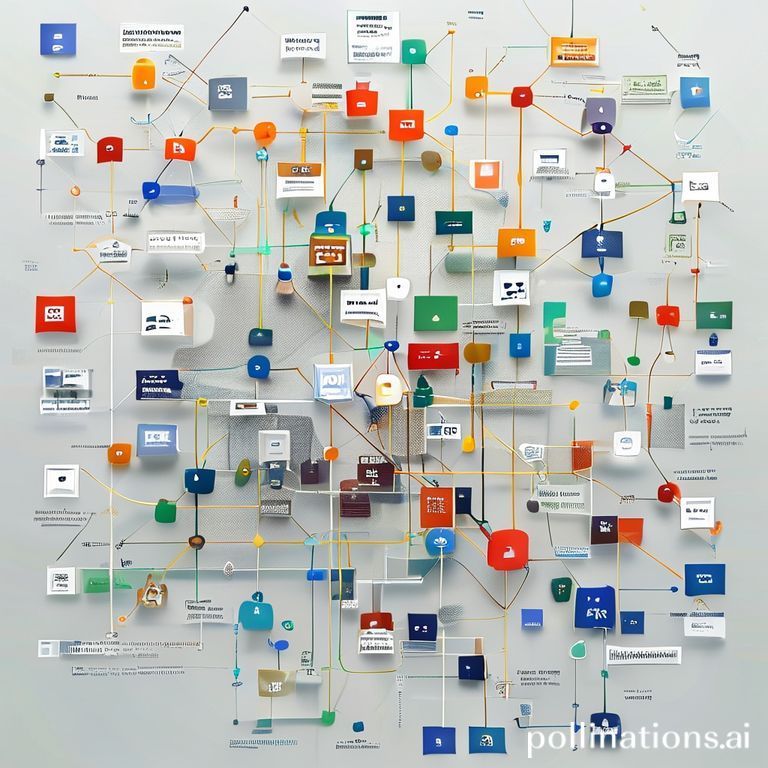
A diagram illustrating the vast Java ecosystem, showing frameworks like Spring, Hibernate, and Apache Kafka, connected to various enterprise application types (e.g., banking, e-commerce, healthcare).
Community and Tools for Java Enterprise Android Development
Community Support and Talent Pool: A Global Network
No language thrives in isolation, and Java exemplifies this perfectly. Indeed, it benefits from one of the largest and most active global developer communities. This extensive network provides abundant resources, detailed documentation, and a vast pool of skilled developers. In essence, choosing Java means embracing more than just a language; it means gaining access to a world of shared knowledge and innovation.
This active community signifies that if a developer encounters a problem, it’s highly probable that someone else has already addressed it and shared the solution. Furthermore, it ensures the language continuously evolves, with new features and fixes constantly being developed. Consequently, the large talent pool of skilled professionals greatly assists businesses in easily finding and hiring experienced Java Enterprise Android developers, which simplifies recruitment and keeps projects progressing efficiently.
Navigating Java Enterprise Android Challenges
While Java possesses clear strengths, like any technology, it also presents areas where developers might encounter challenges. Recognizing these points helps teams make informed decisions and plan effectively for their Java Enterprise Android initiatives. This awareness forms part of the crucial lessons learned from years of extensive Java utilization.
Common Challenges and Considerations
For instance, some developers find Java’s codebase can be more verbose than that of newer languages, often necessitating more lines of code to accomplish a given task. Moreover, Java applications can occasionally exhibit higher memory consumption and slower startup times, particularly when contrasted with certain lighter languages or tools.
Modern Solutions and Future Directions
However, these perceived downsides are not insurmountable obstacles. Instead, the Java community and major corporations are continuously working to address these areas. In fact, there is a concerted focus on optimizing Java for modern computing systems. Specifically, this encompasses advancements in JVM technology, new language features, and enhanced tooling. Consequently, the landscape of Java Enterprise Android development is constantly evolving and improving.
A key trend mitigating these challenges is the shift towards cloud-native applications and microservices architecture. This involves companies breaking down monolithic applications into smaller, independent components. Spring Boot, for instance, excels in this domain, offering lightweight, fast-starting microservices ideal for robust Java Enterprise Android designs. Ultimately, this architectural approach helps alleviate concerns regarding memory footprint and startup times for individual components.
Java Enterprise Android: The Mobile Development Landscape
For an extended period, Java was the undisputed leader for Android application development. Indeed, it played a pivotal role in early Java Enterprise Android projects. From Android’s inception, Java served as the official and primary language. Its comprehensive ecosystem, the Android SDK, and powerful tools like Android Studio made it a trusted choice. Consequently, developers could construct virtually any mobile application with Java, thereby paving the way for complex Java Enterprise Android solutions. Furthermore, its object-oriented design and robust features contributed to the creation of resilient and secure mobile applications.

(https://developer.android.com/guide/components/fundamentals) languages, starting with Java, then showing the introduction of Kotlin and Google’s endorsement.]
Java’s central role in Android development meant that millions of applications utilized it. This notably encompassed many critical Java Enterprise Android applications. The extensive libraries and community support available to Java developers also seamlessly extended to Android. Consequently, this facilitated rapid development and efficient resource sharing.
Java’s Legacy in Enterprise Android Development
For many years, if one sought to build an Android application, Java was the unequivocal choice. It, indeed, offered a well-established and robust environment for developers. The Android SDK—a comprehensive set of tools, libraries, and APIs—was primarily designed for Java. Therefore, this close integration made it straightforward for developers to leverage device features and craft visually appealing applications.
Java’s object-oriented programming (OOP) paradigm aligned well with the modular construction of mobile applications. It enabled developers to create reusable components and effectively manage complex application designs. Furthermore, Java’s inherent security provided an additional layer of protection for mobile applications, which is particularly critical as they often handle sensitive personal data. Many of the applications we use daily, including numerous Java Enterprise Android apps, still contain a significant portion of their codebase written in Java.
The Rise of Kotlin: A New Era for Mobile
The technological landscape is constantly evolving, and Android development is no exception. In 2019, Google officially declared Kotlin its preferred language for Android development. This announcement, therefore, heralded a significant shift in the mobile application ecosystem. Kotlin, a modern language that runs on the JVM and offers compile-time type checking, consequently gained rapid popularity among developers.
Kotlin introduced several compelling advantages over Java, particularly for new Android projects. It was designed to address Java’s perceived weaknesses while building upon its strengths. Furthermore, Google’s strong endorsement signaled that Kotlin would drive new Android innovations. Importantly, it would also interoperate seamlessly with existing Java-based enterprise Android development. This, ultimately, would make mobile applications faster, safer, and more efficient for developers to build. As a result, the mobile development landscape began to transform.
Conciseness and Expressiveness: Writing Less, Doing More
One of Kotlin’s most celebrated features is its conciseness. Developers often discover they can achieve the same functionality with significantly less code in Kotlin compared to Java. This reduction in boilerplate code results in cleaner, more readable, and simpler-to-maintain code. Therefore, imagine implementing a complex feature in half the time; that, in essence, is the substantial advantage Kotlin provides.
Clearer code inherently translates to fewer bugs. When code is succinct and expressive, developers can comprehend its functionality much more rapidly. Consequently, this accelerates application development and simplifies error detection and updates. Kotlin’s concise nature offers a significant advantage for mobile applications, proving particularly valuable in Java Enterprise Android systems where rapid iterations and minimal code are beneficial.
Enhanced Stability and Developer Experience
Null Safety: Preventing Common Crashes
A notorious issue in Java development, particularly on Android, is the Null Pointer Exception (NPE). Specifically, this occurs when a program attempts to use an uninitialized or null reference, ultimately causing applications to crash. Kotlin, however, addresses this problem with its built-in null safety, which compels developers to explicitly handle null values. This effectively prevents abrupt runtime crashes.
Kotlin’s type system distinguishes between nullable and non-nullable types. Consequently, this enables the compiler to identify potential NPEs during the build process, thereby reducing the likelihood of runtime application crashes for users. As a result, this proactive checking significantly enhances the stability and reliability of Android applications, benefiting the entire Java Enterprise Android ecosystem. It considerably saves developers time in debugging and ultimately improves the user experience.
Modern Features and Seamless Integration
Seamless Interoperability with Java: A Bridge, Not a Barrier
One of Kotlin’s most powerful features is its seamless 100% interoperability with Java. This doesn’t imply one language fully replaces the other; rather, Kotlin can readily integrate into existing Java projects. Developers, for example, can write new modules in Kotlin while retaining existing Java code, and they can effortlessly utilize existing Java libraries and frameworks within Kotlin projects. Therefore, this collaborative capability is paramount for gradual adoption.
This interoperability is crucial for incremental adoption. Specifically, it means that companies with extensive Java codebases, particularly those involved in Java Enterprise Android, do not need to undertake a complete overhaul. They can gradually migrate portions of their applications to Kotlin, thereby gaining its benefits without disrupting established systems. Ultimately, this facilitates a smoother and more secure transition for Java Enterprise Android teams, allowing them to leverage the strengths of both languages.

Modern Features: Boosting Developer Productivity
Kotlin is equipped with numerous modern features that significantly boost developer productivity and enhance coding enjoyment. For example, smart casts automatically convert variables to a specific type following a successful check, consequently reducing boilerplate code. Furthermore, Lambda expressions simplify the creation of concise code blocks, which is highly beneficial for event handling. Moreover, extension functions enable developers to add new capabilities to existing classes without modifying their original source code. Collectively, these features, among others, contribute to faster and cleaner coding practices.
These features collectively contribute to faster and more streamlined coding. They empower developers to write more robust, readable code with reduced effort. As a result, Kotlin’s emphasis on developer satisfaction and efficiency has rapidly propelled its popularity among Android developers. This growing adoption, furthermore, enriches the Java Enterprise Android toolkit.
Java and Kotlin: Complementary Roles in Java Enterprise Android
While Kotlin is increasingly becoming the preferred language for new Android projects, Java remains formidable and significant. In fact, many companies still possess extensive Java codebases for their Android applications. These legacy systems require ongoing maintenance, updates, and new feature development. Consequently, for these projects, Java continues to be the primary language for sustaining Java Enterprise Android operations.
This implies that developers entering Android development often need proficiency in both languages. Indeed, a solid understanding of Java is essential for maintaining legacy applications, while learning Kotlin is crucial for new projects and adopting modern paradigms. Thus, it’s a dynamic landscape where both languages coexist for Java Enterprise Android, rather than one simply replacing the other.
Java and Kotlin often demonstrate comparable performance for Java Enterprise Android development. Both languages, in fact, compile into similar bytecode that executes on the Java Virtual Machine. Consequently, the choice between them typically revolves more around developer productivity, code safety, and modern features, rather than raw execution speed. Java’s vast ecosystem, maturity, and stable nature ensure its continued importance in Java Enterprise Android, even as Kotlin propels the development of new mobile applications. Ultimately, both play complementary and pivotal roles.
Java’s Enduring Relevance for Enterprise Android Solutions
Java’s trajectory, from enterprise servers to mobile applications, unequivocally demonstrates its remarkable adaptability. It has, furthermore, proven its value as a stable, robust, and secure language capable of addressing diverse technological requirements. Indeed, its core strengths continue to make it an intelligent choice for both businesses and developers, particularly for Java Enterprise Android solutions.
Strategic Considerations for Java Enterprise Android Decisions
For Developers: Building a Versatile Skillset
If you are a developer, mastering Java Enterprise Android unlocks numerous career opportunities. Specifically, grasping its core concepts and tools like Spring Boot will prepare you for backend roles across virtually any industry. Conversely, if your aspiration is Android development, proficiency in Java remains highly beneficial for maintaining legacy applications and expanding your Java Enterprise Android capabilities. However, integrating Kotlin into your skillset will make you highly sought after for new mobile projects within the Java Enterprise Android ecosystem. Ultimately, the goal is to cultivate a versatile and highly valuable skillset.
https://www.youtube.com/watch?v=0FrJrRU-pKw
(https://developer.android.com/guide/components/fundamentals) explained]
For Businesses: Making Informed Tech Stack Decisions
For businesses and project managers, tech stack selection represents a strategic decision. Java, therefore, continues to be a formidable tool for critical, large-scale backend systems. Its proven performance, security, and scalability solidify its position as the foundation of many Java Enterprise Android architectures. Consequently, when considering Java Enterprise Android development, assess your current codebase. If you possess a substantial Java-based application, a gradual migration to Kotlin might be advantageous. Conversely, for entirely new applications, Kotlin offers distinct benefits in terms of development speed and code safety, presenting a modern alternative within the Java Enterprise Android landscape. The key lies in strategically leveraging the strengths of each language.
The Future Landscape of Java
What lies ahead for Java? Indeed, it is evident that Java is not static; rather, it is a language that continuously evolves. In fact, the Java platform consistently introduces new advancements. Projects like Loom (for enhanced concurrency) and Amber (for improved language features) exemplify its dedication to remaining modern and robust. Ultimately, these innovations aim to address existing challenges and prepare Java for the next wave of computing, thereby strengthening its role in Java Enterprise Android innovation.
Java Enterprise Android will undoubtedly remain a dominant force. Specifically, Java will continue to power cloud-native applications, microservices, and big data systems. Its stable nature and strong performance are too critical for large corporations to disregard. Furthermore, Java will persist in supporting numerous existing Android applications, consequently forming an integral part of the wider Java Enterprise Android solution. Simultaneously, Kotlin will be instrumental in developing new mobile applications, significantly contributing to future Java Enterprise Android projects. Thus, they function synergistically, ensuring a rich and diverse future for Java Enterprise Android.

Ultimately, Java embodies the principles of longevity and adaptability in technology. Its capacity to evolve while retaining its core strengths ensures it remains a leader in software innovation. It, consequently, continues to shape the future of Java Enterprise Android. Therefore, it reminds us that robust tools, much like timeless wisdom, endure by continuously discovering new avenues for utility.
What aspects of Java’s continued evolution do you find most exciting or impactful for the future of software development?