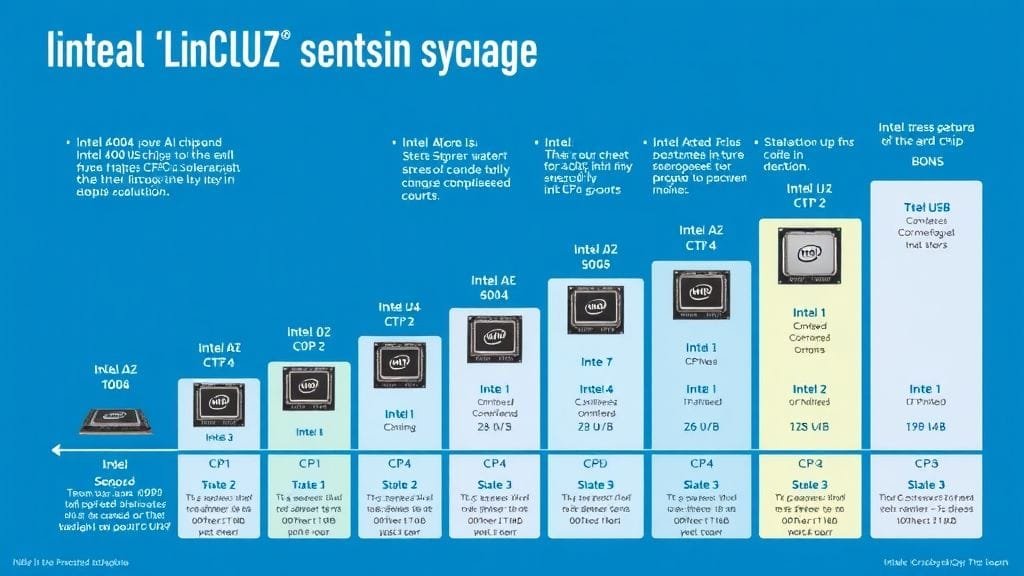
The story of Intel is more than corporate history; instead, it mirrors the very evolution of computing itself. Intel started by crafting chips for calculators. However, now it leads in artificial intelligence. Indeed, Intel has consistently shaped our digital world. Moreover, this journey spans over five decades. Specifically, it showcases relentless innovation. Furthermore, it also demonstrates strategic adaptation. Ultimately, Intel has an enduring impact on our daily technology use.
You might see Intel inside your laptop, or alternatively, it may power vast data centers. Consequently, understanding its transformation helps you appreciate tech shifts. Thus, let’s explore how this semiconductor titan reinvents itself. Indeed, it navigates challenges. Meanwhile, it seizes new frontiers. Overall, Intel remains at the forefront of technological advancement.

The Dawn of Digital: Intel’s Pioneering Microprocessors (1970s)
Imagine a world without personal computers, and likewise, imagine no internet. Indeed, that was the reality before Intel’s earliest innovations. The company did not just join the digital revolution. Rather, it ignited it. Crucially, its first major breakthrough set the stage for everything. In essence, it fundamentally changed what electronics could do.
The Intel 4004: A Revolutionary Beginning
Initially, in 1971, Intel unveiled the 4004. Significantly, it was the world’s first commercially available microprocessor. This tiny 4-bit CPU was, indeed, a marvel. Specifically, initially for a Busicom calculator, the chip packed 2,300 transistors onto a single chip. Furthermore, operation occurred at a modest 740 kHz. Essentially, think of it as computing’s foundational blueprint. Prior to this, complex electronics needed many specialized chips. However, now core intelligence fit in one place.
This was more than an improvement; indeed, it was a paradigm shift. Specifically, a central processing unit now fit on one chip. Consequently, this opened doors to countless new applications. Previously, engineers had not even dreamed of them. Moreover, it clearly demonstrated miniaturization. Ultimately, it met unprecedented functionality. Ultimately, this paved the way for ubiquitous digital devices.
Powering the PC Revolution: From 8080 to x86
Indeed, Intel rapidly iterated on the 4004’s success. First, the 8-bit Intel 8008 arrived in 1972. Following this, the more powerful 8080 appeared in 1974. Subsequently, the 8080 became the heart of early personal computers. Most notably, this included the Altair 8800. Indeed, many consider the Altair the genesis of the PC era. Thus, it put programmable computing power into many hands. As a result, enthusiasts and entrepreneurs alike benefited.
However, the true cornerstone of Intel’s future emerged in 1978. Specifically, it was the Intel 8086. This 16-bit design, furthermore, introduced the x86 architecture. Notably, this architecture endures today. Consequently, IBM adopted it for its first personal computer in 1981. Ultimately, this was a game-changer. Consequently, this partnership solidified Intel’s position. In turn, it became the premier microprocessor supplier. Furthermore, it established a standard dominating for decades. Thus, the evolution of Intel was now linked to the personal computer.
Unrivaled Dominance: The “Intel Inside” Era (1980s-1990s)
As the personal computer moved from niche to mainstream, Intel’s role became central. The company didn’t just create chips. Rather, it created the very engine of the PC revolution. Consequently, it became a household name. Indeed, this era cemented its legendary tech status.
Fueling the PC Boom with x86 and Pentium
Initially, the x86 architecture evolved throughout the 1980s and 1990s. For instance, processors like the 286, 386, and 486 emerged. Notably, each offered significant performance boosts. Subsequently, the Pentium series launched in 1993. In effect, this marked a new era. Indeed, Pentium processors became synonymous with high-performance computing. Moreover, they drove advancements in software, gaming, and multimedia. Additionally, they powered the burgeoning internet. Ultimately, countless business applications ran on them.
During this period, PC sales exploded. Consequently, Intel was at the heart of it all. To illustrate, visualize this growth as a towering skyscraper. Specifically, each new Intel chip added a critical floor. In fact, they continually pushed PC boundaries. Thus, Intel became the backbone of global digital infrastructure. Clearly, this was a testament to its engineering prowess.
The Power of Brand: “Intel Inside”
Beyond technical innovation, Intel also mastered brand recognition. For example, the iconic “Intel Inside” campaign launched in the early 1990s. Soon, it became ubiquitous. Ultimately, it assured consumers of an industry-leading processor. Furthermore, this fostered trust. Moreover, it also built a perception of quality. Consequently, the campaign was very successful. In fact, it solidified Intel’s market leadership. Indeed, the company held a 90% market share in PC microprocessors then. Thus, it showed how smart marketing transforms a component manufacturer. Ultimately, it created a globally recognized brand.
Navigating Turbulent Waters: Challenges and Strategic Shifts (2000s-2010s)
However, no reign lasts forever without challenges. Naturally, Intel faced its share. Specifically, the technological landscape shifted dramatically. In addition, the company confronted new competitive pressures. Furthermore, it also missed opportunities. Consequently, these circumstances forced critical strategic pivots. Ultimately, the period highlights the constant need for adaptation. Indeed, this need is crucial in the fast-paced tech industry.
The Mobile Miss and the Need for Diversification
Around this time, the 2000s saw the mobile revolution rise. Specifically, smartphones and tablets redefined personal computing. Moreover, they ran on energy-efficient ARM-based chips. However, Intel focused on its x86 dominance. However, it struggled in this burgeoning market. For instance, you might recall many smartphones. Indeed, they used Qualcomm processors, not Intel’s.
Ultimately, this strategic misstep taught a critical lesson. Indeed, diversification was no longer optional. However, Intel led in PC and server markets. However, relying solely on them became a vulnerability. Consequently, the market landscape was fragmenting. Thus, it demanded a broader portfolio of solutions.
Reigniting Competition: AMD’s Resurgence
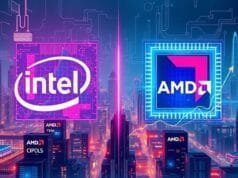
Furthermore, AMD’s resurgence added to Intel’s challenges. Notably, AMD is a long-time rival. Specifically, by the late 2010s and early 2020s, AMD introduced competitive processors. Indeed, this occurred in both PC and server markets. Consequently, it led to a notable shift in market share.
To illustrate, consider this snapshot of the shifting landscape:
| Market Segment | Intel Market Share (2010s Avg.) | Intel Market Share (2024 Est.) | AMD Market Share (2024 Est.) |
|---|---|---|---|
| PC Processors | >80% | ~66% | ~34% |
| Data Center Processors | ~99% | ~70% | ~30% |
Note: These figures are approximate and can vary slightly by research firm.

Evidently, this data clearly illustrates increased competition. Moreover, it underlines Intel’s need to innovate aggressively. Therefore, strategic action is vital to maintain leadership. Therefore, the evolution of Intel now required a fresh focus.
Charting a New Course: Intel’s Bold Leap into the AI Era
Despite this, Intel has faced these challenges. Moreover, it recognizes AI’s immense potential. Consequently, Intel has embarked on a significant strategic pivot. Indeed, the company now aggressively pursues AI leadership. In short, it sees AI as the next frontier for growth. This is not just about faster chips. Rather, it’s about enabling a new era of intelligent computing.
Specialized AI Accelerators: The Gaudi Series
Specifically, Intel’s AI strategy centers on specialized AI accelerators. Specifically, these dedicated chips handle intense computational demands. Furthermore, they power deep learning and generative AI models. For example, the Intel Gaudi 3 AI Accelerator is a prime example. Notably, it was unveiled in late 2023 and launched in 2024. In addition, Gaudi 3 offers high-performance processing for data centers. Thus, it is efficient and scalable. Crucially, it directly competes with Nvidia and AMD.
Therefore, Intel positions Gaudi 3 as a cost-effective alternative. Ultimately, it aims to democratize access to powerful AI infrastructure. Indeed, this focus on specialized hardware is clear. Specifically, it shows a deep understanding of AI workload requirements. Furthermore, it moves beyond general-purpose CPUs. Instead, Intel builds purpose-built solutions. Consequently, the company’s commitment is clear. Therefore, it intends to be a foundational provider for the AI revolution.
AI Integration: From Data Centers to Your PC
Moreover, Intel’s AI strategy is not just specialized accelerators. Instead, it integrates AI capabilities into broader processor lines. Consequently, this widespread integration brings AI power closer. Indeed, it goes from the cloud to the edge device.
- Data Center Power: Specifically, in 2024, Intel announced new Xeon 6 processors. Specifically, these are for data centers. Moreover, they offer improved performance and power efficiency. Crucially, this is specifically for AI workloads. Ultimately, these chips manage massive enterprise AI needs.
- The AI PC: Furthermore, for the client PC market, Intel launched Core Ultra laptop chips. Specifically, they feature built-in Neural Processing Units (NPUs). In other words, NPUs are dedicated AI engines. Ultimately, they handle AI tasks locally. Additionally, this enhances performance and privacy. Furthermore, it also reduces cloud reliance. To accelerate this initiative, Intel began the “AI PC Acceleration Program.” Thus, it fosters collaboration with developers. In turn, they create AI-accelerated applications. Predictably, Intel anticipates over 100 million AI-infused PCs by 2025. Clearly, this signals a new era of personal computing.
https://www.youtube.com/watch?v=ZQ7hwG4IklI
Reclaiming Manufacturing Leadership: The Foundry Vision
Beyond design, Intel also invests heavily in its foundry business. Specifically, this involves manufacturing high-end semiconductors. Furthermore, it does this for its own products. Moreover, it also serves external clients. For example, major players like Microsoft are included. Ultimately, this ambitious pivot seeks to regain manufacturing leadership. In addition, it ensures a resilient supply chain. Furthermore, it is geographically diverse. Indeed, this is crucial for AI chip production.
Notably, significant government funding supports this. For example, the U.S. CHIPS Act is one such initiative. Consequently, Intel aims to be the world’s second-largest foundry by 2030. Consequently, this strategy addresses global supply chain vulnerabilities. In addition, it positions Intel as a key player. Indeed, this spans the entire semiconductor ecosystem. Specifically, it goes from design to fabrication. Ultimately, this bold move underscores Intel’s long-term vision. Thus, it defines the evolution of Intel and its global tech hierarchy.

Intel’s Enduring Legacy and the Road Ahead
Overall, Intel’s journey is compelling. Indeed, it testifies to relentless innovation. Moreover, strategic foresight is also evident. From enabling the first calculators, the company’s work now powers the AI age. Consequently, its contributions have been foundational. Furthermore, the company adapts constantly. For instance, it pivoted from PC dominance to an AI-first strategy. Ultimately, this showcases a deep understanding of technological currents. Indeed, these currents are shaping our future.
However, the evolution of Intel is far from over. As AI becomes more pervasive daily, demand for advanced computing grows exponentially. Consequently, Intel stands at a critical juncture. Significantly, its investments in specialized AI hardware are key. Furthermore, integrated AI capabilities are important. Moreover, its foundry business positions it well. Thus, it will be a key architect of the next tech wave.
What future innovations do you anticipate from Intel as it continues its remarkable evolution in the age of AI? Indeed, share your thoughts in the comments below!