
Have you considered this intricate dance? Indeed, it transforms raw materials into our daily products. For instance, from your smartphone to your car, the journey is a marvel. Moreover, it combines engineering, logistics, and human ingenuity. As our world evolves rapidly, modern manufacturing processes are not just assembly lines. Instead, they are complex, dynamic ecosystems. Furthermore, cutting-edge technology drives them. A relentless pursuit of efficiency also drives them.
At its core, manufacturing is the art and science of transforming raw materials into finished goods. However, the “how” has changed dramatically. Specifically, what was once a largely manual, linear process has blossomed into a sophisticated, data-driven operation. Indeed, global manufacturing output shows consistent growth, thereby underscoring its pivotal role in the global economy. Consequently, this article explores core intricacies. Furthermore, it examines incredible advancements and pressing challenges. Ultimately, these factors shape the future of production.
The Evolution: From Craft to Code in Manufacturing
For centuries, manufacturing was defined by manual labor and mechanical machines. Consider, for example, the industrial revolution, with its steam engines and early factories. While groundbreaking, those systems were rigid, often wasteful, and limited in their ability to adapt. Now, however, we stand at a new industrial era’s precipice. This era, often dubbed Industry 4.0, sees digital tools seamlessly merge with physical processes.
This evolution has paved the way for more agile, efficient, and responsive production systems. Furthermore, these shifts allow companies to meet increasingly demanding market expectations and consumer desire for customization. Indeed, digital transformation is not just a buzzword; instead, it is the very fabric of how things are made. Thus, it pushes the boundaries of modern manufacturing processes.
Core Intricacies: Advanced Manufacturing Technologies at Work
The heart of today’s manufacturing revolution lies in the sophisticated technologies that have become indispensable. Crucially, these aren’t isolated tools; rather, they work in concert. Consequently, this creates a powerful synergy, which in turn optimizes every stage of production. Therefore, understanding these components is crucial to grasping the depth of modern manufacturing’s complexity.
Automation and Robotics: Precision at Scale
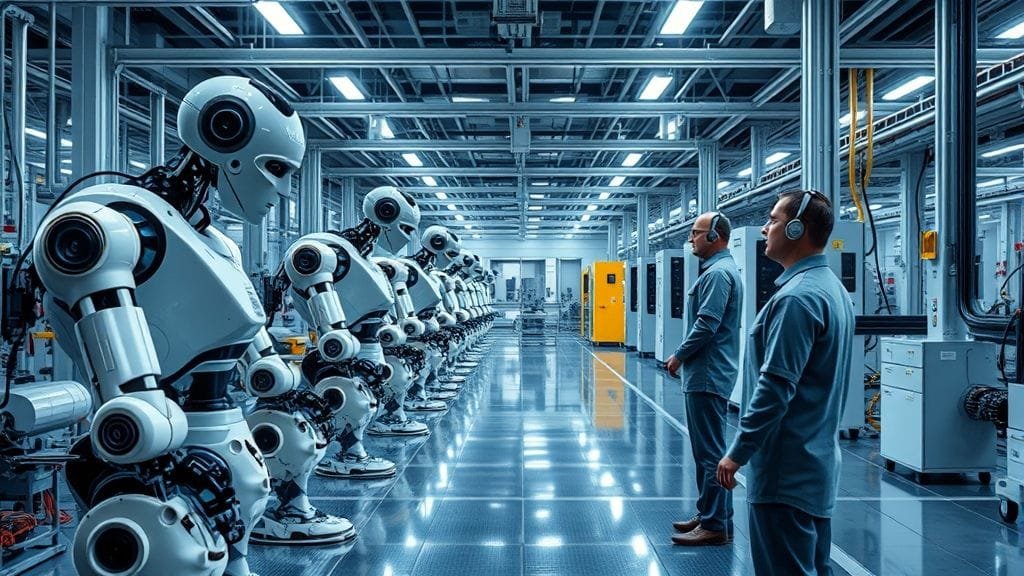
Robots are no longer confined to science fiction; instead, they are integral members of the factory workforce. These intelligent machines excel at repetitive operations. They also perform complex and precision-demanding tasks. In fact, they consistently outperform humans in speed and accuracy. Consequently, they significantly boost production rates and enhance overall efficiency.
Beyond sheer output, robotics dramatically improves quality control and consistency by drastically reducing human errors and waste. Moreover, robots undertake hazardous tasks, which in turn improves worker safety. Human employees can then focus on complex, supervisory roles. Ultimately, this partnership between humans and machines is a hallmark of modern manufacturing processes.
Artificial Intelligence (AI) and Machine Learning (ML): The Brains of the Operation
Imagine a factory. Specifically, it predicts equipment failure before it happens. It also optimizes production schedules in real-time. This optimization, moreover, happens based on fluctuating demand. This isn’t fantasy; rather, it’s the power of AI and ML. Indeed, these technologies enable data-driven decision-making across the entire manufacturing lifecycle.
AI algorithms analyze vast datasets to identify patterns, thereby enabling predictive maintenance that minimizes downtime. They also power automated quality control systems, consequently spotting defects with superhuman accuracy. Furthermore, AI can generate multiple design iterations. It optimizes products for materials, weight, and cost. As a result, this provides a significant competitive edge. You can, for instance, learn more about how AI is shaping industries on [Wikipedia’s AI page](https://en.wikipedia.org/wiki/Artificial_intelligence).
Industrial Internet of Things (IIoT): The Connected Factory
The Industrial Internet of Things (IIoT) is a sprawling network. Specifically, it includes interconnected devices, sensors, and machines that communicate in real-time. Imagine, for example, factory equipment that constantly relays data. This data, moreover, includes temperature, pressure, vibration, and output rates. All of this information subsequently goes to a central system. Therefore, this continuous flow of information transforms operational visibility.
This constant data collection and communication lead to improved efficiency by identifying bottlenecks instantly. It also enhances resilience, thereby allowing for swift responses to unexpected issues. Furthermore, IIoT fuels predictive maintenance strategies. This means, consequently, it shifts from reactive repairs to proactive prevention. Ultimately, this extends equipment lifespan. It also reduces costly breakdowns.
Additive Manufacturing (3D Printing): Beyond the Mold
Additive manufacturing, commonly known as 3D printing, has redefined what’s possible in product design and creation. While traditional methods remove material, 3D printing, by contrast, builds objects layer by layer. Crucially, it uses digital files. This fundamental difference, therefore, unlocks unprecedented design freedom.
This technology allows for rapid prototyping, thereby enabling engineers to test and iterate designs at speed. It also facilitates mass customization, producing unique products tailored to individual customer needs without retooling. Additionally, 3D printing significantly reduces material waste, making it a more sustainable option in many applications.
Digital Twins: Virtual Replicas, Real Insights
Imagine simulating a new machine’s performance. You could also simulate an entire production line. Even more, you could simulate a whole factory. Crucially, all this happens in a virtual environment. Furthermore, this occurs before building a single component. Indeed, that’s the power of digital twins. Specifically, these virtual replicas of physical assets and systems are fed real-time data from their physical counterparts.
They allow manufacturers to run simulations, test optimizations, and predict outcomes with incredible accuracy. Consequently, this virtual sandbox enhances decision-making, identifies potential issues, and boosts operational efficiency significantly. In essence, it’s like having a crystal ball for your entire manufacturing operation.
Advanced Materials: Engineered for Performance
The quest for better, stronger, lighter, and more durable products drives innovation in materials science. Therefore, modern manufacturing processes use many advanced materials. These include, for example, high-strength alloys that withstand extreme conditions. Sophisticated recyclable plastics also meet sustainability goals.
These materials are precisely blended. Moreover, they are engineered at the molecular level. This engineering, consequently, delivers specific performance breakthroughs. Furthermore, it addresses unique application needs. For example, consider lighter EV components. Also, think of biocompatible medical implants. Indeed, relentless materials research fuels these innovations.
Tangible Benefits: Why These Technologies Matter in Modern Manufacturing Processes
Integrating these cutting-edge technologies is more than just adopting new tools; rather, it fundamentally transforms how businesses operate and compete. Indeed, the benefits are profound, as they impact everything from the factory floor to the bottom line.
Increased Productivity and Efficiency
One of the most immediate and impactful benefits is the surge in productivity and operational efficiency. Automation streamlines repetitive tasks, while data-driven insights pinpoint and eliminate bottlenecks. Therefore, this means more products produced in less time, with fewer resources expended. Consequently, downtime is minimized, and production cycles are significantly accelerated.
Enhanced Quality and Consistency
Precision is paramount in manufacturing. Indeed, robots perform tasks with exceptional accuracy, thereby virtually eliminating human error. Moreover, AI-powered systems meticulously inspect products. They can, for example, spot defects with superhuman speed and accuracy. As a result, this ensures products consistently meet stringent quality standards, drastically reducing reworks and scrap material.
Cost Reduction
Initial investment in advanced technologies can be substantial. Yet, long-term cost reductions are compelling. For example, automation minimizes the need for extensive human intervention in repetitive tasks, which in turn leads to lower labor costs. Furthermore, optimized production processes reduce material waste, and energy-efficient equipment lowers operational expenses. Ultimately, this financial prudence makes these investments worthwhile.
Greater Customization and Flexibility
Today’s consumers demand personalization. Consequently, modern manufacturing processes enable customization. Indeed, additive manufacturing and agile systems are key. Together, they produce complex, tailored products efficiently. This flexibility, moreover, allows rapid responses. Therefore, businesses can meet shifting market demands. They also offer bespoke solutions without compromising speed or cost.
Improved Supply Chain Resilience
The past few years have highlighted the fragility of global supply chains. However, digital supply chain technologies, real-time monitoring, and strategies like nearshoring or reshoring enhance visibility and agility. Consequently, manufacturers can anticipate and mitigate disruptions. This, in turn, ensures a steady flow of materials and products. For more insights on global supply chain management, therefore, check out this article on [supply chain resilience](/blog/building-resilient-supply_chains/).
Sustainability: A Greener Future for Manufacturing
Sustainability is no longer optional; rather, it’s a strategic imperative. In fact, advanced manufacturing aids environmental goals. This is because it uses eco-friendly processes. Energy-efficient equipment also helps. Furthermore, waste reduction through circular economy principles contributes significantly. Similarly, green software engineering optimizes resource usage. Ultimately, this leads to a smaller carbon footprint. Thus, it creates a more sustainable future for the industry.
| Feature | Traditional Manufacturing | Modern Manufacturing Processes |
|---|---|---|
| Key Drivers | Manual labor, mechanical power, mass production | Automation, AI, data, customization |
| Flexibility | Low (long retooling times) | High (agile systems, rapid prototyping) |
| Efficiency | Good for scale, but prone to human error and waste | High, driven by optimization, predictive maintenance |
| Quality Control | Manual inspection, statistical process control | Automated, AI-driven inspection, real-time monitoring |
| Material Usage | Often high waste (subtractive methods) | Optimized, reduced waste (additive manufacturing, digital twins) |
| Data Utilization | Limited, reactive | Extensive, real-time, predictive analytics |
| Workforce Needs | Repetitive tasks, physical strength | Data analysis, robotics expertise, problem-solving, collaboration |
| Cost Structure | High variable costs, lower upfront tech investment | Higher initial tech investment, lower operational and waste costs |
| Environmental Impact | Often resource-intensive | Focus on sustainability, waste reduction, energy efficiency |
Navigating the Challenges: The Road Ahead for Modern Manufacturing Processes
Despite the incredible advancements, the journey of modern manufacturing processes is not without its hurdles. For instance, integrating these technologies is complex. Navigating a volatile global landscape is also hard. Indeed, both require strategic foresight and continuous adaptation.
Supply Chain Vulnerabilities: A Persistent Threat
Globalized supply chains are a double-edged sword, offering efficiency but also vulnerability. For example, geopolitical tensions can cause disruptions. Natural disasters can too. So can labor shortages and raw material deficits. Consequently, these escalate into widespread disruptions. Indeed, they lead to increased costs and production delays. A lack of end-to-end visibility further exacerbates these problems, leaving manufacturers blind to impending issues. Therefore, building resilience is key.
Workforce Development and the Skills Gap
The shift to advanced manufacturing demands a new breed of skilled workers. However, the industry struggles to attract and retain talent. Moreover, an aging workforce compounds this challenge, since younger generations also lack interest in traditional manufacturing. While automation is beneficial, it shifts the nature of work. This shift, consequently, creates urgent demand for employees. Specifically, these roles need expertise in robotics, data analysis, and machine learning. Significant investment in reskilling and upskilling programs is therefore imperative.
Technology Integration and Cybersecurity Risks
Successfully integrating a mosaic of advanced technologies into existing, often legacy, processes is incredibly complex. Indeed, it requires clear digital transformation strategies, robust change management, and a significant commitment of resources. Moreover, the increased connectivity inherent in IIoT and other digital systems heightens cybersecurity threats. Therefore, protecting sensitive data and operational integrity demands robust, multi-layered data protection strategies and continuous vigilance.
Operational Inefficiency and Quality Control
Even with advanced tools, fundamental operational inefficiencies can persist. For example, poor demand forecasting can cause issues. So can suboptimal inventory management. Outdated workflows also contribute. Consequently, these lead to customer dissatisfaction and lower revenue. Furthermore, ensuring consistent product quality in complex production environments requires rigorous quality control. This includes defining standards. It also means implementing continuous inspection. Testing protocols are vital too. Ultimately, constant monitoring from raw material to finished product is necessary.
High Costs of Entry
The initial investment required for advanced manufacturing equipment, software, and training can be substantial. Indeed, this capital expenditure can be a barrier. It particularly affects smaller and medium-sized enterprises (SMEs). Consequently, this potentially widens the gap. It separates industry leaders from smaller players. While the long-term benefits often outweigh the initial outlay, financing and strategic planning are critical.
Lean Manufacturing Challenges
Lean manufacturing aims to eliminate waste. It also streamlines processes. Yet, implementation faces many challenges. These include, for example, cultural resistance, a lack of consistent management engagement, and insufficient skills that can hinder progress. Moreover, over-reliance on technology can be an issue. This is especially true if it happens without optimizing underlying processes. Indeed, it can paradoxically increase waste. Therefore, a holistic approach to efficiency is important.
Specific Perspectives: Deep Dives into Key Technologies
To elaborate, let’s briefly highlight two specific areas where the intricacies are particularly pronounced.
Additive Manufacturing: Freedom vs. Scale
Additive manufacturing, or 3D printing, offers unparalleled design freedom, thereby allowing for geometries previously impossible to create. It excels at rapid prototyping and producing customized, complex components. However, it still faces material limitations. In comparison, traditional methods offer more options. Furthermore, achieving consistent surface finishes can be challenging. Scaling up for true mass production also remains a hurdle for many applications.
Robotics and Automation: Efficiency vs. Employment
The transformative impact of robotics and automation on production efficiency and worker safety is undeniable. Indeed, repetitive, strenuous, or dangerous tasks are now performed by machines, which consequently leads to fewer injuries and higher output. Yet, this evolution naturally raises concerns about job displacement. Therefore, workforce adaptation is key. This adaptation, moreover, emphasizes training and upskilling programs. These prepare human workers for new roles. Specifically, they learn supervisory tasks, programming, and maintenance. Thus, humans work alongside robots, not replaced by them. For more detailed discussions, you can explore internal content on [automation in industry](/blog/automation-in-industry/).
The Future of Modern Manufacturing Processes: Resilient and Adaptive
The journey reveals an industry in flux. It is, therefore, driven by technological marvels. Complex global dynamics also shape it. Specifically, advanced technologies are redefining production. These include AI, robotics, IIoT, and 3D printing. They effectively make production more efficient, precise, and responsive. However, this progress faces significant challenges. Securing fragile supply chains is one. Bridging the skills gap is another.
Navigating these complexities needs more than new tools. Instead, it demands strategic planning. Furthermore, continuous investment in technology and human capital is vital. Focus on resilience and adaptability is also unwavering. Ultimately, the future belongs to manufacturers. Specifically, they must harmonize technology with human expertise. This harmonization, consequently, creates productive systems. These systems are also sustainable and robust.
What advancements excite you most? What challenges will be hardest to overcome? Share your thoughts below!