Intel is a titan in processors; indeed, it has defined computing generations. Its Core i-series chips are familiar to many. However, a seismic shift is underway; Core Ultra naming is here. This, in fact, is Intel’s biggest rebrand in years. The scheme, furthermore, aims to simplify product ID and highlight AI-powered computing. This is a bold move which, moreover, coincides with Meteor Lake processors. Ultimately, Intel redefines performance, efficiency, and integrated AI for your next PC.
However, this ambitious strategic pivot hasn’t been without its turbulence. While Intel aims for a clearer path, reception, however, is mixed. Critics, for instance, note potential confusion and early market challenges. As a discerning tech user, therefore, understanding this new landscape is crucial. Let’s unravel Intel’s Core Ultra naming, exploring its promises, its pitfalls, and ultimately, its meaning for your computing future.
A New Era: Understanding the Intel Core Ultra Naming Scheme
Intel has indeed overhauled its branding, and this is not merely cosmetic. Instead, it fundamentally reshapes consumer processors. Specifically, the “Core i” moniker is gone, and explicit generational numbering is past. Though tech enthusiasts tracked these for years, this move, nevertheless, simplifies choices for users. It also creates a premium identity for advanced innovations.
Retiring the “i”: Simplicity or Shifting Sands?
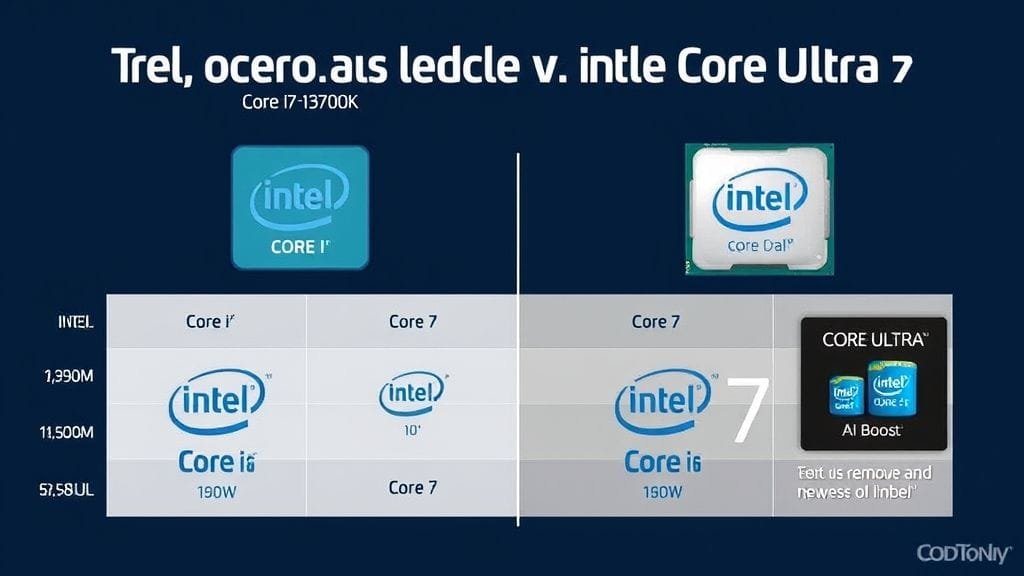
The most immediate change you’ll notice is the disappearance of the “i” from the Core brand. Consequently, processors are no longer “Core i3,” “Core i5,” “Core i7,” or “Core i9.” Instead, they are now “Intel Core 3, 5, 7, 9” or, for premium, “Intel Core Ultra 5, 7, 9.” This, therefore, simplifies product tiers and makes them more intuitive, mirroring other consumer electronics.
Moreover, “Nth-Generation” branding is gone; it was, after all, a key performance differentiator. While it is removed from marketing, generational info still exists within the model number. “Series 1,” for example, denotes Meteor Lake, and “Series 2” is Arrow Lake; this is the first digit. But it’s not front and center, meaning this shift, consequently, changes comparisons. You, therefore, need a deeper dive into specs, as a quick glance won’t work. Intel hopes this subtle approach will, furthermore, reduce perceived complexity for the average buyer.
The Dual Identity: Core vs. Core Ultra Tiers
The new branding, significantly, has two tiers. It segments Intel’s offerings, thus guiding consumers better. This structure, furthermore, distinguishes between general-purpose computing and high-performance, feature-rich experiences. You’re, therefore, presented with two distinct paths, each tailored to different needs and expectations.
The first tier, for example, is simply “Intel Core.” This tier, specifically, is for mainstream consumers; it suits everyday tasks like web browsing and media. It’s ideal for home or office use, as these processors are reliable. These processors offer efficient performance; yet, premium features are lacking. This, then, is Intel’s workhorse segment, meeting essential computing needs with solid performance.
Conversely, the second, more premium tier is the “Intel Core Ultra.” This tier, furthermore, showcases advanced processors, featuring new architectures and enhanced power efficiency. Integrated AI capabilities are, moreover, crucial here. Processors under the Core Ultra banner are engineered for demanding applications such as gaming, content creation (including video editing and 3D rendering), and leveraging AI apps on your PC. These chips, therefore, show Intel’s leadership and target demanding users who need top performance and innovative features.

The “Ultra” Difference: What Intel Promises with Its Premium Tier
“Core Ultra” is more than a name; it is, in fact, a hardware philosophy shift. Intel positions these chips for the “AI PC” era, integrating dedicated hardware and key architectural advancements that go beyond CPU boosts. By choosing Core Ultra, you, therefore, invest in technologies that enhance your digital experience.
Powering the AI PC: The Integrated NPU
Core Ultra boasts a key differentiator: a dedicated NPU, branded as Intel AI Boost. This specialized hardware, crucially, is a game-changer for AI workloads. The NPU, indeed, accelerates AI tasks, running them directly on your PC rather than relying solely on the CPU or GPU. Consequently, AI features run smoother; examples include video conferencing (with background blur and eye contact), as well as photo editing and creative tools.
This, moreover, offers several benefits. Firstly, AI processing is faster, and secondly, CPU/GPU strain is reduced. Additionally, power efficiency improves with AI apps. This, therefore, marks a foundational step where your PC anticipates and assists, thus enhancing productivity and creativity. Dedicated hardware, after all, ensures AI function is not just a buzzword, but a core system capability.
Graphics Reimagined: Intel Arc Integration
Integrated graphics were previously often a compromise, suiting basic tasks while demanding visuals struggled. With Core Ultra processors, however, Intel is actively working to change this perception. Indeed, many Core Ultra chips boast significantly improved integrated graphics, frequently featuring the more powerful Intel Arc GPUs. Arc graphics, consequently, offer a substantial performance uplift over previous generations, blurring the lines between integrated and discrete for mainstream systems.
What, then, does this mean for you? You can expect better casual gaming, smoother video playback, and more capable hardware for content creation, including video editing and graphic design, often without needing a discrete graphics card. This, therefore, particularly benefits thin-and-light laptops, allowing them to handle intensive apps better.
Efficiency at Its Core: Extended Battery Life and Performance
A core tenet of the new architecture underpinning Core Ultra is breakthrough power efficiency. By using Intel 4 process nodes and, furthermore, Foveros 3D packaging, these chips deliver more performance per watt. Consequently, operation is cooler, even under sustained loads, and battery life is extended for mobile devices.
For laptop users, therefore, this focus on efficiency is a major win. Your device, indeed, lasts longer, meaning greater freedom and more flexibility to work remotely, travel, or enjoy entertainment away from outlets. Moreover, efficiency translates to quieter computing, as fans spin less often and at lower speeds.
Beyond Core: The End of Pentium and Celeron
Intel has, furthermore, streamlined its branding by retiring Pentium and Celeron, which were budget-oriented brands. These names, once synonymous with affordable computing, have, therefore, been phased out. They are now succeeded by the more generic yet clear “Intel Processor” designation. This, consequently, simplifies the entry-level segment and provides consistent brand identity across its consumer portfolio.
This change, moreover, reduces market confusion and consolidates Intel’s brand strength. Budget PCs, therefore, now get the “Intel Processor” badge, signifying reliable yet cost-effective computing for basic needs. Ultimately, Intel focuses branding efforts on the Core and Core Ultra tiers.
Suffixes Endure: Decoding the ‘H’, ‘U’, ‘K’, ‘F’
While the main branding has undergone a significant transformation, certain familiar elements, nevertheless, remain consistent. Suffixes, for example, provide critical info; they describe processor characteristics and also show intended use. Understanding these suffixes, therefore, remains key to choosing the right chip for your needs.
- ‘H’ (High-Performance Mobile): These are, specifically, for powerful laptops. They offer higher core counts, and clock speeds suit gaming and demanding apps on the go.
- ‘U’ (Power-Efficient Mobile): These chips, conversely, are optimized for battery life. Optimized for battery life, these chips fit thin-and-light forms; therefore, they are ideal for ultrabooks and everyday mobile computing.
- ‘K’ (Unlocked for Overclocking): This suffix is found on desktop processors. ‘K’ signifies an unlocked multiplier, meaning enthusiasts can, consequently, increase clock speeds to enhance performance.
- ‘F’ (No Integrated Graphics): ‘F’ chips, however, lack an iGPU; thus, they need a dedicated graphics card. These are often chosen by gamers or content creators who will, in any case, install a powerful discrete GPU.
These suffixes, consequently, offer valuable insights. They help identify performance and capabilities of a processor within the new Core Ultra naming structure.
Intel’s Vision: The Strategic Rationale Behind the Core Ultra Naming
Intel’s launch of Core Ultra naming was not arbitrary; instead, it’s a calculated move driven by market dynamics and tech advancements. Indeed, Intel redefines consumer relationships, and the company sees this rebrand as pivotal—an “inflection point”—that sets the stage for its future.
Responding to Demand: Why Intel Simplified
According to Intel, the impetus for this significant update came directly from customer feedback. The old “Core i” structure, for instance, was complex, and generational numbering added further complexity, particularly affecting mainstream audiences. As technology evolved, differentiating improvements became hard, and understanding “i” tier nuances, consequently, challenged non-tech buyers.
Intel, therefore, aims for this rebranding to be a significant update that offers clearer segmentation. Streamlining names, for instance, helps make buying more intuitive, allowing consumers to identify performance tiers. Such a structure, moreover, matches their needs; this simplified approach is about reducing decision fatigue and building confidence in their product choices. Ultimately, this will lead to a better experience and build stronger brand loyalty, which is key in a crowded market.
Highlighting Innovation: AI PCs and Advanced Manufacturing
Core Ultra naming, moreover, does more than simplify; it also differentiates and highlights innovations. The company is, for example, particularly keen to emphasize its strategic focus on the burgeoning “AI PC” market. The “Ultra” tier, therefore, is distinct, and Intel clearly communicates that these processors are fundamental because they incorporate dedicated AI hardware like the NPU.
Furthermore, the rebranding provides a platform to showcase advancements in design, manufacturing, and architecture. This includes the Intel 4 process node, which delivers improvements in transistor density and efficiency. Foveros 3D packaging is, additionally, a leap; it integrates functional “tiles” (including CPU, GPU, NPU, I/O) to form a single package. This, consequently, optimizes performance and power delivery, allowing Intel to explain the technological benefits more clearly, aligning the brand with true innovation.
Navigating the Storm: Criticisms and Market Realities of Core Ultra
While Intel had clear intentions for Core Ultra naming and associated tech advancements, the scheme, however, met turbulence. The transition, in fact, met debate and negative feedback. This, crucially, highlights challenges inherent in a significant brand overhaul. Understanding these criticisms, therefore, is vital for a complete picture of the market landscape.
Consumer Confusion: A Branding Backlash?
One of the most vocal criticisms, indeed, revolves around the potential for increased consumer confusion. While Intel aimed for simplification, many, conversely, argue for confusion instead. “Core” and “Core Ultra” run parallel, and performance tiers overlap (for example, Core 7 and Core Ultra 7). Since marketing lacks generational identifiers, less tech-savvy users, therefore, struggle. They wonder which “Core 7” is newer, or more powerful than a “Core Ultra 5,” or an older “Core i7.”
This absence of clear generational markers, coupled with the similar-sounding names, can, moreover, complicate direct comparisons. It forces consumers to delve deeper into model numbers and benchmarks, consequently undermining the very goal of simplification. Core Ultra naming, therefore, seems complex, presenting a market hurdle that needs more education and guidance.
Performance Perceptions: The Uphill Battle for Core Ultra
A significant point of contention, furthermore, has been the perceived performance uplift of some early Core Ultra models. While Core Ultra introduces new features like the groundbreaking NPU, traditional CPU performance, however, varies. Gaming, for instance, often lacks big leaps, as do some heavy workloads. Consumers, consequently, expected more, and Intel, therefore, sees higher demand for older Raptor Lake chips over new Core Ultra.
Indeed, consumers cite price competitiveness and less performance gain, which consequently pushes them to older chips. Some reviews, moreover, show less uplift, indicating Core Ultra models often perform like previous generations if the NPU or iGPU is unused. This perception, therefore, creates a battle where Core Ultra naming struggles to symbolize premium performance.
Early Sales Struggles and Price Adjustments
The challenges with performance perception and consumer clarity have, therefore, translated into tangible market struggles. Core Ultra sales were slow post-launch, with retailers reporting low units; indeed, some sold zero units for certain models. Consequently, consumers stick with older CPUs that are more affordable and, in some cases, even offer superior performance for specific needs, especially with a dedicated GPU.
In response to these market signals, Intel has, consequently, reportedly reduced prices for some Core Ultra 5 models. This pricing adjustment, therefore, is strategic; it indicates active work by Intel to address competition and make the lineup attractive, particularly targeting budget-conscious and value-driven consumers. Initial sales figures, after all, highlight the importance of delivering not just innovation, but also value, to drive adoption of new Core Ultra naming.
Launch Day Hurdles: Initial Compatibility Issues
The Core Ultra launch, moreover, had its complexities. Early adopters and reviewers, for instance, faced “teething problems,” including BIOS incompatibilities and graphics driver conflicts, which often disrupt new hardware. Such launch-day hurdles, therefore, dampen reception, erode consumer confidence, and create a negative impression that affects otherwise promising products.
While issues are often temporary and software updates resolve them, they, nevertheless, contribute to mixed reception. Core Ultra naming is ambitious, and a smooth launch is, consequently, key to building trust and excitement. Technical glitches, however, added friction, meaning the benefits of new architecture did not shine immediately.

A line graph showing hypothetical sales trends: one line representing cumulative sales of Intel Core Ultra processors and another representing cumulative sales of previous generation Intel Core i processors (13th/14th Gen) over the first six months post-Core Ultra launch, illustrating an initial preference for older chips.
Core Ultra Naming: Performance Snapshot – Where it Shines (and Where it Struggles)
While Core Ultra market adoption faced hurdles, its architecture, nevertheless, excels in specific areas. It is, therefore, crucial to acknowledge these, as Core Ultra naming performance isn’t monolithic. It shows significant gains in some segments and applications, while other areas see only incremental uplift. Understanding these nuances, consequently, helps clarify the value proposition for different user types.
Key Performance Uplifts in Early Models
Indeed, entry-level Core Ultra chips impress, showing generational improvements compared to Core i3/i5. These advancements, therefore, highlight Intel’s capability to offer efficient, powerful solutions for the everyday user.
Let’s, therefore, examine some key performance uplifts observed in early Core Ultra models:
| Feature / Metric | Core Ultra 3 205 vs. Previous Gen Core i3/i5 | Context / Benefit |
|---|---|---|
| Multi-Core Performance | Up to 48% improvement | Faster multitasking, content creation, complex computations. |
| Single-Core Performance | Up to 16% improvement | Snappier responsiveness in everyday tasks and single-threaded apps. |
| Integrated Graphics (iGPU) | Up to 75% improvement (in 3DMark Time Spy) | Significantly better casual gaming, video editing, and visual tasks without a dedicated GPU. |
| NPU (AI Boost) | Dedicated hardware (new feature) | Accelerated AI workloads, improved efficiency for AI features. |
The table, indeed, shows clear gains. Comparing entry-to-mid-range Core Ultra, gains are substantial over predecessors, especially for multi-core performance and integrated graphics. The NPU, moreover, introduces an entirely new class of performance for AI applications, which previous generations lacked. The “struggle,” however, often arises when comparing higher-end Core Ultra models; they compete with top-tier i7/i9 processors (13th or 14th gen) in raw CPU-intensive tasks like high-refresh-rate gaming. Here, older chips can, indeed, hold an advantage with higher power limits, often offering better value for money. This disparity, consequently, causes mixed reception, as consumers conflate the lineup by using high-end comparisons.
Consider, then, upgrading from an older system: a Core Ultra processor, for instance, helps by offering a compelling leap, especially for multi-core efficiency and integrated graphics. Coming from a recent, high-end chip, however, and if you care about raw CPU clock speed for gaming, the decision, conversely, is more nuanced.

Future Forward: Core Ultra Naming Amidst Fierce Competition
Intel’s bold move with the Core Ultra naming isn’t happening in a vacuum; instead, it’s a strategic response to, and a proactive stance within, an increasingly competitive landscape. For future success, the rebrand needs, therefore, not only internal merits but also must carve out a niche, facing formidable rivals.
The AI PC Arena: Intel vs. AMD vs. Qualcomm
The “AI PC” market, which Intel is heavily betting on, is, indeed, rapidly becoming a battleground. Intel Core Ultra processors, with their integrated NPUs, are, consequently, directly competing with:
- AMD’s Ryzen AI Series: AMD’s Ryzen AI Series, for instance, is a rival. AMD, indeed, integrated dedicated AI hardware in its latest mobile processors, offering its own AI PC vision. AMD chips, moreover, have strong multi-core performance and efficient integrated graphics, making them potent rivals.
- Qualcomm’s Snapdragon X Series: Qualcomm’s Snapdragon X Series is, conversely, new. Qualcomm, specifically, pushes into the Windows PC market with its ARM-based chips. Snapdragon X Elite and Plus, for example, promise power efficiency and robust AI capabilities, thereby challenging Intel’s x86 dominance.
This, therefore, is a three-way race where Intel must innovate and clearly communicate advantages for Core Ultra naming and its underlying technology. Differentiation and consistent performance across the entire lineup are, moreover, key to capturing market share in an evolving segment. For you, ultimately, this competition leads to more choice and faster innovation.
The Path Ahead: Clarity, Performance, and Market Acceptance
The long-term success of Core Ultra naming, moreover, depends on Intel’s ability to address criticisms and deliver on promises. This involves, indeed, several critical factors:
- Clarifying the Branding: Clarifying the Branding is vital; Intel, therefore, needs to educate consumers. It must simplify the dual-tier approach, clearly outlining how to understand “Core” and “Core Ultra,” especially regarding generational comparisons. Clearer marketing and easy distinctions, moreover, are vital.
- Delivering Consistent Performance: Delivering Consistent Performance is key. While Core Ultra shines in some areas, the entire lineup, consequently, needs compelling gains that span many applications, especially those valued by consumers like gaming. This, indeed, is paramount.
- Optimizing the AI Ecosystem: Optimizing the AI Ecosystem is crucial. NPU potential needs widespread software optimization; Intel, therefore, must work with developers to ensure apps leverage AI Boost, thus making the “AI PC” truly transformative.
- Competitive Pricing: Competitive Pricing is important; early price adjustments, after all, show this. Intel must, therefore, remain agile; its pricing strategy is key, as Core Ultra needs compelling value when facing strong competition from AMD and Qualcomm.
The Core Ultra naming represents, therefore, a brave new world for Intel and for PC users. It’s an innovation journey that, moreover, demands refinement, and clear communication is vital to help it resonate with the market. Your next PC purchase will, undoubtedly, be shaped by how Intel navigates these crucial next steps.
In conclusion, Intel’s Core Ultra rebrand is a gamble. While it simplifies its product line and highlights its AI PC commitment, core tech advancements like the NPU and improved integrated graphics are, indeed, exciting. But initial reception showed challenges, and this shift is massive. The path ahead, therefore, needs clear communication, consistent performance, and effective competition against many burgeoning rivals.
What are your thoughts on Intel’s new Core Ultra naming scheme? Do you find it confusing or a welcome simplification? Share your perspective in the comments below!