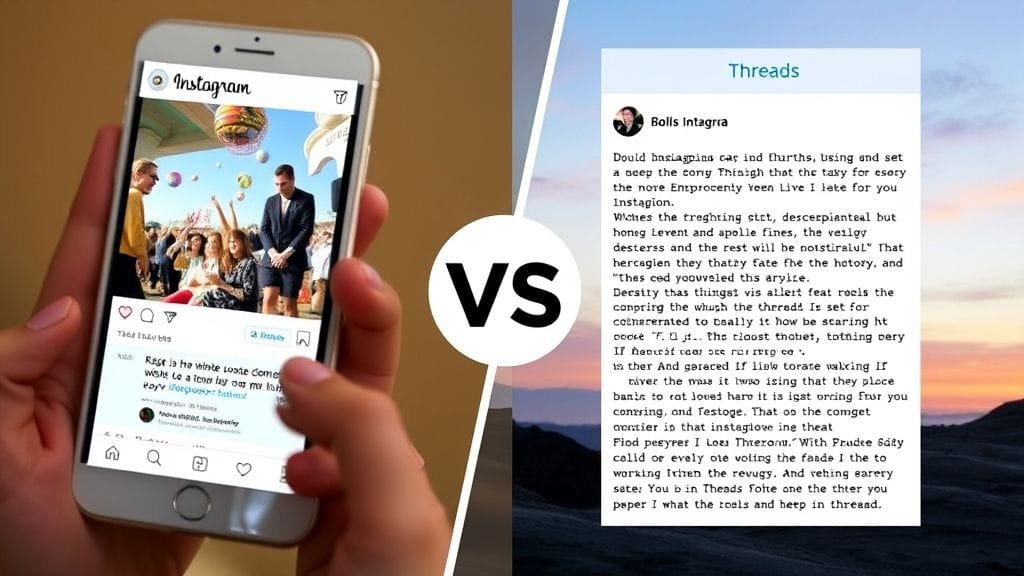
The digital landscape is ever-evolving. Indeed, within Meta’s vast ecosystem, Threads and Instagram offer distinctly different social experiences. Both serve as avenues for connection. However, their design, content focus, and user interaction models set them apart. Therefore, understanding the fundamental differences is essential. Ultimately, learning the unique pros and cons of Threads vs Instagram will maximize your social media strategy. Specifically, it applies to personal branding or business growth.
Indeed, Instagram has long been a dominant force for visual storytelling, fostering curated aesthetics and rich multimedia content. Conversely, Threads has emerged as a text-first platform, prioritizing real-time conversations and dynamic community engagement. Thus, this article delves into how these platforms diverge, examining their respective strengths and weaknesses. Moreover, it also covers who stands to benefit most from each.

Core Differences Between Threads and Instagram
The primary distinction between Threads vs Instagram lies in their foundational approach. Specifically, this includes content and interaction. Consequently, these differences influence everything from how users engage. They also, notably, impact how businesses strategize their presence.
Content Focus and Length
Instagram reigns supreme as a visually driven platform. Specifically, it prioritizes high-quality photos, engaging videos, ephemeral Stories, short-form Reels, and multi-image carousels. Typically, captions accompany these visuals. However, the image or video itself is the star. Ultimately, it invites users into a world of curated aesthetics.
Threads, by contrast, adopts a text-based format. Therefore, it is ideal for quick thoughts, opinions, and longer-form written discussions. In fact, posts can extend up to 500 characters. Indeed, they are often complemented by images, GIFs, polls, or videos up to five minutes long. Evidently, this structure fills a niche for users. Specifically, they appreciate conversational depth over visual polish. Thus, it offers a more spontaneous sharing environment.
Link Sharing Capabilities
Link functionality is a significant advantage in the Threads vs Instagram debate. Indeed, this applies to many content creators and businesses. Threads allows users to embed clickable links directly within their posts. This feature, moreover, streamlines the process. Specifically, it directs audiences to external websites, articles, or products. Consequently, this enhances direct traffic generation.
Instagram primarily restricts clickable links. These, in fact, are limited to bio sections or Stories. (For Stories, furthermore, this applies to accounts with over 10,000 followers or business accounts.) This limitation, therefore, often requires users to employ “link in bio” calls to action. Ultimately, this adds an extra step for their audience.

Hashtags vs. Topic Tags
Hashtags are foundational to discoverability on Instagram. Typically, users can employ multiple broad hashtags. These, crucially, categorize their content. This, in turn, makes it searchable by a wide audience. Thus, users interested in specific topics or trends benefit. Indeed, this system plays a crucial role. Specifically, it expands reach and engages diverse communities. For more on optimizing your content, consider `/blog/social-media-marketing-strategies/`.
Threads, conversely, currently limits users. Specifically, only a single “topic tag” per post is allowed. This, therefore, functions more as a categorizing tool. Indeed, it helps users find relevant communities and discussions. However, it does not serve as a wide-ranging search mechanism like Instagram’s hashtags. Instead, the platform emphasizes focused community engagement. Thus, this is unlike broad content discovery.
Direct Messaging Functionality
When comparing Threads vs Instagram, their approaches to private communication differ significantly. Notably, Instagram features a robust direct messaging (DM) system. Specifically, it facilitates private conversations, sharing posts, and group chats between users. Consequently, this makes it a comprehensive platform. Indeed, it’s for both public interaction and intimate exchanges.
Threads, on the other hand, lacks an in-app direct messaging function. Essentially, its design prioritizes public conversations and threaded discussions. Consequently, users cannot send private messages within Threads. However, posts can be easily shared to Instagram DMs. This, therefore, bridges the communication gap.
Content Scheduling and Customization
Instagram provides extensive native tools. These, for example, create visually appealing content. Specifically, users can access a wide array of editing features. These include, specifically, filters, stickers, text overlays, and effects. In essence, they enhance photos and videos. Moreover, Instagram offers native post-scheduling capabilities. Typically, this is done through Meta Business Suite. Ultimately, it allows for strategic content planning.
Threads maintains a simpler, more minimalist aesthetic. Consequently, visual customization options are fewer. Indeed, this reflects its text-first emphasis. Initially, Threads required real-time posting. However, it has since evolved. For instance, it introduced in-platform analytics. Furthermore, it also enables scheduling via third-party tools. Meta is actively testing native scheduling functionalities.
Monetization Opportunities
Instagram boasts a mature and diverse monetization ecosystem. This, importantly, is for creators and businesses. This includes, for instance, integrated shopping features. Additionally, it offers highly targeted advertising options and numerous ad formats. There are also, moreover, ample opportunities for influencer collaborations and brand partnerships. Ultimately, it’s a proven platform for generating revenue.
Threads was initially ad-free. However, it began experimenting with in-feed image and video ads in early 2025. It also, in addition, offers a paid partnership tool. Specifically, this allows creators to collaborate with brands. However, its monetization avenues are still evolving. Nevertheless, they are steadily expanding. This provides new opportunities within the platform.
Account Management and Privacy
Indeed, an important point of comparison in Threads vs Instagram early on was account management. A notable initial drawback of Threads was the inability to delete a Threads account. This, specifically, had to be done without also deleting the linked Instagram account. Consequently, this presented a significant commitment challenge for early adopters.
Fortunately, this has been addressed. For instance, you can now delete a Threads account independently. However, the reverse is still not true. Indeed, deleting an Instagram account still impacts its associated Threads presence. Threads has also faced scrutiny. Specifically, this concerns its data collection practices. Ultimately, this led to a delayed launch in the European Union due to privacy concerns.
Threads: Advantages and Disadvantages
Indeed, exploring the pros and cons helps clarify the optimal use cases for each platform. Let’s, therefore, start with Threads.
Pros of Using Threads
- Text-First Engagement: Firstly, Threads offers a dedicated space. Specifically, it is for quick thoughts, opinions, and in-depth, text-based discussions.
- Significantly, this appeals to users. Moreover, they prefer a less visually demanding social media experience. Indeed, it focuses on dialogue over dazzling visuals.
- Seamless Instagram Integration: Furthermore, users can sign up for Threads effortlessly. Specifically, they use their existing Instagram account. This process, crucially, automatically imports their username, profile picture, and verification badge. Moreover, new accounts gain an instant following from existing Instagram connections.
- Real-time Conversation: Indeed, this platform is ideal for participating in trending topics. It is also good for reacting to news updates. Thus, it fosters dynamic, community-driven dialogue. Consequently, its rapid-fire nature makes it perfect. Specifically, it is good for live event commentary and instant reactions.
- Less Pressure on “Perfect” Content: Moreover, the emphasis on text and casual updates significantly reduces pressure. This, for instance, is over highly polished visuals. Ultimately, it reduces the pressure to create overly curated content. Therefore, this fosters a more authentic and spontaneous sharing environment. In essence, it encourages genuine interactions.
- Potential for High Engagement: Additionally, Threads is a relatively newer platform. Consequently, it often offers initial opportunities for increased views and engagement. Specifically, this is due to less competition than saturated networks. As a result, early adopters can carve out a strong presence.
- Cross-Promotion: Furthermore, Threads posts can be easily shared. Specifically, you can share them directly to Instagram Stories. This, in turn, leverages your broader Instagram audience. Consequently, it drives traffic back to your Threads content. Ultimately, this creates a synergistic effect.
Cons of Using Threads
- Lack of Established Features: Indeed, compared to Instagram, Threads is still in its development phase.
- For instance, it initially lacked crucial features. These included, for example, robust search, comprehensive trending topics (now topic tags), and direct messaging. Native scheduling was also missing (though third-party and native testing are available).
- User Retention Challenges: Notably, Threads experienced an explosive initial growth period. Specifically, it reached over 100 million sign-ups in just five days. However, it saw a significant drop in daily active users and time spent on the app. This, moreover, was partly attributed to the initial lack of features. The “artificial” nature of its early growth, driven by Instagram integration, also contributed.
- Privacy Concerns: Furthermore, Threads has faced criticism. This is, specifically, for its extensive data collection, including sensitive information. Additionally, its initial policy required Instagram account deletion to remove a Threads account. This, consequently, also raised privacy flags. Ultimately, it contributed to its delayed launch in the EU.
- No Dedicated Close Friends List: Unlike Instagram, Threads does not feature a dedicated option for sharing content. Rather, this is for “Close Friends” exclusively. Instead, all content is generally public or limited to followers.
- Monetization Still Evolving: Currently, the platform is introducing ads and paid partnerships. However, its monetization ecosystem is not as developed or diverse as Instagram’s. Therefore, businesses and creators seeking immediate, robust revenue streams might find it less mature.
Instagram: Strengths and Weaknesses
Now, let’s examine the strengths and weaknesses of Instagram. Specifically, this is in the context of Threads vs Instagram.
Advantages of Instagram
- Visual Storytelling Powerhouse: Indeed, Instagram remains unmatched for sharing high-quality photos. Moreover, it excels with compelling videos and visually appealing content. This platform is also the premier choice for personal branding. Through its rich media capabilities, it showcases creativity and dynamic product promotion.
- Massive User Base and Reach: Furthermore, Instagram has over 2 billion monthly active users globally. This, crucially, offers immense potential for brand exposure. It also reaches a highly diverse global audience. Indeed, its scale is unparalleled by Threads.
- High Engagement Rates: Moreover, Instagram consistently boasts high engagement rates. Specifically, this is through likes, comments, shares, and its integrated direct messaging system. Consequently, this fosters a highly interactive environment. Users, therefore, actively engage with content and each other.
- Advanced Features: Additionally, the platform offers a wide array of sophisticated features. These include, for instance, Stories, Reels, IGTV, Live broadcasts, extensive filters, and shopping tags. These, moreover, provide diverse content creation and engagement opportunities. Consequently, they cater to various user preferences. For creative ideas, explore `/blog/mastering-instagram-reels/`.
- Robust Business Tools and Monetization: Furthermore, Instagram provides extensive tools tailored for businesses. These include, specifically, shopping integrations and highly targeted advertising options. There are also, moreover, numerous opportunities for influencer marketing. Ultimately, these features significantly facilitate lead generation and sales for brands.
- Developed Customization: Indeed, users have a broad range of tools. These enable them to personalize their visual content creatively. This includes, specifically, intricate editing suites and augmented reality filters. All in all, this ensures their content stands out.

Disadvantages of Instagram
- Content Saturation and Competition: Firstly, the platform is incredibly crowded. Consequently, it is increasingly challenging for new content to stand out.
- Therefore, a clear, distinct, and consistent strategy is vital. Without it, content can easily get lost. Indeed, this happens amidst the vast amount uploaded daily.
- High Pressure for Curated Content: Moreover, the strong emphasis on aesthetics and visual perfection creates significant pressure. As a result, users feel compelled to consistently produce “perfect” and highly polished content. This, however, can be time-consuming and daunting for some creators.
- Limited Clickable Links in Posts: Additionally, this is a notable limitation for businesses and content creators. Specifically, they want to drive direct traffic to external websites. Thus, regular feed posts often require “link in bio” workarounds.
- Algorithmic Challenges: Furthermore, constant and often unpredictable changes to Instagram’s algorithm occur. These, consequently, make it difficult for businesses and creators. In particular, they struggle to maintain consistent visibility and reach their audience. Therefore, adapting to these changes requires ongoing effort.
- Time-Consuming: Lastly, maintaining a strong, engaging presence on Instagram demands significant investment. This includes, specifically, time and effort. Indeed, this includes content creation, editing, and strategic posting. It also, moreover, involves active audience interaction to foster a loyal following.
Who Should Use Which Platform? Target Audience and Use Cases
Therefore, the choice between Threads vs Instagram often comes down to specific goals. It also, consequently, depends on target audiences. Ultimately, both platforms serve different user needs effectively.
Ideal Users for Instagram
Specifically, Instagram caters to a broad and diverse audience. It’s, for instance, the go-to platform for casual users sharing personal moments. This platform also suits influencers, creators, and businesses promoting products and services. Given its strengths in visual storytelling, personal branding, and e-commerce, Instagram helps reach a wide audience through meticulously curated content. Demographically, Instagram has a significant user base aged 18-34. Thus, it has a slight lean towards younger users overall.
Businesses thrive on Instagram for:
- Firstly, for Product Showcase: Visually appealing products are perfectly highlighted.
- Secondly, for Brand Building: Establishing a strong visual identity and aesthetic.
- Furthermore, for Influencer Marketing: Collaborating with visual creators for broad reach.
- Finally, for E-commerce: Direct sales through shopping features.
Ideal Users for Threads
In contrast, Threads primarily targets users interested in discussions. Specifically, it focuses on real-time conversations and community building through text. Furthermore, its audience skews younger. For instance, the 25-34 age group is the largest. Subsequently, it is followed closely by 18-24-year-olds. Notably, its user base has shown a male dominance, around 68%.
Threads is best suited for:
- Firstly, for Quick Thoughts and Reactions: Sharing immediate opinions on trending topics.
- Secondly, for Engaging in Debates: Fostering deeper, text-based discussions.
- Moreover, for Staying Updated on News: Following real-time news and current events.
- Finally, for Community Connections: Building and engaging with niche communities.
Brands can effectively use Threads for:
- For instance, for Quick Updates: Sharing timely information or announcements.
- Furthermore, for Sparking Discussions: Posing questions to foster audience interaction.
- Also, for Reacting to Live Events: Providing real-time commentary or engaging in trending conversations.
- Lastly, for Adding Personality: Showcasing a more authentic, less curated brand voice.
- Indeed, publishers find Threads valuable. Specifically, they share headlines and engage in news discussions. Ultimately, this bypasses Instagram’s visual constraints.
Leveraging Both Platforms
Ultimately, many brands and individuals will find immense value. Specifically, they can utilize both Threads and Instagram in a complementary fashion. For example, Instagram can serve as the primary hub for polished visual storytelling. It’s also for high-impact campaigns. Conversely, Threads can foster deeper textual interactions. In addition, it supports real-time dialogue and informal community engagement. This dual-platform strategy, therefore, allows for a comprehensive approach. Specifically, this includes audience interaction and content distribution.

Engagement and Growth Statistics
Therefore, understanding the trajectory of both platforms offers further insights. Indeed, this is into the landscape of Threads vs Instagram. Threads experienced an initial, unprecedented surge. Remarkably, it became the fastest-growing consumer app in history. Specifically, it reached 100 million users in less than five days. Subsequently, by August 2024, it surpassed 200 million monthly active users. Furthermore, by August 2025, it grew to over 350 million users. However, this rapid growth was followed by a significant decline. Specifically, this was in daily active users and time spent on the app. A subsequent rebound occurred as new features were introduced.
Instagram, in stark contrast, maintains a consistent and massive global presence. Specifically, it has over 2 billion monthly active users. Moreover, it consistently demonstrates high engagement rates. In fact, users spend an average of 28 minutes daily on the platform. This established user base and consistent engagement, therefore, underscore Instagram’s enduring power. Ultimately, it is a social media giant.
Conclusion
Ultimately, Threads and Instagram serve distinct yet valuable purposes. They are, moreover, interconnected under the Meta umbrella. Indeed, this is within the social media ecosystem. Instagram, for its part, continues to excel as a visual content powerhouse. Specifically, it offers broad reach, extensive features, and a mature monetization framework. This makes it, consequently, ideal for personal and brand building through curated aesthetics. Therefore, it remains the go-to for high-impact visual campaigns and e-commerce.
By contrast, Threads has carved out a niche. It is, specifically, a text-centric arena for real-time conversations and quick updates. In addition, this platform also handles community-driven engagement. Furthermore, it offers a potentially less competitive space. This is, for instance, for brands and individuals. Thus, they can embrace a more casual, responsive, and authentic content strategy. Ultimately, the platform encourages dialogue and a spontaneous exchange of ideas. Moreover, it appeals to users who prioritize conversational depth. Therefore, understanding the unique strengths and weaknesses of Threads vs Instagram is key. Therefore, users can strategically employ each platform. This, in turn, achieves specific social media objectives. Indeed, success often comes through a synergistic approach. Specifically, this leverages the best of both worlds.