
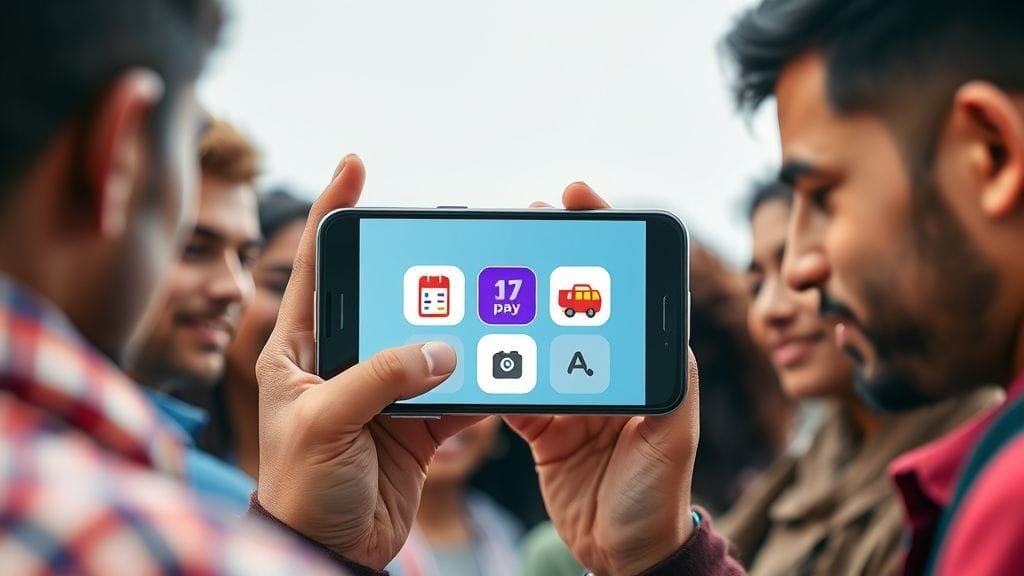
The digital landscape is changing. Indeed, Super Apps drive this transformation. Essentially, these all-in-one platforms consolidate many services, thereby offering a single, seamless interface. Consequently, this fundamentally alters how we interact with technology and how we conduct our daily lives. While Super Apps were pioneered in Asia, they nevertheless offer users great convenience and unlock vast opportunities for businesses. However, they also introduce complex challenges. Specifically, these relate to data, regulation, and market dynamics. Therefore, this article explores Super Apps, covering their rise, benefits, and risks. Moreover, it also discusses their exciting future.

What Exactly Are Super Apps?
Super Apps are sophisticated mobile applications. Essentially, they are multi-functional, integrating many services. Furthermore, all operate within a unified ecosystem. For example, imagine a single app where you can message friends. You can also order food, pay bills, book a ride, shop online, and even manage investments. Ultimately, this consolidation reduces user needs; consequently, users don’t download many single-purpose apps. Instead, Super Apps provide a holistic digital experience.
Pioneers from Asia: WeChat and Alipay
The concept of Super Apps started in Asia, and indeed, it flourished there. Companies like Tencent’s WeChat led this, and similarly, Alibaba’s Alipay also led this innovation. Initially, WeChat began as a messaging app. However, it quickly evolved, bundling digital wallets, and subsequently, e-commerce was added. Moreover, third-party mini-programs were also included, all direct within its interface. Likewise, Alipay started as a payment platform. Nevertheless, it expanded its offerings, and now, it includes many financial services. Lifestyle features are also present, and even government services are available. Ultimately, these platforms showed great potential because they integrated diverse functionalities.
Global Expansion: Beyond Messaging and Payments
While WeChat and Alipay are still dominant, the Super App model is now adopted more widely. For instance, Grab and Gojek originated in Southeast Asia, integrating ride-hailing. Furthermore, food delivery and payment services were also added. Similarly, Paytm offers many financial services in India, and also has e-commerce services. Moreover, Rappi is expanding in Latin America, offering delivery and financial services. Even global players like Uber have shifted, moving beyond ride-hailing. Instead, they added food and grocery delivery. Clearly, this indicates a Super App model shift; likewise, AirAsia Move shows this trend too, as it bundles travel, lifestyle, and financial services.
Unpacking the Benefits of Super Apps
Super Apps primarily benefit users. However, they also significantly benefit businesses. Indeed, their integrated nature fosters efficiency, encourages engagement, and furthermore, opens new growth avenues. Ultimately, understanding these benefits is key; consequently, it explains their rapid global spread and shows their enduring appeal.
Unmatched User Convenience and Engagement
Super Apps offer users a seamless and also contextualized experience. Specifically, they remove the hassle of multiple logins; consequently, users avoid navigating various interfaces. Instead, a single app provides essential services. Thus, this saves time and simplifies daily digital interactions. Ultimately, this convenience boosts user engagement. Moreover, session times become longer, and retention rates are significantly higher. In essence, the user experience is more enjoyable and also more efficient.
Driving Business Growth and Monetization
Businesses in Super App ecosystems gain access to massive, captive user bases. Furthermore, these platforms offer rich data insights. Indeed, they reveal user behavior and preferences. Consequently, this enables effective cross-selling and also creates upselling opportunities. Moreover, companies can unlock new revenue streams. Integrated services provide these, specifically through targeted advertising and various subscription models. Ultimately, building a Super App presence reduces customer acquisition costs, enhances brand loyalty, and also streamlines operational efficiencies. Therefore, this creates a powerful economic engine.

A detailed infographic showing interconnected services within a Super App ecosystem: payments, e-commerce, transport, messaging, entertainment, all feeding into a central data analytics hub.
Harnessing Data for Hyper-Personalization
Super Apps effectively use big data. Moreover, they also leverage AI. Together, this analyzes user behavior comprehensively. Indeed, their analytical capability is strong. Therefore, it allows tailored recommendations and optimizes engagement across services. Clearly, AI-driven personalization is key to their evolution. In fact, predictions suggest 95% of customer interactions will be AI-driven by 2025. Ultimately, this personalization creates an intuitive and also responsive experience. Consequently, this drives satisfaction and continued use.
Powering Mobile-First Economies
Super Apps thrive in specific regions. Specifically, these areas have high smartphone penetration and also mobile-first user bases. Consequently, these all-in-one solutions bridge crucial gaps. This is especially true for unbanked populations, as they offer accessible financial services. Indeed, in many emerging markets, a smartphone is a primary tool. Through it, a Super App manages finances, conducts commerce, and also accesses essential services. Therefore, this democratizes digital access and furthermore democratizes participation.
Navigating the Challenges and Risks of Super Apps
While Super Apps have many advantages, their widespread adoption still has hurdles. Moreover, consolidation also presents potential drawbacks. Therefore, addressing these challenges is crucial. This, in turn, ensures sustainable growth and supports responsible development.
Data Privacy and Security Concerns
Because Super Apps consolidate vast user data, this raises substantial privacy concerns. Furthermore, it creates a larger attack surface, thus becoming attractive to cybercriminals. Consequently, the platform becomes a high-value target. Indeed, a data breach within a Super App could be severe. It could, for instance, have far-reaching consequences, including widespread identity theft. Moreover, financial fraud is also a risk. As a result, regulatory scrutiny is intensifying, especially in regions with strict data protection laws like the EU and US. Ultimately, this poses a challenge to global expansion.
Complexity in Development and Maintenance
Building a comprehensive Super App requires significant investment. Specifically, it needs development, design, and continuous updates. Moreover, integrating diverse services is intricate. This includes, for example, messaging, payments, and e-commerce. Crucially, all must form a single, cohesive platform. Therefore, seamless functionality is crucial, and likewise, data consistency is also important. Furthermore, a unified user experience is needed. This, in turn, requires robust architecture, skilled engineering teams, and ongoing commitment. Consequently, this complexity can be a daunting barrier for new entrants.
User Fatigue and Market Saturation
While convenience attracts users to Super Apps, too many features can also cause fatigue. For instance, an app might become too complex. Alternatively, it could get cluttered. If users only need specific services, then engagement can diminish. Indeed, broad offerings can deter users. Instead, they might prefer simpler or more focused applications. Moreover, the market is very competitive. Therefore, differentiating a new Super App is hard. Consequently, avoiding feature bloat is a significant strategic challenge.
Regulatory Scrutiny and Market Concentration
Globally, regulators are concerned. Specifically, Super Apps could become digital economy “gatekeepers.” Indeed, their dominance is strong, especially in emerging markets. Consequently, it could stifle innovation. Furthermore, smaller competitors might be crowded out, thereby creating a dependency that makes switching platforms difficult for users. Concerns, therefore, include fair competition. Monopolistic practices are also a worry. Ultimately, immense power is concentrated in one entity. Hence, governments are exploring options; primarily, they want a level playing field and to foster innovation. For more on digital market regulation, see this [Wikipedia article on Digital Economy Regulation](https://en.wikipedia.org/wiki/Digitaleconomyregulation).
Slower Adoption in Western Markets
Comparatively, Super Apps are adopted slower in Western markets than in Asia. Indeed, several factors cause this trend:
- Preference for Specialized Apps: Western consumers typically prefer dedicated apps for specific tasks.
- For instance, WhatsApp is used for messaging, PayPal for payments, and Amazon for shopping.
- Stricter Data Privacy Regulations: The EU and US have robust data privacy frameworks.
- Consequently, these create a challenging environment, given that data consolidation is inherent in Super Apps.
- Established Tech Giants: Existing tech behemoths dominate.
- Specifically, Google, Apple, and Facebook are examples; they already dominate various digital services.
- Thus, this makes it harder for new, all-in-one platforms to gain traction.
However, interest is growing. For example, a 2022 survey showed this, where 72% of U.S. respondents were interested. They would consider using a Super App. Therefore, this suggests a potential shift.
The Expanding Global Super App Market
The global market for Super Apps is exploding. Indeed, it reflects increasing demand for integrated digital services. Consequently, these powerful platforms alter market dynamics. Furthermore, they change consumer behavior fundamentally.
Impressive Growth Projections
The market for Super Apps was valued at $58.6 billion in 2022. However, projections indicate a staggering increase. For instance, the market could reach $722.4 billion by 2032, which shows a remarkable 28.9% CAGR. Moreover, other analyses are even more optimistic. They, for example, estimate the market could hit $915 billion by 2033, representing a 28% CAGR. Alternatively, it could also reach $440.19 billion by 2030, with a 28.13% CAGR. Ultimately, these figures underscore immense economic potential and also show widespread adoption of these platforms.
Regional Dominance and Platform Trends
The Asia-Pacific region dominates. Indeed, it held over 42.8% of the global Super App market in 2023. This dominance, furthermore, has several contributing factors. These include, high mobile penetration, a lack of legacy infrastructure, and also cultural preferences for integrated solutions. Moreover, Android is the leading operating system. It, in fact, secured over 63.1% of market share in 2023. Android’s open ecosystem, therefore, drives this success. Since it is prevalent in low-cost handsets common in many emerging markets, Super Apps thrive in these markets. Learn more about market trends in the mobile app industry at [Mobile App Daily](https://www.mobileappdaily.com/blog/mobile-app-market-statistics).

A bar chart showing the projected growth of the Super App market value from 2022 to 2032, with billions of dollars on the Y-axis and years on the X-axis.
Consumer Use and E-commerce Impact
Consumers (B2C) are the largest end-user segment within the Super App landscape. Indeed, over 4.1 billion people used Super Apps in 2024 for daily transactions. Consequently, this shows their integral role in modern life. Furthermore, e-commerce functionality drives this growth because it is embedded within Super Apps. This segment, for instance, was valued at $30 billion in 2023. Moreover, it is expected to reach $150 billion by 2032. Clearly, this highlights immense commercial potential. Specifically, shopping experiences are integrated directly, given that these platforms are multi-functional.
The Future of Super Apps: Evolution and Adaptation
The trajectory of Super Apps suggests continued evolution. Primarily, technological advancements drive this. However, shifting user demands also contribute. Consequently, their future will involve deeper integration. Furthermore, expanded financial services are likely. Nevertheless, adoption strategies will vary across global markets.
AI, FinTech, and Hyper-Personalization
Future Super App developments will include deeper AI integration. Moreover, machine learning will also be more profound. This, in turn, will enable hyper-personalization. Consequently, services will be delivered, and content will be incredibly relevant to users. Furthermore, FinTech services will expand within these platforms; indeed, this is a key trend. Therefore, expect more sophisticated financial tools. Specifically, blockchain technology will provide secure transactions, and cryptocurrency wallets will be integrated. Ultimately, these advancements will solidify Super Apps, transforming them into comprehensive financial hubs.

Mini Super Apps and Niche Expansion
The “everything app” vision is prominent, especially in Asia. However, a different model might emerge in Western markets. Specifically, “Mini Super Apps” could gain traction. These platforms, therefore, would expand services significantly, but within a specific niche. In other words, they would not encompass every digital life aspect. For example, a transportation app could integrate food delivery, payments, or even event ticketing. However, it might stop short of social media or comprehensive e-commerce. This approach, consequently, increases functionality. Yet, it does not overwhelm users. Moreover, it avoids challenging tech giants on all fronts.
Conclusion
Undeniably, Super Apps reshape the global digital landscape. They originated as versatile platforms in Asia. Indeed, these platforms show a powerful ability to consolidate diverse services. This, in turn, offers unparalleled user convenience and also brings substantial growth for businesses. However, challenges persist. Specifically, these relate to data privacy, complex development, and ongoing regulatory scrutiny. Yet, the benefits are clear. These include, for example, enhanced engagement, hyper-personalization, and economic empowerment. As technology evolves and user expectations shift, Super Apps will adapt. They will integrate cutting-edge AI. FinTech solutions will also be included. Ultimately, expansive “everything apps” might continue, or alternatively, more focused “mini super apps” might emerge. Nevertheless, these integrated platforms will define mobile interaction. Consequently, they will make our digital lives more seamless and more interconnected than ever.