“`markdown
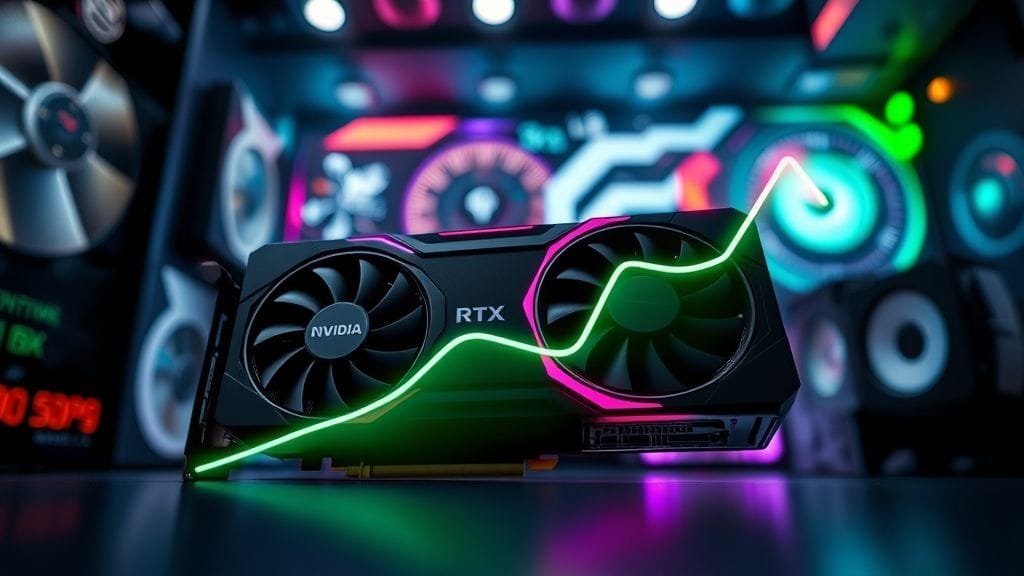
Exciting news for PC builders: RTX 5000 price drops are becoming increasingly common. The high-performance graphics card market is rarely static; therefore, tracking GPU pricing remains essential. Initially scarce and costly, NVIDIA’s RTX 5000 series now sees significant market shifts, however. Indeed, this transition offers a fascinating case study. This article delves into factors behind these adjustments, like improved manufacturing and future “Super” refreshes. Consequently, understanding these forces is crucial for informed purchasing. The market is now more favorable for consumers.

The Shifting Sands of GPU Pricing: Current State of RTX 5000 Price Reductions
NVIDIA’s RTX 5000 series GPUs are currently experiencing significant price reductions. This trend is particularly noteworthy because these powerful cards were only recently released. The decline is clearly visible for RTX 5080 and RTX 5070-class models, showcasing early RTX 5000 price drops. Initially, discounts started slowly; however, they are now widespread. Consequently, retailers worldwide are actively adjusting prices, with street prices moving closer to MSRP and even falling below it.
North American stores, for example, are now offering competitive deals, reflecting significant Blackwell GPU discounts. Major retailers such as Walmart, Best Buy, and Newegg clearly show these lower prices. A PNY RTX 5080, which launched at $999, later became available for $929. Similarly, the RTX 5070 initially sold in the mid-$500s; however, it has now dropped to approximately $479. This move below MSRP signals a notable market shift, undeniably benefiting consumers.
Furthermore, the European market distinctly mirrors this downward trend, with reports showing price cuts of almost 10% on Founders Edition RTX 5090, RTX 5080, and RTX 5070 cards. A stronger Euro currency plays a significant role, making imported GPUs cheaper for European consumers. These combined factors make NVIDIA’s latest cards more accessible, reinforcing the global RTX 5000 price reductions and allowing upgrades without high premiums.

Decoding the Downward Trend: Key Drivers Behind the RTX 5000 Price Drops
Several complex factors are driving the current RTX 5000 price drops. Crucially, this trend is not attributable to a single cause; rather, it involves improved supply, adjusted demand, and strategic market positioning. Both NVIDIA and its AIB partners play crucial roles in these graphics card price cuts. Each element contributes significantly to the current buyer-friendly environment, clarifying the evolving GPU landscape.
Oversupply and Softer Sales: The Catalyst for RTX 5000 Price Drops
A primary reason for the ongoing RTX 5000 price drops is, undeniably, a disconnect: production volume is exceeding consumer uptake. According to Chiphell, a respected industry source, both NVIDIA and its AIB partners are reportedly facing “low terminal sales” and “oversupply.” Furthermore, reports also suggest that NVIDIA is “not pleased with sales” of its Blackwell GPUs, despite its dominant market position, further accelerating the NVIDIA 5000 series sales adjustments.
This situation, at first glance, may seem rather odd, as past launches often experienced severe shortages. However, it illustrates the delicate balance in market forecasting. Manufacturers aim to meet demand but prefer not to exceed it greatly. A large inventory surplus quickly erodes prices as companies must move excess stock, directly contributing to the RTX 5000 price reductions. This indicates that initial demand might have been inflated, and genuine consumer interest at higher prices proved softer than projected.

Healthier Inventory and Proactive Management Fueling RTX 5000 Price Reductions
The RTX 5000 series supply chain has furthermore greatly improved, contrasting sharply with the initial launch period. NVIDIA proactively ramped up production early; in fact, in March 2025, they confirmed “working overtime” to boost supply. They shipped twice as many RTX 50 series GPUs in five weeks compared to the RTX 40 series launch. This aggressive strategy clearly paid off, leading to a “materially healthier” and uniform supply. Consequently, RTX 5080 and RTX 5070-tier boards are now readily available, helping drive the RTX 5000 price drops.
Moreover, larger, consistent shipments are now reaching stores regularly. Therefore, the scarcity premium, common with new GPU launches, has largely disappeared. Well-stocked shelves mean consumers feel less urgency to purchase immediately, thus less likely to pay above MSRP. In essence, improved inventory eliminates a main reason for premium pricing, offering consumers more choice and thereby reducing pressure to buy immediately at high costs. Ultimately, this directly drives down the RTX 5000 price drops and contributes to overall graphics card price cuts.

The “Super” Refresh Factor: Driving Blackwell GPU Discounts
A highly anticipated factor also significantly contributes to the current RTX 5000 price drops: namely, the rumor of NVIDIA launching “Super” GPU models. Historically, NVIDIA introduces “Super” refreshes approximately 12-18 months into a generation’s lifecycle. Typically, these models offer improved performance, often featuring more VRAM or better value, which prompts a refresh of the existing lineup. Indeed, speculation strongly points to a “Super” launch by late 2025 or early 2026.
NVIDIA and its AIB partners are understandably anticipating this release. Consequently, they have a strong incentive to clear existing inventory. After all, holding older stock is financially unsound, especially when a superior, similarly priced model is imminent. Retailers therefore prefer selling current stock at a discount now rather than being stuck with it later, contributing significantly to RTX 5000 price reductions. Ultimately, this strategic clearance creates a significant opportunity for consumers, allowing them to acquire current-generation cards at reduced prices, even though they know a refresh is likely.

Initial High Pricing and VRAM Concerns: Accelerating NVIDIA 5000 Series Sales
Launch prices for some RTX 5000 models were indeed notably high. Furthermore, this trend has, in fact, marked premium GPUs for generations. However, for many consumers, these prices represented a significant barrier. In addition, some RTX 5000 models also faced criticism regarding their VRAM, as many felt it was insufficient for robust future-proofing. Specifically, this became a key concern for gamers using high-resolution settings, and similarly, it affected memory-intensive applications, especially given the cards’ performance tier. This dynamic further contributed to the early signs of NVIDIA 5000 series sales adjustments.
These two factors consequently combined to lead to lower-than-expected demand. High initial pricing and VRAM concerns therefore affected particular consumer segments. For instance, some gamers chose to stick with their existing RTX 40 series cards, opting not to upgrade immediately. Conversely, others chose previous-gen models; indeed, the popular RTX 4060 frequently appeared on bestseller lists, for example. Ultimately, this widespread hesitation contributed significantly to “low terminal sales,” which, in turn, fueled the current RTX 5000 price drops, solidifying the trend of graphics card price cuts.
A Tale of Two Launches: Understanding RTX 5000 Price Drops
Intense competition among Add-in-Board (AIB) partners also critically drives the RTX 5000 price drops. Crucially, this extends beyond NVIDIA’s main strategies. Companies like ASUS, MSI, Gigabyte, Zotac, and PNY build custom GPUs (it’s worth noting that EVGA historically was a partner but no longer makes NVIDIA cards). Consequently, they constantly differentiate their offerings, using aggressive cooler designs, custom PCBs, and enhanced power delivery. Furthermore, bundled extras are also common, all contributing to better Blackwell GPU discounts.

AIB partners frequently cut prices when supply is abundant and demand is softer. They do this primarily to gain market share, and thus, this fierce competition directly benefits consumers. Indeed, each AIB strives to offer the best value. Moreover, these localized price wars combine with broader market factors, thereby creating downward pressure that affects the overall street price of RTX 5000 series cards, leading to more RTX 5000 price reductions. Ultimately, consumers can find excellent deals by comparing offerings from different AIBs across various retailers.
Broader Market Ripple Effects: Following RTX 5000 Price Reductions
The current market, characterized by falling RTX 5000 price drops, contrasts sharply with the initial series rollout in early 2025. Flagship models faced immense demand, leading to severe stock shortages. Widespread scalping occurred; prices soared far above MSRP, creating a frustrating experience reminiscent of past chaotic GPU launches.
Some observers speculated NVIDIA might have deliberately limited initial stock, perhaps to create artificial scarcity. Conversely, others theorized NVIDIA prioritized lucrative AI data center contracts, diverting Blackwell chips from consumer markets. These theories highlight NVIDIA’s complex decisions, operating at the forefront of both gaming and AI technologies, and influencing RTX 5000 price drops.
NVIDIA’s market performance nevertheless remained strong, despite initial supply challenges. In fact, it captured a staggering 92% of the desktop graphics card market in Q1 2025. This dominance clearly demonstrated its formidable position, further highlighting the sheer volume of underlying demand. Therefore, current RTX 5000 price drops are not a sign of failure; rather, they represent a significant adjustment, shifting the market from constrained supply to a more normalized, abundant one with improved NVIDIA 5000 series sales.
AMD’s Strategic Positioning: Intensifying Graphics Card Price Cuts
RTX 5000 price adjustments, it must be noted, are not isolated incidents. Instead, they send ripples across the entire GPU market, influencing consumer behavior and affecting competitive landscapes. Moreover, they impact the strategies of players like AMD, forcing them to consider their own graphics card price cuts. Ultimately, these broader market effects offer valuable insights, revealing the overall health and direction of the graphics card industry.
Q1: What’s Driving the Current RTX 5000 Price Drops? After RTX 5000 Price Drops
High RTX 5000 pricing and early supply issues consequently pushed many gamers away from the bleeding edge. Specifically, many consumers chose previous-generation GPUs, opting not to rush to buy the latest models. Reports from April 2025 furthermore showed a clear trend: the RTX 4060, a mid-range card, topped Newegg’s bestseller charts. This, in turn, demonstrated a clear preference for value and availability, which trumped peak performance at high costs. The absence of compelling RTX 5000 price reductions at launch certainly played a role.

This trend indeed highlights a critical market aspect: price sensitivity. While enthusiasts often chase the highest frames per second, most gamers instead seek a balance between performance and affordability. Therefore, when the latest generation is too expensive or hard to find, demand inevitably shifts to more accessible alternatives. The current RTX 5000 price drops consequently could reverse this trend, potentially drawing more buyers back to the new generation as the value proposition significantly improves, offering consumers true Blackwell GPU discounts.
Is Now the Time to Capitalize on RTX 5000 Price Drops?
NVIDIA’s supply challenges and VRAM concerns consequently created an opening for AMD during the RTX 5000 launch. AMD typically holds a smaller market share; however, NVIDIA’s vulnerability potentially could be leveraged. Reports indeed indicated increased interest and market share for AMD, especially in regions like Japan. Consequently, frustrated consumers explored AMD’s offerings, viewing them as viable alternatives due to NVIDIA’s initial pricing and availability and the lack of early RTX 5000 price reductions.
AMD’s strategy often involves competitive performance, including slightly more aggressive prices and also more generous VRAM in some segments. Therefore, when NVIDIA faces issues, AMD’s value proposition becomes even more appealing. The current RTX 5000 price drops consequently will pressure AMD, forcing them to refine pricing and product strategies to stay competitive. Ultimately, this dynamic competition benefits consumers, driving both innovation and better value across the market, leading to more graphics card price cuts overall.
Navigating RTX 5000 Price Drops: How to Find the Best Deals
By September 2025, the high-end GPU market appeared to be “healing,” signifying a welcome return to predictable pricing and normalized stock levels. This, furthermore, marked a departure from recent chaos. NVIDIA and AMD cards, including the RTX 5000 series, were generally available and traded closer to their MSRPs, reflecting stabilized RTX 5000 price reductions. Ultimately, this normalization indicates a healthier supply chain and also a more balanced demand-supply equilibrium.
Despite this positive trend, uncertainties nevertheless still remain. Geopolitical factors and tariff discussions, for instance, cast a shadow, potentially affecting manufacturing and import costs. Indeed, such uncertainties can introduce price volatility, even in a stable market for NVIDIA 5000 series sales. However, for the immediate future, signs point to continued improvement, including sustained availability and attractive prices for consumers. Ultimately, this ongoing healing process bodes well for PC builders or upgraders.
Seizing the Opportunity: What RTX 5000 Price Drops Mean for Buyers
The current RTX 5000 price drops unquestionably offer a significant opportunity for PC enthusiasts and gamers alike. High prices and limited stock, fortunately, are fading. Instead, the market increasingly favors the consumer. Therefore, what exactly does this mean for buyers, and furthermore, how can they best leverage this evolving situation and the ongoing graphics card price cuts?
Q3: Which RTX 5000 Models are Benefiting Most from Graphics Card Price Cuts?
If you are considering a graphics card upgrade, the answer is “possibly.” Current price reductions undeniably make the RTX 5000 series more attractive, especially compared to their launch prices. Therefore, if immediate Blackwell performance is a priority, now certainly could be a good time to buy, provided current prices align with your budget and you’re satisfied with the RTX 5000 price drops available.
“Super” refreshes are anticipated, with expectations by late 2025 or early 2026. This indeed adds a crucial consideration. Refreshes typically offer enhanced performance; furthermore, they can have more VRAM or superior value, which consequently prompts a refresh of the existing lineup. Therefore, a buyer might wisely wait for “Super” models if they do not need an immediate upgrade or if they prioritize future-proofing and maximum performance per dollar. The decision ultimately depends on individual needs, patience, and budget. However, for many, a “good enough” deal now often beats waiting indefinitely, making current RTX 5000 price reductions quite appealing.
How to Find the Best Deals
To leverage the RTX 5000 price drops effectively, firstly, monitor major retailers like Newegg, Best Buy, Walmart, and Amazon. European shoppers should check local equivalents. Secondly, always compare cards from different AIB partners, such as ASUS, MSI, and Gigabyte; one custom card might offer a deeper discount for the same GPU.
Furthermore, utilize online price tracking tools and browser extensions. These tools effectively automate your search and notify you when a GPU drops to a specific price. This ensures you don’t miss a flash sale on NVIDIA 5000 series products. This proactive approach saves time and maximizes your chances of securing the best deal.
Always look for GPU bundles. Retailers frequently pair graphics cards with games, power supplies, or other PC components. These bundles can reduce overall cost and potentially offer good value if you need the extra items. Calculate total savings to ensure true benefit. Finally, consult recent reviews and benchmarks before buying; this verifies your chosen card meets expectations, whether for 1440p gaming or 4K rendering, particularly in light of current RTX 5000 price reductions. Informed decisions prevent disappointment.
A New Market Landscape
The current market undeniably marks a significant shift, representing a welcome change from recent years. Indeed, by doing diligent research, you can now acquire a powerful RTX 5000 series GPU. Furthermore, by understanding your computing needs, you can get it at a much more reasonable price, thanks to the ongoing RTX 5000 price drops. This increased accessibility consequently helps more gamers and creators experience NVIDIA’s latest architecture, thereby fostering a vibrant, innovative PC ecosystem for all.
Conclusion: A New Chapter for RTX 5000 Pricing
NVIDIA’s RTX 5000 series GPUs have had a dynamic journey, moving from initial scarcity and high prices to improved supply and significant RTX 5000 price drops. This pivotal shift highlights a complex interplay of market forces. NVIDIA ramped up production; however, reported “terminal sales” were softer, easing the initial supply crunch and contributing to Blackwell GPU discounts.
Anticipation of “Super” refresh models also played a significant role. This incentivized inventory clearance, creating a favorable purchasing environment for NVIDIA 5000 series sales. Intense AIB partner competition contributed. Concurrently, high initial pricing and VRAM concerns impacted demand. Ultimately, these factors coalesced, leading to the current downward trend.
These RTX 5000 price drops are undoubtedly welcome news for consumers. They signal a return to more predictable market conditions, making high-performance GPUs more accessible. “Super” refreshes remain a possibility, offering a decision point for buyers. However, the current moment presents a unique opportunity to acquire cutting-edge Blackwell technology affordably. Ultimately, the GPU market is healing, promising advanced gaming and creative capabilities now within reach for more people, also thanks to these graphics card price cuts.
Frequently Asked Questions (FAQ)
Q1: Why are RTX 5000 series GPUs getting cheaper now after being so expensive at launch?
A1: Several factors contribute to the RTX 5000 price drops. NVIDIA firstly greatly increased production, which consequently led to healthier inventory levels. Reports also suggest “low terminal sales” and oversupply, leading to significant graphics card price cuts. Furthermore, upcoming “Super” refresh models prompt retailers to clear stock. Finally, high initial prices and VRAM concerns also dampened consumer demand.
Q2: Is the “Super” refresh confirmed, and how does it affect current RTX 5000 purchases?
A2: NVIDIA has not officially confirmed “Super” refresh models. However, rumors strongly suggest a late 2025 or early 2026 launch. This anticipation consequently drives current price reductions as companies clear existing inventory. Buyers therefore must weigh immediate savings against waiting, since “Super” variants might offer more power or value. These dynamics are central to understanding current RTX 5000 price drops.
Q3: Which RTX 5000 models are seeing the most significant price reductions?
A3: Reports indicate that RTX 5080 and RTX 5070-class models show the biggest price cuts. Specifically, the RTX 5080 launched at $999 but dropped to about $929. Similarly, the RTX 5070 fell from the mid-$500s to roughly $479. In addition, Founders Edition cards in Europe have also seen cuts, including 5090, 5080, and 5070 models, all part of broader RTX 5000 price reductions.
Q4: Does the current market situation indicate that NVIDIA is struggling?
A4: Not necessarily. “Low terminal sales” are reported; however, NVIDIA still held a dominant 92% market share in Q1 2025. Price adjustments instead reflect a transition from constrained supply, which was due to initial shortages or AI contracts. The market is therefore more normalized. Ultimately, it’s an adjustment to market realities and a sign of healthier NVIDIA 5000 series sales, not overall struggle.
Q5: Should I buy an RTX 5000 series GPU now, or wait for AMD’s next offerings?
A5: If you need an upgrade now and find an RTX 5000 series card at a good price, it’s an opportune time to buy. However, if you can wait, firstly, consider NVIDIA’s upcoming “Super” refreshes. Secondly, also watch for future AMD offerings; these could yield better performance-per-dollar or competitive features. Ultimately, increased competition benefits consumers, so staying informed about all options is a smart strategy, especially concerning the impact of RTX 5000 price drops.
“`