
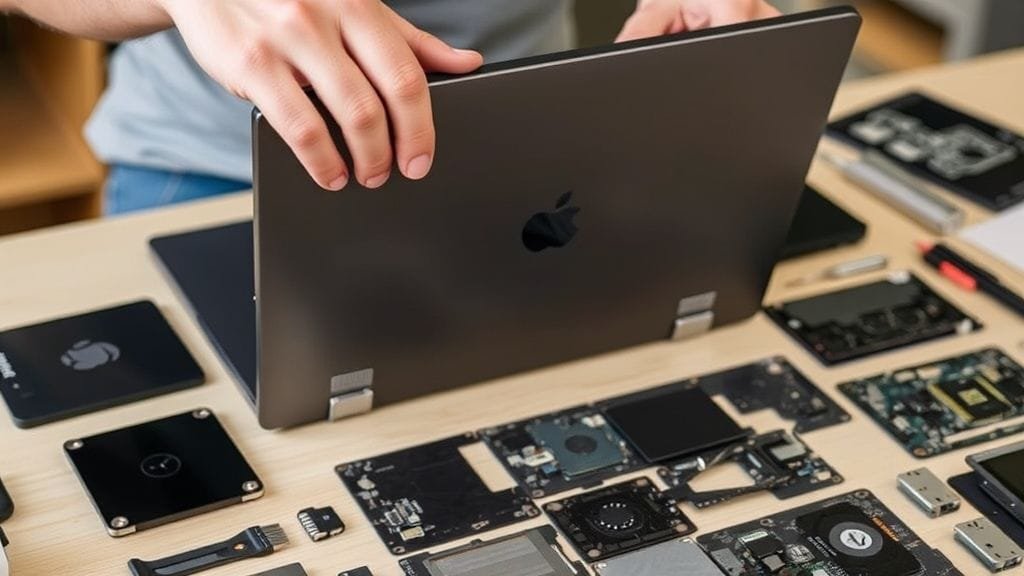
Right to Repair Laptops: How the Movement is Shaping Tomorrow’s Tech
The world of personal technology is experiencing a quiet revolution. Indeed, for years, many consumers accepted that their laptops would eventually become obsolete, difficult to fix, and destined for landfill. However, the burgeoning Right to Repair laptops movement is fundamentally challenging this “take-make-waste” model, reshaping design, empowering users, and ushering in an era of more sustainable and upgradable devices. Specifically, this shift isn’t just about fixing a broken screen; it’s about a future where your laptop can evolve with your needs.

Understanding the Core of the Right to Repair Movement
At its heart, the Right to Repair movement champions the fundamental principle that consumers should possess the ability to repair the products they own. This means, therefore, that manufacturers must provide accessible spare parts, diagnostic tools, and comprehensive repair manuals. Historically, many manufacturers designed products with “planned obsolescence” in mind, making repairs challenging or impossible. Such designs, consequently, often pushed consumers towards frequent replacements, increasing corporate profits.
The movement, conversely, directly counters this trend. It advocates for an open ecosystem where independent repair shops and individual users can perform necessary maintenance without proprietary barriers. Ultimately, this approach promises to extend device lifespans, reduce waste, and provide economic benefits to everyone involved.
The Urgent Environmental Imperative: Tackling E-Waste
One of the most compelling drivers behind the push for Right to Repair laptops is the escalating global electronic waste (e-waste) crisis. In fact, our consumption of electronics generates an alarming amount of discarded materials. Globally, a staggering 62 million tonnes of e-waste were produced in 2022. This figure, moreover, represents an 82% surge since 2010.
Projections indicate that global e-waste could reach 82 million tonnes by 2030, a rate five times faster than documented recycling efforts. Worryingly, only about 17.4% of global e-waste saw proper recycling in 2019. Extending the lifespan of devices through repair, therefore, significantly reduces the demand for new products. Consequently, it lessens the energy and resources required for manufacturing. Experts suggest the Right to Repair could reduce e-waste by up to 30%. This, ultimately, makes a strong case for sustainable technology practices. You can, furthermore, learn more about the global e-waste problem on sites like Wikipedia.
Unleashing Economic Benefits for Consumers and Communities
Beyond environmental gains, the Right to Repair movement offers substantial economic advantages. For consumers, specifically, the ability to repair or upgrade devices translates into significant cost savings. US households, for instance, could save an estimated $40 billion annually if they could reliably repair their devices instead of replacing them. In short, repairing a laptop is often far less expensive than purchasing an entirely new one.
Furthermore, a thriving repair ecosystem supports local economies. Independent repair shops, which frequently employ skilled technicians, benefit directly from increased repairability. This fosters competition, potentially leading to lower repair costs and better service for consumers. These businesses also, importantly, contribute to local job creation and economic resilience.

The Design Revolution: How Laptops are Becoming More Modular
The influence of the Right to Repair is actively transforming laptop design. Manufacturers are, as a result, increasingly adopting principles of modularity and repairability. This marks a significant departure from the trend of permanently glued or soldered components. Consumers, moreover, now look for machines that allow easy access and replacement of parts.
Key design shifts include:
- Easily Replaceable Components: Parts like batteries, RAM, and storage are becoming simpler to swap out. Some designs, moreover, even enable processor and motherboard upgrades.
- Visible and Captive Fasteners: Designers are, therefore, using screws that are easy to see and don’t fall out when loosened. This simplifies disassembly.
- Clear Labeling: Components are often clearly labeled, making identification and replacement straightforward for users.
- Accessible Guides and Schematics: Manufacturers are, furthermore, starting to provide detailed repair guides and technical schematics. This empowers both independent technicians and savvy DIYers.
Pioneering companies like Framework have, in fact, emerged as leaders in this space. They build laptops specifically designed for easy user repair and upgrades. Framework offers an open ecosystem for third-party development and, crucially, ensures year-to-year component compatibility. Even industry giants like Intel have, furthermore, demonstrated interest, proposing modular PC designs that align with these principles.
Empowering Users and Creating Jobs
The Right to Repair movement fundamentally empowers consumers. It, therefore, gives them genuine ownership over the products they purchase. Surveys reveal a strong public desire for repairability. For example, 67% of polled consumers have attempted to repair their computers at home, while 57% believe they should have the right to do so. This sentiment, consequently, clearly indicates a shift in consumer expectations.
Moreover, a more open repair ecosystem fosters increased competition among repair shops. This can, in turn, drive down service costs and improve repair quality for consumers. The repair sector also significantly boosts job creation. For every 1,000 tons of reused electronics, for instance, 200 repair jobs are created. This contrasts sharply with 15 jobs for recycling and only 1 for landfill. Therefore, embracing repairable laptops also means investing in human capital.
Navigating Different Perspectives: Manufacturers’ Concerns and Counterarguments
While the benefits of the Right to Repair movement are clear, manufacturers have historically expressed concerns. Understanding these perspectives, indeed, helps appreciate the complex landscape of this issue. Manufacturers have often cited several reasons for resisting widespread repairability.
Understanding Manufacturer Objections
Safety and Security Concerns
Safety Concerns
Manufacturers frequently argue that unauthorized repairs by untrained individuals could pose safety risks. They highlight, for example, the presence of combustible materials (like lithium-ion batteries), sharp parts, and the potential for mishandling. Such issues, they claim, could lead to hazards and significant liability. However, the U.S. Federal Trade Commission’s (FTC) 2021 report, “Nixing the Fix,” largely repudiated these claims. The report suggested that safety concerns should not restrict repairability, noting that manufacturers could mitigate risks by simply providing necessary tools and parts. This, therefore, refutes a major obstacle to more easily repairable laptops.
Intellectual Property and Security Risks
Another concern, moreover, revolves around intellectual property (IP) and security. Manufacturers worry about protecting proprietary knowledge, trade secrets, and software. They also express apprehension about the potential for data breaches, cybersecurity threats, or the disabling of anti-theft measures if unauthorized parties gain access to tools and information. Advocates, however, argue that providing access to parts and manuals does not necessitate divulging sensitive IP. Secure design practices can also, furthermore, mitigate most security risks.
Design and Cost Implications
Quality, Innovation, and Cost
Some manufacturers argue that designing for repairability might compromise device aesthetics, potentially making laptops thicker or heavier. They also suggest it could stifle innovation, claiming that if products last longer, there is less incentive for research and development. Additionally, they posit that forced changes to manufacturing processes to accommodate individual parts might increase the overall price of electronics.
Proponents, however, counter that innovative design can seamlessly integrate repairability without sacrificing aesthetics or efficiency. They also argue that long-term value and reduced consumption ultimately benefit consumers, even if initial costs see a slight adjustment. The rise of companies specializing in upgradable laptops, in fact, demonstrates that innovation can thrive within a repair-friendly paradigm.

The Global Legislative Push for Right to Repair Laptops
The Right to Repair movement has garnered significant global momentum, translating into concrete legislative action. Governments worldwide are, indeed, recognizing the environmental and economic imperative to support repair. These legislative efforts, consequently, are rapidly changing the landscape for electronics manufacturers.
European Union Leads the Way
The European Union has adopted comprehensive rules that significantly boost the Right to Repair. These mandates, for example, include extended warranty guarantees, requiring manufacturers to repair devices even after the warranty expires. They also ensure spare parts and tools are available at reasonable costs. Crucially, these rules prohibit manufacturers from obstructing repairs through contractual clauses, hardware, or software. They also, furthermore, permit independent repair firms to use secondhand or 3D-printed parts, further democratizing the repair process. This directly, therefore, impacts the design and availability of repairable laptops across Europe.
National and Regional Efforts
Action in the United States
In the United States, several states are taking the lead. New York and California, for instance, have passed their own Right to Repair laws for electronics. These laws require manufacturers to make diagnostic information, parts, and tools accessible to consumers and independent repair shops. This state-level action, furthermore, builds pressure for broader federal legislation, pushing for more widespread availability of upgradable laptops.
Other International Efforts
France introduced a “Repairability Index” for electronic products, providing consumers with clear information about how easy a device is to fix. The UK, similarly, passed regulations in 2021 requiring manufacturers to provide repair and maintenance information and spare parts for certain “white goods” (large home appliances), laying groundwork for similar actions on electronics. These initiatives, therefore, demonstrate a worldwide commitment to fostering a repair economy.

Shifting Stances: Even Tech Giants Are Adapting
Under mounting pressure from activists, regulators, and increasingly vocal consumers, even historically resistant companies have begun to shift their positions. This represents, moreover, a significant victory for the Right to Repair movement. Long-time opponents are now, in fact, acknowledging the benefits and necessity of more open repair practices.
Apple, for example, had for years opposed Right to Repair legislation. However, the company recently announced self-service repair programs. It began selling parts and tools directly to consumers and is now actively supporting Right to Repair bills in states like California. This pivot from one of the world’s largest tech companies, furthermore, signals a major change.
Microsoft has also, in addition, made strides, making some of its Surface laptop models more repairable. They are now touting repairability as a desirable feature, moving away from past designs that prioritized sleekness over serviceability. These shifts from major players, consequently, indicate that upgradable laptops are becoming a new industry standard. This is, moreover, a positive development for consumers and the environment. (/blog/sustainable-tech-choices/).
The Future of Laptops: Upgradability at its Core
The confluence of environmental urgency, economic benefits, legislative action, and shifting corporate attitudes points to a clear future for laptops. This future, indeed, places upgradability and repairability at its core. Consumers will increasingly expect devices that are designed to last, to be easily maintained, and to evolve with their computing needs.
We can, therefore, anticipate more modular designs, greater transparency from manufacturers regarding repair information, and a competitive landscape where ease of repair becomes a significant selling point. The era of disposability for personal electronics is drawing to a close. Instead, a new age of sustainable, user-empowered technology is rising. For anyone looking to invest in new tech, choosing a repairable laptop will be an increasingly smart decision. (/blog/choosing-your-next-laptop/).
Conclusion: A Brighter, More Sustainable Tech Future
The Right to Repair movement is effectively challenging the “take-make-waste” model of electronics consumption. Through persistent advocacy, legislative action, and growing consumer demand, it is fostering a future where Right to Repair laptops are designed with upgradability and repairability as fundamental principles. This transformation promises not only to promote environmental sustainability and significantly reduce e-waste but also to offer substantial economic benefits to users worldwide. Ultimately, the laptops of tomorrow will truly belong to their owners, ready to be fixed, upgraded, and cherished for years to come.