
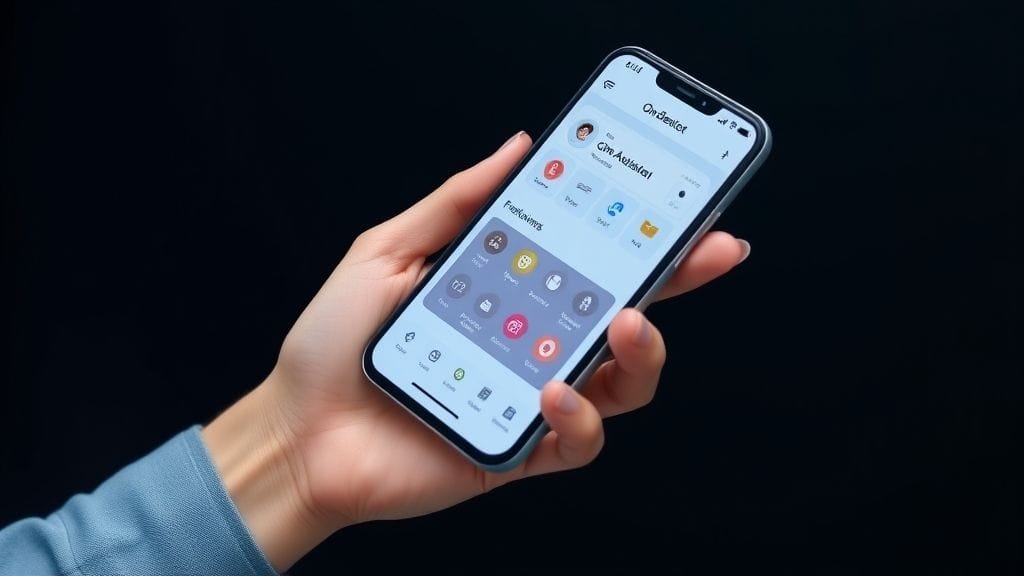
The way we interact with our mobile devices is undergoing a profound transformation. Indeed, at the heart of this evolution lies on-device AI smartphones. Specifically, these devices reshape user experiences. Furthermore, they shift powerful artificial intelligence capabilities from distant cloud servers directly onto your handset. Consequently, this paradigm promises more intuitive, efficient, and personalized smartphones. Thus, they will truly be your intelligent AI companion. In essence, they are no longer just communication tools; instead, these devices are evolving into proactive partners. Moreover, they anticipate needs, and finally, they perform complex tasks with remarkable speed and privacy.

The Dawn of On-Device AI Processing
A significant technological shift defines the modern smartphone landscape: namely, the move towards on-device AI processing. Essentially, this means your smartphone now handles complex AI operations locally. Therefore, it no longer relies on remote cloud servers for heavy computational tasks. Crucially, this trend is not just a preference; rather, it is a necessity. Indeed, it is driven by demand for instant results, enhanced privacy, and seamless offline functionality. Furthermore, remarkable advancements in specialized hardware drive this fundamental change. Consequently, this hardware equips on-device AI smartphones with unprecedented computational power.
Specialized Hardware: The Engine of Mobile AI
Dedicated hardware powers this revolutionary capability in on-device AI smartphones. Specifically, these are known as Neural Processing Units (NPUs) or AI processors. In fact, these specialized chips are meticulously designed to accelerate machine learning tasks. Consequently, most high-end and many mid-range smartphones integrate such processors. Thus, they perform AI computations with superior efficiency and speed. Indeed, this is better than general-purpose CPUs or GPUs. For example, Apple’s A19 Bionic, Samsung’s Exynos 2500, Qualcomm’s Snapdragon 8 Gen 4, and Arm’s Lumex series are included. Ultimately, these powerful processors are crucial for delivering the next generation of mobile intelligence.
Why the Shift to On-Device?
The transition to on-device processing offers several compelling advantages, thereby defining the future of on-device AI smartphones. Firstly, it drastically reduces latency. Indeed, processing data locally eliminates the cloud round trip. Consequently, this leads to near-instantaneous responses. Secondly, it significantly enhances privacy and security. Moreover, sensitive user data remains on the device. Thus, this minimizes exposure to external servers. In turn, this local processing ensures that personal information is handled with greater care. Finally, it enables robust offline functionality. Therefore, many powerful AI features remain accessible without an internet connection. This, furthermore, is crucial for reliability and accessibility in various scenarios.
Transforming the Smartphone Experience with On-Device AI
Advanced AI integration into smartphones unlocks many transformative features, thereby fundamentally redefining user interaction with devices. Ultimately, these intelligent capabilities are making on-device AI smartphones more capable and responsive than ever before. In essence, on-device AI crafts a truly personalized and intuitive mobile journey. For example, this includes revolutionary camera enhancements and proactive digital assistants.
Unlocking Enhanced Photography and Editing
Photography has been revolutionized by on-device AI. Indeed, modern smartphone cameras use AI for advanced scene recognition. Furthermore, they automatically optimize settings for different environments and subjects. For instance, features like sophisticated portrait modes accurately separate subjects from backgrounds, thus producing professional-looking depth effects. Moreover, beyond capture, AI-powered editing tools are incredibly impressive. Consider, for example, using a “Magic Eraser” to instantly remove unwanted objects, or a “Magic Editor” to creatively adjust picture elements with simple text descriptions. Similarly, Night Sight and Smart HDR leverage AI. Consequently, they capture stunning images in challenging lighting conditions. Ultimately, this makes every photo opportunity count.

Smarter Virtual Assistants and Conversational AI
Voice assistants embedded in on-device AI smartphones are becoming increasingly intelligent. Specifically, Google Assistant, Siri, and Bixby leverage on-device processing. Consequently, they interpret user intent more accurately. Moreover, context-aware suggestions are provided, and complex multi-step tasks are also completed. Looking ahead, however, the vision for the future involves truly conversational AI. Indeed, your phone will act as a proactive digital companion. Furthermore, this advanced AI will understand speech nuances, anticipate your needs, and offer assistance before you even ask. Ultimately, this moves beyond simple commands to genuinely helpful interactions.
Real-time Translations and Accessibility
On-device AI offers impressive real-time translation, thereby facilitating communication across language barriers. For instance, features like Samsung Galaxy S24’s “Live Translate” enable instant language translation during phone calls. Consequently, this makes international communication effortless. Similarly, Google Pixel’s Voice Translate allows users to translate spoken conversations, and it also translates text seen through the camera lens. Crucially, all this works without an internet connection. Moreover, this capability is not only convenient but also significantly boosts accessibility. Thus, this helps individuals with language differences or hearing impairments. In addition, other accessibility features include more accurate voice-to-text conversion and real-time captioning for media. Furthermore, for more information on the impact of AI on accessibility, consider reading this [article on AI accessibility advancements](/blog/ai-accessibility-advancements/).
Hyper-Personalization and Device Efficiency
On-device AI smartphones excel at personalization. Specifically, by continuously analyzing user behavior patterns, AI provides tailored recommendations for apps, music, and content. Consequently, it learns your preferences over time, thus making your smartphone experience uniquely yours. Furthermore, AI plays a crucial role in optimizing device performance. For example, intelligent battery management systems predict app usage to conserve power, thereby extending battery life significantly. Ultimately, this proactive optimization reduces power consumption, and ensures your device runs smoothly throughout the day, always ready when you need it.
The Power of Offline Functionality
A key advantage of integrating AI processing directly onto the device is its capacity for offline operation. Indeed, crucial for reliability and accessibility, many AI models can now run seamlessly without an internet connection. Specifically, features like real-time translation, advanced photo editing, and certain virtual assistant capabilities remain fully functional, even regardless of network availability. Moreover, this independence improves user convenience. It also, furthermore, enhances the overall robustness and utility of on-device AI smartphones. This is especially true, therefore, in areas with limited or no internet access.
The Market Landscape and Consumer Adoption of On-Device AI
The rapid evolution of on-device AI smartphones mirrors explosive market growth. Indeed, consumer interest is strong. Consequently, industry forecasts predict a substantial increase, covering adoption and spending on AI-enabled mobile devices. Ultimately, it signals a new era for smartphone technology. Thus, this trend indicates that AI is no longer a niche feature but a central pillar of future mobile experiences.
Soaring Growth in Edge AI Hardware
The global Edge AI hardware market, which is significantly driven by smartphones and tablets, is experiencing remarkable growth. Specifically, the market was valued at USD 896 million in 2024. However, projections indicate a surge to USD 2.24 billion by 2030. This, therefore, reflects a Compound Annual Growth Rate (CAGR) of 15.9%. Moreover, this substantial expansion underscores the increasing demand for specialized processors that power on-device AI capabilities. Consequently, manufacturers are heavily investing in these technologies to meet consumer expectations for smarter, more responsive devices.
Generative AI Smartphones: A Rapid Ascension
Generative AI, in particular, is set to revolutionize on-device AI smartphones. Indeed, shipments of generative AI-enabled smartphones will skyrocket. Specifically, a staggering 364% increase is expected in 2024, which will reach 234.2 million units globally. Furthermore, ABI Research forecasts over 1.8 billion annual shipments by 2030, as these devices will run generative AI on-device. Moreover, Gartner projects worldwide end-user spending on GenAI smartphones. It will, in fact, hit $298.2 billion by the end of 2025. This, consequently, accounts for 20% of total AI end-user spending. By 2029, furthermore, 100% of premium smartphones will feature GenAI capabilities. Ultimately, this underscores its pervasive integration. For a deeper dive into generative AI, therefore, visit [Wikipedia’s page on Generative AI](https://en.wikipedia.org/wiki/Generativeartificialintelligence).

Consumer Demand Driving AI Integration
Consumer sentiment strongly supports the shift towards AI-integrated smartphones. Specifically, a YouGov Survey revealed 60% of consumers consider AI features important when choosing their next smartphone. Moreover, nearly half of U.S. consumers expect their upcoming device to support AI. Indeed, 20% deem AI “very important” in purchase decisions. Furthermore, younger demographics, particularly Gen Z and Millennials, demonstrate higher awareness and a greater likelihood of purchasing AI-integrated smartphones. Consequently, this robust consumer demand acts as a powerful catalyst. It not only drives manufacturers to innovate but also accelerates advanced AI integration into product lines. In addition, AI-based productivity apps are expected to reduce device refresh cycles to less than two years. Ultimately, this provides a compelling return on investment for users, while also boosting sales for manufacturers.
Navigating the Challenges of On-Device AI
The benefits of on-device AI smartphones are transformative. Yet, however, the journey to fully integrated mobile AI has hurdles. Specifically, developers and manufacturers face technical, financial, and ethical challenges, which require innovative solutions. Therefore, understanding these challenges is crucial for appreciating the complexity and future direction of this technology.
Technical Hurdles and Optimization Needs
Running complex AI models directly on a smartphone presents inherent technical limitations. For instance, devices contend with finite computing power, restricted memory capacity, and also battery consumption as an ever-present challenge. To mitigate these issues, therefore, developers rely on advanced model optimization techniques. These include, for example:
- Compression: Reducing the size of AI models.
- Quantization: Representing model parameters with lower precision to save memory and speed up computation.
- Pruning: Removing less important connections or neurons from a neural network.
Ultimately, these techniques ensure sophisticated AI functions run efficiently on mobile hardware, while also avoiding compromising performance or battery life.
Addressing Performance and Development Costs
Compressing large, cloud-based AI models for on-device operation can increase error rates, thus risking overall performance and accuracy. Therefore, striking the right balance between model size and functional integrity is a continuous challenge for engineers. Moreover, developing and implementing efficient on-device AI models requires significant investment. Indeed, this process can be expensive and demands specialized expertise in both AI algorithms and processor architectures. However, such expertise is currently scarce, which in turn creates a bottleneck in the rapid development and deployment of new AI features. Furthermore, the fragmented hardware ecosystem also adds complexity. Because diverse chips exist from Qualcomm, Apple Silicon, and MediaTek, this necessitates extensive optimization for various architectures.

Privacy Concerns and the Hybrid Future
On-device processing offers privacy benefits. Yet, however, consumer apprehension about AI’s access to personal data remains a concern. For example, a Canalys study found privacy to be the leading worry, with over half of respondents worried about AI accessing personal information. Furthermore, lack of transparency about AI data use contributes to apprehension. Moreover, potential issues include electronic waste and over-reliance on devices. Consequently, addressing these concerns is paramount for widespread trust and adoption of on-device AI smartphones. Ultimately, this requires clear policies, transparent data handling, and robust security.
The Future is a Hybrid AI Companion
Experts envision a future with hybrid AI architecture. This architecture, importantly, recognizes both the potential and limitations of purely on-device or cloud-based AI. Essentially, this intelligent approach combines the best of both worlds. It therefore leverages immediate, secure, and private interactions offered by on-device processing for everyday tasks. However, it also maintains flexibility to access larger, complex cloud-based AI models when advanced computational power or vast datasets are required. Ultimately, this adaptive strategy ensures seamless performance for routine tasks on on-device AI smartphones, while still tapping into expansive cloud AI capabilities for demanding applications. Consequently, this creates a truly robust and versatile AI companion.
On-Device AI Smartphones: The Intelligent Evolution
The smartphone’s journey is well underway, as it evolves from a communication device to a sophisticated AI companion. Indeed, revolutionary on-device AI advancements drive this transformation. Specifically, this shift to local processing, powered by specialized hardware like NPUs, has unleashed a torrent of innovative features. Consequently, from real-time translations to advanced photographic capabilities, on-device AI redefines digital interactions, including hyper-personalized experiences and smarter virtual assistants. Although challenges persist in optimizing models for limited hardware and consumer privacy concerns also need addressing, the benefits are undeniable. These benefits, moreover, include enhanced privacy, superior speed, and invaluable offline functionality. Furthermore, the market’s explosive growth and strong consumer demand underscore AI’s pivotal role in shaping the future of mobile technology. Finally, the envisioned hybrid AI architecture promises a robust and adaptive user experience. This, in turn, solidifies on-device AI smartphones‘ position as truly intelligent, indispensable companions in our increasingly connected world.