The anticipation surrounding a new PC build is palpable, especially when looking ahead to 2025. Enthusiasts and power users alike begin to dream of the latest, most powerful components, often fixating on the next big leap in processor technology. Many might have placed AMD’s highly-touted Zen 6 “Medusa Ridge” CPUs on their mental wishlist. However, the landscape for 2025 reveals a different, yet equally exciting, reality. While Zen 6 represents an exhilarating future for AMD, it won’t be gracing new builds next year. Instead, AMD’s formidable Zen 5 architecture stands ready to redefine performance, making it the true next-gen AMD CPU 2025 choice for desktop users. This lineup is poised to impress.
This comprehensive guide will demystify the 2025 CPU market, steering you away from speculative future tech and firmly towards the powerful processors you can realistically incorporate into your upcoming system, particularly the next-gen AMD CPU 2025 options. We’ll dive deep into AMD’s Zen 5 lineup, from the mainstream Ryzen 9000 series to the gaming-centric X3D variants and the beastly Threadripper options. We’ll also briefly survey Intel’s competitive response, ensuring you have a complete picture to make an informed decision for your ultimate 2025 PC build, focusing on the available next-gen AMD CPU 2025 choices.
The Reality Check: Why Zen 6 Isn’t the Next-gen AMD CPU for Your 2025 Build
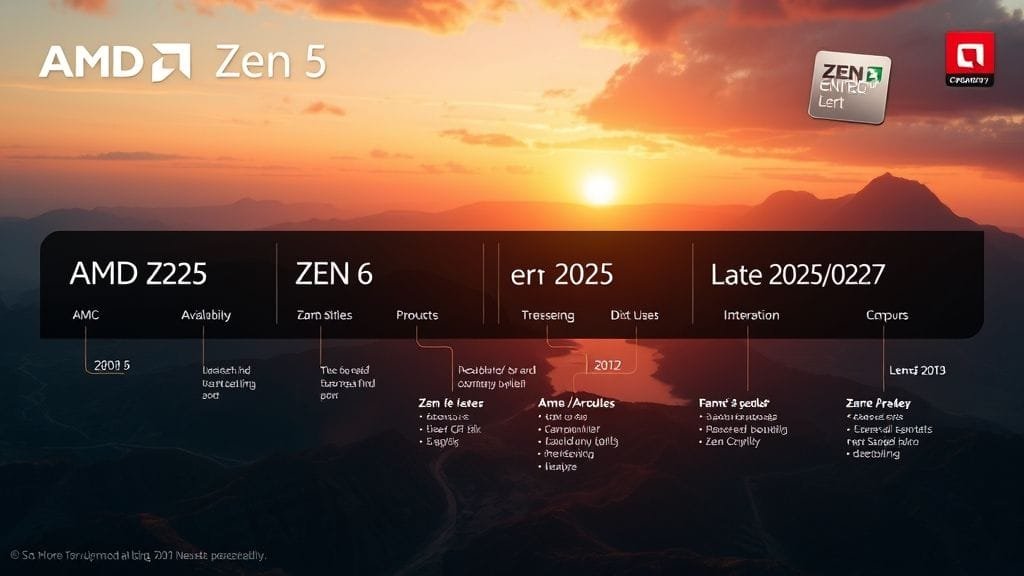
Let’s clear the air upfront: If you’re meticulously planning a new PC build for 2025, AMD’s Zen 6 “Medusa Ridge” CPUs should not be on your shopping list. Despite the buzz and excitement, current industry roadmaps and reliable leaks consistently point to a launch window much later, likely stretching into late 2026 or even 2027. This means that while Zen 6 promises significant architectural advancements and potentially groundbreaking performance, it remains a horizon technology, not a tangible option for a next-gen AMD CPU 2025 build.
The allure of “next-gen” is powerful, often leading to premature speculation about unreleased products. However, building a PC requires focusing on what is available and proven. Investing time and resources into a system based on components that won’t launch for years can lead to frustration and missed opportunities. AMD, like any major semiconductor company, has a carefully phased product release schedule. This ensures thorough testing, optimized manufacturing, and a stable ecosystem for consumers. Zen 6, with its expected further increases in core counts and advanced manufacturing processes, is a generational leap that needs time to mature beyond the scope of a next-gen AMD CPU 2025.
Therefore, for anyone eager to leverage AMD’s cutting-edge technology in 2025, the focus must shift. We need to look at the powerful, tangible innovations that AMD is bringing to market. This means embracing the substantial advancements offered by the Zen 5 architecture, which is poised to be the cornerstone of high-performance next-gen AMD CPU 2025 systems throughout the coming year.

AMD’s True Next-gen AMD CPU for 2025: The Zen 5 Powerhouse
With Zen 6 respectfully set aside for future discussions, let’s turn our attention to the real star of AMD’s 2025 desktop CPU lineup: the Zen 5 architecture, codenamed “Granite Ridge” for mainstream desktops. This is where the innovation truly lies for your upcoming PC build if you’re seeking a next-gen AMD CPU 2025. Unveiled officially at Computex 2024, the Ryzen 9000 series processors, based on Zen 5, began shipping in August 2024, making them firmly available and battle-tested for 2025 as a premier next-gen AMD CPU 2025 option.
Zen 5 represents a significant architectural overhaul, not just an incremental refresh. AMD has engineered these chips for substantial performance and efficiency gains over their Zen 4 predecessors, solidifying their position as a true next-gen AMD CPU 2025. The core complex dies (CCDs) are fabricated using TSMC’s cutting-edge 4nm FinFET process, allowing for higher transistor density, improved power delivery, and enhanced performance scalability. The I/O die (IOD) uses a 6nm process, ensuring efficient communication between the cores, memory controller, and PCIe lanes. This advanced manufacturing, particularly the N4P process for Zen 5 chips, is a cornerstone of their improved power efficiency and performance per watt, with plans for even more advanced N3E in future iterations of AMD’s next-gen processors.
These architectural improvements translate into tangible benefits for users. Expect a noticeable boost in instruction per cycle (IPC) performance, which means each core can accomplish more work in the same amount of time. This is critical for everything from single-threaded applications and gaming to complex multi-threaded workloads. Zen 5 isn’t just about raw power; it’s about smarter, more efficient processing for any next-gen AMD CPU 2025 system.
Ryzen 9000 Series: The Mainstream Next-gen AMD CPU for 2025
The mainstream desktop market is where most PC builders will find their new CPU home, and for 2025, AMD’s Ryzen 9000 series is ready to impress as a leading next-gen AMD CPU 2025 choice. This lineup ranges from Ryzen 5 models, perfect for capable mid-range systems, all the way up to the flagship Ryzen 9 processors, designed for enthusiasts demanding top-tier performance.
At the pinnacle of the standard Ryzen 9000 series sits the Ryzen 9 9950X, a 16-core, 32-thread powerhouse. This chip is engineered to handle the most demanding tasks, from heavy video editing and 3D rendering to complex scientific simulations and, of course, high-fidelity gaming, showcasing what a next-gen AMD CPU 2025 can achieve. The standard Zen 5 CCDs feature 32MB of L3 cache, providing ample fast memory access to keep these powerful cores fed.
Beyond the flagship, the Ryzen 7 9700X exemplifies Zen 5’s advancements in efficiency. This 8-core, 16-thread processor boasts a formidable 5.5GHz boost frequency while maintaining a remarkably low 65W TDP (Thermal Design Power). This is a significant reduction from its Zen 4 equivalent, meaning you get excellent performance with less power consumption and potentially quieter cooling solutions. Such efficiency makes the 9700X an attractive option for users seeking a powerful yet balanced system, or for those building in smaller form factors where thermal management is key for their next-gen AMD CPU 2025.
AMD Ryzen 9000: Your Next-gen AMD CPU for 2025
These processors aren’t just about raw specs; they represent a mature and refined ecosystem. With their launch in mid-2024, by 2025 they will have stable drivers, optimized software support, and a growing body of real-world performance data, giving builders confidence in their choices for a next-gen AMD CPU 2025. Whether you’re upgrading an older system or embarking on an entirely new build, the Ryzen 9000 series offers compelling performance for a wide range of applications, truly embodying the spirit of a next-gen AMD CPU 2025.

The Gaming Champion: Ryzen 9000X3D – Best AMD CPU for 2025 Gaming
For many PC builders, especially those prioritizing gaming performance above all else, the conversation quickly turns to AMD’s X3D processors. These are not just standard Zen 5 chips; they leverage AMD’s innovative 3D V-Cache technology, stacking additional L3 cache directly on top of the CPU dies. This dramatically increases the total available L3 cache, which can provide significant performance uplifts in CPU-intensive games, making them a highly anticipated variant of the next-gen AMD CPU 2025.
The Ryzen 9000X3D lineup promises to continue AMD’s legacy as a gaming powerhouse. The Ryzen 7 9800X3D, featuring 8 cores and an impressive 96MB of L3 cache, launched in November 2024. This processor is a direct successor to previous X3D models that consistently topped gaming benchmarks, making it a premier next-gen AMD CPU 2025 for gamers. For users seeking even more gaming performance combined with multi-threaded prowess, the Ryzen 9 9950X3D (16 cores, 192MB L3 cache) and the 9900X3D are expected to arrive in early 2025. These chips are designed to tackle the most demanding titles, particularly those that benefit from vast amounts of accessible cache, solidifying their status as a top next-gen AMD CPU 2025 for enthusiast gamers.
The impact of 3D V-Cache is most evident in games where the CPU is a bottleneck, or in titles that frequently access small, critical data sets. By providing a massive pool of on-die cache, the CPU can retrieve this data much faster than fetching it from slower system RAM. This leads to smoother frame rates, better 1% low frame rates (reducing stutters), and a generally more fluid gaming experience. If gaming is your primary concern for a 2025 build, an X3D variant of the Zen 5 architecture should be at the very top of your list as a top-tier next-gen AMD CPU 2025.

Powering Professionals with the AMD Zen 5 2025 Threadripper Series
Beyond mainstream desktops and gaming, AMD also caters to the high-end desktop (HEDT) and workstation markets with its Threadripper series. For professionals, creators, and AI developers looking for unparalleled core counts and platform features in 2025, the Zen 5-based Threadripper 9000 series will be the undisputed champion next-gen AMD CPU 2025 for HEDT. These monstrous CPUs, also announced at Computex 2025 (a year after the mainstream Ryzen 9000 series), are slated to begin shipping in July 2025.
The Threadripper 9000 series scales up to an astonishing 64 Zen 5 cores and 128 threads. This immense processing power is complemented by up to 256MB of L3 cache, ensuring that even the most complex, multi-threaded applications run without bottlenecks. For memory-intensive tasks, these processors support quad-channel DDR5-6400 memory, offering incredible bandwidth. Furthermore, the Threadripper platform provides a massive 80 PCIe 5.0 lanes. This extensive I/O capacity is crucial for workstations that require multiple high-speed NVMe SSDs, professional-grade GPUs, and other accelerators without sacrificing performance, making it an ideal professional next-gen AMD CPU 2025.
Whether you’re a 3D animator rendering complex scenes, a video editor working with 8K footage, a software developer compiling massive codebases, or an AI researcher training models, the Threadripper 9000 series provides the raw horsepower and platform capabilities to dramatically accelerate your workflow, defining the ultimate professional next-gen AMD CPU 2025. It’s a no-compromise solution for users who rely on their PC as a productivity powerhouse.
The Enduring AM5 Platform: Gateway to Your Next-gen AMD CPU 2025 Upgrades
One of the most compelling reasons to choose a next-gen AMD CPU 2025 based on Zen 5 for your build is the AM5 platform itself. AMD has a strong track record of platform longevity, and Socket AM5 is no exception. Launched with Zen 4, the AM5 socket is expected to support future Zen architectures, including Zen 6, through 2025 and beyond. This commitment provides significant peace of mind for PC builders investing in a next-gen AMD CPU 2025.
Investing in an AM5 motherboard in 2025 means you’re not just buying into the current generation of CPUs; you’re buying into an upgrade path. As new AMD processors are released, you’ll likely be able to install them into your existing motherboard (perhaps with a BIOS update), extending the lifespan and value of your initial investment. This future-proofing is a huge advantage, especially in a rapidly evolving technological landscape, benefiting any next-gen AMD CPU 2025 build.
Beyond CPU upgradeability, the AM5 platform offers a suite of modern features critical for a high-performance 2025 PC. It natively supports DDR5 memory, which provides higher bandwidth and improved efficiency compared to older DDR4 standards. While DDR5 modules might have been costly at their initial launch, prices have steadily come down, making them a standard and cost-effective choice for new builds with a next-gen AMD CPU 2025. Additionally, AM5 motherboards fully leverage PCIe 5.0, offering double the bandwidth of PCIe 4.0 for graphics cards and, more importantly, for ultra-fast NVMe SSDs. This ensures your storage and GPU can perform at their absolute peak, eliminating potential bottlenecks. Choosing AM5 in 2025 isn’t just about current performance; it’s about building a robust, adaptable system ready for tomorrow’s innovations with your next-gen AMD CPU 2025.
Navigating the Competition: Intel’s 2025 Offerings Against the Next-gen AMD CPU 2025
While AMD’s Zen 5 lineup presents a formidable choice for 2025, it’s essential to consider the competitive landscape for the next-gen AMD CPU 2025. Intel, AMD’s long-standing rival, will undoubtedly have its own offerings designed to attract PC builders. Understanding Intel’s roadmap provides a complete picture for your decision-making process.
Arrow Lake Refresh: Intel’s Mid-Year Counter to the Next-gen AMD CPU 2025
Intel’s primary desktop offering for the second half of 2025 is expected to be an “Arrow Lake Refresh.” Arrow Lake, Intel’s first chiplet-based architecture for desktops, faced some initial challenges, but subsequent updates have improved its performance, particularly in gaming. An Arrow Lake Refresh would likely bring slightly higher clock speeds across the product stack, perhaps some minor architectural tweaks, and more aggressive pricing strategies to compete with AMD’s Zen 5 and its position as the leading next-gen AMD CPU 2025.
These refreshed processors will likely continue to target a broad market segment, offering a balance of gaming and productivity performance. While not a brand-new architecture, an Arrow Lake Refresh could present a compelling value proposition, especially if Intel optimizes its platform and pricing effectively. Builders looking for a mature, stable Intel ecosystem might find this refresh to be a viable choice against a next-gen AMD CPU 2025.
Panther Lake: A Glimpse into Intel’s Future (Mostly Mobile)
Looking further into Intel’s next-gen processors, Panther Lake is anticipated to debut in Q4 2025. However, this launch is primarily targeted at mobile processors, meaning laptops and other portable devices. Panther Lake is expected to be built on Intel’s advanced 18A process node for its CPU tiles, showcasing Intel’s progress in manufacturing technology. The GPU tiles might utilize TSMC’s 3nm or even 2nm process, indicating a hybrid manufacturing approach.
Architecturally, Panther Lake is set to feature upgraded P-cores (Performance cores) known as “Cougar Cove” and enhanced E-cores (Efficiency cores) codenamed “Darkmont.” These improvements would aim to boost both single-threaded and multi-threaded performance, as well as overall efficiency. However, it’s not yet confirmed whether Panther Lake will make its way to desktop platforms within 2025. Even if it does, it would likely be a late-year release, making Zen 5 the more readily available “next-gen” option for most of 2025, solidifying its standing as the primary next-gen AMD CPU 2025.
Nova Lake-S: Not Your Next-gen AMD CPU 2025 Competitor
Just as AMD’s Zen 6 “Medusa Ridge” is a future prospect for late 2026 or 2027, Intel has its own distant “next-next-gen” desktop processors in the pipeline: Nova Lake-S. These chips are also slated for a launch around late 2026 to 2027, positioning them as a direct competitor to AMD’s Zen 6 in the future. For your 2025 PC build, neither Zen 6 nor Nova Lake-S are relevant considerations. This parallelism in roadmaps further emphasizes that for next year, the battle will be squarely between AMD’s Zen 5 and Intel’s Arrow Lake Refresh, with Zen 5 as the established next-gen AMD CPU 2025.

Choosing Your Champion: Next-gen AMD CPU 2025 (Zen 5) vs. Intel
Deciding between AMD’s Zen 5 and Intel’s 2025 offerings boils down to priorities, budget, and specific use cases. Both companies will offer compelling processors, but their strengths might lie in different areas when considering a next-gen AMD CPU 2025 versus Intel.
Next-gen AMD CPU 2025 (Zen 5): Advantages and Use Cases
- Gaming Performance: For raw gaming performance, especially in CPU-intensive titles, AMD’s Ryzen 9000X3D processors are very likely to hold the crown. Their 3D V-Cache technology has consistently proven to be a game-changer. Intel’s Arrow Lake Refresh will undoubtedly offer strong gaming performance, but the X3D cache advantage is difficult to overcome, cementing the next-gen AMD CPU 2025 X3D models as top contenders.
- Productivity & Workstation Tasks: For general productivity, content creation, and multi-threaded applications, the higher core counts and architectural efficiency of AMD’s Zen 5 Ryzen 9000 series will be highly competitive. The Ryzen 9 9950X, for instance, offers a potent blend of cores and cache. For extreme workstation needs, the Zen 5 Threadripper 9000 series will be in a league of its own, unmatched by anything Intel is expected to offer in 2025 for a professional next-gen AMD CPU 2025.
- Power Efficiency: AMD’s use of TSMC’s 4nm N4P process for Zen 5, combined with architectural optimizations, promises excellent power efficiency. This can translate to lower operating temperatures, quieter cooling, and reduced energy consumption, an attractive aspect of the next-gen AMD CPU 2025 lineup.
- Platform Longevity & Upgradeability: AMD’s commitment to the AM5 platform through 2025 and beyond is a significant advantage for those investing in a next-gen AMD CPU 2025. It offers a clear upgrade path for future CPU generations, protecting your motherboard investment. Intel’s platform strategy tends to involve more frequent socket changes, which can mean buying a new motherboard with each major CPU generation.
- Value Proposition: Both companies will vie for market share with competitive pricing. Historically, AMD has offered strong performance per dollar, especially in the mid-range and high-end segments. However, an Intel Arrow Lake Refresh could bring aggressive pricing, particularly as it’s a refresh rather than a completely new architecture. Evaluating real-world benchmarks and street prices at the time of purchase will be crucial for choosing between a next-gen AMD CPU 2025 and its Intel rivals.
Key Advantages of the Next-gen AMD CPU 2025
Key Advantages of the Next-gen AMD CPU 2025
Next-gen AMD CPU 2025 Advantages
Key Strengths of the Next-gen AMD CPU 2025
Next-gen AMD CPU 2025 Advantages
Next-gen AMD CPU 2025 Advantages
Next-gen AMD CPU 2025 Advantages
Next-gen AMD CPU 2025 Advantages
Next-gen AMD CPU 2025 Benefits
Key Advantages of the Next-gen AMD CPU 2025
Next-gen AMD CPU 2025 Advantages
Next-gen AMD CPU 2025 Advantages
Next-gen AMD CPU 2025 Strengths
In summary, if you’re building a dedicated gaming rig or a high-performance workstation in 2025, AMD’s Zen 5 lineup, particularly the X3D and Threadripper variants, offers highly specialized and leading-edge solutions as a next-gen AMD CPU 2025. For a balanced system with a clear upgrade path, the mainstream Ryzen 9000 series is an excellent choice. Intel’s offerings will provide robust competition, especially for general-purpose use and users who prefer the Intel ecosystem, but may not offer the same specialized advantages in certain niches for 2025.
Building Your 2025 PC: What to Consider Beyond the CPU
While the CPU is the “brain” of your PC, a truly great build requires careful consideration of all components working in harmony. For your 2025 PC, especially when opting for a next-gen AMD CPU 2025 based on Zen 5, here are key components to prioritize:
Key Components for Your Next-Gen AMD Zen 5 PC
- Motherboard: As discussed, an AM5 motherboard is essential for AMD Zen 5 processors. Look for boards with robust VRMs (Voltage Regulator Modules) for stable power delivery, sufficient M.2 slots for NVMe SSDs (preferably PCIe 5.0 compatible), ample USB ports, and network connectivity (2.5GbE LAN or Wi-Fi 6E/7). Chipsets like X670E, X670, B650E, and B650 offer various feature sets and price points for your next-gen AMD CPU 2025 platform.
- RAM (Memory): Zen 5 CPUs require DDR5 RAM. While DDR5 has matured, opting for modules with higher speeds (e.g., DDR5-6000 or DDR5-6400) and tighter timings (lower CL numbers) will yield better performance, particularly in gaming and certain productivity tasks. Ensure your chosen RAM is on your motherboard’s Qualified Vendor List (QVL) for compatibility with your next-gen AMD CPU 2025.
- Storage (SSD): With PCIe 5.0 becoming more mainstream, consider an NVMe PCIe 5.0 SSD for your primary drive in 2025. These offer incredibly fast read/write speeds, drastically reducing load times for games and large applications. Even if a PCIe 5.0 SSD is beyond budget, a high-quality PCIe 4.0 NVMe drive still provides excellent performance. Supplement with larger, more affordable SATA SSDs or HDDs for bulk storage if needed with your next-gen AMD CPU 2025 system.
- Graphics Card (GPU): The GPU often has the most significant impact on gaming performance. Pair your powerful Zen 5 CPU with a graphics card that matches your resolution, refresh rate, and target game settings. Whether it’s AMD’s Radeon RX series or Nvidia’s GeForce RTX series, ensure your GPU choice doesn’t bottleneck your high-performance next-gen AMD CPU 2025.
- CPU Cooler: High-performance CPUs, especially the multi-core Ryzen 9 models, generate significant heat. A robust air cooler or, more commonly for these chips, an All-in-One (AIO) liquid cooler is highly recommended to maintain optimal temperatures and boost frequencies for your next-gen AMD CPU 2025.
- Power Supply Unit (PSU): Don’t skimp on the PSU. Calculate your system’s total wattage requirements, including headroom for future upgrades, and choose a reputable brand with an 80 Plus Gold or Platinum rating for efficiency and reliability for your next-gen AMD CPU 2025 build.
- PC Case: Select a case that offers good airflow, ample space for your components (including large GPUs and CPU coolers), and aesthetic appeal. Cable management features and dust filters are also important considerations for housing your next-gen AMD CPU 2025 system.
Essential Components for AMD Zen 5 Builds
Essential Hardware for AMD Zen 5 Systems
Essential Components for AMD Zen 5 Systems
Essential Components for Next-Gen AMD Systems
Key Components for Next-Gen AMD Builds
Essential Components for Your AMD Zen 5 System
Key Components for Your Next-Gen AMD Build
Next-Gen AMD System Components
Key Hardware for Next-Gen AMD Zen 5 Builds
Key Components for AMD Zen 5 Systems
Essential Components for Your Next-Gen AMD Build
Essential PC Components for AMD Zen 5
Key Components for Your AMD Zen 5 PC Build
By carefully balancing these components, you can build a formidable 2025 PC that not only performs exceptionally with your Zen 5 CPU but also remains stable, efficient, and enjoyable for years to come.

Conclusion
As we look towards building new PCs in 2025, it’s natural to be excited about the cutting edge. While AMD’s Zen 6 “Medusa Ridge” CPUs promise an incredible future, the current reality confirms they are not an option for next year’s builds. Instead, PC builders have a robust and compelling choice in AMD’s Zen 5 architecture, the true next-gen AMD CPU 2025.
From the impressive core counts and efficiency of the Ryzen 9000 series (“Granite Ridge”) to the unparalleled gaming dominance of the 9000X3D processors with their revolutionary 3D V-Cache, Zen 5 offers a significant leap in performance. For the most demanding professional workstations, the Zen 5 Threadripper 9000 series stands ready to deliver an abundance of cores, memory bandwidth, and I/O capabilities, defining the pinnacle of a professional next-gen AMD CPU 2025. All of these powerful CPUs benefit from the long-lived and feature-rich AM5 platform, providing future upgradeability and support for modern technologies like DDR5 and PCIe 5.0.
Intel, with its Arrow Lake Refresh and potential late-year mobile Panther Lake offerings, will provide worthy competition. However, for those seeking the very latest in AMD’s desktop technology for a 2025 build, Zen 5 is the clear choice as the premier next-gen AMD CPU 2025. It offers substantial performance and efficiency gains across the board, solidifying AMD’s position at the forefront of PC innovation for the coming year. By focusing on these tangible, available technologies, you can confidently embark on building a powerful, future-ready PC that truly satisfies your needs with a next-gen AMD CPU 2025.
Frequently Asked Questions
Is AMD Zen 6 “Medusa Ridge” available for PC builds in 2025?
No, AMD’s Zen 6 “Medusa Ridge” CPUs are not expected to be available for PC builds in 2025. Current roadmaps indicate a launch closer to late 2026 or even 2027. For 2025, AMD’s Zen 5 architecture is the primary focus and the designated next-gen AMD CPU 2025.
What AMD CPUs should I consider for a new PC build in 2025?
For a new AMD-based PC build in 2025, you should consider processors based on the Zen 5 architecture, which are the primary next-gen AMD CPU 2025 options. This includes the Ryzen 9000 series (e.g., Ryzen 9 9950X, Ryzen 7 9700X), the gaming-focused Ryzen 9000X3D processors (e.g., Ryzen 7 9800X3D, Ryzen 9 9950X3D), and for high-end workstations, the Threadripper 9000 series.
What are the key benefits of AMD’s Zen 5 architecture for 2025?
Zen 5 brings several key benefits, including increased core counts (up to 16 for mainstream, 64 for Threadripper), enhanced performance per watt due to TSMC’s 4nm N4P process, significant IPC (instructions per cycle) gains, and the continuation of the upgradeable AM5 platform with support for DDR5 and PCIe 5.0, establishing it as the definitive next-gen AMD CPU 2025.
How do Zen 5 X3D processors improve gaming performance?
Zen 5 X3D processors leverage AMD’s 3D V-Cache technology to stack additional L3 cache directly onto the CPU die. This significantly increases the total L3 cache (e.g., 192MB on the 9950X3D), which dramatically boosts performance in CPU-intensive and cache-sensitive games by reducing the time cores spend waiting for data. This makes these models exceptional next-gen AMD CPU 2025 options for gamers.
What is Intel’s main competition to AMD Zen 5 in 2025?
Intel’s main competition for desktop PCs in 2025 is expected to be an “Arrow Lake Refresh,” offering minor improvements and potentially aggressive pricing. While Panther Lake will launch for mobile in Q4 2025, its desktop availability in 2025 is uncertain. Therefore, Intel’s primary battle against the next-gen AMD CPU 2025 will be with its Arrow Lake Refresh lineup.