Personal computing blends art and engineering. Indeed, this blend is more fascinating than ever today. Are you an enthusiast looking to build a unique PC? Or do you want one that truly reflects your vision? If so, you’ve arrived at a pivotal moment. The traditional ATX standard was foundational. However, a vibrant array of innovative motherboard form factors now challenges it. Furthermore, creative layout approaches are also emerging. As a result, these advancements open a universe of possibilities. Ultimately, they allow for truly custom, unique, and high-performance systems.
Gone are the days of the beige box. That was once the pinnacle of PC design. However, today’s builders crave personalization. They also want optimized space. Thus, they enjoy constructing powerful machines in unconventional footprints. Indeed, this is not just a fleeting trend. Rather, it’s a fundamental evolution. Consequently, it changes how we conceive, design, and build our digital companions.

Beyond the ATX Horizon: A Spectrum of Innovative Motherboard Form Factors
The ATX motherboard still reigns in PC building. Nevertheless, a diverse court of alternative form factors exists. These, in turn, serve specialized needs and aesthetic preferences. Therefore, understanding these options is your first step. Ultimately, it unlocks true customization.
Let’s delve into the prominent players:
Mini-ITX: The Compact Powerhouse
Mini-ITX boards measure a mere 17cm x 17cm. Consequently, they are the smallest mainstream option for custom PC builders. VIA Technologies developed these diminutive giants. Specifically, they are perfect for:
- Compact, space-saving PCs: For instance, imagine a full gaming rig on a small desk, or tuck it away in a media console.
- Home Theater PCs (HTPCs): Indeed, these are quiet, efficient, and stream media with ease.
- Portable gaming systems: Simply pair a Mini-ITX build with a small case; it then offers surprising portability for LAN parties or travel.
Despite their diminutive size, modern Mini-ITX boards are efficient. In fact, they often integrate a full suite of features. This, for example, includes robust I/O ports and Wi-Fi capabilities. Thus, this compact design exemplifies innovative motherboard form factors tailored for efficiency.
Micro-ATX (mATX): The Balanced Bridge
Micro-ATX boards are a compact version of their larger ATX sibling. Specifically, they typically measure 244mm x 244mm. Consequently, these boards strike an excellent balance, offering a smaller footprint and valuable expandability. Moreover, you’ll find these boards fit comfortably in most ATX cases. Therefore, they offer a versatile upgrade path for many users.
Furthermore, Micro-ATX boards often provide adequate expansion slots. These, for example, support a single GPU setup and up to four RAM slots. As a result, this makes them a cost-effective choice. Indeed, many builders desire a smaller system but don’t want to sacrifice too much performance potential. Consequently, mATX continues to be a popular choice.
E-ATX (Extended ATX): The Enthusiast’s Canvas
Conversely, at the other end of the spectrum are E-ATX motherboards. They are larger than standard ATX. In fact, they often measure around 305mm x 330mm or more. Thus, these expansive boards are designed for uncompromised performance. Moreover, they offer maximum expandability. Specifically, they cater to:
- Overclocking enthusiasts: Here, ample space allows for better airflow and also supports more robust power delivery components.
- Content creators: For these users, multiple GPU configurations are crucial, as well as higher RAM capacities to support demanding professional workloads.
- Extreme builders: E-ATX provides the necessary canvas for those who want the absolute most from their system.
Furthermore, this size facilitates optimal airflow. It also accommodates extensive liquid cooling setups. Therefore, this makes them perfect for high-end, multi-component systems. Indeed, many consider E-ATX the ultimate platform. Ultimately, it helps push performance boundaries.

Niche Form Factors and Historical Footnotes
Beyond these mainstream options, an ecosystem of smaller ITX variants exists. These, for example, include Nano-ITX, Pico-ITX, and Femto-ITX. They are fascinating. However, they are primarily for embedded systems. Specifically, they serve extremely space-limited industrial applications. Thus, they are not for custom consumer PCs.
Furthermore, older designs are also worth noting. BTX (Balanced Technology Extended) is one example. This form factor aimed to improve component placement. Specifically, this was for better airflow. Yet, however, it never achieved widespread adoption. This, in turn, was largely due to a lack of manufacturer support. Ultimately, understanding these past attempts provides context. It also shows how innovative motherboard form factors have evolved.
The Art of Engineering: Creative Motherboard Layouts and Design Innovations
The drive for unique custom PCs has sparked incredible creativity. Indeed, this extends beyond form factors. Instead, it includes how motherboards are designed. It also covers how they are integrated into systems. Ultimately, this push for innovation extends to every aspect. Thus, from component orientation to cable management, it’s all affected.
Optimized Component Placement: The “Sandwich” Revolution
Smaller form factors demand ingenuity. Therefore, component arrangement needs to be smart. Consequently, manufacturers meticulously optimize layouts. This, in turn, ensures superior thermal management and space efficiency. One notable innovation is the “sandwich” style case. Indeed, it is prevalent in the Small Form Factor (SFF) community. In this design, the motherboard resides on one side of the chassis. Meanwhile, the GPU is situated on the other. A riser cable connects them.
Ultimately, this ingenious design minimizes the overall footprint. It also creates unbelievably compact yet powerful systems. Therefore, such optimized placement is a testament to an ongoing quest. It specifically seeks innovative motherboard form factors that defy traditional constraints.
Integrated Features: Maximizing Functionality in Minimal Space
Mini-ITX boards often embody “less is more.” Specifically, they integrate a comprehensive suite of features despite their size. This, for instance, includes built-in I/O ports. High-speed Wi-Fi is often included. Furthermore, even advanced audio solutions are direct on the board. Ultimately, this thoughtful integration maximizes functionality. It also operates within constrained spaces. Consequently, small builds don’t compromise on essential capabilities. Indeed, it’s about smart engineering, not just shrinking components.
Aesthetic-Driven Designs: Where Form Meets Function
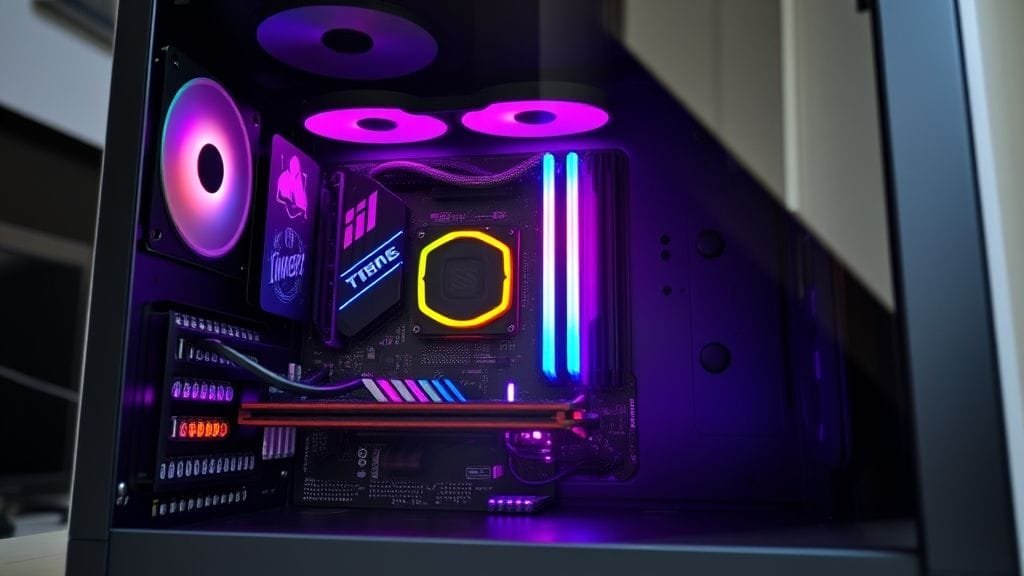
The custom PC market thrives on aesthetics. Thus, today, a PC is often a centerpiece. It is, in fact, a statement piece. Dynamic RGB lighting, sleek tempered glass panels, and minimalist designs are key. Indeed, they are not mere afterthoughts. Instead, they are integral to the planning process. Some extreme custom builds push boundaries further. For example, they integrate entire PCs into desks. Others, moreover, craft elaborate dioramas as unique cases. Therefore, this pursuit of visual excellence is significant. It also influences the development of innovative motherboard form factors, which lend themselves to stunning presentation.

Improved Thermal Solutions: Conquering the Heat Challenge
High-performance builds face a persistent challenge. Specifically, heat dissipation is an issue, especially in compact systems. Consequently, this has spurred significant advancements. For instance, cooling solutions have improved greatly. Custom water cooling loops are common. Moreover, innovative airflow paths exist. Discussions about reorienting components like GPUs are ongoing. This, in turn, leverages natural convection. The goal is to keep powerful hardware running optimally. This, therefore, applies even in the tightest enclosures. Indeed, effective thermal management is paramount. It is, furthermore, crucial for any truly innovative motherboard form factors.
“Back-To-the-Future” (BTF) Design: A New Era of Clean Builds
ASUS recently introduced its “Back-To-the-Future” (BTF) design. Notably, this is a groundbreaking innovation. It specifically relocates most connectors to the back of the motherboard. This ingenious approach, therefore, offers two primary benefits. First, it provides a dramatically cleaner aesthetic inside the PC case. Second, it allows for significantly easier cable management. Consequently, imagine a build where visible cables are almost non-existent. This, in turn, creates an uncluttered, professional look. Ultimately, this creative layout approach represents a leap forward. It also signifies user-centric design.
Why Enthusiasts are Embracing Unique PC Form Factors: Market Trends and Personalization
The allure of unique form factors resonates deeply with PC enthusiasts. Similarly, creative layouts also appeal. Together, this drives a robust and growing market segment. Indeed, personal desires and practical advantages fuel this trend.
Personalization and Uniqueness: Your PC, Your Statement
For many enthusiasts, a PC is more than a tool. Rather, it’s an extension of their personality. Therefore, they increasingly focus on crafting personalized systems. These, in turn, are visually stunning. They also stand apart from mass-produced machines. Consequently, innovative motherboard form factors provide the perfect foundation. Ultimately, they enable these unique expressions of individuality. Indeed, this desire for customization transforms PC building. It then becomes a truly artistic endeavor.
Small Footprint and Portability: The Rise of SFF
Modern living spaces demand efficiency. They also, importantly, demand minimalism. This, consequently, drives the surging popularity of SFF cases. Mini-ITX motherboards are also popular. For instance, do you need a minimalist home office setup, or a portable gaming rig for tournaments? Indeed, the demand for compact, powerful systems is undeniable. Therefore, builders actively seek innovative motherboard form factors. These, in turn, facilitate space-saving designs.
The Challenge of Custom Building: A Rewarding Endeavor
Building a custom PC can be complex. This is especially true with unique form factors. Furthermore, intricate cooling solutions also add complexity. However, for many enthusiasts, this process is rewarding. Indeed, intricate planning and assembly are part of the joy. Overcoming challenges brings a profound sense of accomplishment. This, for example, includes component compatibility, thermal management, and aesthetic integration.
Market statistics underscore this growing enthusiasm:
- The custom PC building market is projected to grow. Specifically, it goes from US$ 1629 million in 2024 to US$ 2403 million by 2031. This, therefore, demonstrates a CAGR of 5.7%.
- The Small Form Factor (SFF) PC case market is large. It is, in fact, estimated at $500 million in 2025. Moreover, it is projected to grow at a staggering CAGR of 12% from 2025 to 2033. This growth is largely fueled by Mini-ITX motherboards. Their accompanying innovative motherboard form factors also contribute.
Overall, these figures clearly indicate a strong and sustained demand. This demand is specifically for specialized, unique approaches to PC construction. Consequently, you are part of a thriving community. Indeed, it embraces this future.

Navigating the Trade-offs: Advantages and Challenges of Innovative Form Factors
Embracing innovative motherboard form factors opens creative possibilities. Yet, however, approach your build with understanding. Specifically, know both the benefits and potential hurdles. Indeed, every choice comes with trade-offs.
The Bright Side: Advantages of Alternative Motherboard Form Factors
Opting for something beyond standard ATX brings several compelling advantages:
- Space-Saving and Portability: Smaller form factors like Mini-ITX enable incredibly compact builds. They are also portable. This, for instance, is perfect for minimalist setups, or even for systems you plan to move frequently.
- Aesthetics: Unique layouts and specialized cases allow for highly customized systems. These, in turn, are visually striking. Consequently, they become focal points, not hidden components.
- Niche Applications: Very small boards cater to specific embedded systems. They also suit industrial applications, or highly specialized computing needs where size is the ultimate constraint.
- Cost-Effectiveness (Micro-ATX): Micro-ATX often offers an excellent balance. It effectively combines features and performance. This, moreover, comes at a more affordable price. It also compares well to larger high-end ATX or pricier Mini-ITX boards.
Ultimately, these advantages collectively empower builders. They therefore create truly personalized computing experiences.
The Roadblocks: Challenges with Unique PC Form Factors
However, pursuing a custom build presents difficulties. This is especially true with innovative motherboard form factors. Therefore, they require careful consideration.
- Limited Expandability: Smaller motherboards inherently have fewer slots. This, for instance, includes RAM, PCIe, and I/O ports. Consequently, this can restrict future upgrades, or it can limit adding multiple peripherals.
- Component Compatibility: Finding compatible components can be a challenge. This is especially true for large GPUs. High-performance CPU coolers in SFF builds are also difficult. Thus, dimensions become critically important.
- Cooling Difficulties: Restricted internal space often leads to thermal challenges. Therefore, careful planning is essential. Advanced cooling solutions and optimized airflow prevent overheating.
- Building Complexity: Assembling components in smaller cases can be harder. More intricate cases, for example, are also time-consuming. You’ll consequently need patience, and perhaps even smaller tools!
- Higher Costs (Mini-ITX and Specialized Components): Micro-ATX can be budget-friendly. However, Mini-ITX motherboards often carry a premium price tag. Similarly, specialized SFF power supplies (like SFX PSUs) or cases also cost more.
- Manufacturer Neglect: Some smaller form factors have limited high-end board selection. Micro-ATX is one example. Instead, ATX or Mini-ITX tend to dominate the enthusiast market.
Thus, understanding these challenges beforehand helps. It also allows for effective planning. Consequently, it mitigates potential frustrations. For example, for comprehensive compatibility checks, PCPartPicker is invaluable. Similarly, for in-depth discussions on SFF builds, r/sffpc on Reddit offers much knowledge and advice.
Your Journey to a Truly Custom PC: Making the Right Choice
Building a truly custom PC is an exciting venture. This is especially true when it uses innovative motherboard form factors. Ultimately, your motherboard choices will dictate overall size. They will also, importantly, affect aesthetics and potential performance.
Consider your priorities:
- Is ultimate portability your goal? If so, look to Mini-ITX.
- Do you need a balance of size and expandability on a budget? Then Micro-ATX might be your sweet spot.
- Are you chasing uncompromising performance and extensive expansion? In that case, E-ATX is ready for you.
Remember, however, the custom PC market is booming. This is primarily because builders like you push boundaries. Consequently, form factors and layouts continuously evolve. This, therefore, ensures the future of PC building is diverse. Ultimately, it will be as exciting as its creators’ imaginations. So, embrace the challenge. Plan meticulously. And finally, revel in the satisfaction of building something truly unique.
So, what aspects of innovative motherboard form factors excite you most? Furthermore, what kind of custom PC are you dreaming of building? Share your thoughts and ideas below!