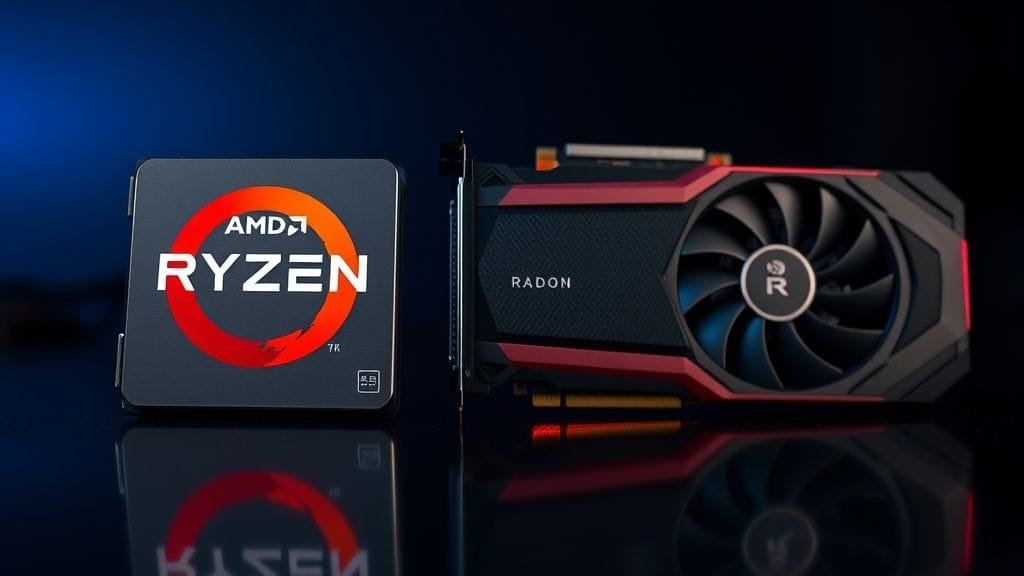
The tech world keeps changing, and few companies push it forward like AMD. With the AMD latest series of processors and graphics cards, we are not just seeing small updates. We are seeing a big step forward. AMD recently showed off a strong new range. This includes the new Zen 5 design for its CPUs and the advanced RDNA 4 design for its GPUs. This article looks closely at what these new things mean for you. This is true whether you play games, work professionally, or run a business.
People are clearly excited about these new products. Imagine your games running smoother. Your work apps speed up. Your data centers run much better than ever before. This is not a future far away. It is happening now with AMD’s latest products. From raw power to special AI features, these series aim to change how you use your computer. Let’s see how AMD is setting new standards and giving users power with its newest tech.

Ryzen Processors: Zen 5 Design and AI Inside
AMD’s desktop CPUs are starting a new time with the Ryzen 9000 series. These chips use the new Zen 5 design. This new design promises a big jump in speed for many different jobs. This includes the hardest games and big content creation tasks. If you thought about upgrading, these processors give strong reasons to change over. They are made to handle many tasks easily. This keeps your computer fast even when busy.
The Zen 5 design is more than just a speed bump. It is a basic upgrade that boosts its IPC (instructions per clock). This makes jobs finish faster. So, whether you are writing code, making 3D images, or streaming high-quality video, your system will work better. AMD made the Ryzen 9000 series very flexible. They meet many different computer needs.
Powering Businesses with Ryzen PRO 9000 Series
Not just for hobbyists and everyday users, AMD is also aiming at businesses with its Ryzen PRO 9000 series. These Zen 5 “Granite Ridge” processors are made for computer makers (OEMs) and companies. They offer strong speed, better security, and easier management. These features are key for company IT systems.
The PRO series is very stable and dependable. This keeps businesses running smoothly. Here’s a quick look at some key models:
- Ryzen 5 Pro 9645: Has 6 cores and a 65W TDP.
- Ryzen 7 Pro 9745: Has 8 cores and a 65W TDP.
- Ryzen 9 Pro 9945: Has 12 cores and a 65W TDP.
These processors give businesses strong, safe, and efficient computer tools. They help make work easier and keep private data safe. Knowing their strong points can help you pick your next business hardware. You can find more details on AMD’s official Ryzen PRO pages ([https://www.amd.com/en/processors/ryzen-pro](https://www.amd.com/en/processors/ryzen-pro)) to compare models.
Gaming Speed Unleashed: Ryzen 9000X3D Series
For serious gamers and speed fans, the Ryzen 9000X3D Series is special. AMD calls these “The Fastest Gaming Processor the World has Ever Seen.” This big claim comes from AMD’s special 3D V-Cache™ tech. This new method puts a huge amount of memory, up to 144MB, right on the CPU.
What does this mean for you as a gamer? It means a big speed gain in games. This is true especially for games that use a lot of fast memory. Imagine games load faster, fewer freezes, and higher average frame rates. This tech works like a super-fast data road right to the CPU’s cores. It makes things happen quicker and gives the best game speed. The Ryzen 9000X3D series makes a clear difference in the hardest games.

Embracing the AI Era with Ryzen AI
Artificial Intelligence (AI) is quickly becoming a key part of how we use computers every day. AMD is leading this change with its Ryzen AI technology. The Ryzen 9000 series is set up as the base for the “best AI system.” It gives strong CPU speed for general AI jobs. But AMD’s focus on personal AI work runs deeper.
Some Ryzen 8000G series processors already have Ryzen AI with a special Neural Processing Unit (NPU). This NPU uses AMD’s XDNA design. It is made to speed up AI tasks right on your device. This means quicker and better use of AI features. These include live video effects, smart task handling, and custom user experiences.
Also, the next Ryzen AI 300 series (called Strix Point and Krackan Point) will use Zen 5, RDNA3.5, and XDNA2 designs. This special AI engine makes sure your next laptop or desktop can run tough AI apps very fast and use little power. This is a big step to bring strong AI to everyone. The AMD latest series processors really get you ready for the future of smart computing.
EPYC Processors: Powering Data Centers, Cloud, and AI
Data centers, cloud services, and businesses need huge processing power, growth, and good use of resources. AMD meets these needs with its 5th Generation AMD EPYC™ 9005 Series processors, called “Turin.” These processors are made to speed up the hardest jobs. They use both Zen 5 and Zen 5c core designs.
Imagine a data center working very well, handling huge amounts of data super fast. The EPYC 9005 series makes this happen. They work with the current SP5 platform. This makes updates easier for businesses already using AMD EPYC. It means you can add the newest tech without totally changing your setup.
The EPYC 9005 series has a huge number of cores, from 8 to an amazing 192 cores. This flexibility lets businesses set up their servers exactly how they need for their work. In some cases, these chips are up to 2.7 times faster than rivals. They also give excellent memory speed and size. This is key for apps that use a lot of memory. For systems with GPUs, EPYC processors show up to 20% better system speed with 8x GPUs on Llama3.1-70B. This is compared to Intel Xeon 8592+ processors. It shows how good they are in AI and HPC.
| Feature | EPYC 9005 (Zen 5/Zen 5c) Highlights |
|---|---|
| Core Count Range | 8 to 192 cores |
| Architecture | Zen 5 and Zen 5c |
| Platform | Works with existing SP5 |
| Speed Boost | Up to 2.7x over rivals (in some cases) |
| IPC Improvement | 17% better in business/cloud vs. Zen 4, 37% higher in AI/HPC vs. Zen 4 |
| AI/HPC Optimization | Great host-CPU for GPU systems, strong Llama3.1 speed |
EPYC Embedded 4005 Series: Reliable Edge Computing
Not just for main data centers, AMD has also added more to its EPYC range with the AMD EPYC Embedded 4005 Series processors. These processors use the Zen 5 x86 design. They are made for network security devices and basic industrial edge servers. Think of the strong computer power needed for smart factories, safe network points, or key systems.
These embedded processors offer good value for a long time. They will be made for an impressive seven years. This long support is key for embedded systems. These systems must be reliable and last a long time. They have up to 16 cores and 32 threads in a small 4 nm chip design. They focus on quick response, smart design, and strong connections. The EPYC Embedded 4005 series shows AMD’s focus on giving powerful, special tools for every part of the computer world. The AMD latest series is very complete.
Radeon Graphics Cards: RDNA 4 for Gaming and Visuals
For gamers and creative pros too, AMD’s graphics team has released the Radeon RX 9000 series graphics cards. These cards are built using the new AMD RDNA™ 4 design. This new generation brings big improvements in graphics. This is especially true with strong raytracing and AI boosters. The goal is to give amazing visuals for both games and work apps like video streaming and recording.
Imagine stepping into virtual worlds that look stunningly real. Light bounces naturally, and reflections look perfect. RDNA 4 makes this easier to get. The design aims to make graphics look better without slowing down games. This is due to better compute units and special speed-up hardware.
Key Models and Market Plan
The Radeon RX 9000 series includes great models aimed at different parts of the market. Here are some main cards:
- RX 9070 XT: Launched in March 2025 for $599.
- RX 9070: Also launched in March 2025, costs $549.
- RX 9060 XT: Comes in 8GB ($299) and 16GB ($349) versions. This model is for gamers on a budget. It gives big upgrades for 1080p and 1440p gaming.
AMD’s plan with the RX 9000 series seems like a smart move to lead the main GPU market. Most gamers, about 85%, buy GPUs that cost less than $700. By giving great speed for the price in this area, AMD hopes to win over many gamers. For example, the RX 9070 XT is said to match NVIDIA’s RTX 4080 speed, but for much less money. This focus on value means you can get amazing visuals without spending too much.

The Power of RDNA 4 Design
The RDNA 4 design inside the RX 9000 series is a big step forward. It has a new design for its compute units, with up to 64 CUs. It also has better AI and ray tracing boosters. Compared to the older RDNA 3, this new design makes ray-tracing twice as fast. It also boosts speed up to eight times for some AI tasks. This power gives you more real gaming and faster content creation.
Also, a key new feature is AMD’s FidelityFX Super Resolution 4 (FSR 4). This upscaler uses machine learning. It also has frame generation tech. It is only for RDNA 4 graphics cards when they first come out. FSR 4 aims to give more frames per second and better image quality at the same time. This means you can use higher resolutions and tougher visual settings without losing smooth gaming.
If you want to know about the tech behind it, you can find a deep look at the RDNA 4 design on tech news sites like Tom’s Hardware ([https://www.tomshardware.com/](https://www.tomshardware.com/)). This helps you understand the tech skill behind the great speed of the AMD latest series of GPUs.
A Nod to the Predecessor: Radeon RX 7700 16GB
While RDNA 4 gets most of the attention, AMD also quietly released a new RDNA 3 GPU: the Radeon RX 7700 16GB. This card offers more VRAM than the standard RX 7700 XT. This can help with some games or apps that need a lot of memory. However, it gives a bit less overall game speed compared to the RX 7700 XT. This gives another choice for those who want a good mid-range GPU with lots of memory.
Key New Features and Market Impact of AMD Latest Series
The release of the AMD latest series for CPUs and GPUs shows a clear plan. AMD is not just competing. It is making new things and aiming at exact market needs. Let’s look back at the big impact of these new products:
- Zen 5 Processors: The Ryzen 9000 series brings a big jump in desktop speed for gaming and content creation. Special PRO versions give better security and easier control for businesses. The Ryzen 9000X3D models, with their 3D V-Cache, give a clear edge in gaming speed.
- EPYC 9005 Processors: These Zen 5/Zen 5c huge chips offer up to 192 cores. They run 2.7 times faster than rivals in some cases. They show big IPC gains: 17% better in general business and cloud tasks vs. Zen 4, and an impressive 37% higher in AI and HPC vs. Zen 4. This makes EPYC a top power in data centers and cloud computing.
- Radeon RX 9000 Graphics Cards: The RDNA 4 design brings strong main gaming speed with better ray tracing and AI boosters. With good prices (e.g., RX 9070 XT vs. RTX 4080) and the special FSR 4, AMD is making high-quality gaming easier to get.
- Ryzen AI: The use of NPUs with XDNA design in some mobile chips and upcoming Ryzen AI 300 series shows AMD’s strong focus. They want to bring powerful, personal AI to your device.
- EPYC Embedded 4005: These chips use Zen 5. They give strong, quick solutions for embedded systems. They come with a great seven years of planned production.
This full release shows AMD wants to push tech limits. They aim to give better speed, improved AI features, and great value for all their products. By making products carefully for certain markets—from serious gamers to big businesses and embedded systems—AMD makes sure its new ideas give real benefits to many different users. This full approach makes the AMD latest series a truly game-changing set of computer parts.

Looking Ahead: The Future of AMD’s New Ideas
The AMD latest series is not just new products. It shows AMD’s constant drive for new ideas. Looking forward, we can expect more improvements and new uses for these designs. The focus on putting AI features right into hardware, for example, hints at a future. In this future, our devices are smarter, more active, and stronger than ever. For a better idea of AMD’s future plans, explore their corporate strategy page (/blog/amd-strategy-and-roadmap/).
The focus on speed-per-dollar, especially in the main GPU market, means the newest tech will keep getting easier to get. This helps everyone. It makes the industry more competitive and lively. As AI and machine learning keep growing, AMD’s basic work with Zen 5, RDNA 4, and XDNA designs will surely play a key part in forming the next wave of computing.
Conclusion
AMD’s recent products, including Zen 5 Ryzen and EPYC chips and RDNA 4 Radeon RX cards, mark a key moment in the industry. They give “the fastest gaming processor” and help data centers with huge core counts. They also push personal AI experiences. The AMD latest series shows a brave step forward. AMD is really shaping the future of fast computing, one new idea at a time.
What excites you most about AMD’s latest series of processors and graphics cards? Share your thoughts and predictions in the comments below!