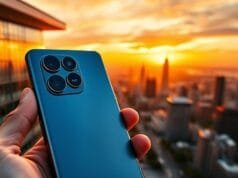

Indeed, the evolution of AI-powered smartphone photography has undeniably reshaped how we capture and share our world. Historically, for years, camera manufacturers engaged in a “megapixel race.” Specifically, they convinced consumers that more megapixels meant better images. However, the future of mobile imaging transcends mere pixel count. Indeed, Artificial Intelligence (AI) and computational photography are true game-changers. Thus, they transform everyday smartphones into sophisticated imaging tools. Consequently, high-quality photography is now more accessible to everyone, empowering users to create stunning visuals with ease.
This is, in fact, a significant shift. For instance, your phone’s camera is no longer just a lens and a sensor. Instead, it’s now an intelligent system. Moreover, it uses advanced algorithms to interpret, enhance, and even recreate visual information. Consequently, these AI capabilities allow smartphones to rival professional cameras. Notably, this happens in various scenarios. Thus, they provide immense value to all photographers. Ultimately, understanding this transformation is key to appreciating the capabilities of modern mobile devices.
The Rise of Computational Photography in Smartphones
Fundamentally, computational photography, at its heart, blends digital computing processes with traditional optical capture. It, therefore, allows cameras to perform feats that would be impossible with hardware alone. AI is, furthermore, the backbone of modern smartphone cameras. It leverages computational techniques, consequently overcoming physical limits of small mobile devices. This innovative approach has, in fact, fundamentally redefined mobile imaging.
Overcoming Hardware Limits with AI
Firstly, smartphone cameras face natural constraints due to their compact size. Small sensors and tiny lenses, for example, have limits. Specifically, they cannot gather as much light, nor can they achieve the optical zoom of dedicated cameras. Nevertheless, AI-powered computational photography effectively bypasses these restrictions. Specifically, it intelligently processes data from multiple exposures or different camera modules, creating a single, superior image. This intelligent processing is, moreover, powerful. Therefore, your smartphone can produce impressive results. This happens even in challenging conditions, thus demonstrating the power of AI-powered smartphone photography.
Evolution from Basic Adjustments to Sophisticated Functions
Initially, early computational photography focused on basic adjustments, such as combining a few exposures to improve dynamic range. Today, however, AI enables incredibly sophisticated functions. For instance, cameras now boast advanced scene understanding, capable of instantly recognizing and adapting to diverse environments. Furthermore, they also perform multi-exposure merging with unparalleled precision. This, in turn, allows for superior low-light performance and noise reduction. Moreover, AI-driven processes manage precise image manipulation. In addition, they enhance zoom capabilities and significantly improve video quality. This, therefore, illustrates a profound leap in photographic technology.

Core AI Enhancements Revolutionizing Image Quality
Indeed, AI offers tangible benefits in smartphone cameras. These are evident, for example, in improved image quality. Additionally, users also get advanced features. Indeed, AI actively refines every aspect of the photographic process, from capture to final output. Consequently, users experience a level of detail and clarity previously unimaginable on mobile devices.
Boosting Image Quality in Every Scenario
Crucially, AI significantly boosts overall image quality by intelligently adapting to diverse lighting conditions. Specifically, it precisely enhances colors and details, while simultaneously reducing unwanted noise and blur. Notably, this is particularly striking in challenging scenarios like low-light photography. AI-powered night modes, for example, merge multiple exposures. Consequently, this drastically reduces grain and enhances fine detail. As a result, bright, clear images result, even in near darkness. Therefore, photographers can capture stunning moments regardless of ambient light.
Intelligent Scene Recognition and Optimization
Furthermore, modern AI-powered smartphone photography excels at understanding context. For instance, AI cameras automatically detect and comprehend various scenes, such as landscapes, portraits, or night shots. In addition, they also identify objects like people and pets. Then, upon recognition, the camera instantly optimizes its settings. Specifically, it adjusts exposure, white balance, and saturation, achieving the best possible shot. Ultimately, this automation liberates users from complex manual adjustments, allowing them to focus solely on composition. Moreover, this intelligent optimization guarantees consistently excellent results across different photographic situations.
Advanced Features: Portraits, HDR, and Zoom
AI, furthermore, unlocks a suite of advanced features that elevate mobile photography. Smart HDR technology intelligently balances exposures, thus ensuring bright highlights and deep shadows retain detail. Similarly, realistic portrait modes use AI. Specifically, they distinguish subjects from backgrounds and apply sophisticated bokeh effects. In essence, these mimic professional prime lenses. Furthermore, AI enhances zoom capabilities by intelligently reconstructing images, filling in missing details when digitally zooming. Indeed, object tracking, real-time photo enhancements, and more are now standard, delivering a seamless and powerful user experience.

A smartphone displaying a vibrant, AI-enhanced portrait photo with a perfectly blurred background (bokeh effect), demonstrating AI-powered smartphone photography’s advanced features.
AI in Editing and Post-processing
Furthermore, beyond capture, AI integrates pro-level editing tools directly into smartphones. Consequently, this empowers users to make real-time adjustments and significant post-processing improvements without needing external software. For example, tasks like background removal, object erasure, and sophisticated retouching are now possible with just a few taps. Emerging generative AI tools are, moreover, powerful. Specifically, they allow users to resize or move objects. Additionally, users can also create entirely new visual elements. Indeed, this powerful integration transforms the smartphone into a comprehensive photo studio.
Hardware and AI Synergy: A New Era for Lenses
While megapixel counts climb in flagship phones. Indeed, 50MP to 200MP sensors are common. But, crucially, megapixels are no longer the sole determinant of image quality. Instead, photographic excellence is complex. Specifically, it involves sensor size, lens quality, and AI-driven processing algorithms. Ultimately, this interplay defines it. This synergy, therefore, marks a pivotal shift in the hardware landscape of AI-powered smartphone photography.
Megapixels, Sensors, and Algorithms: The True Drivers
Certainly, high megapixels contribute to detail. A larger sensor size, furthermore, allows more light gathering. Consequently, this directly impacts image quality. Similarly, superior lens quality reduces optical distortions. However, AI algorithms often bridge the gap between hardware limitations and desired outcomes. For example, in Q2 2025, 50MP-class cameras were 58% of smartphone shipments. Meanwhile, sensors above 100MP reached 9%. Clearly, this highlights a focus on sensor resolution. Nevertheless, it is the intelligent software that truly unlocks the potential of these components.
Fewer Lenses, More Intelligence
Interestingly, there’s a growing trend towards fewer but higher-quality sensors in smartphones. AI is, consequently, increasingly taking on tasks that previously required multiple physical lenses. AI can, for instance, simulate wide-angle or telephoto effects. It uses advanced computational techniques, thereby replicating dedicated hardware functionality. Specifically, the average lenses in Q2 2025 phones was 3.19. Notably, this decreased from 3.37 last year. This trend indicates AI-driven photography is growing, thus reducing the need for numerous rear cameras. Ultimately, this demonstrates the software’s ability to achieve complex optical results.
Future Hardware Innovations
Looking ahead, the future of smartphone hardware promises further innovations that will work in tandem with AI. For example, we anticipate multi-layer sensors. Ultimately, they will improve dynamic range even further and capture more detail in shadows and highlights. Additionally, advancements like foldable or liquid lenses could enable sophisticated optical zoom capabilities within compact form factors. These innovations will, therefore, provide richer data. Ultimately, AI algorithms will process this data, pushing the boundaries of AI-powered smartphone photography.

The User Experience: Empowering Every Photographer
Indeed, one of the most profound impacts of AI-powered smartphone photography is its ability to democratize advanced techniques. Specifically, it simplifies the photographic process for everyone, making it accessible and enjoyable, regardless of skill level. Ultimately, this translates into a more intuitive and rewarding experience for users worldwide.
Simplifying Advanced Techniques
Essentially, AI effectively simplifies photography by automating tasks that once required extensive manual adjustments or specialized external editing software. For example, features like automatic exposure bracketing, focus stacking, and complex color grading are now handled seamlessly by the phone’s intelligence. Consequently, this means amateur users can achieve professional-looking results without needing deep technical knowledge. Moreover, this ease of use encourages more people to explore their creative potential.
Focus on Creativity, Not Settings
As AI automates technical intricacies, users can then focus on composition and storytelling. Instead, they no longer worry about camera settings. Photographers can, instead, immerse themselves fully in the moment, capturing their vision without distraction. Ultimately, this saved time and effort empowers individuals to experiment more, resulting in more expressive and engaging images. Ultimately, AI elevates the user experience by making advanced photography feel effortless and intuitive.
Smartphones capture most pictures, for example. Specifically, they account for 92.5% of all photos. Conventional cameras, in contrast, take just 7.5%. Indeed, about 1.8 trillion photos are taken annually, which equals 5 billion daily. Clearly, this shows widespread mobile photography adoption. Typically, smartphone users store about 2,795 photos. Ultimately, this highlights the personal value and volume of mobile photography. Looking ahead, by September 2025, the AI imaging market in photography expands substantially. AI features are, furthermore, becoming standard in devices and apps. Specifically, 80% of smartphones were projected to have AI-powered cameras by 2024. Clearly, this indicates rapid and pervasive technology integration. For more insights into smartphone camera trends, you can explore detailed market analysis reports on mobile technology. (/blog/latest-mobile-tech-trends/)
Navigating the Challenges of AI in Photography
While AI benefits in smartphone photography are widely acknowledged. Yet, this leap presents challenges. Indeed, it sparks important discussions. Ultimately, these perspectives highlight the need for careful consideration as AI becomes even more integrated into our imaging processes. Addressing these concerns is, therefore, crucial for the responsible development of AI-powered smartphone photography.
Authenticity, Ethics, and Misinformation
Firstly, the increasing role of AI in manipulating and generating images raises significant questions about the authenticity of photos. Specifically, critics, including some professional photographers, worry that AI might “fake” images rather than authentically record a scene. This could, consequently, potentially devalue traditional photography skills and erode trust in visual media. Furthermore, AI manipulation is easy. Thus, it could spread misinformation inadvertently. This, in turn, makes it harder to distinguish reality from digital fabrication. This ethical dilemma, therefore, requires ongoing public and industry dialogue.
Technical Demands and Battery Life
Moreover, running complex AI algorithms demands substantial processing power from smartphones. This can, consequently, lead to increased power consumption, placing a strain on battery life. Additionally, for lower-end devices, real-time AI performance might also be limited, affecting the user experience. Developers must, therefore, optimize algorithms for efficiency. Hardware manufacturers, meanwhile, improve battery technology and processing capabilities. Balancing powerful AI with practical device limitations is, thus, a continuous challenge.
Privacy and Algorithmic Bias
Indeed, AI algorithms often require vast amounts of training data, which frequently includes user-generated images. Consequently, this raises legitimate privacy concerns about data collection, storage, and usage. Users need, therefore, assurance that their personal data is protected and used ethically. Moreover, AI algorithms are only as good as their training data. Specifically, biases may exist in training datasets. These biases could, consequently, reflect in photographic output. Ultimately, this might lead to misrepresentation or unfair outcomes, especially concerning diverse skin tones or cultural contexts.
Balancing User Control and Automation
While AI automation simplifies photography, some users prefer more manual control over their images. There is, therefore, a delicate balance to be struck between technological advancement and preserving the photographer’s artistic vision. Ideally, provide options for intelligent automation. Also, offer granular manual adjustments. Ultimately, this lets users choose their creative input. Ultimately, the best AI-powered smartphone photography tools empower users, rather than dictate their creative process.
Impact on Hardware Investment
Some critics argue AI software improvements are overemphasized. This might, consequently, reduce hardware investment by phone makers. Since experimenting with software can be cheaper than developing new physical components, this concern is valid. Many believe sensor tech, lens configs, and processing chips will, nevertheless, advance. Consequently, this provides the best data for AI to process. Ultimately, the interplay between hardware and software innovation remains crucial for pushing photographic boundaries. For more on AI and creative fields, read this article. Specifically, it covers artistic applications of machine learning. (/blog/ai-and-creative-arts/)
The Dynamic Future of AI-Powered Smartphone Photography
Indeed, the future of AI-powered smartphone photography is undeniably bright and dynamic, promising even more innovative and immersive experiences. Specifically, we anticipate deeper AI integration. Ultimately, this will be throughout the entire imaging pipeline, pushing boundaries for mobile devices. These developments will, furthermore, further blur the lines between reality and digital enhancement, offering unprecedented creative control.
Deeper Integration and Advanced Features
AI will integrate deeper into image capture, for example. Specifically, this includes previewing a shot to final post-processing. Ultimately, features like multi-frame processing, sophisticated noise reduction, and super-resolution techniques will reach new levels of performance. This integration will, consequently, result in consistently sharper, more detailed, and aesthetically pleasing images, even from compact devices. Expect your smartphone, moreover, to anticipate your needs before you even press the shutter.
Enhanced Video Capabilities
AI will continue to revolutionize video capture, thus making professional-grade videography accessible to everyone. Specifically, tools like automatic subject tracking, intelligent zoom that maintains focus and clarity, and advanced stabilization will become standard. AI could, furthermore, enable real-time color grading. Additionally, it could also provide dynamic lighting adjustments. Moreover, intelligent editing suggestions directly on the device are possible too. Ultimately, this means smoother, more cinematic videos with minimal effort.
New Creative Horizons with Generative AI
Generative AI is, moreover, poised to unlock entirely new creative possibilities for photographers. For instance, expect innovative filters and intelligent effects. Specifically, these will adapt to content. Furthermore, AI will even suggest creative compositions and styles. Consider, for example, an AI that helps you frame a shot or proposes a unique aesthetic based on your subject. This collaborative approach between human creativity and machine intelligence will, consequently, foster unparalleled artistic exploration. Indeed, 53% of photography enthusiasts use AI-powered camera apps. Moreover, 82% of photographers use AI tools for image enhancement and editing. Furthermore, 45% of pros leverage AI to streamline workflows. Clearly, this demonstrates widespread adoption and potential for future growth.

Merged Realities and Specialized Systems
Future smartphone cameras may integrate 3D mapping, for example. Additionally, they can include AR overlays. Moreover, real-time machine translation in viewfinders is also possible. This will, therefore, transform them into powerful gateways to merged digital and physical realities, offering interactive and informative experiences. Specialized camera systems are, furthermore, emerging. Specifically, they seamlessly integrate with smartphones, like the Alice Camera. Consequently, this elevates content production for pros and enthusiasts. Ultimately, these systems promise to expand the capabilities of AI-powered smartphone photography even further.
Ultimately, AI is redefining what constitutes a “photograph” in the digital age. Indeed, it blurs the lines between captured reality and digitally enhanced creation. Therefore, human creativity and AI collaborate synergistically. This, in turn, promises new artistic possibilities. Furthermore, it offers innovative solutions for photographers of all skill levels. As technology advances, our phones will continue to be our most powerful and personal creative tools.