
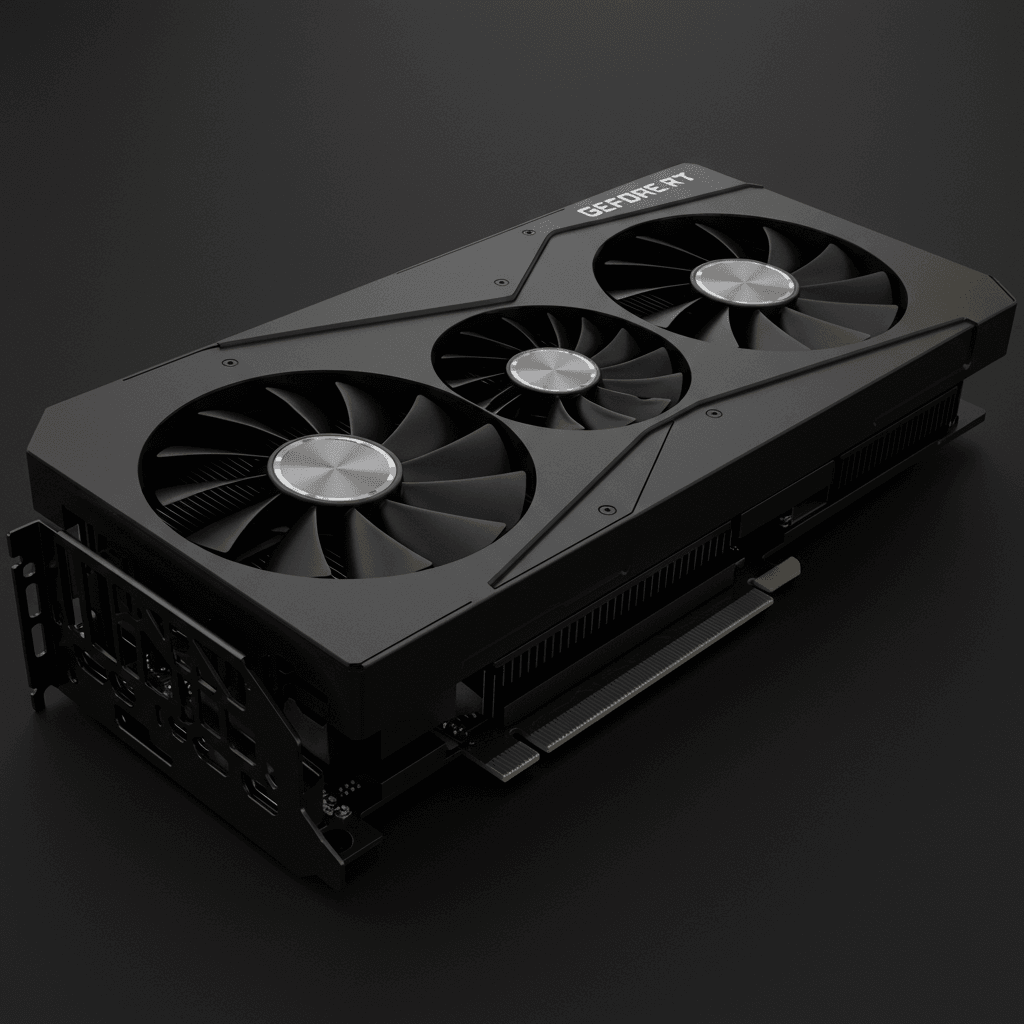
Technology constantly advances. Consequently, choosing a graphics card for your PC or workstation can be complex. Indeed, many enthusiasts weigh their options. Specifically, they compare NVIDIA’s current-gen RTX 4080 with the new RTX 5080. Thus, this guide explores key differences. Furthermore, we cover the pros and cons of the RTX 4080 vs. RTX 5080. Ultimately, make an informed hardware choice.
NVIDIA GeForce RTX 4080: A Closer Look
The RTX 4080 launched in NVIDIA’s Ada Lovelace lineup. Subsequently, it quickly became a powerful performer. Indeed, it represents a significant leap from previous generations, offering excellent capabilities for demanding users. Therefore, gamers and content creators frequently consider this card for its robust feature set and performance.
Ada Lovelace Architecture and Core Specs
The NVIDIA GeForce RTX 4080 uses Ada Lovelace architecture. Moreover, it employs a 5 nm TSMC 4N process node. This architecture brought substantial efficiency improvements over its predecessors. For instance, the card features 9,728 CUDA Cores. In addition, it also has 304 4th-gen Tensor Cores and 76 3rd-gen Ray Tracing Cores. Ultimately, these specialized cores are crucial for AI-driven tasks and realistic lighting effects in games.
It comes equipped with 16 GB of GDDR6X memory, operating on a 256-bit memory interface. Consequently, this configuration delivers 22.4 Gbps effective memory speed. Thus, total memory bandwidth is 716.8 GB/s. The boost clock speed can reach up to 2505 MHz. Similarly, its Total Graphics Power (TGP) is 320 W. Furthermore, it uses a PCIe 4.0 x16 interface for motherboard communication. The RTX 4080’s initial launch price stood at $1,199 USD.

Strengths of the RTX 4080
The RTX 4080 offers a compelling package. Indeed, it combines strong features and performance. This is ideal for those upgrading from older generations. Consequently, it consistently delivers an excellent experience in modern titles. Below, are its primary advantages:
- Strong Performance: The RTX 4080 excels in 4K gaming. In fact, it often achieves over 100 FPS in many demanding titles. Furthermore, it significantly outperforms previous-generation flagships, such as the RTX 3090 Ti.
- Excellent Ray Tracing: With dedicated 3rd-generation RT cores, the card provides very good ray tracing performance. Therefore, this allows for incredibly realistic lighting, reflections, and shadows in supported games.
- DLSS 3 with Frame Generation: NVIDIA’s Deep Learning Super Sampling (DLSS) 3, including Frame Generation, dramatically boosts frame rates. Specifically, it uses AI to create new frames. Consequently, this improves performance and image quality in compatible games.
- Improved Efficiency: Compared to its immediate predecessors, the RTX 4080 demonstrates much-improved power efficiency. As a result, this translates to lower operating temperatures and potentially reduced electricity bills.
- Lower Power Consumption than 4090: While still a high-power card, its 320W TGP is considerably less than the top-tier RTX 4090. Thus, this makes it a more manageable option for many power supplies and cooling setups.
- Ample VRAM: The 16GB of GDDR6X VRAM is substantial. Moreover, it is enough for current high-resolution gaming. Furthermore, it also handles various creative tasks. Ultimately, this ensures longevity for demanding applications.
- Advanced Features: The card supports modern display standards like HDMI 2.1. In addition, it also includes AV1 hardware encode/decode. Indeed, these capabilities are essential for high-quality video streaming and content creation.
Limitations of the RTX 4080
Despite its many advantages, the original RTX 4080 did face some significant criticisms upon its release. Consequently, these factors often impacted its perceived value. Therefore, understanding these drawbacks is essential when comparing it to newer options.
- High Initial Price: The launch price of $1,199 was a major point of contention for many reviewers and consumers. Indeed, many felt this price point was difficult to justify, particularly for a non-flagship card.
- Poor Price-to-Performance vs. RTX 4090: The card’s price often placed it too close to the significantly more powerful RTX 4090. Specifically, a small price increase could get the much higher-tier 4090. Consequently, this made the 4080 a less compelling value.
- RTX 4080 Super Undercut: NVIDIA later released the RTX 4080 Super. Indeed, it offered similar or better performance for $999. As a result, this move further diminished the value and appeal of the original RTX 4080.
- Large Physical Size: Many custom designs of the RTX 4080 are very large. Therefore, its large size can cause PC case compatibility issues. Ultimately, users must carefully check dimensions.
- No DisplayPort 2.1: The card lacks the newer DisplayPort 2.1 connectivity standard. While it was not a deal-breaker at release, it was a future-proofing omission.
NVIDIA GeForce RTX 5080: Entering the Blackwell Era
The RTX 5080 introduces NVIDIA’s Blackwell architecture. Fundamentally, this shift marks a new generation of GPUs. Specifically, the 5080 card, with its “Super” variants, represents cutting-edge consumer GPU tech. Moreover, these advancements apply as of September 2025. Ultimately, it promises significant advancements across the board.

Blackwell Architecture and Anticipated Specs
The RTX 5080 is built on the brand-new Blackwell architecture, rumored to utilize a TSMC 4NP process node. Crucially, this new architecture brings a host of optimizations and enhancements over Ada Lovelace. Specifically, initial specs suggest boosted core counts. For example, it has 10,752 CUDA Cores. In addition, also 336 5th-gen Tensor Cores and 84 4th-gen Ray Tracing Cores. Thus, these upgrades enhance both traditional rasterization and specialized AI/RT workloads.
A major highlight is the adoption of GDDR7 memory. Indeed, the initial launch model may have 16 GB GDDR7. Rumored “Super” variants might offer 24 GB. Furthermore, this memory runs at 30 Gbps effective speed. Consequently, it delivers 960 GB/s memory bandwidth on a 256-bit interface. The boost clock is rumored to be around 2,617 MHz. Initially, RTX 5080 TGP is estimated at 350-360 W. “Super” variants may reach 400-415 W. Crucially, the RTX 5080 adopts the faster PCIe 5.0 x16 interface. The initial RTX 5080 launched in January 2025. However, “Super” variants are expected in late 2025 or early 2026. Furthermore, the expected price for the RTX 5080 aligns with the RTX 4080 Super’s launch price.
Key Advantages of the RTX 5080
The RTX 5080, powered by Blackwell, offers many compelling reasons for an upgrade. Indeed, it introduces next-generation technologies that promise enhanced performance and future-proofing. Below, are its significant advantages:
Performance and Core Technology
- Next-Gen Architecture (Blackwell): This foundational upgrade brings architectural enhancements. Specifically, it includes more mature 5th-gen Tensor Cores and 4th-gen RT cores. Consequently, this improves AI TOPS performance and ray tracing efficiency.
- GDDR7 Memory: The transition to GDDR7 memory is a significant leap. Indeed, it offers higher memory bandwidth than GDDR6X. For example, the initial model offers 960 GB/s. Ultimately, this is critical for high-resolution textures, demanding apps, and future games.
- DLSS 4 (Expected): The RTX 5080 is anticipated to launch alongside DLSS 4. Specifically, this DLSS iteration could greatly improve performance and image quality. Furthermore, this is especially true with Multi-Frame Generation advancements.
- Performance Uplift: The card should deliver a noticeable performance increase. Indeed, it will outperform the RTX 4080 and 4080 Super. Early reports hint at impressive gains. In fact, performance could potentially double in certain scenarios with DLSS 4.
Connectivity and Design Improvements
- PCIe 5.0 x16 Interface: With PCIe 5.0, the GPU can fully leverage increased motherboard bandwidth. Consequently, this ensures optimal data delivery and prevents bottlenecks, boosting system performance.
- DisplayPort 2.1 Support: The Blackwell series is the first NVIDIA generation to fully support DisplayPort 2.1 UHBR20. Specifically, this standard provides up to 80 Gbps bandwidth. Thus, it enables higher refresh rates and resolutions on compatible monitors.
- Increased VRAM (Super variants): Rumors suggest the RTX 5080 Super could feature 24GB of GDDR7 VRAM. Moreover, this substantial boost addresses VRAM concerns. Furthermore, it helps with future-proofing and demanding creative workloads.
- Improved Cooling/Form Factor: Initial reports suggest a slimmer RTX 5080 form factor. Additionally, it may also have improved cooling. Consequently, this makes it compatible with more PC cases.
Potential Drawbacks of the RTX 5080
The RTX 5080 brings impressive advancements. Yet, buyers should be aware of potential considerations. Therefore, these factors relate to its launch performance, pricing, and power requirements. Below, are its main potential cons:
#### Performance and Pricing Concerns
- Potentially Underwhelming Generational Leap (Initial Model): Early benchmarks compared the initial RTX 5080 to the RTX 4080 Super. Notably, they suggested an 8% performance uplift. However, some users may find this modest increase underwhelming. Indeed, they expect a more dramatic generational jump.
- Still Expensive: Despite matching the RTX 4080 Super’s launch price, the RTX 5080 remains a high-cost GPU. Consequently, this price point still places it outside the budget of many mainstream consumers.
- Performance Tied to DLSS 4: Achieving “double RTX 4080 gaming performance” may rely heavily on DLSS 4. Therefore, its adoption and efficacy are key. Ultimately, game support for this new technology will be crucial for realizing its full potential.
#### Power and Market Challenges
- Higher Power Consumption: The anticipated TGP is 350-360W; meanwhile, Super variants could reach 415W. However, this is higher than the RTX 4080’s 320W. Consequently, this increased power draw necessitates a robust PSU and efficient case cooling.
- GDDR7 Heat: While faster, GDDR7 memory is noted to run hotter than previous generations. Therefore, this could pose additional thermal management challenges within the GPU design.
- Phased Release/SKU Confusion: The initial RTX 5080 and “Super” variants are released rapidly. Thus, this can confuse consumers. Reportedly, NVIDIA discontinues the base RTX 5080, favoring Super models instead. Consequently, this could cause market uncertainty.
Direct Comparison: RTX 4080 vs RTX 5080
Comparing the RTX 4080 and RTX 5080 shows a clear generational shift. Indeed, this spans several key technological aspects. This detailed comparison highlights where each card excels and what advancements the Blackwell architecture brings. Therefore, understanding these differences is crucial for deciding on an upgrade.

Architecture and Core Technology
First, the most fundamental difference lies in their underlying architecture: the RTX 4080 leverages NVIDIA’s Ada Lovelace architecture, known for its significant efficiency improvements. Conversely, the RTX 5080 introduces the newer Blackwell architecture. Blackwell features generational enhancements in its core components. Specifically, it upgrades to 5th-generation Tensor Cores and 4th-generation Ray Tracing Cores. Consequently, these improvements mean better AI acceleration. Furthermore, they also offer more refined ray tracing effects. Moreover, overall processing efficiency is potentially higher. Indeed, Blackwell cards often perform more operations per clock. This is true even with similar raw core counts.
Memory: GDDR6X vs. GDDR7
Firstly, memory technology represents one of the most substantial upgrades in the RTX 5080; the RTX 4080 utilizes 16 GB of GDDR6X memory, delivering 716.8 GB/s of bandwidth. However, the RTX 5080 adopts the faster GDDR7 memory. This new standard offers higher effective speeds (30 Gbps vs. 22.4 Gbps). Furthermore, it provides greater bandwidth (960 GB/s for the initial 5080 model). Rumored RTX 5080 Super variants will boast 24 GB of GDDR7. Consequently, they will feature a wider 384-bit memory interface. Thus, this boosts bandwidth and future-proofs the card. Ultimately, it handles increasingly VRAM-hungry applications. This memory upgrade is critical for high-resolution textures and complex scene rendering.
Connectivity and Interface
Regarding connectivity, modern GPUs rely on fast interfaces for optimal data transfer; the RTX 4080 connects via a PCIe 4.0 x16 interface. However, the RTX 5080, being a next-gen card, upgrades to PCIe 5.0 x16. Consequently, this doubles the total bandwidth available to the GPU. PCIe 4.0 is adequate for most current gaming. Yet, PCIe 5.0 offers greater headroom for future applications. Thus, it ensures the GPU utilizes its full capabilities. Specifically, the interface will not bottleneck it.
In terms of display outputs, the RTX 4080 features DisplayPort 1.4a. However, the Blackwell series, including the RTX 5080, supports DisplayPort 2.1 UHBR20. Indeed, it’s NVIDIA’s first generation to do so, and this standard provides significantly higher bandwidth. Specifically, it offers up to 80 Gbps. Consequently, it supports extremely high resolutions and refresh rates (e.g., 4K at 240Hz or 8K at 120Hz). DisplayPort 1.4a cannot achieve this. Therefore, for users with cutting-edge monitors, this is a distinct advantage of the RTX 5080.
Performance Expectations and DLSS
The RTX 4080 offers strong 4K gaming and creative performance. Indeed, it often exceeds previous-generation high-end cards. However, the RTX 5080 is positioned to deliver a generational leap. Furthermore, this performance boost is particularly evident when leveraging new technologies like DLSS 4, and early reports and synthetic benchmarks show initial RTX 5080 performance. Specifically, it suggests an 8% improvement over the RTX 4080 Super. However, a more substantial gain is expected in real-world gaming, especially with full DLSS 4 implementation. Its potential “Multi-Frame Generation” will contribute. Consequently, this feature could provide significant FPS increases. In fact, performance might even double in supported titles vs. RTX 4080.
Power Consumption and Efficiency
First and foremost, power consumption is an important consideration for PC builders; the RTX 4080 has a TGP of 320W, which is considerable but manageable for most enthusiast power supplies. In contrast, the RTX 5080 generally has a higher TGP. Specifically, the base model may draw 350-360W. Rumored RTX 5080 Super variants could reach 400-415W. Consequently, this increased power demand requires a robust PSU. Moreover, it also needs better case airflow for effective heat management. While Blackwell aims for improved performance per watt, increased power ultimately means more frames or faster processing.
Pricing, Value, and Market Position
The RTX 4080 faced criticism for its high launch price. Specifically, the RTX 4090 offered much more performance for a small cost increase. The RTX 4080 Super later released at a lower price. Consequently, this complicated the original 4080’s value proposition. The RTX 5080 price should match the RTX 4080 Super. Therefore, it may offer better value due to generational advancements. Indeed, the initial RTX 5080 performance uplift might not be dramatic compared to the RTX 4080 Super in raw rasterization. However, the rumored RTX 5080 Super is compelling. It has increased VRAM and a wider memory bus. Ultimately, this could make it the top Blackwell offering. Consumers should consider performance gains vs. price. Specifically, the base 5080 may not significantly leap over the 4080 Super.
Making Your Choice: Which GPU is Right for You?
Choosing between RTX 4080 and RTX 5080 depends on your setup. Furthermore, it also depends on your budget and performance expectations. Both are high-end cards, yet they cater to slightly different priorities. Ultimately, understanding your specific needs will guide your decision. For more general advice on choosing a GPU, check out our guide on [/blog/choosing-a-gaming-gpu/].
When to Consider the RTX 4080
The RTX 4080 remains a powerful, capable graphics card. Indeed, this is true even with the 50-series arrival. It is still an excellent choice for 4K gaming and demanding creative tasks. Therefore, consider the RTX 4080, especially if:
- You Find a Great Deal: Find the original RTX 4080 or 4080 Super at a reduced price? Then it offers exceptional value. Furthermore, its strong performance for 4K gaming is still highly competitive.
- You Prioritize Established Performance: The RTX 4080’s performance metrics are well-documented and extensively reviewed. Thus, there are no unknowns; you know exactly what you’re getting.
- You Have a PCIe 4.0 System: For motherboards supporting only PCIe 4.0, the RTX 5080’s PCIe 5.0 benefit will be marginal. In this scenario, the RTX 4080 will fully utilize your system’s capabilities.
- Power Consumption is a Factor: The RTX 4080 has a 320W TGP. Moreover, it is less power-hungry than the RTX 5080. Consequently, you might keep your existing power supply if it meets requirements.
- You Don’t Need Cutting-Edge Display Tech: If your monitor lacks DisplayPort 2.1, then the RTX 5080’s advanced connectivity isn’t a necessary upgrade.
Why the RTX 5080 Might Be Your Next Upgrade
The RTX 5080 represents NVIDIA’s future graphics tech. Indeed, it offers many advancements. Enthusiasts seeking maximum performance find it compelling. Therefore, it is a robust choice if:
- You Demand the Latest Technology: The Blackwell architecture, GDDR7, PCIe 5.0, and DisplayPort 2.1 are cutting-edge features. Consequently, for users who always want the newest hardware, the RTX 5080 is the obvious choice.
- Future-Proofing is Key: The RTX 5080 is key for future-proofing. Indeed, it has next-gen architecture and higher VRAM options (especially rumored Super variants). Moreover, it also features DLSS 4. Thus, it’s better positioned for future games and apps.
- Maximum Performance is Your Goal: Initial gains over the 4080 Super may seem modest. However, the RTX 5080 targets maximum performance. Indeed, with DLSS 4, it should deliver the highest frame rates in demanding games.
- You Plan to Upgrade Your Monitor: Upgrading to a high-res, high-refresh monitor? If so, and if it supports DisplayPort 2.1, the RTX 5080 maximizes its potential.
- You Engage in AI/Content Creation: Blackwell’s improved Tensor Cores and architectural efficiency are beneficial. Specifically, they significantly help AI acceleration and intensive content creation workflows. For a deeper dive into DLSS, see our article on [/blog/understanding-dlss/].
https://www.youtube.com/watch?v=beFo1p0JSNk
The Future of High-End Gaming Graphics
The release of the RTX 5080 marks an exciting new chapter in graphics card technology. Indeed, NVIDIA’s continuous innovation is pushing boundaries. This includes architectural advancements, new memory tech, and also AI-driven features like DLSS 4. Consequently, this impacts gaming and professional applications. Overall, this generational shift from Ada Lovelace to Blackwell brings raw performance increases. Furthermore, it also offers deeper efficiency and new capabilities.
The trend towards higher power consumption for top-tier performance continues. Therefore, this emphasizes the importance of a well-planned power supply and cooling for high-end gaming PCs. Furthermore, AI upscaling technologies like DLSS are increasingly relied upon. Specifically, this points to a future where raw rasterization is augmented. Instead, intelligent frame generation and image reconstruction will play a role. Ultimately, these innovations will redefine visual fidelity. Moreover, they will also redefine fluidity in our gaming experiences.

Conclusion
Ultimately, choosing between RTX 4080 and RTX 5080 is a balance of immediate value versus future-proofing and cutting-edge performance. The RTX 4080 uses Ada Lovelace architecture. Nonetheless, it remains a highly capable card. Indeed, if found at a discounted price, the card offers great value. Furthermore, it delivers excellent 4K gaming and supports DLSS 3. Thus, this makes it strong for tighter budgets. Moreover, it also suits those not needing the absolute latest features.
Conversely, the RTX 5080, built on the new Blackwell architecture, represents a significant technological leap. Notably, it features faster GDDR7 memory, PCIe 5.0 x16, DisplayPort 2.1, and also has enhanced AI and Ray Tracing Cores. In addition, DLSS 4 is also promised. The base 5080’s initial uplift over the 4080 Super may not be massive. However, architectural improvements are significant, and potential for future optimizations exists (especially with rumored “Super” variants offering more VRAM). Ultimately, this positions it as a more advanced, forward-looking option. Therefore, if you are building a top-tier PC, want the very latest performance and features, or seek future compatibility, then the RTX 5080 is the superior choice.