The data center, once a realm of unquestioned dominance, is undergoing a profound transformation. This shift centers on AMD EPYC processors. Indeed, they have emerged as a formidable force. Moreover, EPYC relentlessly challenges long-standing incumbents. Thus, it redefines expectations for performance, efficiency, and total cost of ownership (TCO). Since their debut, these powerful chips have not merely competed. Instead, they have spearheaded a veritable “EPYC Challenge.” Consequently, this forced the industry to innovate at an unprecedented pace.
Understanding AMD’s EPYC journey is no longer optional. Indeed, it is a critical component of strategic planning. Specifically, this applies if you’re involved in IT infrastructure, cloud architecture, or high-performance computing. This article delves into AMD EPYC processors. Furthermore, they are not just gaining market share. Instead, they fundamentally alter the technological landscape for hyperscalers, enterprises, and supercomputing facilities worldwide. Prepare to explore innovations, strategic wins, and future directions. Ultimately, these solidify EPYC’s position as a game-changer.

The Rise of AMD EPYC Processors: A Story of Innovation
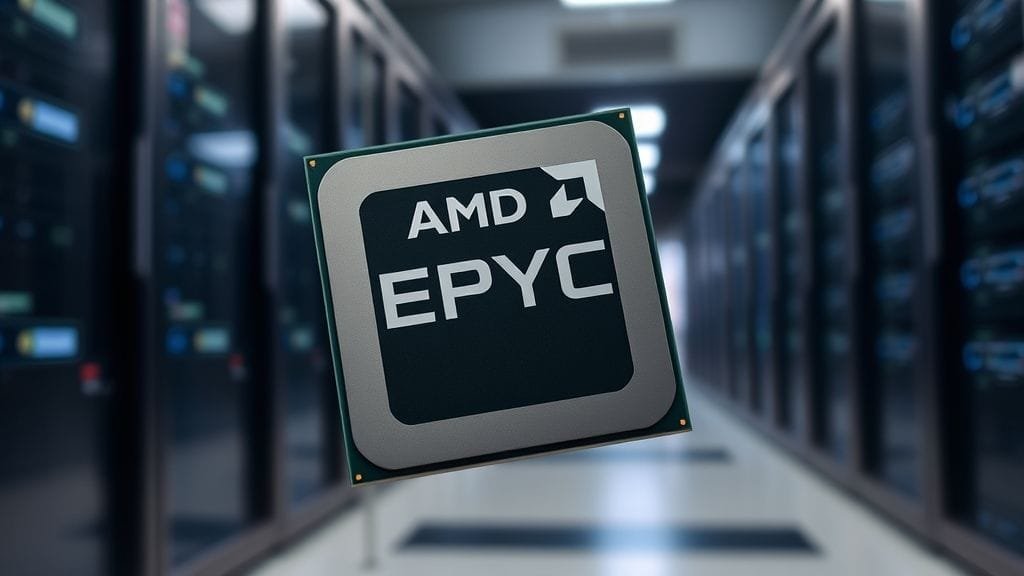
For decades, the server processor market felt largely settled. Indeed, one dominant player dictated terms and innovation cycles. However, then came AMD’s EPYC line. Thus, it injected fierce competition. As a result, this drove rapid advancements across the industry. This disruption began in 2017. Since then, the trajectory has been nothing short of remarkable. Notably, AMD EPYC processors leveraged a chiplet design. Furthermore, they focused on core count, memory bandwidth, and I/O capabilities.
Their success is not just about raw power. Instead, it is about a holistic approach. This approach resonates with modern, scalable computing environments. Enterprises and cloud providers both realize the impact. Indeed, the right silicon choice can unlock significant operational efficiencies. It also brings performance gains. Ultimately, this paradigm shift empowers businesses. Furthermore, they can deliver better services. They also manage costs more effectively.
Unprecedented Market Share Growth
The growth trajectory of AMD EPYC processors has been astonishing. Specifically, this applies to the server market. AMD started with a modest ~2% server market share in 2018. Nevertheless, it has rapidly expanded its footprint. By Q3 2024, industry reports indicated EPYC’s capture. It held an estimated 33.9% of server CPU revenue share. Moreover, it also captured 24.2% in unit share. Thus, this demonstrates a compelling shift in customer preference.
Furthermore, analysts further project AMD’s server CPU market share. It could approach 40% by mid-2025. Moreover, it may potentially exceed that milestone by 2026. This sustained expansion is a clear testament. Specifically, it shows AMD’s strategic product development. It also highlights its competitive pricing. Consequently, this directly translates into more choices. Furthermore, it also means better value for data center operators globally.
To illustrate this rapid ascent, consider the following market share progression for AMD EPYC processors:
| Metric | 2018 (Estimate) | Q3 2024 (Estimate) | Mid-2025 (Projection) | 2026 (Projection) |
|---|---|---|---|---|
| Server Market Unit Share | ~2% | 24.2% | Approaching 40% | Exceeding 40% |
| Server Market Revenue Share | N/A | 33.9% | N/A | N/A |
Thus, this data clearly highlights the rapid market penetration. It was achieved by AMD EPYC processors. Moreover, this underscores their growing importance in the enterprise segment.

A line graph showing the historical and projected market share growth of AMD EPYC processors in the server CPU market from 2018 to 2026.
Setting New Performance Benchmarks
Performance is paramount in the data center. Indeed, AMD EPYC processors have consistently delivered. In fact, they often set new benchmarks. The Genoa and Bergamo series use the advanced Zen 4 architecture. Specifically, they showcase exceptional capabilities. This is particularly true in multi-threaded workloads. Moreover, these workloads are critical for diverse applications. They span intensive cloud services to extensive virtualization platforms. Furthermore, they also include demanding high-performance computing (HPC) environments.
For example, consider the compelling evidence from independent benchmarks. For instance, the EPYC 9654 processor has outperformed some Intel Xeon Gold chips. Specifically, it achieved up to 2.5 times better performance in multi-core tests. This is according to Cinebench R23 scores. Moreover, SPEC CPU 2017 benchmarks indicate a significant advantage. In fact, EPYC chips showed 20-35% better performance. This applied to both integer and floating-point operations.
Furthermore, the latest Zen 5 architecture further elevates this performance. It offers an astounding 128 cores per socket. Furthermore, select Genoa configurations can scale up to 192 cores. Thus, this provides unparalleled parallel processing power. Indeed, this computational density is crucial. It handles the most intensive data center demands. Moreover, it helps businesses extract maximum value from their infrastructure.
The Efficiency Advantage: Lowering Total Cost of Ownership
Beyond raw performance, operational efficiency is a cornerstone. Indeed, it is vital for data center economics. Notably, AMD EPYC processors excel in this domain. They offer a superior performance-per-watt ratio. Comparatively, this compares favorably to competitors. Consequently, this translates directly into tangible benefits for organizations. Specifically, lower power consumption dramatically reduces electricity bills. Indeed, these are significant operational expenditures for any data center.
Furthermore, improved efficiency often means fewer servers are needed. Thus, this achieves the same workload throughput. Moreover, this saves on initial hardware investment. It also reduces cooling requirements and physical rack space. Ultimately, all these contribute to substantial total cost of ownership (TCO) savings. These savings occur over a typical 3-5 year server lifecycle. Consequently, investing in EPYC processors aligns perfectly with sustainability goals. Moreover, it minimizes the environmental footprint of IT operations. Furthermore, it also boosts economic returns.
Advanced Features and Robust Security for Modern Demands
Modern data centers are complex ecosystems. Indeed, they demand more than just raw processing power. Furthermore, they require a suite of advanced features. Robust security protocols are also essential. Thus, these ensure efficient operation and protect sensitive data. Specifically, AMD EPYC processors are engineered with these requirements in mind. They offer cutting-edge technologies. Furthermore, they also provide comprehensive security solutions.
Organizations deploying EPYC can therefore be confident. They build an infrastructure ready for today’s and tomorrow’s challenges. For instance, for more insights into server security, you might find valuable information. See server hardware security best practices like [this article on protecting data centers](/blog/data-center-security-best-practices/).
Next-Generation Technologies: DDR5, PCIe Gen 5, and CXL
The EPYC platform embraces forward-looking technologies. Indeed, these are essential for high-performance data center operations. Moreover, they also ensure future-proofing. Notably, EPYC processors integrate DDR5 memory support. This technology offers significant increases in bandwidth and capacity. In fact, compared to previous generations, these improvements are substantial. Moreover, the enhancement is vital for memory-intensive applications. It also helps virtualized environments where data access speed is paramount.
Additionally, AMD EPYC processors are at the forefront. They offer PCIe Gen 5 support. Specifically, this doubles the bandwidth of PCIe Gen 4. Consequently, this enables faster connectivity for GPUs, NVMe storage, and high-speed network interfaces. Moreover, it unlocks new levels of throughput. Furthermore, the inclusion of Compute Express Link (CXL) 1.1+ further revolutionizes memory expansion. Moreover, it also enables resource pooling. Consequently, this allows for more flexible server configurations. Overall, this robust feature set ensures EPYC-powered systems. They can handle the most demanding contemporary workloads.
Fortifying Data Centers with AMD Infinity Guard
In an era of increasing cyber threats, security cannot be an afterthought. Therefore, AMD EPYC processors incorporate AMD Infinity Guard. This is a comprehensive suite of hardware-enabled security features. Specifically, it protects data from internal and external threats. This spans from boot-up to runtime. Thus, this multi-layered approach provides a strong foundation. Moreover, it ensures secure computing.
For example, one cornerstone feature is Secure Encrypted Virtualization (SEV). SEV encrypts each virtual machine’s memory. Moreover, it isolates it from the hypervisor and other VMs. Consequently, this drastically reduces the attack surface. Moreover, it safeguards tenant data in multi-tenant cloud environments. Furthermore, the chiplet design of EPYC processors also contributes to better thermal management. Thus, this indirectly enhances system stability and security. Moreover, it prevents performance degradation due to overheating.
Widespread Adoption Across Industries
The true measure of a processor’s success lies in its adoption. Specifically, this applies to key industry players. Indeed, AMD EPYC processors have achieved significant victories. This spans a diverse range of sectors. Moreover, it demonstrates their versatility and reliability. EPYC is proving its mettle where it matters most. For example, this includes the largest cloud providers to specialized supercomputing facilities. Furthermore, it also covers critical enterprise applications.
Thus, this widespread adoption underscores the processors’ ability. They meet varied and stringent requirements. Consequently, this solidifies AMD’s position as a trusted partner. Indeed, it is vital in high-stakes environments. Moreover, the confidence placed in EPYC chips by prominent entities highlights their robust performance. It also shows their compelling value proposition.
Powering the Cloud Hyperscalers
Cloud computing giants demand unparalleled scalability and efficiency. Moreover, they also require high performance. Consequently, they have been quick to embrace AMD EPYC processors. For example, major cloud providers have integrated EPYC into their offerings. These include Amazon Web Services (AWS), Google Cloud, and Oracle Cloud. Furthermore, Microsoft Azure, Alibaba Cloud, and Tencent Cloud also use them. Consequently, they leverage these processors to power high-performance cloud instances. Moreover, this allows their customers to run various workloads. These range from general-purpose virtual machines to compute-intensive tasks. Ultimately, they do so with superior economics.
Indeed, this widespread adoption by hyperscalers is a critical indicator. It shows EPYC’s enterprise-readiness. Moreover, it also demonstrates its ability to handle immense, globally distributed workloads. For instance, specific AWS instances are optimized for EPYC. Consequently, they offer customers a tailored experience. You can learn more about these partnerships. See official AMD partner pages, such as [AMD’s cloud solutions overview](https://www.amd.com/en/technologies/cloud).
Supercomputing and Enterprise Triumphs
Beyond the cloud, AMD EPYC processors are also engines. Specifically, they power some of the world’s most powerful supercomputers. EPYC chips power multiple systems on the prestigious TOP500 list. Notably, this includes the world’s seventh-fastest supercomputer. Consequently, this demonstrates EPYC’s capability in extreme high-performance computing (HPC) environments. Indeed, here every teraflop counts.
Furthermore, enterprise adoption is equally broad. Specifically, it spans industries like aerospace and streaming services. Financial services, retail, energy, and telecommunications also use EPYC. For example, notable examples include KDDI. It utilizes EPYC processors for its 5G networks. Moreover, Nokia deploys them within its cloud platforms. Ultimately, these diverse implementations underscore EPYC’s ability. It caters to a broad spectrum of computational needs. These range from complex scientific simulations to critical business operations.

Navigating the Competitive Arena and Future Directions
The data center market is intensely competitive. It is characterized by constant innovation and strategic maneuvering. However, AMD EPYC processors have undoubtedly disrupted the status quo. However, the journey forward involves navigating a complex landscape. Specifically, this includes a vigorous rivalry with long-established players. Moreover, it also includes the emerging influence of specialized accelerators. This is particularly true in artificial intelligence.
Indeed, understanding these dynamics is key. Moreover, this helps appreciate AMD’s holistic strategy. AMD’s vision for future computing is also clarified. Indeed, it is a testament to the company’s agility and foresight. Even so, the company continues to make significant strides in such a demanding environment.
The Dynamic Rivalry with Intel Xeon
AMD’s success with EPYC has undeniably placed considerable pressure on Intel. Intel historically held a near-monopoly in the server CPU market. Consequently, Intel has responded by adjusting its product strategies. Moreover, it also changed its pricing models to remain competitive. Specifically, this is especially true with its latest Xeon 6 CPUs. Indeed, this intense rivalry benefits the entire industry. It drives both companies to accelerate innovation. Moreover, it also makes them offer better value to customers.
The competition between AMD EPYC processors and Intel Xeon chips pushes boundaries. Specifically, it impacts performance, efficiency, and feature sets. Consequently, this ensures data center operators have access to increasingly sophisticated solutions. Moreover, they also get cost-effective options. Ultimately, this healthy competition fuels progress. It allows for more diverse hardware options. These are tailored to specific workload requirements.
Addressing the AI Imperative with Instinct Accelerators
AMD EPYC processors excel in general-purpose computing. Moreover, they also handle many AI inference workloads. However, the broader data center and AI market is heavily influenced. Specifically, this comes from specialized AI accelerators, primarily GPUs. Indeed, NVIDIA currently holds a dominant position. This is in the AI GPU market, particularly for AI training. However, AMD is not standing idly by. Instead, it actively addresses this critical segment. It does so with its Instinct AI accelerators. For example, examples include the MI350 series.
Indeed, these Instinct accelerators are gaining significant traction. Major hyperscalers are adopting them. Moreover, they demonstrate strong performance in both AI training and inference tasks. Therefore, AMD’s overarching strategy involves offering a comprehensive solution. Specifically, this seamlessly integrates its CPUs, GPUs, and networking technologies. Consequently, this unified approach aims to provide a complete, optimized stack. Moreover, it addresses the evolving demands of AI and HPC. Ultimately, this positions AMD as a full-spectrum data center solutions provider. For a deeper dive into AMD’s AI strategy, explore resources. See, for example, [this analysis of AMD’s AI hardware](https://en.wikipedia.org/wiki/AMD_Instinct).
Overcoming Challenges and Sustaining Momentum
Despite its impressive momentum, AMD faces unique challenges. It continues its “assault” on the data center market. Specifically, these hurdles range from global geopolitical complexities. Moreover, they also include the perennial battle for software ecosystem dominance. Therefore, addressing these challenges effectively will be crucial. This applies to AMD EPYC processors. Moreover, it will help sustain their growth trajectory. It will also solidify their leadership position.
Indeed, AMD’s ability to innovate and adapt will largely determine its long-term success. This applies in the face of these obstacles. Moreover, the company continues to invest heavily in R&D. It also pursues strategic partnerships. Consequently, this ensures its portfolio remains competitive and relevant.

Geopolitical Headwinds and Supply Chain Resilience
Geopolitical factors have impacted AMD’s AI revenue. Specifically, this is particularly true for U.S. export controls. These controls target advanced AI chips to China. Consequently, this has even led to inventory write-downs. Thus, it highlights the technology sector’s vulnerability. This vulnerability is due to international policy shifts. Therefore, navigating these complex regulations requires strategic agility. Moreover, it also needs a robust understanding of global market dynamics.
Moreover, maintaining a resilient supply chain is a continuous challenge. Specifically, this is especially true in an unpredictable world. Therefore, AMD must ensure consistent fulfillment. It needs to meet the growing demand for AMD EPYC processors. Furthermore, it must also mitigate risks. Specifically, these risks are associated with manufacturing, logistics, and international trade. Consequently, this requires proactive planning. Moreover, it also demands strong relationships with its fabrication partners.
Cultivating a Robust Software Ecosystem
Another significant challenge lies in the software ecosystem. Indeed, AMD’s ROCm software ecosystem is steadily growing. Moreover, it is also gaining adoption for AI and HPC. However, NVIDIA’s CUDA still holds a significant advantage. Specifically, this is in terms of developer adoption and maturity. This applies to AI workloads. Therefore, building a vibrant, expansive developer community around ROCm is critical. Moreover, this will unlock the full potential of AMD’s Instinct accelerators. It will also further integrate them with EPYC-based systems.
The rapid evolution of AI demands flexible infrastructure. Specifically, this infrastructure must handle diverse and constantly changing workloads. AMD EPYC processors efficiently handle traditional enterprise and AI workloads. However, continuous development of software tools and libraries is essential. Ultimately, this maximizes versatility. Moreover, it also simplifies deployment for customers.

The Future is EPYC
AMD EPYC processors have undeniably reshaped the data center landscape. Indeed, they transitioned from an underdog to a dominant force. Specifically, this resulted from a relentless commitment to architectural innovation. Moreover, they also offer superior performance metrics and compelling total cost of ownership. Furthermore, a keen focus on essential enterprise features is also key. For example, these include security and energy efficiency. Consequently, EPYC has captured substantial market share. Moreover, it is poised for continued, robust growth.
AMD navigates intense competition from Intel. Moreover, it also faces the rising tide of specialized AI accelerators. Additionally, complex geopolitical dynamics pose further challenges. Nonetheless, AMD’s comprehensive strategy positions it as a critical force. It drives transformation. Specifically, the integrated approach encompasses both EPYC CPUs and Instinct AI accelerators. Consequently, this offers a powerful, cohesive solution. Moreover, it meets the evolving demands of cloud, enterprise, and high-performance computing.
The “EPYC Challenge” is not just about market share. Instead, it drives a new era of data center innovation. Moreover, it offers more choices, better performance, and greater efficiency. Ultimately, this benefits organizations worldwide.
What aspects of AMD’s EPYC journey do you find most impactful for the future of data centers? Share your thoughts in the comments below!