Revolutionary 24GB GDDR7 Super GPUs will transform the graphics landscape. This cutting-edge GDDR7 memory, the latest SDRAM technology, promises unprecedented speeds and efficiency. Consequently, it redefines performance benchmarks for NVIDIA’s RTX 50-series “Super models.” Indeed, these 24GB modules offer significantly enhanced bandwidth and memory density. Moreover, this fundamental leap enables immersive gaming and accelerates complex AI computations. Ultimately, it also powers demanding professional applications, directly addressing the long-standing VRAM bottleneck.

Graphics Double Data Rate (GDDR) memory is undeniably vital for high-end graphics cards. While new generations typically introduce incremental improvements, GDDR7, however, marks a dramatic and transformative shift. Building upon its predecessors, this new standard simultaneously pushes next-gen GPU memory capabilities significantly further.
Before the advent of GDDR7, GDDR6 and GDDR6X were indeed the dominant memory standards. Initially, GDDR6 saw widespread adoption; it notably offered a substantial speed boost over its predecessor, GDDR5. This particular standard reached impressive data rates of 16-18 gigatransfers per second (GT/s) per pin. Consequently, it successfully balanced performance with cost, thereby making it a highly effective solution for a large market segment.
Subsequently, GDDR6X further pushed performance boundaries. Specifically designed by NVIDIA for its high-end RTX 30-series and 40-series cards, GDDR6X notably introduced PAM4 signaling. This innovative approach allowed two bits of data per clock cycle to be transmitted, crucially without increasing the core clock frequency. Consequently, GDDR6X achieved speeds exceeding 21 GT/s, thereby providing crucial bandwidth for real-time ray tracing and high-resolution gaming.

The Need for a New Standard for 24GB GDDR7 Super GPUs
While GDDR6X was undoubtedly impressive for its time, modern applications, however, quickly began to strain its limits. Gaming at 4K and 8K resolutions, for example, frequently encountered memory bandwidth issues. Moreover, as AI workloads rapidly grew in complexity and scale, memory bandwidth became an even more significant bottleneck, consequently limiting overall GPU performance. As GPU architectures became more complex and data volumes surged, a clear and urgent need for next-gen GPU memory like GDDR7 emerged.

GDDR7, therefore, offers far more than just faster speeds. Fundamentally, this high-speed graphics memory rethinks data transmission, actively optimizes power use, and significantly improves on-chip storage. Thus, GDDR7 comprehensively addresses these key areas, which is vital for next-generation high-performance computing. Consequently, this shift represents a revolutionary leap, not merely an evolution; ultimately, it aims to break existing bottlenecks and unlock entirely new possibilities.
GDDR7’s Core Innovations: A Deep Dive into Next-Gen GPU Memory Technology
Indeed, GDDR7 introduces numerous technological advancements, all specifically aimed at redefining GDDR7 VRAM capabilities. These innovations not only promise unmatched performance but also offer superior efficiency and significantly better reliability. Therefore, GDDR7 is poised to be an ideal partner, ready to support next-generation GPUs and, furthermore, power cutting-edge AI accelerators.
Ultra-High Speed and Bandwidth: Redefining Data Throughput for GDDR7 VRAM
Undeniably, GDDR7’s exceptional speed and bandwidth constitute its main attractions. This new standard, ideal for RTX 50-series GDDR7, delivers unprecedented data rates, starting at an impressive 32 GT/s per pin. However, this initial speed is merely the beginning; a clear roadmap moreover shows future speeds extending up to 48 GT/s. For comparison, 32 GT/s represents a remarkable 60% increase over the fastest GDDR6 and is, furthermore, 33% faster than GDDR6X.
Significantly, leading memory manufacturers are actively pushing these limits for high-speed graphics memory. Companies like Samsung and Micron, for instance, are deeply involved, both currently developing GDDR7 chips for the 32 GT/s baseline. Notably, Samsung has even demonstrated speeds up to 42.5 gigabits per second (Gbps) in high-end tests. Ultimately, these impressive raw data rates directly and substantially boost GPU system bandwidth.
Consequently, GDDR7 VRAM is initially projected to offer over 1.5 terabytes per second (TB/s) of bandwidth. Furthermore, Samsung’s high-density 24Gb GDDR7 chips, crucial for future 24GB GDDR7 Super GPUs, could potentially push this figure to an astonishing 1.92 TB/s. This massive increase, therefore, ensures a constant and robust data flow for upcoming GPUs, effectively removing memory bottlenecks and thus unlocking their full potential in demanding applications.

PAM3 Signaling: The Game-Changing Modulation for RTX 50-series GDDR7
Indeed, PAM3 signaling stands central to GDDR7’s innovative design. This refers to Pulse-Amplitude Modulation with 3 levels, representing a foundational architectural shift for RTX 50-series GDDR7. While older techniques include NRZ (GDDR6) and PAM4 (GDDR6X), understanding PAM3 is key to comprehending GDDR7’s superior performance.
Fundamentally, signaling methods control data transmission within next-gen GPU memory modules. NRZ (used in GDDR6) sends one bit per cycle. PAM4 (found in GDDR6X) transmits two bits using four distinct voltage levels. GDDR7’s PAM3, surprisingly, utilizes only three levels, efficiently encoding approximately 1.5 bits per cycle (log2(3) ≈ 1.58 bits).
Moreover, PAM3’s brilliance lies in its optimal balance compared to PAM4. It requires less complex circuitry, which reduces both power consumption and latency. Furthermore, its three voltage levels offer a wider “eye opening,” ensuring superior signal integrity and providing enhanced robustness against noise and interference.
Ultimately, this improved integrity significantly helps GDDR7 achieve higher, more reliable data rates at lower voltages. In essence, PAM3 enables 1.5 times more information per cycle than NRZ and is simultaneously more efficient and less error-prone than PAM4. Therefore, it stands as an optimized solution for high-speed graphics memory.
Unprecedented Power Efficiency: Cooler, Quieter, Longer Lasting 24GB GDDR7 Super GPUs
Although GDDR7 offers huge performance gains, it simultaneously provides impressive power efficiency, crucial for future 24GB GDDR7 Super GPUs. This is vital for modern electronics, as it directly affects GPU cooling and extends mobile battery life. GDDR7 typically runs at 1.2V, notably less than GDDR6X’s 1.35V, translating into significant power savings.
Indeed, leading manufacturers consistently report major power efficiency gains for GDDR7 VRAM. Both Micron and Samsung, for instance, cite 30% to 50% better efficiency when compared to GDDR6/GDDR6X generations. Furthermore, GDDR7 notably includes new sleep modes, which can cut standby power use by an astounding 70%.
Consequently, this improved efficiency offers many benefits. For powerful GPUs, like upcoming NVIDIA Super models, less power directly translates to less heat, meaning cards run cooler and quieter. On mobile platforms, better efficiency significantly extends battery life, allowing for longer use on the go.

In data centers, where thousands of chips are deployed, small per-chip gains, however, add up to enormous overall savings. Consequently, these lead to substantial cost reductions and, moreover, lessen environmental impact. Therefore, GDDR7 becomes an increasingly compelling choice, making it ideal for next-gen GPU memory in enterprise AI accelerators.
Increased Memory Density and Capacity: Fueling Demanding Workloads with High-Speed Graphics Memory
Packing more data into small spaces is vital. GDDR7 excels here, supporting high-density 24-gigabit (24Gb) modules, each offering 3 gigabytes (GB). This density directly enables powerful 24GB GDDR7 Super GPUs without needing larger card footprints.
More GDDR7 VRAM capacity is now essential. Modern games, for instance, demand huge VRAM, particularly at 4K with ray tracing. Furthermore, professional content creation, including 3D modeling and video editing, also necessitates vast memory. Expansive memory pools, consequently, efficiently manage complex scenes and massive datasets.
AI/ML workloads, moreover, heavily utilize vast memory, as large language models and neural networks require colossal datasets and high-speed graphics memory. GDDR7, therefore, allows GPUs to manage intricate textures and larger AI models, reducing system memory swaps and bottlenecks. Additionally, its FP4 precision processing, a growing AI standard, cuts computational needs, leading to lower latency and better throughput for efficient AI model operation.
Moreover, GDDR7 supports non-power-of-two memory setups, such as 18GB or 24GB, a key feature for upcoming 24GB GDDR7 Super GPUs. This flexibility is crucial, giving GPU designers more room to optimize memory for specific products, consequently better meeting diverse market needs.

Enhanced Reliability and Data Integrity: Trustworthy Performance in NVIDIA Super Models
As computing tasks grow increasingly critical, data integrity and reliability become paramount. RTX 50-series GDDR7, therefore, directly addresses this crucial need, incorporating advanced features ensuring high memory stability and accurate data transmission.
Specifically, on-die Error Correction Code (ECC) is a key feature, which includes real-time reporting. Integrated directly onto the chips, ECC actively detects and corrects common data errors. Thus, GDDR7 efficiently identifies single-bit errors, preventing system crashes and data inaccuracies. Real-time reporting logs errors, enabling proactive memory health monitoring.
In addition, GDDR7 VRAM features data poison detection, which includes command address parity. Data poison detection marks corrupted data, preventing its use and fixing issues. Command address parity checks command/address integrity, ensuring accurate GPU-VRAM communication. Collectively, these features boost GDDR7 reliability and improve serviceability.
Ultimately, data integrity is crucial for critical applications, including workstations, data center AI, and automotive systems. These enhancements, therefore, not only add security but also significantly improve operational stability, making next-gen GPU memory like GDDR7 a robust and dependable choice for demanding environments.
The “Super” Future: 24GB GDDR7 Super GPUs in NVIDIA’s RTX 50-series
Anticipation is high for NVIDIA’s upcoming NVIDIA Super models in the RTX 50-series, set to redefine consumer graphics. Their strategic use of RTX 50-series GDDR7 memory demonstrates NVIDIA’s commitment to pushing GPU performance. Users can expect an unparalleled computing experience.
The “Super” tag, familiar from past NVIDIA generations, consistently signifies enhanced architectural versions. Consequently, RTX 50-series “Super” models will fully leverage GDDR7 VRAM, setting new performance benchmarks and addressing VRAM feedback. Rumors hint at exciting innovations, though official details remain under wraps.
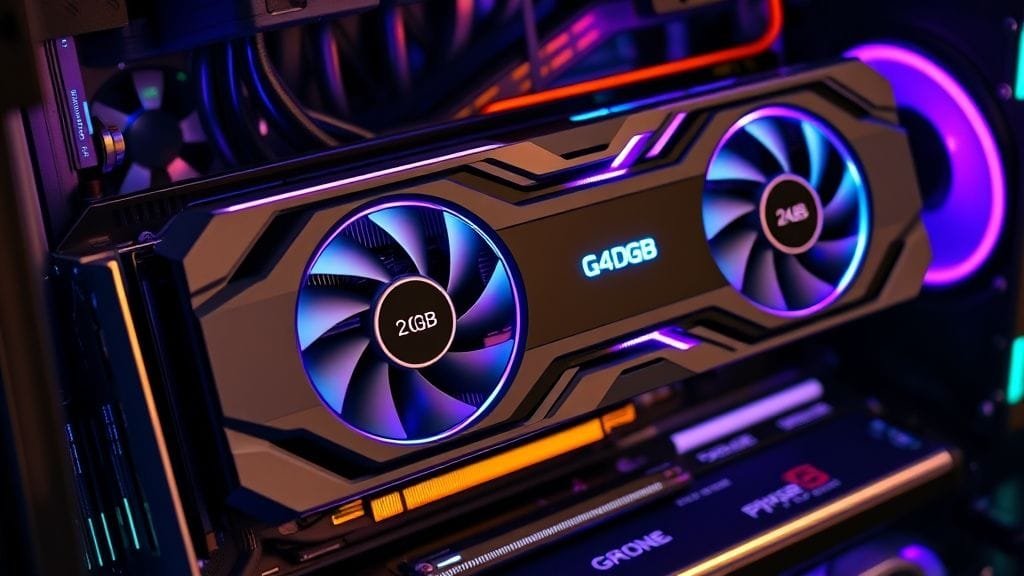
Expected models include the RTX 5080 Super and RTX 5070 Ti Super, both rumored to feature 24GB of GDDR7 VRAM. This capacity capitalizes on GDDR7’s higher memory density (24 Gbit/3GB chips). For gamers and creators, 24GB GDDR7 Super GPUs offer abundant headroom, supporting demanding 4K titles, maxed graphics, and intense ray tracing.
Conversely, the RTX 5070 Super is rumored to feature 18GB of high-speed graphics memory, offering robust performance for mainstream to high-end gaming and productivity. Ensuring mid-range “Super” offerings handle future demands. The flagship RTX 5090 is rumored to boast 32GB of GDDR7, a true powerhouse for extreme gaming, professional applications, advanced AI, and complex data visualization where capacity is vital.
Addressing Evolving VRAM Needs for 24GB GDDR7 Super GPUs
In recent times, NVIDIA’s graphics cards have faced criticism regarding VRAM capacity. As games and applications became increasingly graphically intensive, earlier VRAM capacities consequently became a clear bottleneck. This issue was especially prevalent at higher resolutions and, furthermore, when utilizing demanding features like neural rendering.
Consequently, NVIDIA is actively addressing these concerns by integrating abundant GDDR7 VRAM into their NVIDIA Super models in the RTX 50-series. This strategic approach, therefore, does more than merely boost processing power; it also provides crucial memory bandwidth and ample capacity. This, in turn, ensures peak performance for years to come and supports a diverse range of demanding workloads.
Enthusiasts and professionals alike eagerly await these “Super” GPUs, featuring RTX 50-series GDDR7, which are expected to launch between late Q1 and early Q2 2026. This timeline, moreover, suggests a careful and deliberate rollout, allowing NVIDIA and its partners ample time to refine the technology. Ultimately, this meticulous preparation aims to ensure a smooth and groundbreaking launch, promising a significant leap in graphics capabilities.
Real-World Impact: Applications Transformed by GDDR7 VRAM
GDDR7 VRAM, indeed, brings a multitude of advancements; however, these are not merely theoretical or confined to benchmarks. Instead, these innovations translate directly into tangible gains, spanning a vast array of real-world applications. Consequently, GDDR7 will revolutionize digital content interactions, accelerate scientific discovery, and ultimately impact everything from demanding games to cutting-edge AI.
Gaming: Unparalleled Visual Fidelity and Fluidity with NVIDIA Super Models
For gamers, 24GB GDDR7 Super GPUs are unequivocally a game-changer. They dramatically increase both memory bandwidth and capacity, which will substantially boost Frames Per Second (FPS) in traditional rasterization workloads. More critically, however, they will also greatly enhance ray tracing and path tracing performance. Early projections, moreover, suggest over a 30% FPS improvement, consequently meaning smoother gameplay and more stable frame rates, especially at demanding 4K resolutions.
Moreover, enhanced next-gen GPU memory capacity allows GPUs to load larger textures, manage intricate environmental data, and handle sophisticated lighting models, all without incurring latency or stutter. Consequently, games will achieve unprecedented visual fidelity, making environments feel more lifelike and immersive. Since ray tracing, which realistically simulates light, is inherently memory-intensive, GDDR7’s superior bandwidth and capacity will immensely benefit it. This, therefore, enables more efficient rendering, allowing ray tracing to become more common and less performance-punishing. Ultimately, developers can push graphics further, delivering previously unachievable experiences, and 4K gaming, even maxed out, becomes seamless and breathtaking.

AI and Machine Learning: Supercharging Inference Performance
Beyond gaming, AI and Machine Learning will similarly benefit greatly from GDDR7. AI workloads, particularly inference tasks (where a model makes predictions), are often limited by data speed. Therefore, GDDR7’s ultra-high bandwidth directly addresses and fixes this bottleneck, consequently supercharging AI inference performance for high-speed graphics memory.
Furthermore, GDDR7 VRAM efficiently handles immense data streams, which allows AI accelerators to process trillion-parameter models without encountering data bottlenecks. This capability is critical for many applications, including real-time image generation, natural language processing, and complex AI inference. Additionally, GDDR7 supports FP4 precision processing, a growing AI standard that reduces memory footprint and cuts computational needs for specific tasks. This, in turn, leads to lower latency and better throughput. Consequently, GDDR7 ensures efficient AI model operation, whether for image generation, recommendation engines, or advanced analytics, thus accelerating the development and deployment of next-generation intelligent systems.
High-Performance Computing (HPC) and Content Creation: Seamless Workflows
Beyond gaming and AI, GDDR7 is also exceptionally well-suited for High-Performance Computing (HPC) and content creation. These specialized sectors regularly manipulate large datasets and, moreover, perform complex computations. Therefore, next-gen GPU memory bandwidth and capacity are paramount for efficient operation within these fields.
In HPC applications, for instance, RTX 50-series GDDR7 greatly speeds up data access, benefiting complex simulations such as fluid dynamics, climate modeling, and molecular biology. Engineers and researchers can run more intricate simulations with greater precision in less time. Similarly, content creators—including 3D artists, animators, CAD architects, and video editors—also receive a substantial boost from GDDR7. Loading massive 3D models becomes smoother, rendering high-resolution scenes improves dramatically, and working with multi-track 8K video is far more responsive. This advanced memory ensures seamless workflows, reduces rendering times, allows for more iterative design, and fundamentally enhances overall productivity while fostering creativity.
Beyond the Desktop: Expanding Horizons
High-speed graphics memory with GDDR7’s versatility, moreover, extends significantly beyond traditional desktop PCs. It offers a compelling combination of high performance and exceptional power efficiency, which consequently makes it suitable for many demanding applications across various sectors:
- Workstations: Professional workstations, managing complex data visualization and scientific computing, will greatly benefit from GDDR7 VRAM‘s increased memory capacity and bandwidth. This, therefore, allows for intricate designs and significantly faster analysis.
- Gaming Consoles: Furthermore, future gaming consoles could leverage next-gen GPU memory with GDDR7, blurring lines between cinematic and interactive experiences. This, consequently, would offer richer worlds and more sophisticated physics.
- Autonomous Driving Systems: Moreover, self-driving cars need real-time sensor data processing and rapid AI decision-making. High-speed graphics memory with GDDR7’s bandwidth and reliability are crucial for these safety-critical tasks, ensuring efficient, error-free operation.
As technology continues to evolve, the demand for faster, more efficient memory will only grow. GDDR7, therefore, stands as a foundational technology, poised to enable advancements across diverse fields. Ultimately, it democratizes access to high-performance capabilities and profoundly accelerates innovation everywhere.
GDDR7 vs. HBM: A Strategic Coexistence
While high-speed graphics memory with GDDR7 significantly advances graphics memory, its role alongside High Bandwidth Memory (HBM) is key. HBM, a sophisticated stacked memory, offers greater bandwidth and power efficiency per bit. However, its complex manufacturing makes it costlier, and direct GPU integration adds expense. Consequently, HBM’s high costs limit widespread adoption, creating distinct niches for both technologies.
Historically, HBM has primarily suited high-end applications, including data centers for large-scale AI training and HPC. Specifically, HBM provides unmatched TB/s bandwidth, excelling where memory access speed is the critical bottleneck; training huge neural networks, for example, is a prime instance. Moreover, HBM also boasts superior power efficiency per bit, which is invaluable for energy-conscious data centers.
In contrast, RTX 50-series GDDR7 presents a cost-effective, high-performance solution, serving a broader market. For consumer GPUs, edge AI, and workstations, HBM’s extreme bandwidth is often excessive and its cost prohibitive. GDDR7, therefore, offers an excellent balance of performance, power efficiency, and affordability, making it ideal for most graphics cards and AI accelerators within budget limits.
Hybrid Memory Architectures and Strategic Coexistence
NVIDIA, a prominent innovator in both consumer GPUs and enterprise AI, deeply understands this interplay. Consequently, the company actively explores new combinations, even utilizing both HBM and GDDR7 in its AI platforms (e.g., Rubin CPX), including its future NVIDIA Super models. This practical approach strategically optimizes memory costs while simultaneously maintaining or enhancing performance for specific AI inference workloads.
For example, a hybrid system might employ a small, ultra-fast HBM module specifically for critical, latency-sensitive operations. Subsequently, a larger GDDR7 VRAM pool would complement it for general data storage. This flexible design, therefore, expertly manages expenses and, moreover, efficiently caters to diverse computing needs.

Ultimately, this strategic coexistence positions GDDR7 as a key driver, significantly impacting memory technology across consumer products and enterprise AI. Importantly, neither technology will replace the other; instead, each serves its optimal niche. GDDR7, exemplified by 24GB GDDR7 Super GPUs, will democratize high-performance graphics and provide AI inference at scale, while HBM will continue to dominate supercomputing and large-scale AI training. Together, consequently, they form a robust ecosystem that powers our data-intensive world.
Conclusion
GDDR7, indeed, marks a transformative era for graphics memory, poised to redefine future GPU capabilities. Its groundbreaking advancements in speed, bandwidth, power efficiency, density, and reliability, therefore, firmly establish it as a cornerstone technology. This revolutionary memory, moreover, will be integrated into NVIDIA’s RTX 50-series “Super models,” leading to impressive 24GB GDDR7 Super GPUs, thereby signifying a huge performance leap.
Specifically, GDDR7 VRAM will unlock unparalleled visual fidelity in 4K gaming, including advanced ray tracing. It will also supercharge AI inference for trillion-parameter models and, furthermore, effectively address existing VRAM limits. While HBM continues to serve demanding data center AI and HPC applications, GDDR7, however, emerges as a cost-effective, high-performance solution for a broader market, driving innovation in consumer GPUs and edge AI.
As the RTX 50-series “Super” lineup prepares for launch, the promise of 24GB GDDR7 Super GPUs truly shines as a beacon for next-generation performance. Ultimately, GDDR7 cements its indispensable role, driving a faster, more efficient, and more capable future for both graphics and AI, all thanks to its profound innovations.