
Spatial computing is rapidly redefining how we interact with technology and the world around us. Indeed, this groundbreaking field seamlessly blends digital information with physical environments. Thus, it creates immersive experiences. However, these were once confined to science fiction. Therefore, far beyond simple augmented reality (AR) or virtual reality (VR), spatial computing represents a paradigm shift. Specifically, it enables digital systems to understand and interact with the physical world in real-time. Consequently, it crafts a future where our digital lives aren’t confined to screens; instead, they are integrated directly into our physical spaces. Ultimately, this offers unprecedented levels of immersion and utility.

What is Spatial Computing? Understanding the Core Concepts
Essentially, at its heart, spatial computing empowers digital systems to comprehend and manipulate physical spaces. Furthermore, it moves beyond traditional 2D interfaces. Thus, users can engage with digital content as a natural extension of their real-world environment. For example, this field encompasses a spectrum of technologies. Specifically, Augmented Reality (AR) overlays digital information onto the real world. Conversely, Virtual Reality (VR) transports users to entirely simulated environments. Meanwhile, Mixed Reality (MR) bridges these two; consequently, it enables digital objects to interact convincingly with physical surroundings.
Bridging Digital and Physical Realities
Ultimately, the essence of spatial computing lies in establishing spatial relationships. Specifically, it connects digital information with real-world objects. For instance, imagine digital instructions appearing directly on a machine you’re repairing; or, visualize a virtual architectural model standing tangibly in your living room. Therefore, this capability transforms passive consumption of digital content. Instead, it becomes active, context-aware interaction. Consequently, technology feels intuitive and deeply integrated into our daily lives.
The Technology Powering Spatial Computing
Indeed, a complex interplay of advanced technologies underpins spatial computing’s seamless experiences. Specifically, these components work in harmony. Consequently, they enable devices to “understand” the physical world, track user movements, and project digital elements with precision.
- Sensors and Cameras: For example, devices like the Apple Vision Pro, Meta Quest 3, and Microsoft HoloLens are equipped with sophisticated cameras; they also have depth sensors. Ultimately, these components continuously capture data. Specifically, this includes the user’s surroundings, movements, and interactions.
- Spatial Mapping and Localization: Furthermore, this is a crucial process. Indeed, it involves creating a detailed digital map of the physical environment. Consequently, a device accurately understands its position and orientation within this map. Thus, this allows it to precisely place and anchor digital objects. Moreover, they appear stable and realistic in the real world.
- Artificial Intelligence (AI) and Machine Learning: Primarily, AI algorithms are indispensable. Specifically, they process and analyze vast amounts of spatial data. For instance, object recognition is facilitated through their capabilities; intuitive gesture controls are also enabled. Ultimately, virtual elements intelligently co-exist within physical spaces. For more on AI’s role, see our article on `(/blog/future-of-ai-innovation/)`.
- Computer Vision: Furthermore, this technology allows devices to “see” and interpret the physical world. Specifically, it does so in a human-like manner. Indeed, this is essential for accurately tracking environments. Object identification is another key function; it also understands human interactions with unparalleled precision.
Haptic Feedback and Connectivity
- Haptic Feedback Systems: Notably, Haptic systems provide tactile responses. Specifically, they make digital interactions feel truly natural and immersive. For instance, these vibrations and sensations mimic touching, pressing, or manipulating virtual objects.
- 5G and Edge Computing: Furthermore, the robust infrastructure provided by 5G networks and edge computing is vital. Specifically, these technologies support high-bandwidth, low-latency data transmission. Consequently, this is required for smooth, real-time spatial computing experiences. Therefore, digital content responds instantly to user input and environmental changes.

Transforming Industries: Key Applications of Spatial Computing
Indeed, spatial computing is not just a technological marvel; rather, it is a powerful tool. Consequently, this technology is poised to revolutionize numerous industries. Furthermore, it enhances visualization, interaction, efficiency, and productivity. Therefore, this unlocks new possibilities across diverse sectors. For example, processes become more intuitive, and likewise, outcomes become more effective.
Revolutionizing Work and Collaboration
Currently, the modern workplace is being fundamentally reshaped by spatial computing. Specifically, it allows for the creation of immersive virtual offices. Thus, geographically dispersed employees can interact as if in the same physical room. Consequently, this fosters real-time collaboration. Moreover, it strengthens communication; it also enables shared digital workspaces. For example, virtual whiteboards and 3D models can be manipulated by multiple users simultaneously.
Immersive Training and Education
Indeed, one of the most impactful applications of spatial computing is in training and education. Specifically, realistic simulations and interactive 3D visualizations offer unparalleled hands-on learning experiences. For example, workers can practice complex skills in risk-free virtual environments. Thus, this ranges from intricate medical procedures to operating heavy machinery. Similarly, students can explore complex subjects in vivid, interactive detail; such examples include human anatomy or ancient civilizations. Consequently, this significantly enhances engagement and comprehension.
Enhancing Manufacturing and Logistics
Furthermore, in manufacturing and logistics, spatial computing improves operational efficiency and safety. For instance, it provides real-time visualization of processes. Specifically, this includes assembly lines and predictive maintenance schedules. Moreover, augmented reality overlays can guide workers; indeed, they show step-by-step instructions directly on machinery. Consequently, this drastically reduces errors; it also minimizes downtime and optimizes workflows. Ultimately, this can lead to significant cost savings; quality control is also improved.
Advancing Healthcare Practices
Notably, the healthcare sector stands to gain immensely from this technology. For example, surgeons can rehearse intricate procedures. Specifically, they use highly detailed 3D simulations. Thus, this refines their techniques before entering the operating room. Furthermore, doctors can analyze complex medical scans in virtual space; consequently, this leads to faster and more accurate diagnoses. Moreover, AR can provide real-time guidance during operations. For instance, it displays vital patient information or anatomical overlays directly within the surgeon’s field of view.

Redefining Retail and Design
Indeed, spatial computing is transforming the consumer experience in retail and e-commerce. For example, customers can virtually try on clothing. Alternatively, they can visualize furniture in their homes before purchase, using applications like IKEA Place. They can even explore entire virtual shopping environments. Furthermore, in design and prototyping, architects, engineers, and product designers can create and test 3D models. Specifically, they do this in immersive virtual environments. Consequently, this streamlines the design process. Moreover, it identifies potential issues much earlier.
The Future of Entertainment and Accessibility
Additionally, beyond commercial applications, spatial computing delivers highly immersive experiences. Specifically, this includes gaming and entertainment. Thus, players can interact with game environments and characters more naturally. For example, they use intuitive ways. Consequently, this blurs the lines between digital and physical. Moreover, it offers significant advancements in accessibility. For instance, AR can provide real-time guidance for visually impaired individuals. Similarly, VR can offer therapeutic experiences for those facing physical or cognitive challenges.
The Growing Market: Spatial Computing’s Economic Impact
Indeed, the market for spatial computing is not just growing; rather, it is experiencing an explosive surge. Primarily, this reflects its immense potential; it also shows increasing adoption across various sectors. Consequently, this growth signals a profound shift. Specifically, it impacts technological investment and consumer interest. Thus, this solidifies its position as a major economic force.
Impressive Market Size and Growth Projections
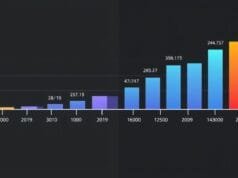
Currently, the global spatial computing market has already reached substantial valuations. However, estimates vary slightly across different reports; nevertheless, they consistently point to robust expansion. For instance, the market was valued at approximately USD 97.9 billion in 2023. Another projection placed it at USD 7.84 billion in the same year. Therefore, this highlights the nascent but accelerating nature of comprehensive market measurement. Looking ahead, the growth trajectory is even more impressive. Specifically, the market is projected to reach USD 280.5 billion by 2028. Indeed, this is at a Compound Annual Growth Rate (CAGR) of 23.4%. By 2030, this figure is expected to hit USD 469.8 billion; also, this is at a CAGR of 20.4%. Moreover, it could potentially surpass USD 897.5 billion by 2035 with an 18.2% CAGR. Other optimistic forecasts predict the market size to exceed USD 200 billion by 2025; furthermore, it could reach over USD 700 billion by 2033. It might even potentially hit USD 1,066.13 billion by 2034 at a 21.7% CAGR. Ultimately, these figures underscore the incredible financial momentum. Specifically, this momentum is behind this transformative technology. For further insights into market trends, consider exploring reports from reputable industry analysts.
Regional Market Leadership
Currently, North America holds the largest share of the spatial computing market. Specifically, this is driven by significant investment in technology development; it also has a strong ecosystem of tech companies and early consumer adoption. However, the Asia-Pacific region is demonstrating the fastest growth rate. Indeed, this is fueled by expanding digital infrastructures; it also has a large consumer base. Furthermore, governmental support for technological innovation is increasing. Globally, the combined AR and VR market is anticipated to grow. Specifically, it will see a CAGR of approximately 43.8% from 2021 to 2028. The AR market alone is projected to reach USD 248.38 billion by 2029. Notably, over 171 million people worldwide already utilize VR technology. Therefore, this indicates a solid foundation for future expansion.

Navigating the Challenges of Spatial Computing Adoption
Despite its immense potential and rapid growth, widespread adoption of spatial computing still faces several significant hurdles. Indeed, addressing these challenges is crucial. Ultimately, the technology needs to move beyond niche applications. Specifically, it must become a ubiquitous part of our daily lives and professional environments.
Overcoming High Costs and Technical Barriers
Primarily, one primary barrier to entry for many organizations and consumers remains high costs. Specifically, this applies to both hardware and software. For example, cutting-edge AR glasses, VR headsets, and necessary advanced sensors often come with premium price tags. Furthermore, specialized skills are required. Developing sophisticated spatial computing applications can also be expensive. Consequently, this limits access for smaller businesses and individual creators.
Addressing Privacy and Security Concerns
Notably, spatial computing systems inherently collect vast amounts of data. Specifically, this includes users’ physical environments, movements, and interactions. Consequently, this raises critical concerns regarding data privacy and security. Therefore, questions about data storage, processing, and sharing must be thoroughly addressed. Access control is also vital. Thus, this builds user trust. Moreover, it ensures ethical deployment. Furthermore, robust regulatory frameworks are essential; transparent data handling practices are also key.
The Need for Skilled Professionals
Indeed, the rapid evolution of spatial computing has created a significant skill gap. Specifically, there is currently a shortage of skilled professionals. For instance, they are needed to design, develop, and maintain these complex systems. Consequently, this lack of expertise can slow adoption. Moreover, it hinders innovation; it also makes it challenging for companies to fully leverage the technology’s capabilities. Therefore, investing in education and training programs is vital to close this gap.
Improving User Experience and Content Ecosystems
Notably, the shift from familiar 2D screens to immersive 3D environments presents unique UI/UX challenges. Specifically, designing intuitive and comfortable interfaces for spatial interactions requires a complete rethinking. Indeed, this applies to traditional design principles. For example, issues such as motion sickness and user fatigue are still being refined. The need for natural interaction paradigms is also key. Moreover, content and application ecosystems are still evolving. Specifically, this is true for spatial computing, especially compared to established computing platforms. Consequently, this limits immediate utility for many potential users.

The Future of Spatial Computing: A Seamlessly Integrated World
Ultimately, the trajectory of spatial computing points towards an increasingly integrated and intuitive future. Specifically, digital and physical realities will merge seamlessly. Indeed, the distinction will become almost imperceptible. Consequently, this evolution promises to profoundly transform both personal and professional domains.
Hardware Evolution and Miniaturization
Currently, the current generation of AR glasses and VR headsets can often be bulky. However, they are powerful but somewhat obtrusive. Indeed, the future undoubtedly holds significant advancements in hardware design. Specifically, it is moving towards miniaturization and greater comfort. Therefore, we can expect devices to become lighter and sleeker; they will eventually integrate seamlessly into everyday objects and environments. Furthermore, this will evolve beyond dedicated headsets. For example, they will become more natural, fashionable forms; examples include standard eyeglasses or even contact lenses. Ultimately, this will make spatial computing an effortless part of daily life.
Deeper AI Integration and Ubiquitous Connectivity
Moreover, Artificial Intelligence will become even more indispensable. Specifically, it will enhance the spatial computing experience. For instance, AI will enable systems to understand physical environments with greater nuance. Furthermore, it will recognize objects and individuals more accurately. Proactively, user needs will be predicted; hyper-personalized, context-aware experiences will also be created. Concurrently, network technologies will advance. The continued rollout of 5G and the advent of 6G are particularly important. Ultimately, these will provide ubiquitous, high-speed, low-latency connectivity. Consequently, this will enable more sophisticated and real-time spatial computing experiences. Thus, they can be delivered anywhere, anytime, without performance compromises.
The Road to the Metaverse and Natural Interactions
Indeed, many experts view spatial computing as a foundational pillar. Specifically, it is crucial for the realization of the metaverse. As this concept evolves, the internet will transform; instead, it will become a truly immersive, shared 3D virtual space. Moreover, it will be deeply integrated with our physical world. Furthermore, interaction paradigms will continue to move beyond traditional screens. Specifically, this includes keyboards and mice. Instead, future interactions will increasingly rely on natural user interfaces; examples include precise hand gestures, intuitive voice commands, and advanced eye tracking. Ultimately, technology will feel less like a tool; rather, it will be more like an extension of human intent. Consequently, this evolution in how we interact promises a more human-centric computing experience. For more on natural user interfaces, explore `(/blog/intuitive-tech-interfaces/)`.

Conclusion: Embracing the Blended Reality
In conclusion, spatial computing is rapidly advancing. Specifically, it is driven by the powerful convergence of augmented and virtual realities with our physical world. Indeed, going far beyond initial novelty applications, the technology heralds a future where digital content is not merely displayed; instead, it is intricately integrated into our physical surroundings. Consequently, this fosters unprecedented levels of collaboration, efficiency, and immersive experiences. Moreover, it impacts both personal and professional spheres. However, significant challenges persist. Specifically, these concern cost, data privacy, infrastructure requirements, and user experience. Nevertheless, ongoing advancements are paving the way. For example, this includes hardware, AI, and connectivity. Ultimately, spatial computing is undoubtedly poised to become the next frontier in human-computer interaction. Thus, it promises a future of blended reality. Therefore, this will redefine how we live, work, and connect.