When building or upgrading a gaming PC, selecting the [right graphics card](https://jompatech.com/best-graphics-cards-2025-the-only-guide-you-need/) is often the most critical decision. Many gamers might still consider popular older cards, and the NVIDIA GeForce RTX 3060 is one such example. The ASUS Dual NVIDIA GeForce RTX 3060 V2 OC Edition, for instance, boasts a strong history. It was well-regarded for its balanced performance and competitive price. However, with 2025 upon us, gaming hardware has evolved significantly. This raises a crucial question: is the RTX 3060 still a viable choice in 2025?
Consequently, many gamers wonder if a once-strong card like the RTX 3060 can still hold its own against newer, more powerful rivals. While the RTX 3060 remains a good choice for a specific group of buyers, it would be inaccurate to label it the “best” NVIDIA gaming graphics card for 2025. This article aims to clearly position the RTX 3060 in 2025, explaining its features and, importantly, highlighting the better alternatives now available. To that end, we will dive deep into its performance, unique strengths, and current market position. Ultimately, this analysis will help you make the most informed decision regarding your gaming needs and the RTX 3060 in 2025.
The RTX 3060 2025: A Viable Budget Option for 1080p Gaming
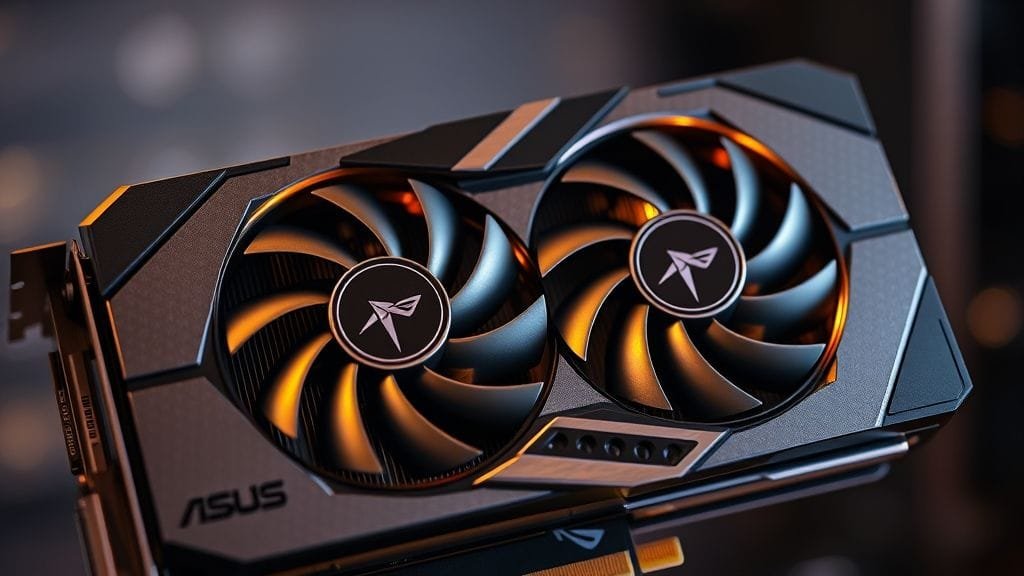
The NVIDIA GeForce RTX 3060, especially its 12GB GDDR6 model, remains a strong choice for budget gamers in 2025. It doesn’t aim for top-tier performance or extreme graphics. Instead, this GPU aims to deliver a reliable and enjoyable gaming experience. It performs optimally at 1080p, the most common resolution. If smooth, budget-friendly gameplay is your primary goal, then the RTX 3060 in 2025 is certainly worth considering. The ASUS Dual V2 OC version, for example, is notable for its often superior cooling and factory overclock, which subtly boosts the RTX 3060’s speed.
This card launched with a strong reputation, and even now, years later, it still proves useful. Its key strength lies in handling modern games at 1080p, offering good frame rates. In fact, the RTX 3060 might surprise you with its very capable performance, despite its age. This demonstrates that good design endures, at least for specific tasks.

Delving into 1080p Performance with the RTX 3060 2025
For many gamers, 1080p resolution is ideal, offering great visuals without the need for powerful hardware typically required for 4K. In 2025, the RTX 3060 (specifically the 12GB model) still excels here. You can expect a solid 1080p gaming experience, often achieving 60 frames per second (FPS) or more with high or ultra settings in many new games. This, consequently, delivers very smooth images and responsive gameplay. Ultimately, this is precisely what most gamers seek from the RTX 3060 in 2025.
To illustrate its capability, consider some demanding titles. Take Cyberpunk 2077, for example, a graphically rich game. The RTX 3060 can achieve around 69 FPS at high settings at 1080p. Likewise, in the visually stunning God of War Ragnarok, you might see around 74 FPS under the same settings. These figures are more than adequate, translating to a truly enjoyable gaming experience. You will rarely feel limited by your RTX 3060 setup in 2025.
Optimizing for High Refresh Rates with the RTX 3060 2025
For competitive gamers seeking high frame rates for an advantage, or those who simply appreciate the smooth movement that higher refresh rates (above 60Hz) provide, the RTX 3060 can still perform admirably. By making judicious changes to your game settings—for example, opting for medium or optimized high settings instead of ultra—you can often achieve frame rates well above 120 FPS in many popular games. This means the RTX 3060 in 2025 is suitable for both immersive single-player games and fast-paced multiplayer matches.
To achieve higher FPS, your system’s central processing unit (CPU) is crucial. When pairing the RTX 3060 with a strong CPU, such as an Intel Core i5-12400F or a similar mid-range chip, the card performs optimally at 1080p. The CPU handles game logic, AI, and physics, sending frames for the GPU to display. Therefore, a balanced system ensures no single component bottlenecks another. This allows your RTX 3060 to utilize its full potential at 1080p in 2025.
The Unsung Hero: 12GB GDDR6 VRAM of the RTX 3060 2025
One significant, often overlooked strength of the RTX 3060 (especially the 12GB model) is its ample video memory. In 2025, this 12GB of GDDR6 VRAM stands as a major advantage for the RTX 3060. Many newer, even costlier GPUs—including some from NVIDIA’s next generation—offer similar performance levels but come with less VRAM, a point that has often been a hot topic among PC enthusiasts.
Modern games are increasingly demanding of graphics cards, requiring better texture quality and complex details. These high-resolution textures necessitate ample video memory to load and display effectively. With 12GB of VRAM, the RTX 3060 readily handles large texture packs without encountering memory limitations, commonly known as VRAM bottlenecks. As a result, you can maintain high texture quality, even in demanding games, avoiding the stuttering or performance drops that cards with less VRAM often suffer from. This wise design choice in the RTX 3060, therefore, provides a clear, long-term benefit for budget gamers, extending the card’s viability well into 2025 and beyond.
Where the RTX 3060 Stumbles: 1440p and Ray Tracing
While the ASUS RTX 3060 V2 OC excels at 1080p, it’s vital to recognize its limitations. No graphics card is universally perfect, and the RTX 3060 clearly has its boundaries. If you aim to play above 1080p or desire advanced graphics, the card begins to show its age. Its core processing power becomes a limiting factor. Understanding these limits helps set realistic expectations and determine if the RTX 3060 in 2025 truly meets your gaming desires.

The Challenge of 1440p Gaming for the RTX 3060 2025
Moving to 1440p significantly increases the pixel count the GPU must render. While the RTX 3060 can technically handle 1440p, it often struggles to maintain 60 FPS without assistance, as its core processing power is not robust enough. It was primarily designed for 1080p gaming and struggles to process the 78% greater pixel density 1440p demands compared to 1080p. This is especially evident with high settings. Consequently, you may experience significant frame rate drops, resulting in a less smooth and engaging experience with the RTX 3060 at 1440p in 2025.
Fortunately, modern graphics cards employ intelligent solutions to address these challenges. Tools like NVIDIA DLSS or AMD FSR are crucial for playable 1440p gaming on an RTX 3060, making them almost indispensable. These tools render the game at a lower internal resolution, then use AI or intelligent upscaling methods to match your monitor’s 1440p resolution. This provides a significant performance boost. Frame rates often become playable again, though it might result in a slight reduction in image sharpness for some users. Additionally, Frame Generation, if supported by FSR3, can further augment these figures for the RTX 3060 in 2025.
Ray Tracing: A Step Too Far for Smooth Performance
Ray tracing is an advanced rendering technique that simulates the physical behavior of light. This, in turn, generates incredibly realistic reflections, shadows, and overall lighting. Essentially, it dramatically enhances game visuals, making scenes appear strikingly realistic. However, this heightened realism comes with a substantial performance cost. Ray tracing demands a tremendous amount of a GPU’s processing power.
For the RTX 3060, ray tracing represents a distinct weakness. Enabling ray tracing in most modern games results in significant FPS drops. This often renders gameplay impossible or simply unenjoyable. While the card supports ray tracing, its dedicated RT cores from the Ampere generation are simply not powerful enough. They cannot handle the workload required for smooth frame rates without significant sacrifices. You would likely need to drastically lower other graphical settings, or heavily rely on DLSS; even then, it might still not be enough. Ultimately, a consistently smooth experience with the RTX 3060 in 2025 is unlikely. Therefore, if ray tracing is a key priority for your gaming, the RTX 3060 is likely not the card for you.
Market Position and Pricing of the RTX 3060 2025
Understanding the market position and pricing of the ASUS Dual NVIDIA GeForce RTX 3060 V2 OC Edition in 2025 is crucial for potential buyers. Once a popular mid-range GPU, its evolution into a budget-friendly choice marks an interesting journey. Notably, this shift occurred due to a confluence of factors: supply chain issues, the introduction of new products, and evolving consumer demands. Furthermore, its price reflects its position in a market constantly filled with new technology; this continuous innovation is the reality for the RTX 3060 in 2025.
Historical and Current Pricing for the RTX 3060 2025
The RTX 3060 debuted in 2021 with an MSRP of $329. At the time, this was considered a competitive price, offering strong performance for the cost. Now in 2025, new RTX 3060 cards retail for approximately $299. This modest price reduction reflects its current market standing. Even more appealing are used models, which can be found for around $224.99. These used prices offer exceptional value for gamers on a tight budget, provided they are comfortable with second-hand components. Thus, the RTX 3060 in 2025 represents a very compelling deal on the used market.
Continued demand for the RTX 3060, even years post-launch, underscores its enduring value. This demand is partly driven by the perceived high cost and insufficient performance uplift of some newer GPUs. For example, many gamers felt the succeeding RTX 4060 wasn’t a significant upgrade, offering no major boost in performance or memory, leading them to question its pricing. The RTX 3060 already offered 12GB of VRAM, further fueling skepticism.
NVIDIA’s Strategy and Market Dynamics
Recognizing the continued appeal and demand for the RTX 3060, NVIDIA reportedly extended its production into 2024. This strategic decision helped them maintain a strong foothold in the budget segment of the market. By adjusting prices and maintaining supply, NVIDIA effectively leveraged the RTX 3060. Ultimately, this strategy appealed to budget-conscious gamers unwilling or unable to spend on high-end cards, filling a critical market gap where newer cards were perceived as offering insufficient value.
The graphics card market is constantly evolving, shaped by manufacturing costs, new technologies, and consumer preferences. The continued relevance of the RTX 3060 serves as a clear illustration of this dynamic. It effectively demonstrates how a well-positioned product, even an older one, can remain popular through competitive pricing and by meeting specific market needs. Its 12GB VRAM, in particular, remains a significant selling point, standing out against newer cards with less memory. Overall, this truly secures the RTX 3060’s place in the 2025 market.

Exploring Superior Alternatives for 2025 Gaming
While the RTX 3060 remains a good budget 1080p GPU, it’s vital to acknowledge the significant shifts in the market. Gamers seeking enhanced performance, superior visuals, or greater overall value in 2025 now have numerous alternatives. Newer cards from both NVIDIA and AMD present compelling choices. These alternatives often provide a significant boost in power and efficiency, offering greater future-proofing and making them a superior choice for many.
Understanding these alternative cards is crucial for making an informed decision. This is especially true if you have a slightly larger budget or desire more than basic 1080p gaming from the RTX 3060 in 2025. The table below provides a concise overview of some leading cards across various performance and price points.
| Category | Recommended GPU | Key Advantage | Target Resolution |
|---|---|---|---|
| Best Overall | AMD Radeon RX 9070 | Superior performance for the price | 1440p / 4K |
| Best Value | AMD Radeon RX 9060 XT 16GB | Excellent 1440p performance, generous VRAM | 1440p |
| Mid-Range NVIDIA | NVIDIA GeForce RTX 5070 Ti | Significant performance uplift over RTX 3060 | 1440p |
| Mid-Range NVIDIA | NVIDIA GeForce RTX 5070 | Strong 1440p performance, next-gen features | 1440p |
| Budget 1080p | Intel Arc B570/B580 | Competitive 1080p performance, good value | 1080p |
| Budget 1080p | NVIDIA GeForce RTX 5060 | Modern NVIDIA architecture, efficient | 1080p |
| 1440p Value Upgrade | NVIDIA GeForce RTX 5060 Ti 16GB | Good 1440p performance, ample VRAM | 1440p |
| 1440p Value Upgrade | AMD Radeon RX 9060 XT 16GB | Excellent 1440p value, 16GB VRAM for longevity | 1440p |
AMD’s Strong Contenders: RX 9000 Series
AMD has made significant strides in the graphics card market, offering highly competitive products that often rival NVIDIA’s offerings. This is particularly true regarding raw performance-to-cost ratio. For 2025, the AMD Radeon RX 9070 is widely regarded as an excellent overall graphics card, delivering robust performance that can effortlessly handle 1440p and even 4K gaming. Consequently, it stands as a compelling choice for gamers prioritizing top-tier visuals.
For those seeking the best value without significant compromises in power, the AMD Radeon RX 9060 XT 16GB is a prime contender. This card strikes an excellent balance between price and performance. It’s well-suited for most PC gamers targeting 1440p. Its generous 16GB VRAM also contributes to its longevity, enabling it to handle more demanding games and high-resolution textures in the future. Upgrading from an older card like the RTX 3060 in 2025 to the RX 9060 XT 16GB offers a noticeable leap, delivering superior visuals and frame rates.
NVIDIA’s Next Generation: RTX 50 Series
NVIDIA continues its innovation with new GeForce RTX cards, and the RTX 50 series has introduced significant improvements to the market. If you prefer NVIDIA or simply seek greater performance than the RTX 3060, consider the RTX 5070 Ti and RTX 5070. These are robust options in the mid-range market, offering a substantial performance boost. They often significantly outperform the RTX 3060 in 2025.
The RTX 5070 and 5070 Ti are engineered for exceptional 1440p gaming. They boast improved ray tracing and advanced DLSS features. As such, they represent the ideal choice for NVIDIA users currently, balancing power, features, and efficiency. Additionally, the NVIDIA GeForce RTX 5060 Ti 16GB offers excellent value and serves as a commendable direct upgrade for 1440p. Furthermore, it performs robustly and provides ample VRAM for high-resolution gaming, clearly surpassing the RTX 3060 in 2025.
Budget Alternatives to the RTX 3060 2025 and Upgrade Recommendations
If your budget is comparable to or slightly above the RTX 3060’s price, and you desire newer technology or superior 1080p performance, several choices are available. The Intel Arc B570/B580 series, for instance, offers strong 1080p gaming performance, often at a competitive price. Intel has made significant advancements with its Arc GPUs, demonstrating much improved driver stability and performance since their initial launch.
The NVIDIA GeForce RTX 5060 also serves as a newer budget option, featuring NVIDIA’s latest architecture and potentially offering greater power efficiency than the 3060. Nevertheless, it still targets strong 1080p performance. However, always verify the VRAM on these budget cards, as some may offer less than the RTX 3060’s 12GB. This difference is a crucial consideration for future-proofing, as it truly sets the RTX 3060 in 2025 apart from some newer, budget alternatives that sometimes compromise on VRAM.
For superior FPS at higher resolutions like 1440p or 4K, a more powerful GPU is not merely suggested but often essential. This necessitates looking beyond the RTX 3060 in 2025. While the older RTX 3060 Ti offers a noticeable boost in performance, investing in a newer GPU, such as an RTX 50 or AMD RX 9000 series, provides a more substantial and future-proof upgrade. The RTX 5060 Ti 16GB and the AMD RX 9060 XT 16GB offer excellent value for 1440p gaming. These cards provide the necessary power and memory to truly enjoy games at 1440p, far surpassing what the RTX 3060 in 2025 can achieve at higher resolutions.
Who is the RTX 3060 2025 Still For?
With numerous newer, more powerful cards available, one might question if the ASUS Dual NVIDIA GeForce RTX 3060 V2 OC Edition still holds a place in 2025 gaming. The answer is a resounding “yes,” but under very specific conditions. This card is not universally suitable; instead, it caters best to a particular type of gamer who possesses clear needs and understands the card’s inherent strengths and limitations. Therefore, the RTX 3060 in 2025 continues to serve a crucial niche market.
The Budget-Conscious 1080p Gamer
The RTX 3060 in 2025 primarily targets budget-conscious gamers whose main goal is quality 1080p gaming. Whether building a first PC on a tight budget or upgrading from an older card (such as a GTX 10-series), the RTX 3060 offers a significant performance boost at a competitive price. It allows you to play modern games at high settings without excessive expenditure. It represents an enjoyable entry point into PC gaming with the RTX 3060 in 2025.
This category includes gamers who:
- Have a 1080p monitor and no immediate plans to upgrade to 1440p or 4K.
- Prioritize smooth 60 FPS gameplay over pushing ultra-high frame rates at competitive settings.
- Are comfortable with moderate settings if it means saving money.
- Are looking for a reliable card for general use and gaming without needing the absolute latest tech.

Upgrading from Very Old Hardware to an RTX 3060 2025
For users still operating a graphics card many years old, such as an NVIDIA GTX 1060 or AMD RX 580, the RTX 3060 presents a substantial upgrade. You would experience a major boost in performance. This upgrade enables you to play games your older card couldn’t handle, or significantly boosts frame rates in games you already own. Ultimately, this makes the RTX 3060 in 2025 a compelling upgrade choice, capable of revitalizing an older system without necessitating a full rebuild.
Its 12GB VRAM also positions it as a wise choice for those looking to extend the lifespan of their current PC. Furthermore, this ample memory helps future-proof against the increasing memory demands of new games, ensuring your investment lasts longer. Therefore, the RTX 3060 in 2025 presents a strong argument for upgrading older systems.
Leveraging the Used Market for the RTX 3060 2025
For the highly budget-conscious who are comfortable with the used market, the RTX 3060 (such as the ASUS Dual V2 OC) offers exceptional value. Used models typically retail for around $225, delivering impressive gaming performance for that price point. When purchasing used, always buy from trusted sellers and look for cards with a warranty or return policy for added peace of mind. A used RTX 3060 often outperforms many new budget cards at a comparable price, making the RTX 3060 in 2025 a shrewd used purchase.
The Future Outlook for the RTX 3060 2025
While understanding the RTX 3060’s current standing is important, predicting its future trajectory is another matter. As 2025 progresses, new technologies will continue to emerge, and the relevance of this popular card will inevitably shift. Numerous factors will influence its longevity and its eventual phase-out from the mainstream market. This perspective is crucial for comprehending the future path of the RTX 3060 in 2025.
Gradual Phase-Out by Late 2025
Projections indicate a gradual phase-out of new RTX 3060 sales by late 2025. This is a natural progression as technology advances, with graphics card manufacturers like NVIDIA continually boosting performance and introducing new features. Indeed, there’s an increasing emphasis on AI-powered GPUs, which not only enhance gaming performance but also support a wide range of AI applications and tasks.
As these newer, AI-focused GPUs gain prominence, they will naturally supersede older cards, including the Ampere-based RTX 3060. They will consequently dominate manufacturing and retail channels. However, this doesn’t render the RTX 3060 in 2025 immediately obsolete, though it will become progressively harder to acquire as a new product. Ultimately, this shift signifies the market’s progression beyond the RTX 3060.

Continued Relevance in the Refurbished Market
While new RTX 3060 cards will become scarce, the RTX 3060 will likely retain its utility in the used markets for years to come. Given its capable 1080p performance and ample 12GB VRAM, it remains an excellent choice for budget gamers unable to purchase new cards. Refurbished cards are often rigorously tested and may even come with limited warranties. They offer an excellent opportunity to acquire this capable card at an even lower price point. Thus, the RTX 3060 will continue to find new homes in 2025 and beyond.
The used market also keeps demand alive for people building basic systems or those who need a trusty, cheap GPU for non-gaming tasks. For instance, consider video editing or light creative work, where dedicated graphics help a lot. So, a used RTX 3060 offers too much value to disappear fast.
The Role of Software and Driver Updates
Another factor contributing to its longevity is NVIDIA’s ongoing driver support. While older cards eventually lose access to some cutting-edge features of newer ones, NVIDIA typically provides driver updates across many GPU generations. This means the RTX 3060 will continue to receive updates that improve performance and address bugs for new game releases. Consequently, this extends its useful lifespan; as long as software support continues, the card can run new games, albeit perhaps not at the very highest settings. Therefore, this commitment will help the RTX 3060 remain a functional device well into 2025.
Conclusion: Making Your Decision on the RTX 3060 2025
The ASUS Dual NVIDIA GeForce RTX 3060 V2 OC Edition occupies a unique and evolving position in the 2025 graphics card market. Its original design earned it popularity, and consequently, it remains a favorite among budget gamers. This is particularly true for 1080p gaming at high settings. Its ample 12GB of VRAM is undoubtedly a significant strength, helping it endure by meeting the increasing texture demands of new games. Ultimately, this crucial feature enables the RTX 3060 in 2025 to punch above its weight class in specific scenarios.
However, it’s crucial to reiterate: the RTX 3060 is not the “best” NVIDIA gaming graphics card for 2025. Newer NVIDIA RTX 50 or AMD RX 9000 series cards are demonstrably superior choices for gamers seeking higher 1440p+ performance or ray tracing without significant speed drops. These newer cards boast greater raw power, more advanced designs, and often provide better value across various performance tiers than the RTX 3060 in 2025.
Ultimately, your decision hinges on your specific needs, budget, and gaming aspirations. If you can acquire the RTX 3060 at a favorable price, especially used, it remains a smart and capable choice. This holds true whether you’re building a basic 1080p gaming PC or upgrading from very old hardware. However, if higher resolutions or cutting-edge features are your priority, then exploring other options is advisable. For the best performance-to-money ratio in 2025, next-generation GPUs are the way forward.
Considering all the exciting advancements in the GPU market, what feature are you most looking forward to in the next generation of graphics cards?