Have you ever considered the remarkable journey of computer processors? They evolved from colossal machines that filled entire rooms to tiny chips fitting in your pocket. The transformation of these critical components showcases human ingenuity. The history of processors is more than just a tale of technology; it reveals how science, fierce competition, and innovative designs constantly push the boundaries of what’s possible.
This article will delve into the History of Processors, examining the pivotal moments that shaped modern computing. It will trace the origins and development of microprocessors, analyze market competition, and speculate on their future trajectory.
The Seeds of Innovation: Pre-Microprocessor Milestones
Long before the concept of a “computer on a chip” existed, brilliant minds laid crucial early groundwork. This foundational work forms the initial chapters of the History of Processors. Though seemingly disparate at the time, these early discoveries collectively built the essential platform for all subsequent processing units.
The Material and the Method: Silicon and Logic
Baron Jons Jacob Berzelius made a significant discovery in 1823: silicon. Unbeknownst to him then, this element would become pivotal in the History of Processors. Silicon possesses unique properties, making it an ideal semiconductor. Consequently, it emerged as the primary building block for nearly all modern electronics.
Many years later, in 1903, Nikola Tesla patented electrical logic circuits. These circuits were early precursors to the “gates” or “switches” that control electricity in digital circuits. They provided fundamental insights into how electrical signals could perform calculations as processors began to develop.
The Transistor: A Giant Leap Forward
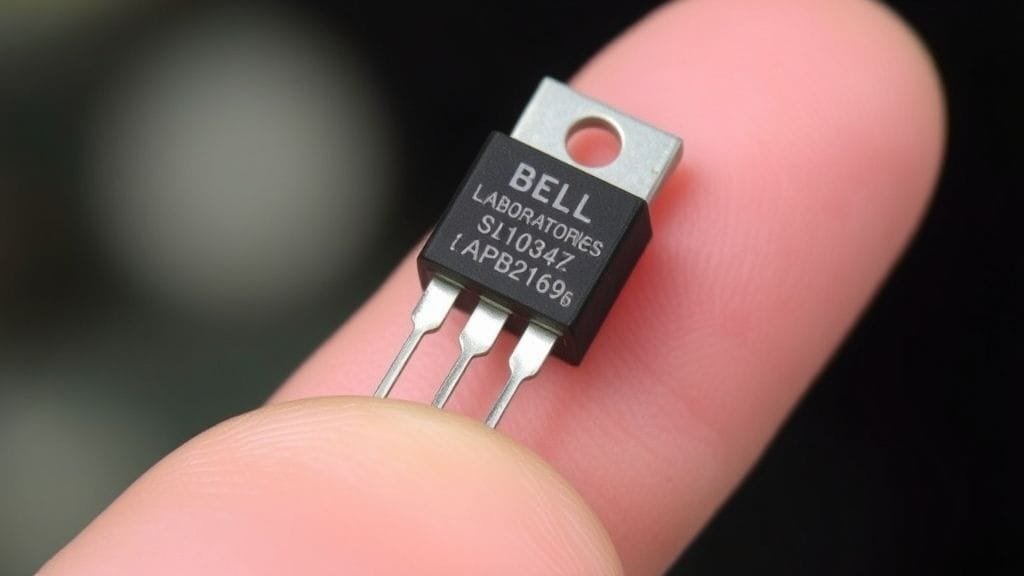
A monumental leap forward in the History of Processors occurred in 1947. At Bell Laboratories, John Bardeen, Walter Brattain, and William Shockley invented the transistor. Prior to this, computers relied on large, unreliable, and energy-hungry vacuum tubes. Transistors, however, were compact, consumed far less power, and proved significantly more dependable. This invention sparked a revolution, enabling electronics to become much smaller and truly practical.

The Integrated Circuit: Combining Power
The next logical progression in the History of Processors was to consolidate multiple transistors and other electronic components onto a single piece of material. This led to the invention of the integrated circuit (IC) in 1958 by Jack Kilby at Texas Instruments. Robert Noyce at Fairchild Semiconductor independently conceived a similar idea. The IC allowed engineers to pack more components into smaller spaces. This innovation also reduced production costs, enhanced reliability, and improved operational performance. Ultimately, it truly made the “computer on a chip” feasible and paved the way for further advancements in processor technology.
The Birth of the Microprocessor: A Key Chapter in the History of Processors
With the groundwork laid, the stage was set for the microprocessor – a single integrated circuit containing all the functions of a central processing unit (CPU). This pivotal invention completely transformed computing in the History of Processors, making powerful computers accessible to everyone.
Intel’s Pioneering Vision: The 4004
The official beginning of the microprocessor era was November 15, 1971. On that day, Intel, with crucial design contributions from Ted Hoff, released the 4-bit Intel 4004. This marked a monumental event in the History of Processors. Advertised as a “computer on a chip,” this tiny marvel contained 2,300 transistors and could perform an astonishing 60,000 operations per second. Initially intended for calculators, its broader applications quickly became apparent.
Rapid Evolution: From 8-bit to 16-bit Dominance
Intel soon followed the 4004 with more powerful processors, marking continued progress in the History of Processors. For instance, the 8-bit Intel 8008 emerged in 1972, followed by the highly successful Intel 8080 in 1974. The 8080 became a de facto standard for early personal computers and embedded systems. Simultaneously, other companies like Motorola (MC6800, 1974) and Zilog (Z80, 1976) drove innovation through healthy competition.

The History of Processors rapidly advanced into the 16-bit era. Intel’s 8086 (1978) and 8088 (1979) processors were particularly influential. IBM’s choice of the 8088 for its groundbreaking personal computer cemented Intel’s position as a market leader for many years. This decision also established the x86 architecture as the accepted standard for personal computing.
The Rise of 32-bit and 64-bit Architectures
The late 1980s heralded the advent of the 32-bit era, with processors like Intel’s 80386 making their debut. This represented another significant period in the History of Processors. This substantial architectural leap allowed computers to address significantly more memory and handle complex tasks more efficiently. This directly supported the graphical interfaces and advanced software that soon emerged.
Today, 64-bit multi-core processors are the prevailing standard. These processors can manage even greater amounts of memory and deliver vastly improved performance and efficiency. This ongoing increase in “bitness” thus signifies a profound escalation in computing power throughout the History of Processors.
Architectural Philosophies: CISC vs. RISC
Beyond simply adding more transistors, engineers in the History of Processors also grappled with how a processor should execute instructions. This challenge led to two primary types of instruction set architectures (ISAs): Complex Instruction Set Computer (CISC) and Reduced Instruction Set Computer (RISC).
The “Do-It-All” Approach: CISC
CISC architectures were prevalent from the 1950s to the 1970s. They aimed to shorten programs by allowing a single instruction to perform several complex operations. For example, one CISC instruction might fetch data, perform a mathematical operation, and save the result. Intel’s x86 architecture, found in most desktop and laptop computers, remains the most well-known CISC design in the History of Processors. Powerful as they are, these complex instructions can sometimes require many clock cycles to complete.
The “Simple and Fast” Approach: RISC
RISC architectures emerged in the late 1970s and 1980s, pioneered by projects like the IBM 801 and designs from Stanford and UC Berkeley. RISC processors, conversely, utilize simpler, fixed-length instructions. These can execute much faster, often in just one clock cycle, employing techniques like pipelining. While a RISC program might require more machine code, the faster execution per instruction often translates to better overall performance and efficiency for these processors.

ARM, SPARC, and PowerPC are notable examples of RISC architectures. Initially, RISC faced challenges due to a lack of software support. However, advancements in compiler technology and the proliferation of mobile computing changed this dynamic. In mobile devices, energy conservation is paramount. These factors eventually made ARM-based RISC processors ubiquitous, securing their prominent place in the History of Processors.
Embracing Parallelism: The Multi-Core Revolution
As processors grew faster, engineers in the History of Processors encountered physical limitations. This prompted a significant shift toward parallel processing – a new paradigm for boosting computing power.
Early Concepts: Supercomputers and Shared Data
The concept of parallel processing dates back to the late 1950s. Back then, early supercomputers began employing multiple processors in tandem to handle immense datasets. These costly machines divided tasks into smaller segments, which were then executed concurrently. This dramatically accelerated complex calculations and demonstrated a key principle in the History of Processors.
The Mainstream Shift: Multi-Core Processors
The truly mainstream adoption for everyday computing in the History of Processors occurred in the early 2000s with multi-core processors. Manufacturers encountered physical barriers when attempting to increase single-core clock speeds, such as excessive heat and power consumption. Consequently, they realized they could integrate multiple complete processing units (cores) onto a single chip. This ingenious move improved not only speed but also energy efficiency. In fact, multiple cores operating at slower speeds often deliver superior overall performance and use less power.

Today, parallel computing is the dominant approach in the History of Processors. For example, most desktop and laptop computers come equipped with dual-core or quad-core microprocessors. Moreover, powerful servers frequently feature processors with ten or more cores. This has fundamentally altered how software is designed and how we interact with computers.
The Shifting Sands of the Processor Market
The History of Processors is also a story of intense competition. For many years, one company maintained a dominant position, but recent years have brought significant shifts in the market landscape.
Intel’s Long Reign and AMD’s Emergence
For an extended period, Intel led the PC microprocessor market, often holding over 90% market share. This strong position stemmed from early innovations, robust manufacturing capabilities, and crucial partnerships. This marked a key era in the History of Processors. Advanced Micro Devices (AMD), founded in 1969, eventually emerged as Intel’s primary challenger. AMD initially produced chips for Intel, but in the 1990s, it began manufacturing its own x86-compatible CPUs, directly challenging Intel’s supremacy.
The AMD Resurgence: Zen Architecture
AMD experienced periods of both success and difficulty. Then, a major turning point in the History of Processors arrived in 2016 with AMD’s Zen microarchitecture. This entirely new design completely revamped their processors, focusing on performance, power efficiency, and scalability. Zen was truly transformative, delivering significantly improved performance, often surpassing Intel in certain benchmarks. As a result, AMD’s market share grew considerably, both for consumer systems and data centers. This demonstrated that innovation could indeed come from anywhere in the industry.
Current Market Dynamics
AMD’s comeback was a momentous event in the History of Processors. Its impact can be seen in recent market share figures, which illustrate a clear shift away from Intel’s near-total control:
| Market Segment | Vendor | Q1 2025 Market Share |
|---|---|---|
| Client CPU | Intel | 75.3% |
| AMD | 24.7% | |
| Server CPU | Intel | 63.3% |
| AMD | 36.5% |
Note: Q1 2025 data for Client CPU, Q3 2025 data for Server CPU as per research summary.
Ultimately, this intensified competition greatly benefits consumers. It pushes both companies to foster more innovation and offer better value in the ongoing History of Processors.
The Performance Curve: Growth, Limits, and Plateaus
Processor performance, throughout the History of Processors, has followed an astounding, often rapid, trajectory. However, this growth has encountered distinct phases and challenges.
Decades of Exponential Growth
Prior to the mid-1980s, processor performance typically increased by approximately 25% annually. Subsequently, this rate accelerated to an impressive 52% per year, sustaining until 2002. This acceleration resulted from innovations in transistor manufacturing and fabrication, coupled with improved internal designs, such as branch prediction and larger caches. All of these were key factors in the History of Processors.
The Slowdown and the Multi-Core Imperative
Since 2002, single-core performance growth in the History of Processors has significantly decelerated, falling to about 20% per year. Engineers encountered fundamental physical barriers, including power consumption, heat dissipation, and the inherent limits of sequential task execution. Consequently, this slowdown necessitated the transition to multi-core designs. This shift enhanced system performance by enabling multiple cores to execute tasks concurrently.
Recent Trends and Benchmarking
Multi-core designs continued to boost performance in the History of Processors. However, recent data suggests that even this growth might be entering a new phase. For instance, PassMark’s 2025 tests indicated the first average CPU performance drop since 2004, specifically for desktop (0.5%) and laptop (3.4%) processors. This doesn’t imply that processors are getting “worse”; rather, it could point to a potential leveling off in certain areas of performance gain. Therefore, objective benchmarking tools like SPEC, Geekbench, and PassMark remain crucial for evaluating and comparing CPU speeds.
Looking Ahead: The Future of Processing Power
The journey of processors, and indeed the entire History of Processors, is far from over. Future innovations will likely emphasize even greater efficiency, more specialized tasks, and entirely new computing paradigms.
We are already witnessing a proliferation of specialized accelerators. These include Graphics Processing Units (GPUs) for parallelizable tasks and Neural Processing Units (NPUs) for AI workloads. This trend suggests that future systems will feature a collection of highly tuned processing units working in concert. This heterogeneous computing approach will unlock new levels of speed for specific applications in the ever-evolving History of Processors.
Furthermore, research into quantum computing and optical computing continues to advance. While still nascent, these fields promise immense jumps in computational power for certain problems. They could revolutionize industries from medicine to material science. Thus, the processors of tomorrow might look dramatically different from today’s silicon chips, marking a truly new era in the History of Processors.
Your Perspective: What’s Next?
The History of Processors is a vibrant narrative of a relentless pursuit of speed, efficiency, and ingenious ideas. It illustrates how fundamental science transforms into world-changing technology. From Berzelius’s silicon to Kilby’s integrated circuits and Intel’s 4004, each step built upon the last, leading us to the sophisticated devices we use daily.
Competition between industry giants like Intel and AMD, coupled with architectural debates like CISC versus RISC, has fueled remarkable progress throughout the History of Processors. Moreover, the strategic shift to multi-core designs has ensured computing power continues to increase, even in the face of physical limitations.
What do you believe is the most exciting development in the History of Processors? And looking to the future, which emerging technology, such as quantum computing or specialized AI chips, do you think will have the greatest impact on how we compute? Share your thoughts in the comments below!