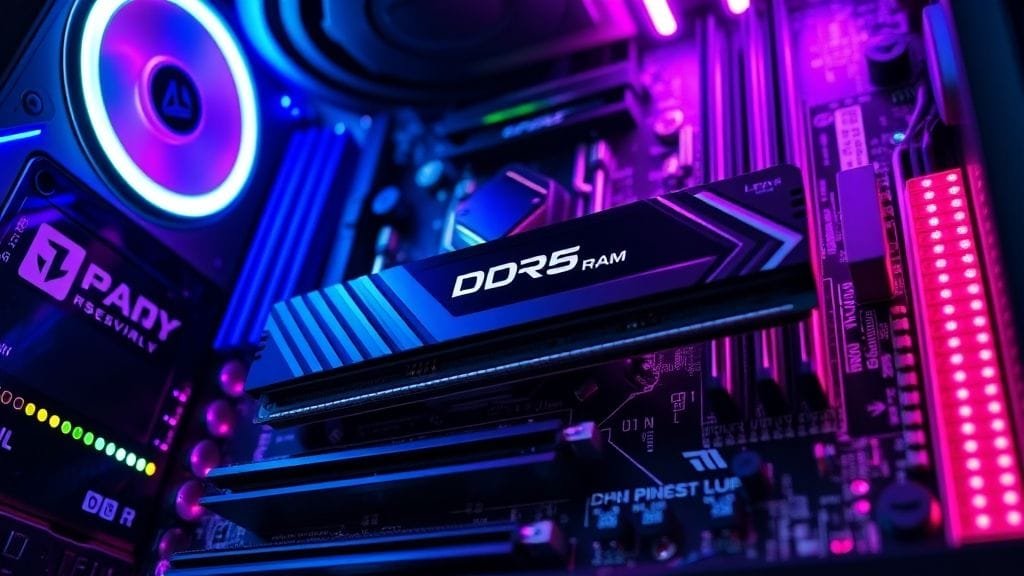

Building or upgrading a PC is exciting. However, it often brings a critical question: “Is DDR5 worth it?” For years, DDR4 reigned supreme. Indeed, it offered stable, affordable performance. Nevertheless, 2024 and 2025 bring a significant shift. In fact, the PC memory landscape has fundamentally changed. Consequently, DDR5 is no longer a premium option. Instead, it is rapidly becoming the standard. Moreover, it promises significant advancements for new systems. Yet, does this next-gen memory deliver enough value? Specifically, can it justify its cost for your specific needs?
This article delves into DDR5 memory. Herein, we examine its performance, pricing, compatibility, and future. Furthermore, we cut through marketing jargon. Thus, you will gain a clear, actionable understanding. So, is DDR5 a smart investment for your next build? Or, conversely, does DDR4 still make sense? By the end, therefore, you’ll have key insights. Ultimately, you can make an informed decision for your computing journey.
The Evolution of DDR5 Memory: From Niche to Necessity
DDR5 first arrived as a premium product. Consequently, it commanded high prices. It catered to early adopters and enthusiasts. Yet, like all new technologies, DDR5 matured fast. It was once a niche component. However, DDR5 is increasingly viable now. In fact, it’s often recommended for new PC builds today. Moreover, this trend continues into the immediate future. This evolution, therefore, shows technical refinements. It also reflects shifts in market dynamics. User expectations, too, have changed.
Manufacturers optimized DDR5 modules. Consequently, they pushed speeds higher. Early stability concerns, furthermore, were addressed. The PC ecosystem, indeed, embraced this standard. Therefore, CPUs and motherboards now fully support it. This solidifies its place. Is DDR5 becoming dominant? That is no longer the question. Instead, the question is when. And that “when” is undeniably now.
Performance Powerhouse: How DDR5 Outpaces DDR4
The core appeal of DDR5 is its raw performance. Notably, it’s a generational leap over DDR4. It meets escalating demands. This includes modern applications and gaming. Therefore, understanding these advantages is crucial. So, is DDR5 worth it for your specific use?
Speed, Bandwidth, and Real-World Impact
DDR5 boasts higher speeds. It also has increased bandwidth. This, consequently, surpasses its predecessor. Initially, DDR5 modules started at 4800 MT/s. Current offerings, however, reach 8400 MT/s and beyond. This is a substantial leap from DDR4’s 3200 MT/s peak. Moreover, enhanced data transfer rates improve performance. This, in turn, benefits memory-intensive applications.
Consider video editing tasks, for example. Here, large files shuffle between storage and memory. DDR5, therefore, speeds these operations by up to 20%. Similarly, 3D rendering benefits too. Complex data analysis also sees gains. Virtualization workloads, furthermore, improve with increased bandwidth. Gamers, too, see benefits, especially at high resolutions. Specifically, DDR5 delivers 3-15% higher FPS. This is true for AAA titles (1440p or 4K). However, pair it with the latest CPUs and GPUs. Gains, conversely, might be less in CPU-bound games. Lower resolutions also show fewer gains. Still, system responsiveness improves. Overall fluidity, moreover, is enhanced. The impact of DDR5 memory, therefore, is clear. It shines when your system pushes its limits.
Latency: Understanding the Nuance
Latency is a common comparison point. Indeed, it sometimes causes confusion. DDR5 modules, for example, have higher initial CAS Latency. This means CL36 or higher. Conversely, DDR4 modules are typically CL15-CL19. On paper, higher raw latency, therefore, seems like a disadvantage. However, consider the complete picture.
Imagine a highway scenario, for instance. DDR4, in this case, has fewer toll booths (lower CL). But it’s a single-lane road. Conversely, DDR5 has more toll booths. Yet, it’s a multi-lane super-highway. A single data piece, perhaps, might take longer through a “toll booth.” However, massive data is processed simultaneously. This, consequently, gives far better overall real-world performance. Therefore, DDR5 offers higher effective throughput. This is true despite its raw latency numbers.
Beyond Speed: Efficiency and Capacity Gains
Raw speed and bandwidth get much attention. Nevertheless, DDR5 offers other significant advantages. These create a more efficient computing experience. It is also more powerful. These benefits are less obvious. Yet, they play a crucial role. This includes modern system design. It also aids future scalability.
Power Efficiency for Cooler Operations
DDR5 memory offers improved power efficiency. Specifically, DDR5 operates at 1.1V. In contrast, DDR4 runs at 1.2V. This small voltage reduction, consequently, boosts system energy efficiency. Moreover, DDR5 modules generate less heat. This, in turn, benefits system stability and longevity. It also helps compact builds. Furthermore, it aids systems under heavy load. Less heat, therefore, means less stress on cooling. As a result, system operation can be quieter. This, furthermore, enhances the user experience. Thus, DDR5 is attractive for powerful desktops. It also suits energy-conscious builds.
Unlocking Massive Memory Capacities
Beyond efficiency, DDR5 supports greater module capacities. Specifically, each DIMM can hold up to 128GB. Thus, DDR5 enables massive memory footprints. This is crucial for demanding workstations. It also helps professional servers. Moreover, specialized applications needing immense RAM benefit.
Advanced virtualization environments, for example, use these capacities. Large-scale data analysis also benefits. High-end content creation studios can too. They handle huge projects and complexities. For consumers, potential per stick increases. Consequently, future motherboards may offer higher total memory. This can be in more compact configurations. Overall, DDR5 memory offers key scalability. Therefore, it’s a future-proof investment. This is ideal for needs beyond everyday computing.
The Compatibility Crossroads: What You Need to Know

Is DDR5 worth it? Compatibility questions, in fact, inevitably follow. Indeed, this is a significant hurdle. Moreover, it affects users with older hardware. Therefore, DDR5 is not a drop-in upgrade. Consequently, it won’t work in existing DDR4 systems.
You need a compatible motherboard and CPU for DDR5. For instance, Intel users need 12th, 13th, or 14th-gen Core processors. Conversely, AMD Ryzen 7000 series are exclusively DDR5. All subsequent generations are too. They, consequently, cannot use DDR4 memory. Furthermore, DDR4 and DDR5 modules are physically incompatible. They have different notch placements. This, therefore, prevents incorrect insertion. You cannot use the wrong RAM type. So, if you have a DDR4 system, upgrading to DDR5 is complex. You are not just buying new RAM. Instead, it means a complete platform overhaul. This includes a new motherboard and processor. This, furthermore, is a significant financial consideration. Factor it into your decision, therefore.
Decoding DDR5 Pricing: Is it Finally Affordable?
Price is often key in hardware decisions. DDR5 memory, moreover, has had a fascinating journey. Since 2021, DDR5 prices dropped significantly. Consequently, it is now more accessible to PC builders. This trend, in fact, made DDR5 worth it for more people.
The Narrowing Price Gap
DDR5 initially cost much more than DDR4. This, therefore, made it a difficult sell. It was for those not chasing top performance. However, as production scaled up, competition intensified. The price gap, subsequently, steadily narrowed. DDR5 modules still cost more than DDR4 for equivalent capacities. However, the difference is no longer prohibitive. Many new builds, therefore, find it acceptable. In conclusion, DDR5 is a compelling investment for new systems. The incremental cost for superior tech, moreover, feels justified.
Market Fluctuations and Future Outlook
The memory market is dynamic. DDR5 is no exception. While prices largely trended downwards, 2024 saw recent fluctuations. For instance, DDR5 had minor price hikes. Analysts, indeed, cite various factors. Shifting supply chains is one. Increased demand from generative AI is another. Further increases, therefore, are possible. Conversely, a cool-down is projected around Q3 2025. DDR4 prices also surged recently. This occurred as manufacturers shifted production focus. They moved to DDR5 and other memory types. Thus, the pricing landscape constantly evolves. Therefore, stay informed about market trends. Do this before making your purchase.
Future-Proofing Your Rig with DDR5

Investing in DDR5 memory helps future-proof your PC. This, indeed, is a compelling argument. As computing evolves rapidly, building an adaptable system is smart. DDR5, furthermore, is central to this concept.
Accelerating Adoption and Industry Trends
DDR5 adoption is accelerating fast. Industry trends, moreover, fuel this growth. Generative AI (GenAI), for example, is a growing field. It demands rapid data processing. It relies heavily on high-bandwidth memory. Consequently, DDR5 fits this need. Modern games, furthermore, have increasing graphical fidelity. Their complexity also grows. Professional content creation demands rise. Enterprise applications also push faster memory. All these, therefore, drive DDR5 adoption.
These sectors, in turn, force developers’ hands. Both hardware and software optimize for DDR5. By 2025, therefore, DDR5 will dominate. Analysts project this. It will be the standard for new PC builds. It will also be for upgrades. This swift transition, moreover, is important. So, choose DDR5 memory now. Your system will, consequently, stay relevant. It will also be high-performing for years.
A Smart Investment for Longevity
Invest in DDR5 now. Indeed, this is a “future-proof” move. First, it ensures compatibility. Furthermore, it works with future hardware. Moreover, it supports software optimizations. As applications become more memory-intensive, operating systems also use faster memory better. A DDR5 system, therefore, handles these demands well. Consequently, it avoids bottlenecks. To avoid being left behind, therefore, choose DDR5. After all, the industry marches forward. Your initial investment, consequently, becomes more sustainable. This is especially true in the long run.
Finding the DDR5 “Sweet Spot”: Performance vs. Cost
Faster is often seen as better. But PC hardware, nevertheless, needs balance. It’s about performance, stability, and cost. DDR5 memory, moreover, has a clear “sweet spot.” It offers excellent value. It avoids diminishing returns. It also avoids complications. This insight, therefore, is valuable. So, is DDR5 worth it at its highest speeds?
The DDR5-6000 CL30 Recommendation
Most users, including gamers and content creators, find DDR5-6000 CL30 to be the “sweet spot.” This has tight timings. This configuration, consequently, balances performance and cost. It suits AMD (Zen 4/5) platforms. It also suits Intel platforms. At these speeds, moreover, DDR5 uplifts performance over DDR4. It delivers crisp responsiveness. It also provides high frame rates in demanding titles. Furthermore, CL30 offers excellent real-world latency. It maximizes DDR5’s high clock speed benefits. Many pre-built gaming PCs, consequently, use this speed. Enthusiasts also recommend it. There’s a good reason for this, therefore.
Navigating Stability and Higher Frequencies
Faster DDR5 kits exist. But pushing beyond 6000-6400 MT/s, however, yields diminishing returns. Gains in FPS or speed, for example, become less noticeable. This is true compared to the DDR4 jump. Moreover, higher speeds can cause stability issues. This is especially true when all four DIMM slots are used. It particularly occurs at very high frequencies. Ultra-high frequency signal integrity, furthermore, is sensitive. This can lead to boot issues. System instability can also occur. Enthusiasts, therefore, often recommend two high-capacity modules. This is over four smaller ones. It aims for peak performance. Some users, furthermore, report longer DDR5 boot times. Motherboard manufacturers, however, work on this issue. They optimize through BIOS updates. For most users, therefore, stick to DDR5-6000 CL30. It’s a proven “sweet spot.” It offers the best experience. You get excellent performance. And you avoid unnecessary hassle or expense.
Weighing the Downsides: When to Pause on DDR5

DDR5 has many advantages. Its adoption, moreover, is accelerating. However, it also has considerations. Therefore, it’s crucial to acknowledge downsides. Understanding them, consequently, helps your decision. So, is DDR5 worth it for your situation?
Top-speed DDR5 profiles, for example, need more power. This is true compared to slower kits. It can, therefore, increase heat output. DDR5 runs at lower voltage than DDR4. Still, high frequencies generate thermal load. This, moreover, might need robust cooling. Stability issues can arise. This is true when all four DIMM slots are populated. It especially occurs at very high frequencies. The DDR5 signal path, furthermore, is sensitive. Motherboards and CPUs, consequently, might struggle. They may not maintain stability with extreme overclocks. This is true across a full set of RAM. Enthusiasts, therefore, often recommend two high-capacity modules. This is over four smaller ones. It aims for peak performance. Some users, furthermore, report longer DDR5 boot times. Motherboard manufacturers, however, work on this issue. They optimize through BIOS updates.
The most significant downside, however, applies to DDR4 users. This, incidentally, was mentioned previously. Upgrading to DDR5, therefore, costs more than just new RAM. Indeed, it requires a new motherboard and CPU. In essence, this means a complete platform upgrade. Some users, for example, have adequate DDR4 systems. For them, performance gains for everyday tasks might not justify a complete overhaul.
Your Verdict: Is DDR5 Worth It for You?
We’ve explored technical advancements. We also looked at market trends. Practical considerations, moreover, were covered. Now, therefore, we address the central question: Is DDR5 worth it in 2024-2025? The answer, ultimately, depends on you. It depends on your circumstances and priorities.
Building a new PC in 2024 or 2025? Especially for high-performance tasks? Then, the answer is a resounding yes. Indeed, DDR5 is unequivocally superior memory technology. It offers advancements over DDR4. These include speed, bandwidth, power efficiency, and capacity. Are you a gamer chasing every frame? Or a content creator needing faster rendering? Perhaps a professional running intensive apps? If so, DDR5 is a solid investment. It offers future-proofing. Moreover, it delivers tangible performance benefits. Declining prices help. Furthermore, increasing market adoption also helps. Both factors, moreover, solidify DDR5’s value for new builds.
Users with existing DDR4 systems, however, must consider upgrades carefully. A new motherboard and CPU, for instance, cost extra. The DDR5 memory itself also costs. This additional cost, therefore, is significant. Does your DDR4 setup meet your needs? This includes everyday tasks, browsing, and lighter gaming. Then, performance gains might not justify the overhaul. Are you often bottlenecked by memory? Or planning a big CPU and GPU upgrade? If so, then jump to a full DDR5 platform. It’s the logical, forward-thinking choice.
The DDR5 performance sweet spot is DDR5-6000, for instance. It has low latency (e.g., CL30). This, consequently, balances speed, cost, and stability well. Here, you get phenomenal performance. You also avoid unstable, cost-prohibitive ultra-high frequencies. DDR5, moreover, is not just future tech. Instead, it’s today’s high-performance reality.
Making the Smart Memory Choice
As you finalize your PC build or upgrade plans, remember, memory is foundational. Indeed, it impacts system responsiveness and capability. Therefore, embrace DDR5 memory now. Step into higher speeds; gain greater efficiency; enjoy enhanced future compatibility. Ultimately, it’s an investment that pays dividends in performance and longevity.
So, what DDR5 aspects matter most to you? Consider, for instance, performance or value. What’s your next PC hardware decision? Share your thoughts below!