The world of technology never stands still. Indeed, this is clear in the rapid evolution of new hardware & tech. We are living through massive transformation; in fact, breakthroughs redefine what’s possible every few months. These advancements, for example, power our smartphones. They also enable complex autonomous vehicle systems. Their impact, moreover, is not just incremental. Rather, they fundamentally reshape industries, economies, and daily life. Therefore, understanding these shifts is crucial. It helps you, first, stay competitive and innovate. Furthermore, it also helps you comprehend our digital future. Consequently, this article will journey through the cutting edge. We will, therefore, explore key trends and significant benefits. Moreover, we will also examine persistent challenges. These, truly, define new hardware and technology. We’ll also, consequently, glimpse the promising market outlook. This, furthermore, underscores its growing importance.
The Core Pillars of New Hardware & Tech Innovation
Innovation in new hardware & tech is surging. Indeed, several interconnected trends drive it. Each, consequently, pushes computing boundaries. These are not, however, isolated developments. Rather, they are a symphony of advancements. These developments, moreover, accelerate progress toward a more connected world. Furthermore, they make it more intelligent. Therefore, let’s delve into foundational areas. Profound changes are, in fact, taking place here. These innovations, moreover, create entirely new possibilities.
AI and Machine Learning: Intelligence at the Core
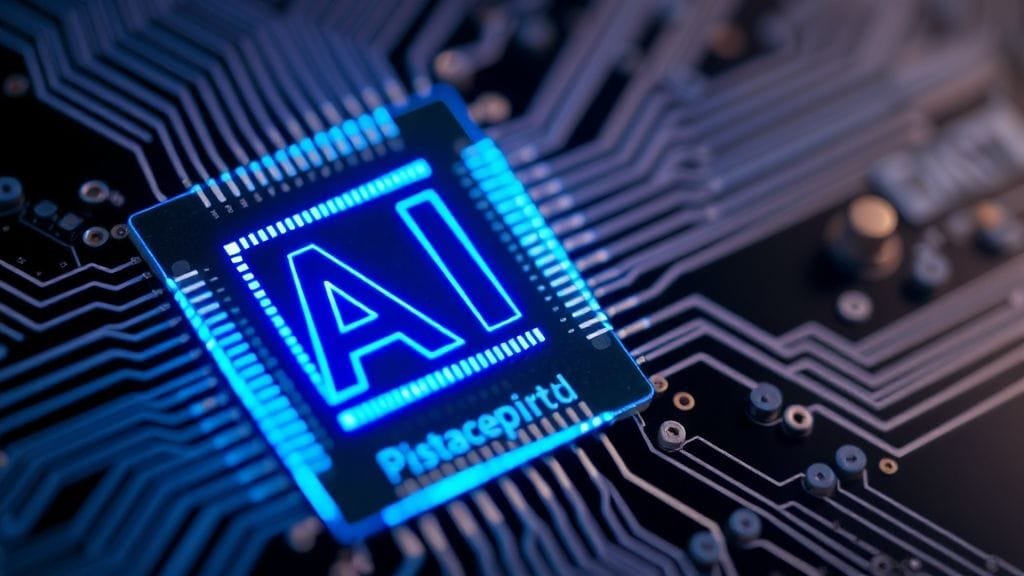
Artificial Intelligence (AI) and Machine Learning (ML) are not just software concepts. Instead, they fundamentally reshape hardware design. Consider this, for example: complex AI models need specialized hardware. This hardware, therefore, must handle vast data quickly. That’s why, consequently, AI-powered chips are surging. Accelerators like TPUs and NPUs are, indeed, examples. They are, furthermore, engineered for deep learning. They also, moreover, support neural network inference.
Autonomous vehicles, for instance, rely on onboard AI hardware. This enables them, therefore, to perceive surroundings. It also helps them, subsequently, make real-time decisions. Robotics, natural language processing, and computer vision all, indeed, benefit. This dedicated infrastructure is, in fact, immense. Furthermore, AI integration into Internet of Things (IoT) devices also drives smarter automation. Consequently, everyday objects can make intelligent decisions locally. This, moreover, reduces reliance on central cloud systems. This, therefore, marks a significant leap. Devices now, truly, interact intelligently with their environment. They become, therefore, truly intelligent companions.

Quantum Computing: Beyond Binary Limits
Imagine an impossible computer. It could, for instance, solve problems beyond today’s supercomputers. That, truly, is the promise of quantum computing. While traditional computers use bits (0s or 1s), quantum computers, conversely, use qubits. Qubits can, moreover, represent both 0 and 1 simultaneously. This happens, specifically, through superposition. This, consequently, allows exponential processing power. It also, furthermore, enables parallel computation. This, therefore, opens doors to unimaginable possibilities.
Giants like [IBM](https://www.ibm.com/quantum-computing/), Google, and Intel, for example, lead this research. They make, furthermore, substantial strides. They develop, moreover, stable quantum systems. The implications, consequently, are staggering. Cryptography, for instance, could be revolutionized. Current encryption methods, indeed, may become obsolete. However, new, uncrackable ones could emerge. Quantum computing could, additionally, accelerate drug discovery. It would, for example, simulate molecular interactions accurately. Complex financial modeling would also, moreover, benefit. This would, consequently, help us understand market dynamics better. It’s truly, therefore, a paradigm shift for computation.
IoT and Edge Computing: Data Where It Matters
IoT devices are everywhere. They range, for example, from smart home sensors to industrial machinery. They generate, moreover, an astonishing volume of data. Processing it all in a central cloud is, therefore, slow. It can also be inefficient. This, consequently, leads to critical delays. Edge computing, however, solves this. It brings, in fact, computational power closer to the data source. Smart sensors, AI chips, and micro data centers are, for instance, used. These are located, specifically, at the network’s edge. This, therefore, allows real-time processing and analysis.
This approach, moreover, minimizes latency significantly. It also, furthermore, reduces bandwidth requirements. This, truly, is critical for applications needing immediate action. Think, for example, about autonomous factories. Machines must, therefore, respond instantly to anomalies. Smart cities also, for instance, manage traffic flows in real-time. Edge computing, moreover, enhances data privacy and security. It processes sensitive information locally, for example. This, consequently, avoids sending it across networks. It’s essential, therefore, for growth. Smart homes, smart cities, and industrial automation all, indeed, benefit. Advanced healthcare monitoring systems also, moreover, use it. Learn more about its impact, for example, in our article on [understanding edge computing](/blog/understanding-edge-computing/).
5G and Advanced Connectivity: The Speed of Tomorrow
5G network rollout is more than just faster internet. Instead, it fundamentally enables the next generation of new hardware & tech. This advanced connectivity, furthermore, provides high-speed communication. It also, moreover, offers low latency. This is, consequently, necessary for truly real-time applications. Imagine, for instance, self-driving cars communicating instantly. They connect, moreover, with each other and traffic infrastructure. Augmented reality (AR) devices could also, therefore, overlay digital information seamlessly. This happens, moreover, onto the physical world without lag.
5G’s robust capabilities, moreover, transform industries. It supports, for example, remote work solutions. These feel, moreover, like in-person collaboration. It also, furthermore, aids sophisticated telehealth platforms. Researchers, subsequently, look ahead to 6G. It promises, furthermore, even faster data rates. It will also, moreover, integrate [Artificial Intelligence](https://en.wikipedia.org/wiki/Artificial_intelligence) deeper. AI capabilities, in fact, will be directly in the network architecture. This, consequently, paves the way for ubiquitous intelligent environments. The impact of this connectivity is, therefore, huge. It transforms, moreover, how we interact with new hardware solutions.

Sustainable Computing: Green Tech for a Blue Planet
Technology advances constantly. So, too, does our awareness of its environmental footprint. Therefore, a growing focus exists. It centers, moreover, on sustainable computing and materials science. This is, specifically, in the realm of `new hardware`. This “green computing” movement has, therefore, priorities. It favors, for example, energy-efficient data centers. It also, moreover, focuses on low-power processors. Developing recyclable components is, furthermore, key. Manufacturers are, in fact, increasingly driven by environmental responsibility. Consumer demand for eco-friendly products also, moreover, plays a role.
Beyond energy efficiency, advancements are, furthermore, crucial. Materials science and nanotechnology, for instance, revolutionize hardware. They do this, in fact, at a fundamental level. These innovations, moreover, promise faster processors. They will, moreover, consume less power. More flexible electronics, for example, can bend and fold. Ultra-sensitive sensors can, furthermore, detect minuscule changes. Imagine, for instance, powerful electronics. They are also, moreover, entirely biodegradable. Or, alternatively, they are made from renewable resources. This, consequently, reduces electronic waste. It also, furthermore, ensures a healthier planet for future generations. Explore more about these innovations, for example, in our piece on [sustainable tech innovations](/blog/sustainabletechinnovations/).
Advanced Processor Architectures: Rethinking the Chip
The traditional monolithic processor is changing. Instead, it is giving way to more sophisticated designs. These are, moreover, tailored for specific workloads. The future of `new hardware` lies, in fact, in heterogeneous architectures. These integrate, for example, different processing units. CPUs, GPUs, and specialized accelerators are, indeed, examples. They exist, furthermore, on a single chip or package. This, consequently, allows each component to handle its best tasks. It dramatically, moreover, optimizes performance and efficiency.
Another significant innovation is, moreover, chiplet architecture. Instead of one giant, complex chip, systems are, for instance, broken down. They become, therefore, smaller, independently manufactured “chiplets.” These chiplets, subsequently, combine on a single package. This approach, furthermore, offers enhanced flexibility. It also, moreover, provides scalability. Improved yield rates, for example, result during manufacturing. It also, additionally, allows easier upgrades and customization. This, consequently, pushes the boundaries of high-performance computing.
Immersive Technologies: Stepping into New Realities
Augmented Reality (AR), Virtual Reality (VR), and Mixed Reality (MR) are seeing a profound renaissance. This is, moreover, largely due to significant `hardware technology` advancements. These immersive technologies, in fact, move beyond niche applications. They reshape, furthermore, how we interact with digital content. They also, additionally, change how we interact with each other. Progress includes, for example, superior sensors. These track movements, moreover, with greater precision. Higher-resolution displays, subsequently, create realistic visual experiences. Ergonomic designs, furthermore, make headsets more comfortable for prolonged use.
AR/VR/MR are expanding rapidly. They transform, for example, the gaming industry with lifelike virtual worlds. They revolutionize, moreover, education through interactive simulations. In healthcare, moreover, they offer new tools. These assist, for example, surgical training and therapy. For remote collaboration, additionally, they provide immersive meeting spaces. These transcend, furthermore, geographical boundaries. Hardware’s ongoing evolution is, truly, critical. It unlocks, therefore, the full potential of these realities. We discuss this, for example, in [The Future of AR, VR, and MR](/blog/thefutureofarvr_mr/).
Unleashing Potential: Benefits of Embracing New Hardware & Tech
Investing in new hardware & tech is a strategic move. It is not, therefore, just about keeping up with trends. Instead, it delivers tangible benefits for businesses and individuals. These advancements, moreover, empower us. We can, therefore, work smarter, live better, and achieve more. Let’s explore, for example, the compelling advantages. Adopting cutting-edge technology, moreover, brings them. These investments, consequently, yield significant returns.
Performance and Productivity Leaps
Upgrading to `new hardware` offers an immediate benefit. It provides, specifically, a significant boost in performance and efficiency. Modern processors, moreover, offer dramatically faster speeds. Applications, consequently, load quicker. They also, furthermore, run more smoothly. You’ll notice, for example, faster device boot-up times. Multitasking demanding programs, moreover, becomes fluid. For businesses, therefore, this increases staff productivity. Employees wait less for systems, for example. They spend, moreover, more time on critical tasks. This, consequently, leads to better outcomes and less frustration.
Enhanced Security and Reliability
Cyber threats are escalating. Therefore, security is paramount. Newer `hardware technology`, for instance, often includes advanced security measures. Older systems, in contrast, lack these. Biometric authentication features are, indeed, examples. Fingerprint or facial recognition, moreover, offers robust protection. Hardware-based encryption also, furthermore, guards against cyberattacks. Upgraded hardware, moreover, ensures compatibility. It works, for instance, with the latest security patches. It also, furthermore, supports software updates. This, consequently, keeps your systems resilient. It guards, moreover, against emerging vulnerabilities. This enhanced reliability, furthermore, means less downtime. It avoids, for example, system freezes, crashes, or security breaches. It also, moreover, extends your IT infrastructure’s lifespan.
Strategic Cost Reduction and Competitive Edge
The initial investment in new hardware & tech may seem substantial. However, it often leads to significant long-term cost reductions. Modern hardware is typically, for example, more energy-efficient. This, consequently, lowers electricity bills. Both data centers and individual users, moreover, save money. It also, furthermore, automates routine tasks. This, therefore, reduces the need for manual intervention. Staff can, consequently, focus on higher-value activities. Enhanced reliability, moreover, minimizes maintenance and repair expenses. Beyond cost savings, furthermore, new technology offers an edge. It provides, for example, a powerful competitive advantage. Businesses can, moreover, develop innovative products. They can, additionally, create new services. They are also, furthermore, able to expand into new markets. Additionally, they deliver superior customer experiences. This, consequently, sets them apart from rivals.

Boosting Employee Morale and Innovation
Working with slow, outdated equipment causes frustration. Providing employees with modern `hardware solutions`, therefore, helps. It can, moreover, dramatically boost morale and engagement. Tasks, consequently, complete quickly. Technical glitches are, furthermore, avoided. Employees feel, moreover, more empowered and valued. This positive environment, consequently, fosters greater job satisfaction. It can even, for instance, reduce employee turnover. Equipping teams with the latest tools also, furthermore, encourages innovation. They can, for example, experiment with new ideas. They leverage, moreover, advanced capabilities. This, consequently, leads to creative problem-solving. It also, furthermore, creates a more dynamic workplace culture. It’s, therefore, an investment in your people and your technology.
Navigating the Hurdles: Challenges in Developing New Hardware & Tech
Innovation moves at a dazzling pace. Yet, bringing new hardware & tech to market is challenging. It requires, moreover, immense technical expertise. Strategic planning is also, furthermore, needed. Substantial financial resources are often, consequently, necessary. Understanding these hurdles is, therefore, important. It helps us, moreover, appreciate the complexity behind every new device. It also, additionally, shows the ingenuity needed to overcome obstacles.
Cost Control and Design Complexity
Managing costs is a formidable `hardware development` challenge. Manufacturing processes are, for example, involved. Intricate assembly and global sourcing are, consequently, costly. Specialized parts are, moreover, expensive. Cost-effective solutions are, furthermore, a constant battle. Budget overruns are, indeed, common. Studies show, for example, over 55% of hardware projects exceed budgets. Unforeseen technical challenges or scope changes are, moreover, frequent causes.
Modern hardware products, moreover, feature intricate designs. This complexity, consequently, increases manufacturing difficulty. It also, furthermore, makes assembly processes more demanding. The likelihood of design errors, moreover, rises. Resolving these issues, therefore, takes more time. It requires, moreover, additional resources. Costly redesigns are often, consequently, needed. This, furthermore, prolongs development cycles. It further, moreover, inflates expenses.
Supply Chain Labyrinths
`New hardware` production is globalized. Components are sourced, for example, from many suppliers. These suppliers are, furthermore, in different countries. Coordinating these diverse supply chains is, consequently, monumental. Managing logistics is, moreover, a challenge. Ensuring timely deliveries is, furthermore, critical. Material procurement delays can, for instance, occur. Sudden component shortages also, additionally, happen (as seen recently). Geopolitical disruptions can, furthermore, severely disrupt timelines. Such disruptions, consequently, inflate costs. They can also, moreover, lead to missed market opportunities. Disgruntled customers are, furthermore, another result. A robust, resilient supply chain strategy is, therefore, absolutely critical.
Testing, Validation, and Compatibility
New devices must be tested rigorously. Validation, moreover, ensures correct function. They must comply, furthermore, with many regulatory standards. This process is, therefore, time-consuming. It is also, moreover, expensive. Studies show, for example, 68% of hardware projects face delays. This is due, moreover, to design flaws identified late. Insufficient early-stage testing is, furthermore, another cause. Seamless integration is, therefore, crucial. Compatibility with existing software ecosystems is, moreover, key. Hardware must work, for example, with various operating systems. It must also, furthermore, be designed for future scalability. This, consequently, prevents rapid obsolescence. It also, moreover, allows for future advancements.
Power, Durability, and Talent Gaps
Designing energy-efficient `new hardware` is a challenge. This is especially true, for example, for portable devices. Battery life is, therefore, paramount for them. Balancing performance and power consumption, moreover, requires sophisticated engineering. Hardware must also, furthermore, be incredibly durable. Many devices, for instance, operate in harsh environments. They need designs that, furthermore, withstand temperature extremes. Humidity, dust, and unreliable power sources are also, moreover, factors. Failure must, consequently, be avoided.
The rapid pace of new hardware & tech innovation, moreover, creates demand. It needs, specifically, highly specialized talent. Finding skilled hardware engineers is, therefore, a struggle. They need proficiency, for instance, in complex embedded systems. Advanced materials science and next-gen architectures are also, furthermore, required. Protecting valuable intellectual property (IP) is, moreover, a continuous concern. This is, for example, in a globally competitive landscape. Robust legal frameworks are, consequently, needed. Vigilant security measures, furthermore, safeguard innovations.
The Future is Now: Market Outlook for New Hardware & Tech
The trajectory for new hardware & tech shows impressive growth. This is, moreover, sustained. It is not, therefore, merely an expanding industry. Instead, this is a foundational sector. It underpins, consequently, nearly all other technological advancement. Current statistics, moreover, paint a clear picture. The market is, indeed, robust. It has, furthermore, significant potential. It illustrates, therefore, a future brimming with opportunity.
Overall Market Expansion
The global hardware market size was estimated at USD 126.52 billion in 2024. Experts project this to nearly double, for example. It will reach, specifically, USD 232.51 billion by 2033. This shows, consequently, a healthy Compound Annual Growth Rate (CAGR) of 7%. Another analysis, moreover, forecasts growth from $110.58 billion in 2024. It will reach, for instance, $114.87 billion in 2025 (3.9% CAGR). It will further expand, moreover, to $137.18 billion in 2029 (4.5% CAGR). This consistent upward trend is, therefore, clear. It underscores, furthermore, enduring demand for innovative physical technologies. The broader IT hardware market is even larger. It was valued, for example, at approximately USD 1200 billion in 2024. It is expected, moreover, to hit USD 1893.6 billion by 2033. This boasts, consequently, a CAGR of 5.2%.
The Surge in AI Hardware
Within this expansive landscape, `new hardware` segments are hyper-growing. This is, moreover, particularly true for Artificial Intelligence-related hardware. The AI in hardware market will surge, for example. It will grow, specifically, by USD 149.61 billion during 2024-2029. This accelerates, furthermore, at an impressive 27.6% CAGR. Similarly, AI computing hardware alone will increase. It is predicted, furthermore, to grow by USD 94.67 billion. This is, moreover, at a 24.6% CAGR over the same period. Most strikingly, the AI server hardware market is projected to grow. It will increase, moreover, by an astounding USD 358.33 billion from 2024-2029. This is, furthermore, with an astonishing 42% CAGR. These figures, consequently, highlight the critical role. Specialized hardware, moreover, plays in unlocking AI’s full potential.

Edge Computing and Strategic Investment
Edge computing is another pivotal area for `new tech`. It is also, moreover, expanding rapidly. Its market size will climb, for example. It expects to go, specifically, from USD 168.40 billion in 2025. It will reach, moreover, USD 249.06 billion by 2030. This is, furthermore, at a steady CAGR of 8.1%. This growth, consequently, reflects an increasing need. It is, for example, for distributed processing power. This supports, moreover, the burgeoning IoT ecosystem. It further, additionally, solidifies its importance.
Businesses globally, moreover, recognize these advancements. They are, indeed, indispensable. North American and European businesses anticipate, for example, significant allocation. They will allocate, specifically, 19% of IT budgets to hardware. This is, furthermore, for investments in 2025. This sustained commitment to `new hardware solutions` is, moreover, strong. Continuous technological breakthroughs also, additionally, contribute. Evolving consumer demands for smarter products, furthermore, factor in. Integrated and sustainable products are, for example, desired. This will, therefore, fuel innovation. It will, furthermore, foster remarkable growth. This applies, moreover, across the entire sector for years. The future is not just arriving. Instead, it’s being built, piece by piece, by new hardware ingenuity.
Conclusion: Shaping Tomorrow with Cutting-Edge Hardware
The world of new hardware & tech is fascinating. It reveals, for example, relentless innovation. It brings, furthermore, transformative benefits and complex challenges. AI chips and quantum computers, moreover, offer incredible power. IoT provides, furthermore, pervasive intelligence at the edge. 5G delivers, moreover, blazing speeds. These are not, therefore, just theoretical constructs. Instead, they are the bedrock of our digital future. Embracing these technologies, consequently, yields unparalleled performance. It also, furthermore, enhances security. Strategic cost savings are, moreover, realized. The workforce is, furthermore, revitalized.
However, the path forward has obstacles. Development costs are, for example, high. Design complexities are, moreover, intricate. Supply chain management is, furthermore, delicate. Demand for specialized talent is, consequently, constant. Innovation, therefore, requires immense dedication. Strategic foresight is also, furthermore, needed. Yet, the market outlook is, indeed, overwhelmingly positive. Investment in `new hardware` will, furthermore, accelerate. This will, consequently, drive economic growth and societal progress.
Ultimately, understanding these shifts is paramount. Adapting to `hardware and technology` changes is, moreover, key. This applies, for example, to individuals, businesses, and nations. It’s more than, therefore, owning the latest gadget. It’s about, instead, harnessing physical innovation’s power. This solves, consequently, complex problems. It creates, moreover, new opportunities. It also, furthermore, improves quality of life for everyone.
What aspect of new hardware & tech excites you most? How do you envision it impacting your daily life? How will it impact your industry in the next five years? Share your thoughts in the comments below!